The X100 Ergonomic Mesh Office Chair is built for buyers who want one chair for long desk sessions and short breaks.
Its appeal comes from the mix of a footrest, adjustable lumbar support, flip-up arms, and a heavy-duty frame.
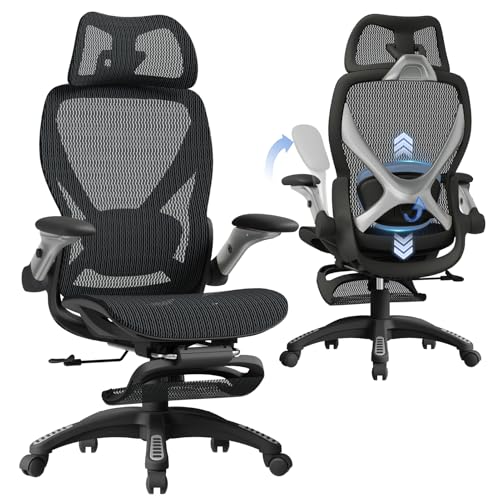
X100 Chair Review Summary
The X100 Ergonomic Mesh Office Chair makes the most sense for people who want a highly adjustable, all-day office chair with relaxation features built in. The listing positions it as a work-and-gaming hybrid, and that is the right way to evaluate it: it is not just about posture support, but about how comfortably it can shift between focused typing, reclined breaks, and more casual sitting.
If you are shopping for a chair that can handle a broad range of desk setups, the X100 has a strong feature mix.
The adjustable lumbar system, 3D headrest, reclining mechanism, and extendable footrest give it more flexibility than a basic mesh task chair.
The BIFMA-certified structure and 300 lb capacity also make it more relevant for buyers who need a sturdier frame than many entry-level models provide.
The tradeoff is that this is a feature-dense chair, which usually means more things to tune.
Buyers who want a simple, minimalist seat may find the adjustability excessive.
But if you care about dialing in support, moving armrests out of the way, and having a chair that can switch from work to rest, the X100 is a convincing option.
Review Scorecard
| Category | Score | Why it matters |
|---|---|---|
| Ergonomic adjustability | 9/10 | 3D lumbar, 3D headrest, and multiple reclining and arm adjustments create a wide fit range. |
| Comfort for long sessions | 8/10 | Mesh breathability, padded support, and a footrest all point to extended-use comfort. |
| Build confidence | 8/10 | BIFMA-certified structure and 300 lb support suggest a more serious frame than budget chairs. |
| Space efficiency | 7/10 | Flip-up arms help, but the footrest and larger build are still geared toward a bigger setup. |
| Work-to-rest versatility | 9/10 | The chair is clearly designed to move between desk work, reclining, and relaxed sitting. |
| Ease of setup and use | 7/10 | The listing promises quick assembly, but the number of moving parts means more setup than a basic chair. |
Key Features and Specifications of X100 Chair
The X100 is an ergonomic mesh office chair with a built-in footrest and a dual-purpose design that targets home office use, gaming, and executive-style seating.
The listing emphasizes a dynamic spinal alignment system, a synchro-tilt mechanism, and a set of adjustments that go well beyond the basics.
Key listed features include:
- 3D lumbar support with lockable depth, height, and rotation adjustments
- 5D flip-up armrests with height, width, forward, backward, rotate, and flip functions
- 3-stage reclining mechanism with an extendable footrest
- 3D breathable headrest shaped for cervical support
- Ventilated mesh construction for airflow and elasticity
- BIFMA-certified structure
- Heavy-duty Grade-4 central column
- Weight support up to 300 lb
- Seat height range listed at 18.3 to 23 inches
- Assembly time listed at about 15 minutes
- 5-year quality support claimed by the manufacturer
On paper, the X100 is more ambitious than a standard task chair.
The adjustable lumbar and headrest matter most for buyers who spend many hours at a desk and need support that can be tuned rather than accepted as-is.
The flip-up arms matter for people who slide under desks, alternate between keyboard and controller use, or simply want more room when getting in and out of the chair.
The mesh build is also important.
The listing claims improved airflow and elasticity versus standard mesh, which fits the product’s positioning as a chair for long sessions.
That matters most in warmer rooms or for buyers who dislike foam-heavy chairs that trap heat.
The footrest changes the product from a pure office chair into a more lounge-friendly seat.
That is a real differentiator, but it also makes the chair more niche.
If you never recline or stretch out, you may be paying for a feature set you will not use often.
Pros and Cons of X100 Chair
Pros
- Broad adjustability across lumbar, headrest, armrests, reclining, and seat height
- Built-in footrest adds real relaxation value
- Mesh construction should help airflow during long sitting sessions
- 300 lb support and BIFMA-certified structure make it feel more substantial
- Flip-up arms are useful for desk clearance and flexible use
Cons
- The number of moving parts may feel unnecessary if you want a simple chair
- The footrest increases size and makes the chair less minimal
- Buyers who prefer a softer, cushioned feel may not love a mesh-first design
- Very feature-rich chairs can take more time to fine-tune than expected
The strongest part of the X100 is that its feature set is internally consistent.
The lumbar system, headrest, recline, and footrest all point toward a single idea: letting the chair support different postures instead of locking you into one sitting position.
The downside is equally clear: if you do not value that flexibility, the chair’s complexity is wasted.
Who Should Buy X100 Chair?
This chair fits buyers who spend long hours at a desk and want more than a plain office seat.
It is especially relevant for people who alternate between focused computer work, gaming, and lounging because the footrest and recline options support all three modes.
It also makes sense for taller or heavier buyers who want a chair with a stated 300 lb capacity and a sturdier base.
The flip-up arms are a good sign for anyone who needs to move in and out of the chair often or wants to push the chair fully under a desk.
You should probably skip it if you want a small, low-profile chair with minimal adjustments.
It is also not the best fit if you dislike mesh seating or prefer a more traditional plush executive chair with thicker cushioning.
Ergonomics and Adjustability Tradeoffs of X100 Chair
Dynamic Lumbar Support
The lumbar system is one of the chair’s main selling points because it is not just adjustable in one direction.
The listing describes lockable depth, height, and rotation changes, which means the back support can be tailored more closely to the sitter’s shape and posture.
Armrest and Workspace Flexibility
The 5D flip-up arms are the kind of feature that sounds excessive until you use them in a cramped workspace.
For buyers who switch between typing, controller use, and open-chair movement, those adjustments can make the chair feel easier to live with every day.
Recline and Footrest Use
The extendable footrest and 3-stage reclining setup are what separate this from ordinary office chairs.
Together, they make the X100 better for breaks and recovery between work blocks, but they also make it a less compact, more specialized purchase.
Mesh Comfort Over Time
The mesh design should help in warm rooms and long sessions because airflow is part of the product’s identity.
That said, mesh comfort is a preference issue: some buyers value breathability and support, while others want more cushion and a softer seat feel.
Alternatives to X100 Chair
If you want a comparable Amazon search starting point, consider these options:
- SIHOO ergonomic office chair
- Hbada ergonomic chair
- Flash Furniture executive office chair
- RESPAWN gaming chair with footrest
SIHOO is a sensible comparison if you want a more established ergonomic-chair line with many adjustable options.
Hbada is worth checking if you want a sleeker chair with a lighter visual footprint.
Flash Furniture is a better search path if you want a more traditional executive-chair look.
RESPAWN is the closest-style alternative if the footrest and work-gaming crossover matter most.
Is X100 Chair Worth It?
Yes, if you want a feature-rich ergonomic chair that can handle both work and downtime. The X100 is worth considering for buyers who will actually use its lumbar tuning, reclining modes, flip-up arms, and footrest.
It is less compelling for minimalists, but for anyone building a more adaptable desk setup, it offers a strong mix of support, flexibility, and all-day use value.