TIANSE’s spiral coil binding machine is a practical pick if you want to turn loose pages into clean, professional-looking bound books without moving up to a larger commercial system.
It is aimed at home offices, schools, and small teams that need flexibility more than industrial throughput.
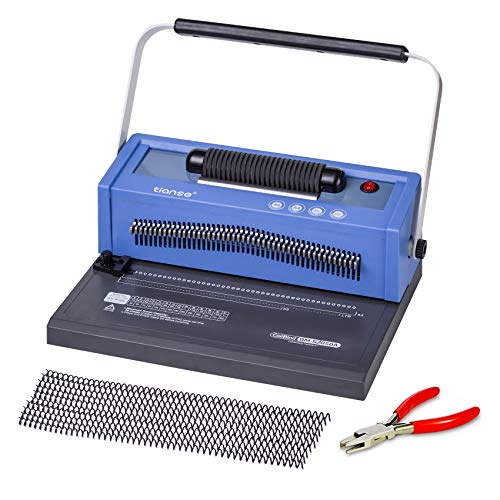
TIANSE Spiral Coil Binding Machine Review Summary
This TIANSE spiral coil binding machine review comes down to a simple fit question: do you need a coil binder that is more capable than a basic puncher, but still compact enough for a desk or shared office shelf?
If yes, this model makes a strong case because it combines manual punching, an electric coil inserter, adjustable pins, and a starter bundle in one package.
The standout value is not raw power.
It is the way the machine tries to reduce friction across the whole binding process.
The electric coil inserter is meant to speed up coil installation, the disengaging pins help you adapt hole patterns to different page sizes, and the adjustable side margin gives you more control over alignment.
That makes it more appealing for recurring reports, proposals, manuals, lesson packets, and other documents where consistency matters.
It is also the kind of tool that makes sense if you do not want to source every accessory separately.
The included 100-piece starter coil pack and plier add-ons lower the barrier to getting started.
At the same time, buyers should recognize that this is still a manual workflow machine.
It can be efficient, but it is not the same thing as a heavy-duty electric production binder.
Review Scorecard
| Category | Score | Editorial rationale |
|---|---|---|
| Ease of use | 8/10 | The electric coil inserter and full handle are designed to reduce effort during routine binding. |
| Flexibility | 9/10 | 46 disengaging pins, open-throat design, and margin adjustments support different paper sizes and formats. |
| Output quality | 8/10 | The machine is built for neat, professional-looking coil-bound documents when set up correctly. |
| Starter value | 8/10 | The included coils and plier make it easier to begin without assembling a separate kit. |
| Capacity fit | 7/10 | The listed 20-sheet punch capacity is useful for common office jobs, but not high-volume workloads. |
| Desk practicality | 7/10 | It is appropriate for a small office or home setup, though still a dedicated piece of equipment. |
Bottom line: this is a good buy for people who want a versatile, starter-friendly coil binder with a clear focus on adjustable document work rather than large-scale production.
Key Features and Specifications of TIANSE Spiral Coil Binding Machine
TIANSE positions this binder as a manual book-maker punch binder with an electric coil inserter.
The listing emphasizes faster coil insertion, less hand effort, and the ability to create clean, finished books at home or in an office.
The punch system uses 46 disengaging pins, which is useful when you need to match different paper formats without fighting a fixed hole pattern.
The supported layouts listed include Letter size with 42 holes, A4 with 46 holes, and A5 with 33 holes.
The open-throat design also helps with large or non-standard page sizes.
The margin adjustment range is another practical detail.
The listing gives 2.5 mm, 4.5 mm, and 6.5 mm options, which should help users get more consistent alignment for different document thicknesses and layouts.
That matters if you bind a lot of reports or manuals and want the holes to sit where they should every time.
Here are the most useful listed details:
| Feature | What the listing says |
|---|---|
| Binding style | 4:1 pitch plastic binding coils |
| Punch capacity | Up to 20 sheets of 80g paper at a time |
| Coil insertion | Electric coil inserter for faster installation |
| Hole control | 46 disengaging pins |
| Size support | Letter, A4, and A5 layouts |
| Margin options | 2.5 mm, 4.5 mm, and 6.5 mm |
| Included extras | 100 pcs 5/16” black PVC coil spines and coil crimper pliers |
| Handle design | Full handle for left- or right-handed punching |
One caution from the listing is compatibility: it explicitly says laminated paper cannot be punched.
That is an important limitation for buyers who work with presentation materials or protected covers and expect the machine to handle everything.
It also notes that the machine is shipped with lubricant applied, so the included oil-absorbing paper is part of the first-use setup.
Pros and Cons of TIANSE Spiral Coil Binding Machine
Pros
- Electric coil insertion reduces some of the manual effort involved in finishing documents.
- Disengaging pins make the punch pattern more adaptable across common page sizes.
- Adjustable side and edge guides help with cleaner alignment.
- The included coil spines and pliers improve out-of-box usefulness.
- The full handle supports both left- and right-handed operation.
Cons
- This is still a manual punch binder, so it is not built for industrial throughput.
- The listed 20-sheet punch capacity is adequate, but not especially high.
- Laminated paper is not supported for punching.
- Buyers who need frequent large-batch production may outgrow it.
For most buyers, the strongest pro is the combination of flexibility and convenience.
The main downside is that the machine is best understood as a compact office tool, not a high-speed production device.
Who Should Buy TIANSE Spiral Coil Binding Machine?
This TIANSE spiral coil binding machine is a good fit for home offices, teachers, admin staff, and small businesses that need to bind reports, handbooks, course packets, proposals, or internal manuals on a regular basis.
It is especially attractive if you want a machine that can adapt to different paper sizes and avoid the hassle of buying a completely separate coil insertion tool.
It also makes sense for buyers who care about presentation.
Coil binding is often chosen because it lays flat and looks organized, and this model is clearly designed with that outcome in mind.
You should probably skip it if your main need is rapid, high-volume binding or if you expect to work heavily with laminated sheets.
In that case, a more robust office machine or a different binding format may be a better fit.
Best for: small offices, schools, and solo operators who need adjustable coil binding with a starter kit.
Not ideal for: heavy production environments or buyers who need broad media compatibility.
Binding Workflow and Usability
Punching Control
The 46 disengaging pins matter because they let you tailor the punch pattern instead of forcing every format into the same layout.
For mixed document work, that is the sort of feature that saves time and reduces misalignment mistakes.
Margin and Alignment
The adjustable side margin and edge guide are the practical features most buyers will feel first.
If you bind documents with consistent margins, those controls help the finished stack look more deliberate and less improvised.
Coil Insertion
The electric coil inserter is the feature that separates this machine from a more basic manual punch-only setup.
It should make coil installation faster and less tedious, especially when you are handling batches of documents rather than a single occasional booklet.
Starter Kit Value
The included 100 coil spines and plier are useful because they reduce the number of extra decisions before first use.
Buyers who want immediate functionality will appreciate that the machine does not arrive empty-handed.
Alternatives to TIANSE Spiral Coil Binding Machine
If you want a different fit, look at Fellowes coil binding machines for a more established office-equipment brand.
For buyers who want another starter-friendly option, Akiles coil binding machines are worth comparing.
If you are deciding between binding styles rather than brands, comb binding machines are a useful alternative when you want a simpler punch-and-comb workflow.
For more compact office use, manual coil binding machines can also be compared directly against this TIANSE model.
Is TIANSE Spiral Coil Binding Machine Worth It?
Yes, if your goal is to make neat coil-bound documents with a machine that tries to balance convenience, adjustment, and starter value.
The electric coil inserter, disengaging pins, margin controls, and included consumables make it a sensible option for small offices and schools.
It is less compelling if you need very high volume or broad material compatibility, because the listed capacity and laminated-paper limitation define its boundaries.
For the right buyer, though, this is a practical and well-targeted coil binder that should handle everyday document work with less friction than a bare-bones unit.