The best smart home hubs bring your devices, sensors, lights, locks, and routines into one easier-to-manage system. The right choice depends on your preferred ecosystem, wireless standards, automation goals, and comfort with setup.
We compared 10 leading smart home hubs, including touchscreen control panels and advanced automation platforms, to help you find a hub that fits your home now and leaves room to expand later.
Best 10 Smart Home Hubs Picks for 2026
Best Overall
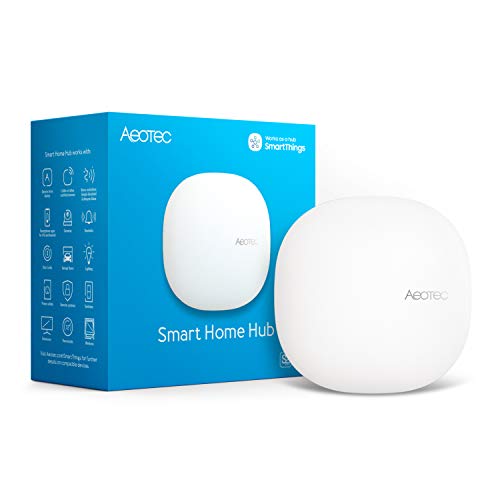
- Supports Matter, Zigbee, Z-Wave Plus, and SmartThings
- Works with Alexa and Google Home
- Wi-Fi and Ethernet connectivity
Best For: Mixed-brand SmartThings setups
Best Smart Display
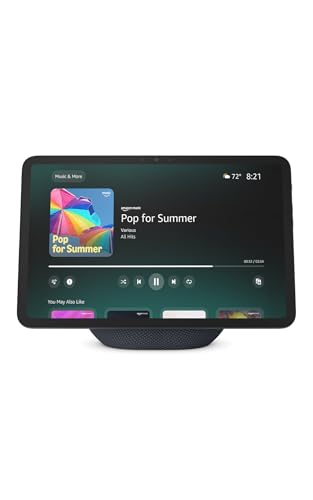
- 11-inch Full-HD touchscreen with spatial audio
- Built-in hub for Alexa-compatible devices
- Supports camera feeds and personalized routines
Best For: Alexa-centered homes wanting a visual control panel
Best for Privacy

- Home Assistant OS comes preinstalled
- Keeps home data on the device
- Expandable with Zigbee, Z-Wave, and Thread USB devices
Best For: Local automation and privacy-focused setups
Best Wall-Mounted Controller

- Customizable 8-inch smart home dashboard
- Built-in support for Matter, Zigbee, and Thread
- Controls cameras, security, routines, and devices
Best For: Families wanting a centralized Alexa control panel
Advanced Matter Hub

- Matter bridge with Zigbee and Thread support
- Local automations and encrypted storage
- IR control, PoE, and dual-band Wi-Fi
Best For: Aqara users building an advanced, locally focused Matter setup
Kitchen Command Center

- Large 21-inch Full HD smart display
- Alexa dashboard for smart home control
- Built-in Fire TV and video calling
Best For: Families wanting a visible kitchen organization and entertainment hub
Local Automation Hub

- Local processing keeps automations responsive
- Matter, Z-Wave, Zigbee, and Bluetooth support
- Advanced rules with no required subscription
Best For: DIY users building a fast, customizable multi-protocol smart home
Best Family Organization Hub

- 15.6-inch Full HD family dashboard
- Built-in Fire TV and video calling
- Voice, touch, and privacy controls
Best For: Families wanting organization, entertainment, and smart home control in one large display
Best Security Monitoring Hub
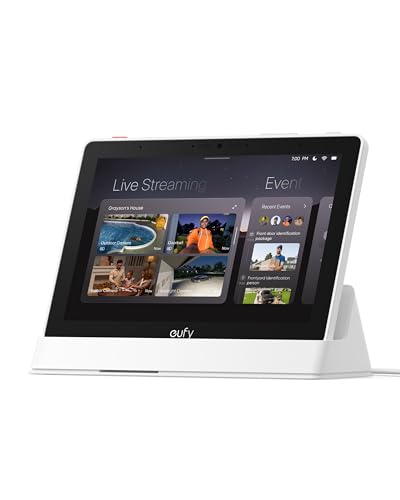
- 8-inch touchscreen for security alerts
- Four simultaneous live camera feeds
- Local event playback and daily summaries
Best For: eufy users who want an accessible central security monitor
Best Multi-Protocol Automation Hub

- Supports seven major connectivity technologies
- Compatible with 50,000-plus devices
- Local-first Flow automation and energy tools
Best For: Smart home enthusiasts managing diverse brands and advanced automations
Best Overall – Aeotec Smart Home Hub
The Aeotec Smart Home Hub is a strong choice for shoppers comparing smart home hubs with broad device compatibility. It supports Matter, Zigbee, Z-Wave Plus, Wi-Fi, SmartThings, Alexa, and Google Home, while offering both Wi-Fi and Ethernet setup.
Best For: Households building a mixed-brand smart home around SmartThings, Matter, Zigbee, or Z-Wave devices.
Pros:
- Supports Matter, Zigbee, Z-Wave Plus, Wi-Fi, and SmartThings devices.
- Works with Alexa and Google Home voice assistants.
- SmartThings automations can coordinate lights, sensors, switches, and other devices.
- Offers both Wi-Fi and wired Ethernet connectivity.
Cons:
- Designed for use in North America.
- Z-Wave Plus compatibility is specified for the V3 model.
Choose this hub if flexibility and protocol support matter more than having a display. Its SmartThings app and local automation support make it a practical foundation for a connected home.
Best Smart Display – Echo Show 11
The Echo Show 11 combines a large Full-HD touchscreen, Alexa control, and a built-in smart home hub. It is one of the more entertainment-focused smart home hubs, with on-screen controls for compatible devices alongside streaming, recipes, calendars, and video calls.
Best For: Homes that want a visible Alexa control center with entertainment, camera viewing, and everyday assistant features.
Pros:
- 11-inch Full-HD display provides more viewing area for controls and content.
- Built-in hub controls compatible lights, thermostats, cameras, and more without a separate hub.
- Supports routines triggered by temperature, presence, or visual identification through Omnisense technology.
- Includes spatial audio and a centered auto-framing camera for video calls.
Cons:
- Its smart home compatibility is centered on devices that work with Alexa.
- The larger display may be more than needed for shoppers seeking a compact hub.
The Echo Show 11 makes sense when a smart home controller should also serve as a household information and entertainment screen. Its display is especially useful for camera feeds, routines, recipes, and calendars.
Best for Privacy – Home Assistant Green
Home Assistant Green | Smart Home hub with Advanced Automation | Official Home Assistant Hardware
Check Price On AmazonHome Assistant Green is a compact option for shoppers who want smart home hubs focused on local control and advanced automation. Home Assistant OS is preinstalled, and household data stays on the device while USB ports allow expansion with Zigbee, Z-Wave, or Thread adapters.
Best For: Privacy-minded users who want flexible automations and local management of a broad smart home.
Pros:
- Comes with Home Assistant already installed for straightforward setup.
- Keeps home data on the device and supports viewing, sharing, and exporting it.
- Fanless, silent design uses only a couple of watts of power.
- USB expansion supports Z-Wave, Zigbee, and Thread devices.
Cons:
- Initial setup requires an Ethernet connection.
- Z-Wave, Zigbee, and Thread connectivity requires compatible USB devices.
Home Assistant Green is a good fit for users willing to build around Home Assistant rather than a voice-assistant ecosystem. Its local data approach, automation capabilities, and expansion options provide room to grow.
Best Wall-Mounted Controller – Echo Hub
The Echo Hub is a dedicated 8-inch control panel for shoppers comparing smart home hubs that can stay visible and accessible. Its customizable dashboard organizes devices, cameras, routines, and security controls, while the built-in hub supports Wi-Fi, Bluetooth, Zigbee, Matter, Sidewalk, and Thread devices.
Best For: Families wanting a centralized, wall-mountable Alexa dashboard for everyday smart home and security control.
Pros:
- Customizable dashboard lets users arrange device sections and resize controls.
- Built-in hub supports Wi-Fi, Bluetooth, Zigbee, Matter, Sidewalk, and Thread.
- Can manage compatible cameras, locks, alarms, sensors, and security systems.
- Supports wall mounting and optional power-over-Ethernet installation.
Cons:
- Tabletop stands, power-over-Ethernet adapters, and in-wall cable accessories are sold separately.
- Advanced Ring features require a compatible Ring subscription sold separately.
The Echo Hub is most compelling when quick visual access matters more than a general-purpose smart display. Its customizable layout and broad built-in protocol support make it a practical household command panel.
Advanced Matter Hub – Aqara Hub M3
The Aqara Hub M3 is a strong choice among smart home hubs for users building an advanced, locally focused setup. It combines Aqara Zigbee and Thread support with Matter bridging, IR appliance control, wired or wireless networking, and encrypted local storage.
Best For: Aqara users who want Matter integration, local automations, and flexible connectivity.
Pros:
- Supports Aqara Zigbee and Thread devices, plus advanced Matter bridge functionality.
- Edge Hub operation prioritizes local automations and supports migration from older Aqara hubs.
- Includes a 360-degree IR blaster with feedback and learning for compatible appliances.
- Offers dual-band Wi-Fi, PoE, USB-C power options, and 8GB of encrypted local storage.
Cons:
- The stated Zigbee capacity applies to Aqara Zigbee devices, not third-party Zigbee devices.
- A 2A USB power adapter is not included.
- Some cloud-based notifications still require an internet connection.
The M3 is particularly appealing if you already use Aqara products or want a Matter-ready hub with local control. Its IR and networking features add versatility, while ecosystem-specific limits are worth checking before purchase.
Kitchen Command Center – Echo Show 21
The Echo Show 21 takes a display-first approach to smart home hubs, pairing Alexa control with a large Full HD screen. It can keep calendars, shopping lists, weather, entertainment, camera feeds, and family photos visible in a central household location.
Best For: Families wanting a large kitchen-based dashboard with Alexa, Fire TV, and video calling.
Pros:
- The 21-inch 1080p display provides ample room for widgets and household information.
- Alexa smart home controls can be accessed by voice or through the dashboard.
- Built-in Fire TV supports services including Prime Video, Netflix, YouTube, and Apple TV.
- Centered auto-framing video calling, 3.3x zoom, and a wide field of view support clearer calls.
Cons:
- Its large display is better suited to a fixed counter or wall location than compact spaces.
- Some entertainment services may require subscriptions.
- It is primarily a visual Alexa hub rather than a dedicated multi-protocol automation controller.
The Echo Show 21 is a practical smart home hub for households that value visibility and shared access. Choose it when a large information and entertainment screen matters as much as device control.
Local Automation Hub – Hubitat Elevation C-8 Pro
The Hubitat Elevation C-8 Pro is designed for homeowners who want smart home hubs with local processing and broad device compatibility. It supports Matter, Z-Wave, Zigbee, and Bluetooth, while its rule engine enables detailed automations without a required subscription.
Best For: DIY-focused users who want fast local automations, multi-protocol support, and advanced rule building.
Pros:
- Runs automations locally so routines can continue when the internet is unavailable.
- Supports Matter 1.5, Z-Wave 800 Series Long Range, Zigbee 3.0, and Bluetooth.
- Works with Alexa, Google Home, and Apple HomeKit, with compatibility across 1,000-plus devices.
- Includes Rule Machine, AI-assisted routine building, dual external antennas, and no recurring subscription.
Cons:
- Its advanced rule engine and broad customization may require more setup than simpler hubs.
- It is designed primarily for automation control rather than serving as a smart display or entertainment device.
The C-8 Pro stands out for technically minded users who want reliability, privacy, and deep customization. Its local-first design and wide protocol support make it a flexible foundation for a growing DIY smart home.
Best Family Organization Hub – Echo Show 15
The Amazon Echo Show 15 is a smart home hub designed for households that want organization, entertainment, and device control in one prominent kitchen display. Its 15.6-inch Full HD screen supports customizable widgets, Fire TV, video calling, and a smart home dashboard.
Best For: Families that want a large shared dashboard for calendars, to-do lists, entertainment, and Alexa-enabled smart home controls.
Pros:
- Large 15.6-inch Full HD display with customizable family widgets
- Built-in Fire TV with access to services including Prime Video, Netflix, YouTube, and Apple TV
- Voice and touchscreen smart home controls, including camera-feed access
- Privacy controls include a microphone and camera-off button plus a physical shutter
Cons:
- Its large screen may require more wall or counter space than a compact hub
- Some entertainment services may require separate subscriptions
The Echo Show 15 is more than a conventional smart home hub: it is a central household display. Choose it if a visible family-planning screen and built-in entertainment matter as much as controlling compatible devices.
Best Security Monitoring Hub – eufy Smart Display E10
The eufy Smart Display E10 is a smart home hub focused on security monitoring. Its 8-inch touchscreen can show alerts and live feeds from compatible eufy cameras and doorbells, while local storage and HomeBase 3 features support quick access to recorded events.
Best For: Homes using eufy security devices that want a dedicated, easy-to-use display for live monitoring and event review.
Pros:
- Automatically displays live video and voice alerts for supported doorbell, lock, and camera activity
- Can show four simultaneous live feeds
- Automatically downloads historical events to local storage for replay
- Supports facial and package recognition through HomeBase 3, with daily event summaries
Cons:
- Its strongest features are centered on the eufy security ecosystem
- It is designed primarily for monitoring rather than broad cross-brand automation
The E10 makes sense when security visibility is the priority. Its touchscreen, automatic alerts, multi-camera view, and local event access provide a more focused monitoring experience than a general-purpose smart display.
Best Multi-Protocol Automation Hub – Homey Pro (2026)
Homey Pro (2026) is a smart home hub for connecting and automating devices across multiple wireless standards. It supports Z-Wave Plus, Zigbee, Wi-Fi, Bluetooth, infrared, Matter, and Thread, with local-first processing and compatibility spanning more than 50,000 devices from over 1,000 brands.
Best For: Enthusiasts building a broad, multi-brand smart home with advanced automations and local control.
Pros:
- Supports seven connectivity technologies, including Matter and Thread
- Works with more than 50,000 devices from over 1,000 brands
- Homey Flow and Advanced Flow enable detailed custom automations
- Local processing, energy tracking, sensor alerts, and reduced cloud dependency
Cons:
- The wide range of features may be more than casual users need
- Compatibility should be checked for specific brands and devices before buying
Homey Pro is the most automation-oriented option in this group. Its extensive protocol support and local-first approach make it a strong foundation for a growing smart home, particularly when devices come from several different ecosystems.
How We Picked the Best Smart Home Hubs
We focused on the features that matter most in daily use: device compatibility, support for standards such as Matter, Thread, Zigbee, and Z-Wave, automation depth, voice-assistant integration, interface quality, and setup requirements. We also considered whether each hub is best suited to beginners, privacy-conscious users, security systems, or highly customized installations.
Because “smart home hub” can mean either a dedicated automation controller or a display-based command center, this list includes both types. A touchscreen hub may be ideal for family control and visual dashboards, while a dedicated controller can offer more reliable local automation and broader configuration options.
Quick Comparison
| Best For | Look For |
|---|---|
| Simple voice-controlled homes | Alexa, Google Assistant, or another familiar ecosystem |
| Advanced automation | Local processing, powerful rules, and broad device support |
| Mixed-brand setups | Matter, Zigbee, Z-Wave, Thread, and strong integration support |
| Visual household control | A responsive display, customizable dashboards, and room-friendly placement |
| Security-focused control | Camera views, sensors, alarms, and dependable notifications |
Key Buying Factors for Smart Home Hubs
Compatibility and Wireless Standards
Check the radios and protocols built into the hub before buying. Matter improves cross-platform compatibility, but it does not replace every feature offered by Zigbee, Z-Wave, Thread, Wi-Fi, or infrared. If you already own devices, confirm that the hub supports their exact brands and connection types.
Local Control and Reliability
Some hubs depend heavily on cloud services, while others can run many automations locally. Local processing can improve response times, privacy, and reliability during an internet outage. However, cloud-connected systems may offer easier remote access, frequent updates, and broader integrations.
Automation and Expansion
Basic routines are enough for many homes, but advanced users should examine conditional rules, scenes, presence detection, energy monitoring, and third-party integrations. Also consider whether the platform has a clear upgrade path as your device collection grows.
Display, Voice, and Placement
For a display hub, evaluate screen size, viewing angle, audio quality, camera features, dashboard customization, and privacy controls. Larger screens work well in kitchens and shared spaces; compact panels are easier to place near an entryway or bedside.
Who Should Buy Which Smart Home Hubs?
Choose an Alexa-based Echo device if you want familiar voice control, accessible routines, and a simple household interface. A display model is especially useful for calendars, cameras, media, and visual controls.
Choose Home Assistant Green, Hubitat, or Homey Pro if advanced automation, local control, and extensive customization matter most. These platforms are better suited to enthusiasts willing to spend more time configuring their systems.
Aeotec and Aqara are strong choices for shoppers building around specific wireless standards or seeking a flexible bridge between device ecosystems. For security-centered households, a dedicated security display may be the most convenient option. Before purchasing, list your current devices, identify the protocols they use, and decide whether you prioritize simplicity, privacy, expandability, or a polished touchscreen experience.