The best wireless smart home hubs bring devices from different brands together, making it easier to automate lighting, sensors, locks, cameras, and more from one control system.
This roundup compares 10 leading options, from focused lighting bridges and affordable gateways to advanced Matter controllers and powerful automation platforms.
Best 10 Wireless Smart Home Hubs Picks for 2026
Best Overall
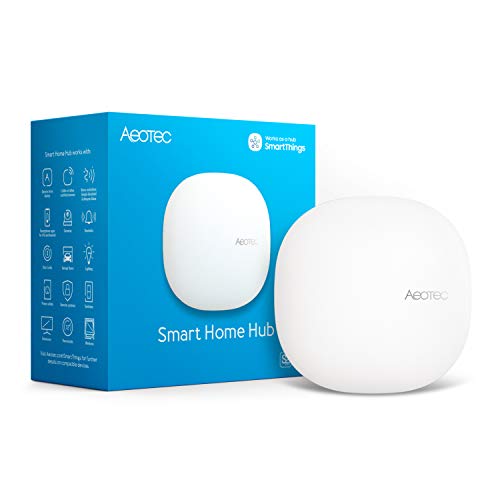
- Supports Matter, Z-Wave, Zigbee, and SmartThings
- Works with Alexa and Google Assistant
- Offers Wi-Fi or Ethernet setup
Best For: Multi-brand smart homes needing broad compatibility
Best for Hue Lighting

- Supports 150+ Hue lights and accessories
- Stores up to 500 personalized scenes
- Adds Hue MotionAware movement automation
Best For: Large Philips Hue lighting systems
Best Touchscreen Controller

- 8-inch customizable smart-home dashboard
- Built-in Zigbee, Matter, Thread, and more
- Controls cameras, routines, and security devices
Best For: Families wanting visual Alexa-based control
Best for Local Control

- Home Assistant OS is preinstalled
- Keeps home data on the device
- Supports USB expansion for Z-Wave, Zigbee, and Thread
Best For: Privacy-minded users building advanced automations
Best for Tapo Ecosystems

- Supports up to 64 sensors or switches plus four cameras or doorbells
- Built-in smart alarm and chime functionality
- Local microSD storage up to 512GB
Best For: Tapo users expanding cameras, doorbells, sensors, and buttons
Best for Lutron Lighting
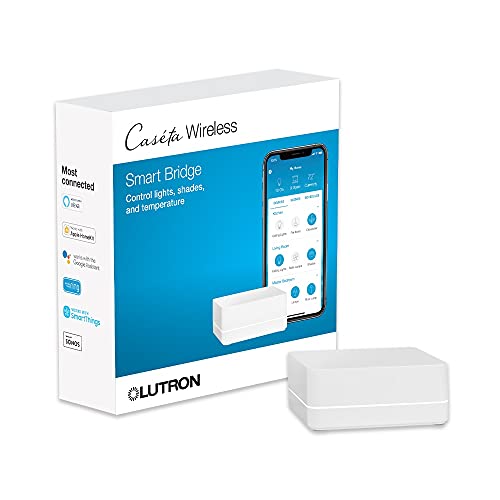
- Controls up to 75 Caseta devices
- Works with Alexa, Apple HomeKit, Google Assistant, Ring, and Sonos
- Uses Clear Connect technology alongside Wi-Fi devices
Best For: Lutron Caseta lighting installations with major smart-home platforms
Best for Advanced Local Automation

- Combines Zigbee, Thread, Matter bridging, and IR control
- Supports local automations through Edge Hub operation
- Offers dual-band Wi-Fi, PoE, and encrypted local storage
Best For: Advanced Aqara setups requiring local control and multi-protocol support
Best Tuya Multi-Protocol Value

- Combines Zigbee 3.0 and Bluetooth mesh
- Supports up to 128 Tuya devices
- Alexa and Google Home voice control
Best For: Tuya households using Zigbee and Bluetooth mesh devices
Best Matter Integration
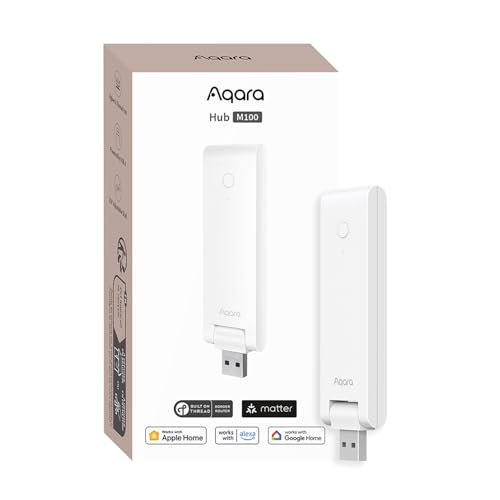
- Bridges Aqara Zigbee devices to Matter ecosystems
- Supports Thread and local automation
- Wi-Fi 6 and WPA3 connectivity
Best For: Aqara and Matter users building a locally responsive setup
Best Easy Tuya Setup
MOES ZigBee and Bluetooth Gateway
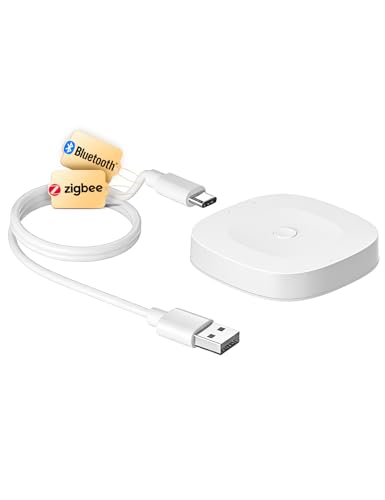
- Plug-in setup with no wiring required
- Supports up to 128 Tuya devices
- Includes local automation and alarm features
Best For: Tuya users prioritizing simple installation and app control
Best Overall – Aeotec Smart Home Hub
The Aeotec Smart Home Hub is a versatile choice for wireless smart home hubs, combining SmartThings control with Matter, Z-Wave, Zigbee, and Wi-Fi compatibility. It supports app- and voice-based control, custom routines, and either Wi-Fi or Ethernet setup.
Best For: Homes combining devices from multiple smart-home ecosystems.
Pros:
- Supports Matter, SmartThings, Z-Wave Plus, Zigbee, and Wi-Fi devices.
- Works with Alexa and Google Assistant for voice control.
- Supports custom automations, with many routines able to run locally.
- Offers both Wi-Fi and Ethernet connectivity.
Cons:
- Designed for use in North America.
- Z-Wave Plus support applies to the V3 model.
Choose this hub if broad protocol support and flexible SmartThings automation matter more than having a built-in touchscreen. Its combination of wired and wireless networking also makes it adaptable to different installations.
Best for Hue Lighting – Philips Hue Bridge Pro
The Philips Hue Bridge Pro is a lighting-focused option among wireless smart home hubs. It unlocks Philips Hue control features, supports more than 150 lights and accessories, and adds faster processing, expanded memory, and advanced scene and automation capacity.
Best For: Philips Hue households expanding their lighting system.
Pros:
- Supports 150+ Philips Hue lights and accessories.
- Stores up to 500 personalized scenes and more automations.
- Hue MotionAware can use three Hue devices to detect movement without separate motion sensors.
- Includes enhanced security controls through the Zigbee Trust Center.
Cons:
- Its listed compatibility and features are centered on Philips Hue lighting.
- Requires corded power and an Ethernet connection.
This is a strong fit for buyers already invested in Hue or planning a large Hue installation. Its extra capacity is most useful when you have many lights, accessories, scenes, and automations to manage.
Best Touchscreen Controller – Amazon Echo Hub
The Amazon Echo Hub stands out among wireless smart home hubs by pairing a wall-mountable 8-inch touchscreen with Alexa control. Its customizable dashboard can display devices, cameras, routines, and security controls, while built-in support covers Wi-Fi, Bluetooth, Zigbee, Matter, Sidewalk, and Thread devices.
Best For: Families wanting a shared, visual control panel for Alexa-compatible devices.
Pros:
- Provides a customizable dashboard for devices, cameras, routines, and more.
- Built-in hub supports Wi-Fi, Bluetooth, Zigbee, Matter, Sidewalk, and Thread.
- Can help manage compatible security systems, cameras, locks, alarms, and sensors.
- Supports wall mounting and optional power-over-Ethernet installation.
Cons:
- Power-over-Ethernet, in-wall cable hardware, and tabletop stands are sold separately.
- Some Ring camera features require Alexa+ and a compatible Ring subscription.
Consider the Echo Hub when at-a-glance touchscreen control is as important as hub connectivity. It is particularly practical in shared spaces where multiple household members need quick access to routines and security controls.
Best for Local Control – Home Assistant Green
Home Assistant Green | Smart Home hub with Advanced Automation | Official Home Assistant Hardware
Check Price On AmazonHome Assistant Green is a privacy-focused option among wireless smart home hubs, with Home Assistant OS preinstalled for straightforward setup. It keeps home data on the device, supports advanced automations, and can be expanded with USB adapters for Z-Wave, Zigbee, and Thread.
Best For: Users who want flexible automation and local control over their smart home data.
Pros:
- Comes with Home Assistant already installed.
- Supports advanced automations across devices and routines.
- Keeps home data on the local device for viewing, sharing, and exporting.
- Offers USB expansion for Z-Wave, Zigbee, and Thread connectivity.
Cons:
- Initial setup requires Ethernet and the included power supply.
- Z-Wave, Zigbee, and Thread connectivity requires separate USB devices.
Home Assistant Green is a compelling foundation for technically minded households that want one central automation platform without relying on a collection of separate apps. Its USB expansion keeps the initial hardware simple while allowing future protocol additions.
Best for Tapo Ecosystems – Tapo H200 Smart Hub
The Tapo H200 is a practical choice for shoppers building wireless smart home hubs around Tapo cameras, video doorbells, sensors, and buttons. It connects up to 64 switches, sensors, or buttons plus four cameras or doorbells, while requiring a 2.4GHz Wi-Fi connection.
Best For: Tapo users who want a central hub with alarm, chime, local video storage, and voice-control features.
Pros:
- Supports up to 64 switches, sensors, or buttons and four cameras or doorbells.
- Acts as a smart alarm or chime for compatible cameras, doorbells, and sensors.
- Supports microSD video storage up to 512GB, with the card sold separately.
- Works with Amazon Alexa and Google Home for voice control.
Cons:
- Requires 2.4GHz Wi-Fi.
- Compatibility is centered on Tapo devices.
- microSD card is not included.
Choose the H200 if your smart-home setup already uses Tapo products and you want straightforward expansion, longer-lasting low-power sensors, and an integrated chime. It is less suited to shoppers seeking a broadly brand-agnostic hub.
Best for Lutron Lighting – Caseta Smart Hub
The Lutron Caseta Smart Hub is a focused option among wireless smart home hubs for coordinating Caseta lighting with major smart-home platforms. It connects to a router, uses Lutron’s Clear Connect technology for compatible devices, and supports up to 75 Caseta devices.
Best For: Homeowners who want centralized Lutron lighting control with Alexa, Apple HomeKit, Google Assistant, Ring, Sonos, or Serena shades.
Pros:
- Supports up to 75 Caseta devices.
- Works with Alexa, Apple HomeKit, Google Assistant, Ring, Sonos, and Serena shades.
- Clear Connect technology avoids competing with Wi-Fi-connected devices.
- Setup involves connecting it to a router and following the Lutron app instructions.
Cons:
- Designed primarily around Lutron Caseta devices and compatible integrations.
- Caseta dimmers and switches are sold separately.
- Requires a wired connection to a Wi-Fi router.
The Caseta hub makes the most sense when reliable, expandable Lutron lighting control is the priority. Its broad platform compatibility adds flexibility, but it is not the strongest fit for shoppers seeking one hub for a wide range of unrelated device standards.
Best for Advanced Local Automation – Aqara Smart Home Hub M3
The Aqara Smart Home Hub M3 is an advanced pick among wireless smart home hubs, combining Zigbee, Thread, Matter bridging, IR control, and local automation. It supports wired or wireless networking, including dual-band Wi-Fi and PoE, and is designed for users who want a more capable multi-protocol foundation.
Best For: Experienced smart-home users who need local automations, Matter integration, Aqara device migration, and flexible network connectivity.
Pros:
- Supports up to 127 Aqara Zigbee devices and 127 Thread devices, with repeaters needed for Thread expansion.
- Functions as an Edge Hub for local automations and supports Matter bridging.
- Includes a 360-degree IR blaster with feedback and learning for compatible traditional remotes.
- Offers dual-band Wi-Fi, PoE, USB-C power options, and 8GB of encrypted local storage.
Cons:
- Third-party Zigbee devices are not included in the stated 127-device Zigbee support.
- A 2A USB power adapter is not included.
- Some cloud notifications and Matter functionality still depend on the integration and internet connection.
The M3 is a strong fit for technically minded households that value local control and multiple connectivity options. Its advanced features bring more setup considerations, so simpler Aqara installations may not need its full capabilities.
Best Tuya Multi-Protocol Value – Smart Multi-Mode Gateway
For shoppers comparing wireless smart home hubs, this compact gateway is a practical choice when your setup uses Tuya or Smart Life devices across Zigbee and Bluetooth mesh. It connects compatible devices to a 2.4GHz network and adds app-based remote control plus Alexa and Google Home voice control.
Best For: Tuya households that need one hub for Zigbee and Bluetooth mesh devices.
Pros:
- Supports Zigbee 3.0 and Bluetooth mesh in one gateway.
- Works with Smart Life/Tuya app remote, group, and device controls.
- Supports voice control through Alexa and Google Home.
- Can support up to 128 Tuya smart home devices.
Cons:
- Supports Tuya/Smart Life devices only.
- Requires a 2.4GHz network.
This is a straightforward bridge for a Tuya-centered home, especially if you want broad device capacity and mixed Zigbee/Bluetooth support without using separate gateways.
Best Matter Integration – Aqara Smart Hub M100
Among wireless smart home hubs, the Aqara M100 stands out for Matter bridging and local automation. It connects Aqara Zigbee and Thread devices, while helping expose compatible Aqara features to ecosystems such as Apple Home, Amazon Alexa, and Home Assistant.
Best For: Aqara users who want Matter integration, Thread support, and local automations.
Pros:
- Supports Aqara Zigbee devices and Thread devices.
- Acts as a Matter bridge for compatible smart home ecosystems.
- Local Zigbee and Matter automations can continue without Wi-Fi or cloud access.
- Uses 2.4GHz Wi-Fi 6 with WPA3 security.
Cons:
- Does not support third-party Zigbee devices.
- Supports up to 20 Aqara Zigbee and 20 Thread devices.
- 5V⎓0.5A power adapter is required but not included.
The M100 is a strong fit for a growing Aqara or Matter installation, though buyers should confirm device compatibility and plan for continuous power and a suitable router location.
Best Easy Tuya Setup – MOES ZigBee and Bluetooth Gateway
This MOES gateway is one of the more accessible wireless smart home hubs for Tuya users. It combines Zigbee 3.0 and Bluetooth mesh, supports Smart Life or MOES app control, and is designed for quick plug-in installation without wiring or advanced technical skills.
Best For: Tuya users who want simple setup, app control, and local automation features.
Pros:
- Combines Bluetooth mesh and Zigbee 3.0 communication.
- Supports up to 128 Tuya smart home devices.
- Offers app control and Alexa or Google Assistant voice control.
- Supports local scenarios, local automation, and security functions.
Cons:
- Works only with Tuya smart devices.
- Uses a Type-C plug-in design and requires a suitable power connection.
Choose this hub if ease of installation and broad Tuya compatibility matter most. Its local automation and alarm features add useful flexibility, but it is not intended as a universal hub for unrelated smart-home brands.
How We Picked the Best Wireless Smart Home Hubs
We focused on hubs that provide a meaningful central role in a smart home rather than simple wireless accessories. Our evaluation considered protocol support, compatibility, automation capabilities, app quality, voice-assistant integration, setup requirements, and long-term flexibility.
The selection includes broad platforms such as Home Assistant, SmartThings-compatible hardware, and Matter controllers, alongside specialized choices for Philips Hue, Lutron Caséta, Aqara, Tapo, and Tuya ecosystems. This makes it easier to match a hub to your current devices instead of choosing based only on features.
Quick Comparison
| Best For | Recommended Type | What to Look For |
|---|---|---|
| Mixed-brand smart homes | Multi-protocol hub | Matter, Zigbee, Z-Wave, and strong platform support |
| Advanced automation | Local-control platform | Powerful rules, integrations, and dependable offline operation |
| Smart lighting | Dedicated lighting bridge | Reliable bulb control, scenes, and manufacturer compatibility |
| Simple voice control | Display or assistant hub | Easy setup, visual controls, and broad device support |
| Budget ecosystems | Brand-specific gateway | App compatibility and support for your existing devices |
Key Buying Factors for Wireless Smart Home Hubs
Protocol and Device Compatibility
Check which wireless standards the hub supports before buying. Matter can improve cross-brand compatibility, while Zigbee and Z-Wave remain valuable for sensors, switches, and other low-power devices. Some hubs support only one manufacturer’s ecosystem, so confirm compatibility with every device you plan to connect.
Local Versus Cloud Control
Local processing can make automations faster and more dependable during an internet outage. Cloud-based systems may offer easier remote access and broader integrations, but they can depend more heavily on an active account and vendor services.
Automation and Expansion
Consider whether you need basic schedules or complex routines based on motion, time, presence, temperature, and device states. Also check whether the hub can expand with additional accessories, integrations, and future Matter products.
Network and Setup Requirements
Review Wi-Fi band requirements, Ethernet needs, app setup, and placement recommendations. A central location with good wireless coverage generally improves reliability, while dedicated bridges may need to remain connected to your router.
Who Should Buy Which Wireless Smart Home Hubs?
Choose a multi-protocol hub if your home includes devices from several brands or you want room to grow. Pick a dedicated lighting bridge when dependable lighting scenes matter more than broad automation. Home Assistant-style hardware suits experienced users who want deep customization and local control.
A display-focused hub is a practical choice for households that prefer visual controls and voice commands. Aqara, Tapo, Lutron, Philips Hue, and Tuya-compatible gateways are best when most of your devices already belong to that ecosystem. Before purchasing, list your current devices, preferred voice assistant, wireless network limits, and the automations you actually expect to use.