The right channel strip can turn a raw vocal into a cleaner, more controlled signal before it reaches your interface or recorder. The best choice depends on your microphone, room, recording style, and how much hands-on processing you want.
We selected 10 channel strips for vocals ranging from accessible podcast and home-studio processors to premium studio hardware, with attention to preamp character, dynamics control, EQ, connectivity, and everyday usability.
Best 10 Channel Strips for Vocals Picks for 2026
Best All-Around Value

- Compression, de-esser, enhancer, and gate
- XLR mic and 1/4-inch line inputs
- Loop-out and rack-mountable design
Best For: Home studios and live vocal setups needing essential processing
Best Transformer Color
Chameleon Labs 7603 Preamplifier

- Transformer-coupled microphone and line preamp
- Inductor-based three-band EQ
- Switchable impedance and highpass filter
Best For: Vocal tracking where preamp character and EQ matter most
Best Digital Connectivity

- Tube preamp with warmth and definition
- Compressor, expander, de-esser, and gate
- ADAT, AES/EBU, S/PDIF, TOSLink, and USB
Best For: Studios needing tube tone and flexible digital routing
Best Premium Processing

- Discrete preamp with Lundahl I/O transformers
- Transient Designer and tube saturation
- Integrated compressor in a mono channel strip
Best For: Premium vocal chains focused on analog tone and processing
Tube-Controlled Vocal Chain
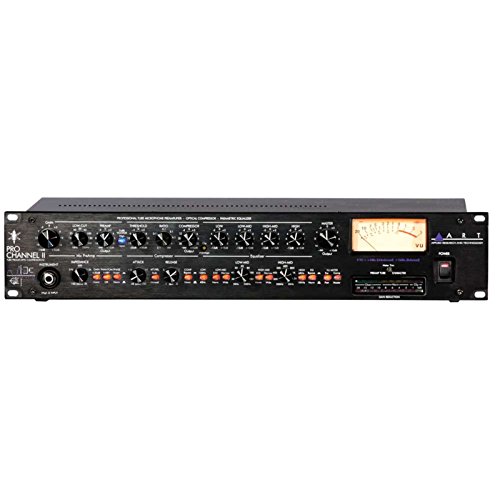
- Tube preamp, compressor, and EQ in one channel
- Selectable optical/tube compression
- Selectable VU metering for key output stages
Best For: Hands-on tube-style vocal tracking and tone shaping
Classic Class A Vocal Front End

- Class A preamp/EQ channel strip
- 24-bit/192kHz AD/DA conversion
- USB, ADAT, insert, and headphone connectivity
Best For: Computer-based studios needing premium vocal input and I/O
Flexible Tube Vocal Processor

- Class A 12AX7 tube preamp
- VCA compressor with auto attack/release
- Three-band EQ with parametric mid band
Best For: Rack-based vocal tracking with broad analog tone control
Compact SSL Tracking Power
SSL SiX Channel 500 Series Bundle

- Three SSL SiX Channel modules
- Mic preamp, EQ, and dynamics
- Compatible with standard 500 Series racks
Best For: Expanding a 500 Series studio setup with multiple SSL channels
Tube Color and Control
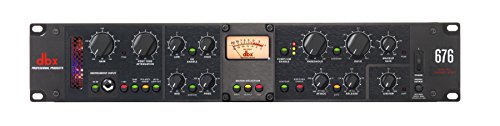
- High-voltage Class-A tube preamp
- Compressor/limiter and sweepable-mid EQ
- Rack-mountable 2U design with VU meter
Best For: Vocal recording that benefits from tube tone and onboard shaping
Analog Noise Cleanup
Rodweil RO05 Noise Gate Channel Strip

- Reduces ambient and preamp-floor noise
- Fully analog, near-zero-latency processing
- Compact unit with XLR-to-TRS cable
Best For: Cleaning vocal line-level signals after a microphone preamp
Best All-Around Value – dbx 286s Vocal Channel Strip
For shoppers comparing channel strips for vocals, the dbx 286s is a practical one-channel option with microphone preamplification, compression, de-essing, enhancement, and expander/gate processing in a rack-mountable unit. Its controls target common vocal-recording tasks, from managing dynamics to reducing sibilance.
Best For: Home studios, vocalists, and live setups that want several essential processors in one affordable rack unit.
Pros:
- Combines compression, de-essing, enhancer, and expander/gate processing.
- Dedicated de-esser helps reduce harsh high frequencies and sibilance.
- Accepts XLR microphone input and 1/4-inch line-level sources.
- Loop-out and insert connections support additional external processing.
Cons:
- It is a single-channel unit.
- Its digital connectivity is limited compared with the ART VoiceChannel.
The dbx 286s is a strong starting point when you need straightforward vocal shaping without assembling multiple processors. Metering LEDs and rack compatibility add practical convenience for studio or live use.
Best Transformer Color – Chameleon Labs 7603 Preamplifier
The Chameleon Labs 7603 is a one-channel microphone and line preamplifier for buyers who want a more focused front end among channel strips for vocals. It pairs input and output transformers with an inductor-based three-band EQ, switchable microphone impedance, and a highpass filter.
Best For: Vocal-recording setups that prioritize transformer-based tone and hands-on equalization over a larger collection of dynamics processors.
Pros:
- Uses input and output transformers for its stated British-sounding profile.
- Provides a three-band inductor-based EQ.
- Includes switchable microphone impedance and a highpass filter.
- Works as a microphone or line preamplifier.
Cons:
- The supplied notes do not list a compressor, de-esser, or gate.
- It offers one channel.
- Its 15.4-pound weight may be substantial for some installations.
The 7603 makes the most sense when preamp character and EQ are your priorities. If you need built-in vocal dynamics and sibilance control, a more feature-dense channel strip may be a better match.
Best Digital Connectivity – ART VoiceChannel
The ART VoiceChannel combines a tube preamp with compressor, expander, de-esser, and gate sections, making it a versatile choice among channel strips for vocals. Its digital outputs include ADAT, AES/EBU, S/PDIF, and TOSLink, while USB provides direct connection to a computer or laptop.
Best For: Recording setups that need tube preamp warmth, integrated vocal dynamics control, and multiple digital-output options.
Pros:
- Tube preamp design is intended to provide warmth and definition.
- Includes compressor, expander, de-esser, and gate processing.
- Offers ADAT, AES/EBU, S/PDIF, TOSLink, and USB connectivity.
- Supports sample rates up to 192 kHz.
Cons:
- It is a single-channel unit.
- Its broad feature set may be more than a basic vocal setup requires.
VoiceChannel is the most connectivity-focused option in this group. It is particularly compelling when your vocal chain needs both analog tube character and flexible digital integration with a computer or interface.
Best Premium Processing – SPL Channel One MK3
The SPL Channel One MK3 is a premium mono channel strip for buyers seeking a more specialized vocal front end. Its supplied features include a discrete preamp, Lundahl input and output transformers, Transient Designer processing, tube saturation, and a compressor.
Best For: Vocal-recording chains where premium transformer-coupled preamplification, transient shaping, saturation, and compression are the main priorities.
Pros:
- Features a discrete preamp and Lundahl input/output transformers.
- Includes Transient Designer processing for transient shaping.
- Provides tube saturation and a compressor in the signal path.
- Designed as a dedicated mono channel strip.
Cons:
- The supplied notes do not list a de-esser, gate, or expander.
- It is a single-channel unit.
- Its premium feature focus may not suit buyers seeking broad connectivity or a budget solution.
The Channel One MK3 is aimed at users who value specialized analog processing over an extensive list of connections. Consider it when transformer tone, saturation, transient control, and compression align with your vocal workflow.
Tube-Controlled Vocal Chain – ART Pro Channel II
ART Pro Channel II Microphone Preamp/Compressor/EQ Professional Tube Based Selectable VU Metering
Check Price On AmazonFor singers who want hands-on tone shaping, the ART Pro Channel II is a versatile choice among channel strips for vocals. It combines a tube microphone preamp, selectable optical/tube compression, and tube EQ in three independent modules, with selectable VU metering for monitoring different stages.
Best For: Vocal recording setups that prioritize tube coloration, flexible compression, and tactile controls.
Pros:
- Combines tube mic preamp, compressor, and EQ in one channel.
- Offers switchable optical and tube compressor modes.
- Provides selectable VU metering for mic pre, compressor, or main output.
- Includes XLR and 1/4-inch TRS/TS connectivity.
Cons:
- Its 13.4-pound weight and rack-style dimensions may be substantial for compact setups.
- It is a single-channel unit, so it is less suited to simultaneous multi-source recording.
The ART Pro Channel II stands out when you want an all-in-one analog front end with multiple tube-based stages. Its independent modules and selectable metering make it practical for shaping vocals while tracking.
Classic Class A Vocal Front End – Neve 1073SPX-D
The Neve 1073SPX-D is a strong option among channel strips for vocals when recording quality and studio integration matter. It combines a Class A preamp/EQ channel strip with a USB audio interface, 24-bit/192kHz conversion, insert send/return, headphone amplification, and ADAT I/O.
Best For: Computer-based vocal studios that need a premium preamp/EQ channel strip with direct USB and ADAT connectivity.
Pros:
- Uses Class A circuitry in the preamp/EQ channel strip.
- Supports up to 24-bit/192kHz AD/DA conversion.
- Includes USB connectivity, insert send/return, headphone amp, and ADAT I/O.
- Works with Windows, macOS, and major DAWs including Pro Tools, Logic Pro, and Ableton Live.
Cons:
- At 16.3 pounds, it is a comparatively substantial piece of studio hardware.
- Its feature set may be more than needed for a simple analog-only vocal chain.
Choose the 1073SPX-D if you want the channel-strip concept combined with modern computer connectivity. Its conversion, monitoring, and expansion features make it especially useful as a central vocal recording interface.
Flexible Tube Vocal Processor – PreSonus STUDIOCHANNEL
The PreSonus STUDIOCHANNEL is a practical pick among channel strips for vocals, combining a high-voltage Class A 12AX7 tube preamplifier with a VCA compressor and three-band EQ. Its mic, line, and instrument inputs, plus rack-mountable steel chassis, suit both project and professional studio environments.
Best For: Vocalists and engineers who want tube preamp drive, flexible compression, and parametric EQ in a rack-ready unit.
Pros:
- Combines a Class A tube preamp, VCA compressor, and three-band EQ.
- Includes phantom power, polarity reverse, high-pass filtering, and a -20 dB pad.
- Provides variable-Q mid EQ plus shelving/peak options for the high and low bands.
- Accepts microphone, line, and instrument sources.
Cons:
- Its supplied warranty is one year from purchase through an authorized dealer.
- The analog-focused design does not list USB, ADAT, or other computer-audio connectivity.
The STUDIOCHANNEL is well suited to shaping vocals before they reach the recorder. Its combination of tube drive, adaptable EQ, and automatic or manually controlled VCA compression gives a broad range of tracking options.
Compact SSL Tracking Power – SSL SiX Channel 500 Series Bundle
For engineers building a multi-channel setup, these channel strips for vocals provide SSL console-style processing in a three-module 500 Series bundle. Each unit combines a mic preamp, EQ, and dynamics processing for tracking, mixing, or live use.
Best For: Studios needing three rack-ready SSL channel strips for expanding a compatible 500 Series system.
Pros:
- Includes three SiX Channel 500 Series modules.
- Combines mic preamp, EQ, and dynamics processing.
- Fits standard 500 Series rack enclosures.
Cons:
- Requires a compatible 500 Series rack enclosure.
- The three-pack may be more hardware than a smaller setup needs.
This bundle is a practical choice when you want multiple SSL-branded channels and flexible 500 Series integration rather than a single standalone rack unit.
Tube Color and Control – dbx 676FX Tube Channel Strip
The dbx 676FX is a rack-mountable channel strip for vocals built around a high-voltage Class-A tube preamp. Its compressor/limiter, sweepable-mid parametric EQ, VU meter, and flexible XLR and 1/4-inch connectivity support detailed tracking and live signal control.
Best For: Vocalists, producers, and serious hobbyists who want tube character with onboard dynamics and EQ.
Pros:
- 250-volt tube design supports warm, clear, or dirtier tones.
- Includes compressor/limiter and three-band parametric EQ.
- Offers front-panel instrument input, side-chain insert, and XLR/1/4-inch connections.
- Rack-mountable 2U format includes a VU meter.
Cons:
- Its 2U rack format requires suitable rack space.
- Tube coloration may not suit users seeking an entirely transparent preamp.
Choose this model when tonal shaping is a priority and you want preamp, compression, limiting, and EQ in one substantial rack unit.
Analog Noise Cleanup – Rodweil RO05 Noise Gate Channel Strip
The Rodweil RO05 is a compact analog channel-strip processor focused on reducing ambient and preamp-floor noise in home studios, podcasts, and stage setups. It is designed for line-level use after a mic preamp, helping preserve vocal continuity without digital conversion or plugin subscriptions.
Best For: Home-studio vocalists and podcasters seeking low-latency analog noise reduction after a microphone preamp.
Pros:
- Targets ambient background noise and preamp floor noise.
- Uses a fully analog, balanced circuit for nearly zero latency.
- Compact design includes an XLR-to-TRS cable.
- Designed to provide smoother signal continuity than a basic cutoff-style gate.
Cons:
- It must be placed after a mic preamp or in a line-level chain.
- A microphone should not be connected directly to the unit.
- Higher power consumption and a slight power-off circuit echo are noted in the product information.
This is best viewed as a specialized analog noise-control tool, not a complete microphone preamp; correct signal-chain placement is essential for proper operation.
How We Picked These Channel Strips for Vocals
We focused on the features that matter most when recording or performing vocals: microphone preamp quality, useful compression, de-essing or high-frequency control, noise management, EQ flexibility, metering, and reliable connections. We also considered whether each unit suits a home studio, project room, live setup, or professional tracking environment.
Because vocalists have different needs, this list includes tube and solid-state designs, single-channel processors, 500 Series hardware, digital-output models, and straightforward voice-processing units. The goal is not to identify one universal winner, but to make it easier to match a channel strip to your microphone, workflow, and budget.
Quick Comparison
| Best For | Look For | Typical Strength |
|---|---|---|
| Podcasting and streaming | Simple controls, de-essing, gating, and low noise | Fast, consistent voice processing |
| Home-studio vocals | Mic preamp, compressor, EQ, and flexible routing | Complete front-end control |
| Character vocals | Tube circuitry or transformer-style coloration | Added warmth and harmonic detail |
| Professional tracking | High-quality preamp, precise dynamics, and strong metering | Clean gain staging and repeatable results |
| Expandable systems | 500 Series format or digital outputs | Integration with larger studio rigs |
Key Buying Factors for Channel Strips for Vocals
Preamp Character and Gain
Check whether you want transparent gain or audible coloration. Condenser microphones may need phantom power, while low-output dynamic and ribbon microphones benefit from generous, quiet gain. A usable input stage should remain clean at the levels your microphone requires.
Compression and De-Essing
Compression helps keep vocal levels controlled, but useful controls matter more than a long feature list. Look for adjustable threshold, ratio, attack, release, and makeup gain when you want precise results. A dedicated de-esser can reduce harsh sibilance before recording.
EQ, Filtering, and Noise Control
High-pass filtering can reduce rumble and handling noise, while parametric or semi-parametric EQ gives you more control over muddiness, nasal tones, and presence. Gates and expanders can help in noisy rooms, but aggressive settings may cut off quiet words or breaths.
Connections and Workflow
Confirm the unit has the inputs and outputs your setup requires, including XLR, line-level, insert, USB, ADAT, or 500 Series connections. Good metering is especially useful when recording processed vocals, since excessive input gain or compression cannot always be repaired later.
Tube Versus Solid-State Design
Tube units can provide warmth and harmonic saturation, while solid-state circuits often offer speed, clarity, and lower maintenance. Neither is automatically better; choose based on whether you want color, transparency, or both through flexible controls.
Who Should Buy Which Channel Strips for Vocals?
Choose a simple voice channel strip if you mainly record podcasts, streams, voiceovers, or live announcements and want quick control over noise, dynamics, and clarity.
Choose a versatile home-studio model if you record sung vocals regularly and need preamp gain, compression, EQ, and monitoring control in one front-end unit.
Choose a tube-based strip if your microphone and voice benefit from added thickness or harmonic character, and you are comfortable adjusting levels carefully.
Choose a premium or expandable model if you need refined metering, dependable construction, multiple routing options, digital integration, or a unit that can remain part of a professional recording chain for years.
Before buying, compare the strip’s maximum gain, noise performance, required connections, physical format, and control layout with your existing microphone and interface. The best Channel Strips for Vocals improve your recording at the source without forcing you into a complicated workflow.