The best OLED televisions for gaming combine near-instant pixel response, excellent contrast, and smooth motion with the smart features modern consoles and PCs demand.
Our 2026 roundup includes premium LG and Samsung OLEDs, newer Roku and Sony options, plus QLED and Mini LED alternatives for shoppers prioritizing brightness or value.
Best 10 Oled Televisions for Gaming Picks for 2026
Best Overall
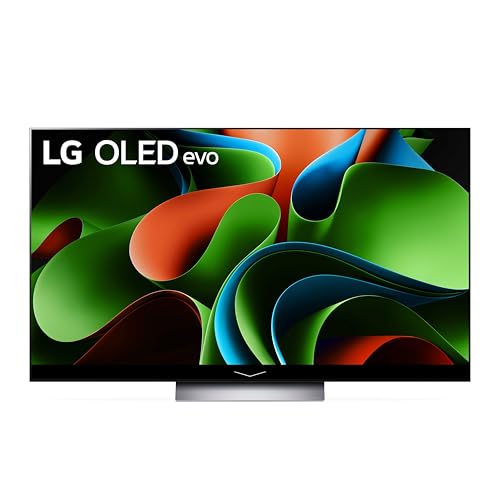
- 0.1ms response time and native 120Hz refresh rate
- VRR, G-Sync, FreeSync Premium, and four HDMI 2.1 inputs
- Dolby Vision, Dolby Atmos, and Game Optimizer
Best For: A versatile 55-inch OLED for gaming, movies, and streaming
Best Large-Screen Pick

- 77-inch OLED panel with pure blacks and wide viewing angles
- 4K/120, VRR, ALLM, and SBTM gaming features
- Google TV with Gemini plus Dolby Vision and Atmos
Best For: Large-room gaming and cinematic shared-screen viewing
Best Bright-Room Upgrade

- Up to 144Hz refresh rate with a 0.1ms response time
- VRR, G-Sync, FreeSync Premium, and four HDMI 2.1 inputs
- Brightness Booster and UL-verified glare-free performance
Best For: Fast gaming in a 65-inch screen setup with variable lighting
Best QLED Alternative

- Native 120Hz panel with Motion Rate 480 and MEMC
- QLED color covering nearly the entire DCI-P3 color space
- Four HDMI inputs and broad HDR format support
Best For: Smooth 55-inch gaming and vibrant QLED color without choosing OLED
Best Large-Screen OLED Pick

- 77-inch self-lit OLED with vivid contrast
- 120Hz, VRR, ALLM, G-SYNC, and FreeSync
- Four HDMI inputs support 4K 120Hz gaming
Best For: Large-room gaming and home-theater setups
Best High-Refresh Alternative
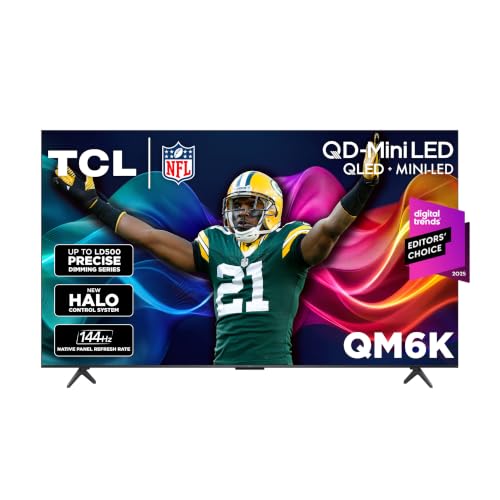
- 144Hz native refresh with Game Accelerator 240 VRR
- QD-Mini LED and Quantum Dot color
- Supports Dolby Vision and HDR10+
Best For: Bright-room gaming and fast-motion viewing
Best 55-Inch OLED for Competitive Play

- 0.1ms listed response time for responsive play
- Up to 165Hz with VRR, G-SYNC, and FreeSync
- OLED pixels deliver Perfect Black and Perfect Color
Best For: Competitive console and PC gaming in smaller rooms
Best Easy-to-Use Pick

- 4K OLED panel with vibrant colors and deep blacks
- 120Hz refresh rate with FreeSync Premium, ALLM, and VRR
- Dolby Vision, HDR10+, and HLG support
Best For: Simple streaming and flexible gaming setups
Best AI-Powered Gaming Pick

- 4K OLED HDR with 120Hz refresh rate
- NVIDIA G-SYNC and AMD FreeSync Premium
- NQ4 AI Gen2 processing and 4K upscaling
Best For: Adaptive-sync gaming with AI-enhanced picture quality
Best Overall – LG C3 Series 55-Inch OLED evo
For shoppers comparing OLED televisions for gaming, the LG C3 is a well-rounded 55-inch option with a 0.1ms response time, native 120Hz refresh rate, and four HDMI 2.1 inputs. Its OLED panel, VRR support, and dedicated gaming controls suit both console and cloud gaming.
Best For: Gamers who want a versatile 55-inch OLED for gaming, movies, and streaming.
Pros:
- 0.1ms response time and native 120Hz refresh rate
- Supports NVIDIA G-Sync, AMD FreeSync Premium, and VRR
- Four HDMI 2.1 inputs for multiple gaming devices
- Dolby Vision, Dolby Atmos, and FILMMAKER MODE support
Cons:
- 55-inch screen may feel small for very large rooms
- Glossy screen finish may reflect room lighting
The LG C3 combines strong gaming specifications with a slim design, webOS 23, and useful Game Optimizer controls. It is a practical all-purpose pick when you want OLED contrast without giving up connectivity.
Best Large-Screen Pick – Sony BRAVIA 6 77-Inch OLED
The Sony BRAVIA 6 brings OLED contrast to a large 77-inch screen, making it a compelling choice among OLED televisions for gaming in spacious setups. Its 4K/120Hz support, VRR, ALLM, and four HDMI 2.1-featured ports provide the core connections for high-performance gaming.
Best For: Gamers who want an expansive OLED display and a cinematic Google TV experience.
Pros:
- Large 77-inch OLED screen with individually controlled self-lit pixels
- Supports 4K/120, VRR, ALLM, and SBTM through HDMI 2.1 features
- Dolby Vision, Dolby Atmos, and DTS:X support
- Two-position stand can accommodate a soundbar
Cons:
- 77-inch size requires substantial wall or furniture space
- Refresh rate is listed at 120Hz rather than a higher gaming rate
With factory-calibrated panels, wide viewing angles, ambient-light sensing, and Google TV with Gemini, this Sony emphasizes both shared-screen viewing and gaming compatibility. Its standout feature is the immersive scale of the 77-inch display.
Best Bright-Room Upgrade – LG C5 Series 65-Inch OLED evo
The LG C5 is a 65-inch OLED evo model designed for fast gaming and brighter-room viewing. It combines a 0.1ms response time, up to 144Hz refresh rate, VRR, and four HDMI 2.1 inputs, while its Bright Room Ready certification addresses discomfort glare.
Best For: Gamers seeking a newer 65-inch OLED with high-speed performance and bright-room features.
Pros:
- 0.1ms response time and up to 144Hz refresh rate
- Supports NVIDIA G-Sync, AMD FreeSync Premium, and VRR
- Four HDMI 2.1 inputs and dedicated Game Optimizer controls
- Brightness Booster and UL-verified Discomfort Glare Free performance
Cons:
- Glossy screen finish can still reflect some lighting
- Its advanced gaming features may exceed the needs of casual players
The C5 adds LG’s Alpha 9 AI Processor Gen8, AI upscaling, webOS 25, and Art Gallery mode to a strong gaming platform. It is especially appealing when you want a larger screen and higher refresh-rate capability than the older C3.
Best QLED Alternative – TCL T7 Series 55-Inch QLED
If you are comparing OLED televisions for gaming but are open to a QLED alternative, the TCL T7 offers a 55-inch 4K panel with a native 120Hz refresh rate and QLED color. It also includes four HDMI inputs, Dolby Vision, and motion-enhancement features for games, sports, and streaming.
Best For: Gamers who prioritize 120Hz motion, broad HDR support, and QLED color over OLED’s self-lit pixels.
Pros:
- Native 120Hz panel with Motion Rate 480 and MEMC
- QLED color covering nearly the entire DCI-P3 color space
- Supports Dolby Vision, HDR10+, HDR10, and HLG
- Four HDMI inputs, including one with eARC
Cons:
- QLED technology is not OLED and does not provide self-lit pixel contrast
- Gaming specifications do not list a response time, VRR, or ALLM
- Wi-Fi 5 is older than newer wireless standards
The TCL T7 is a sensible choice for buyers who want smooth 120Hz gaming, rich quantum-dot color, and a Google TV interface without specifically requiring OLED technology. Its extensive HDR format support adds flexibility for mixed entertainment use.
Best Large-Screen OLED Pick – LG 77-Inch OLED evo C6
For shoppers comparing oled televisions for gaming, the 77-inch LG OLED evo C6 combines a large home-theater display with self-lit pixel contrast and gaming-focused connectivity. Its 120Hz panel, VRR, ALLM, and four HDMI inputs support responsive console and PC play, while Dolby Vision adds strong HDR support for games and movies.
Best For: Large living rooms, home theaters, and gamers who want a spacious OLED screen with flexible console and PC connections.
Pros:
- Brightness Booster Pro is designed to make highlights more visible in brighter rooms.
- 120Hz refresh rate, VRR, ALLM, G-SYNC compatibility, and FreeSync Premium support smooth gameplay.
- Four HDMI ports support 4K 120Hz connections for multiple devices.
- Dolby Vision, Dolby Atmos, Filmmaker Mode, and webOS broaden its entertainment appeal.
Cons:
- The 77-inch size requires substantial wall or console space.
- Wall-mount hardware is sold separately.
- Built-in audio may not replace a dedicated sound system for some home theaters.
The C6 is a strong choice when immersive size and OLED contrast matter as much as gaming features. Measure your room and check mounting compatibility before buying.
Best High-Refresh Alternative – TCL 55-Inch QM6K Mini LED
The TCL QM6K is a compelling alternative for shoppers seeking oled televisions for gaming but prioritizing high brightness and refresh rate. Its QD-Mini LED backlight, Quantum Dot color, 144Hz native refresh rate, and Game Accelerator 240 VRR are built for fast-moving games, sports, and HDR content.
Best For: Gamers who want a bright 55-inch display with very high refresh capability and Google TV convenience.
Pros:
- 144Hz native refresh rate and up to 240Hz variable gaming refresh rate target smooth action.
- QD-Mini LED and Halo Control support brightness, contrast, and shadow detail.
- Supports Dolby Vision, HDR10+, HDR10, and HLG.
- Built-in 2.1-channel Onkyo audio system includes a subwoofer.
Cons:
- This is a Mini LED QLED television rather than an OLED model.
- The supplied details do not specify the number of HDMI ports or HDMI 2.1 support.
- Full-array local dimming can still differ from OLED’s pixel-level light control.
Choose the QM6K if bright-room performance and exceptionally smooth motion are more important than OLED’s individually self-lit pixels. It also makes sense for mixed gaming, sports, and streaming use.
Best 55-Inch OLED for Competitive Play – LG OLED evo AI C6 55-Inch
For a compact gaming setup, the 55-inch LG OLED evo AI C6 pairs OLED contrast with a listed 0.1ms response time and gaming features aimed at fast, responsive play. Up to 165Hz refresh support, VRR, NVIDIA G-SYNC, and AMD FreeSync Premium make it especially suited to PC and console gamers who want a smaller premium screen.
Best For: Competitive gamers and smaller rooms needing a responsive 55-inch OLED with strong PC gaming support.
Pros:
- Listed 0.1ms response time helps target responsive gameplay.
- Up to 165Hz refresh rate, VRR, G-SYNC, and FreeSync Premium support fluid motion.
- More than 8.3 million self-lit pixels deliver OLED’s Perfect Black and Perfect Color features.
- Four HDMI ports and webOS support gaming, streaming, and connected devices.
Cons:
- The supplied details list a 120Hz display refresh rate despite the gaming specification stating up to 165Hz; verify supported modes for your setup.
- OLED care is recommended to help maintain display quality over time.
- The 55-inch screen may be less immersive than a larger display in a spacious room.
This C6 is a practical fit when low response time and adaptive-sync support are priorities without moving to a larger screen. Confirm your console or PC can use the desired refresh mode before purchase.
Best with Extra Features – Samsung S90C 77-Inch OLED
For shoppers seeking oled televisions for gaming, the Samsung S90C stands out with its expansive 77-inch 4K OLED display, fast gaming features, and self-illuminating pixels. Its Motion Xcelerator Turbo Pro supports up to 120Hz for 4K content and up to 144Hz with compatible PC-connected content.
Best For: Gamers and movie fans who want a large, bright OLED screen with Samsung smart features.
Pros:
- 77-inch 4K OLED display with rich colors, optimized contrast, and HDR10+ support
- Motion Xcelerator Turbo Pro supports fast gameplay up to 120Hz, or 144Hz with compatible PC content
- Gaming Hub brings console and streaming games together in one place
- Dolby Atmos and Object Tracking Sound Lite add virtual three-dimensional audio effects
Cons:
- Its 77-inch size requires substantial room and wall or stand space
- The highest 144Hz capability requires compatible PC-connected content
The S90C is a strong choice when screen size matters as much as gaming responsiveness. It also adds a very slim design, AI-powered 4K upscaling, and compatibility with Samsung soundbars through Q-Symphony.
Best Easy-to-Use Pick – Roku Pro Series 65-Inch OLED
The Roku Pro Series combines a 65-inch 4K OLED panel with a straightforward Roku interface, making it one of the more accessible oled televisions for gaming. Its 120Hz refresh rate works with FreeSync Premium, ALLM, and VRR to support smoother, more responsive play.
Best For: Gamers who want simple streaming controls, smooth motion, and broad HDR format support.
Pros:
- 4K OLED display produces vibrant colors and genuinely deep blacks
- 120Hz refresh rate with FreeSync Premium, ALLM, and VRR for gaming
- Supports Dolby Vision, HDR10+, and HLG
- Roku interface offers free entertainment, voice control, and a remote-finder feature
Cons:
- It has a smaller screen than the 77-inch option in this roundup
- Some premium features, such as Bluetooth headphone mode, are most useful for specific viewing situations
This Roku model is particularly appealing if easy navigation is a priority. The two-height tool-less stand, cable management system, backlit voice remote, and built-in headphone mode add practical convenience beyond gaming.
Best AI-Powered Gaming Pick – Samsung S85H 65-Inch OLED
The Samsung S85H is a compelling option among oled televisions for gaming, pairing a 65-inch 4K OLED screen with a 120Hz refresh rate and a gaming-focused feature set. Motion Xcelerator 120Hz, NVIDIA G-SYNC, and AMD FreeSync Premium are designed to support smooth, tear-free graphics and responsive play.
Best For: Gamers who want adaptive-sync support and AI-assisted picture processing in a 65-inch OLED TV.
Pros:
- 4K OLED HDR delivers bright highlights and inky blacks
- 120Hz gaming features include NVIDIA G-SYNC and AMD FreeSync Premium
- NQ4 AI Gen2 processor enhances content, motion, color, and sound processing
- 4K AI upscaling improves lower-resolution streaming and video content
Cons:
- HDR support listed in the supplied specifications is HDR10+, rather than Dolby Vision
- Its 65-inch screen may be less immersive than a larger display in a spacious room
The S85H makes the most sense for buyers who value Samsung’s AI processing alongside gaming performance. Pantone validation, Color Booster Pro, and a claimed maximum brightness of 1300 nits further emphasize its picture-focused design.
How We Picked the Best Oled Televisions for Gaming
We focused on the features that most directly affect gaming performance and everyday usability: panel response, refresh rate, HDMI connectivity, variable refresh rate support, HDR compatibility, input lag, image quality, smart-TV software, and available screen sizes. We also considered whether each model makes sense for console players, PC gamers, movie watchers, or households that need a bright all-purpose display.
The list includes Oled Televisions for Gaming alongside carefully selected QLED and Mini LED alternatives. Those non-OLED models can be compelling when room brightness, price, or screen-size flexibility matters more than perfect black levels.
Quick Comparison
- Best overall performance: Look for a current-generation OLED with 4K resolution, a 120Hz or higher refresh rate, HDMI 2.1, VRR, and low input lag.
- Best for large rooms: A 77-inch OLED creates a more cinematic view, provided you have enough viewing distance and wall or stand space.
- Best value: A prior-generation OLED or a 120Hz QLED can deliver excellent gaming without the price of a flagship model.
- Best for bright rooms: Mini LED and QLED televisions generally provide higher full-screen brightness than OLED.
- Best for simple streaming: Choose the platform you already use most, such as Google TV, webOS, Samsung Gaming Hub, or Roku.
Key Buying Factors for Oled Televisions for Gaming
Refresh Rate and VRR
A native 120Hz panel is a strong baseline for PlayStation 5, Xbox Series X, and gaming PCs. Variable refresh rate features such as HDMI VRR, AMD FreeSync, or NVIDIA G-SYNC help reduce tearing and stutter when frame rates fluctuate.
HDMI 2.1 and Input Lag
Check the number of full-bandwidth HDMI 2.1 ports if you plan to connect multiple consoles, a PC, and a soundbar. Low input lag matters for competitive play, while automatic low-latency mode can switch the television into its fastest gaming mode automatically.
HDR, Brightness, and Burn-In Awareness
OLED delivers exceptional contrast and pixel-level black control, making HDR games look especially rich. However, sustained static elements can create image-retention concerns over time. Use built-in panel-care features, vary content, and avoid leaving menus or HUDs displayed for extended periods. For a sunlit room or frequent news and sports viewing, a bright QLED or Mini LED may be the safer fit.
Size, Sound, and Smart Features
Choose a size based on viewing distance rather than price alone. A soundbar or receiver can improve impact because built-in speakers are rarely comparable to a dedicated audio system. Also confirm that the television supports your preferred streaming apps, voice assistant, and gaming cloud services.
Who Should Buy Which Oled Televisions for Gaming?
Competitive console and PC gamers should prioritize a 120Hz OLED with multiple HDMI 2.1 ports, VRR, and consistently low latency. Movie-focused gamers will appreciate OLED’s contrast and Dolby Vision support, especially in a dim or controlled room. Large-room shoppers should consider a 77-inch model, but measure the viewing distance and installation area first.
Bright-room households may be happier with a QLED or Mini LED alternative, while budget-conscious buyers should compare discounted previous-generation OLEDs with newer midrange models. Finally, if you want the simplest interface, choose the platform that matches your existing apps and controllers rather than paying extra for features you will not use.