The right patch bay can make a live rig easier to troubleshoot, faster to reconfigure, and far less dependent on reaching behind racks or stage equipment. This roundup compares 10 options spanning balanced 1/4-inch bays, XLR feed-through panels, pedal-focused designs, and splitter solutions.
Use the buying guide below to match connector type, channel count, rack format, and signal-routing needs to your setup before choosing a model.
Best 10 Patch Bays for Live Sound Picks for 2026
Flexible Routing

- 48 balanced 1/4-inch points
- Normalled, half-normalled, and thru modes
- 1U rack-mountable design
Best For: High-density TRS routing in live sound racks
XLR Signal Access

- 16-point XLR patchbay
- 32 gold-plated XLR connectors
- Built for live sound and studio routing
Best For: Compact XLR-based signal routing
Pedalboard Convenience

- Practical and robust design
- Clear and silent operation
- Multifunctional pedal-style format
Best For: Simple pedal-oriented patching applications
Accessible XLR Inputs

- 12-point reversible XLR design
- Brings rear XLR inputs to the rack front
- Compatible with mixers and preamps
Best For: Front-access XLR connections in live sound racks
Compact XLR Panel Solution

- Eight numbered XLR male-to-female connections
- 19-inch, 1U rack-panel format
- Shielded cables for frequent use
Best For: Rack-mounted microphone and audio patching
Large-Format Splitter Snake
Seismic Audio 32-Channel Combo Snake
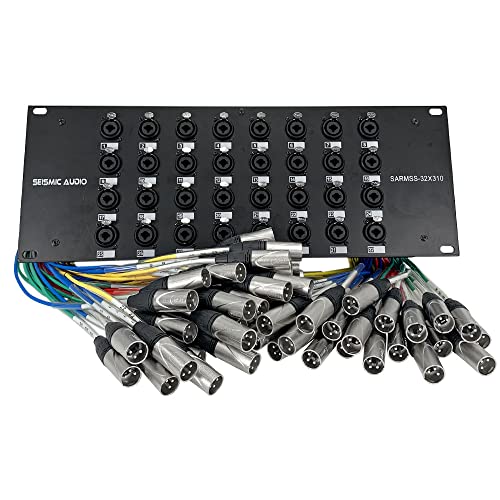
- 32 channels with XLR/TRS combo jacks
- Includes 3-foot and 10-foot fantail trunks
- Individually shielded pairs with 22-gauge conductors
Best For: Events and professional stage signal distribution
High-Density Rack Patch Bay

- 48 front and 48 rear 1/4-inch jacks
- Compact 1U rack-mount design
- Rugged steel construction
Best For: Dense 1/4-inch audio rerouting in rack systems
Tour-Ready Routing

- 16-port balanced XLR patching
- Reversible male/female connectors
- Steel rackmount chassis with screws included
Best For: Larger live sound and touring rigs
Professional Rack Organization
Art Pro Audio P48 48-Point Patch Bay

- 48-point balanced patch bay
- Fully shielded steel rackmount design
- Organizes cables and protects equipment connectors
Best For: High-density studio, PA, AV, and live sound racks
Fast Signal Tracing

- Eight color-coded female-to-female XLR ports
- Compact 1U rackmount feed-through design
- Mounting screws and manual included
Best For: Compact, easy-to-trace studio and live sound racks
Flexible Routing – Samson S-Patch Plus
Samson S-Patch Plus Balanced 48-Point 1/4" Patch Bay | 1/4 Inch Phone Connections
Check Price On AmazonFor patch bays for live sound, the Samson S-Patch Plus is a versatile 1U rack solution with 48 balanced 1/4-inch points. Its front-panel switches make it easier to configure signal paths without reaching behind your mixer or rack gear.
Best For: Live sound and rack setups that need flexible TRS routing and convenient front-panel access.
Pros:
- Provides 48 fully balanced 1/4-inch connections.
- Supports normalled, half-normalled, and thru operation.
- Front-panel access helps streamline equipment changes.
- 19-inch, 1U rack-mountable metal construction.
Cons:
- Uses 1/4-inch TRS connections rather than XLR.
- Its many configuration options may require careful labeling.
The S-Patch Plus stands out when you want high connection density and adaptable routing in a rack-friendly format. It is especially practical for organized systems using balanced 1/4-inch cabling.
XLR Signal Access – Black Lion Audio PBR XLR
The Black Lion Audio PBR XLR is a straightforward choice for patch bays for live sound systems built around XLR connections. It offers 16 patch points with 32 gold-plated XLR connectors for routing audio signals in recording or live sound environments.
Best For: XLR-based live sound or studio systems that need a compact, accessible patching point.
Pros:
- Provides 16 XLR patch points.
- Includes 32 gold-plated XLR connectors.
- Designed for audio signal routing in live sound and recording studios.
- Aluminum outer construction keeps the unit practical for rack use.
Cons:
- Offers fewer patch points than larger 48-point designs.
- Uses XLR connectivity, so it is not suited to 1/4-inch-only setups without appropriate cabling.
Choose the PBR XLR when your setup prioritizes XLR compatibility and simple signal access. Its 16-point layout keeps the interface focused without adding unnecessary routing complexity.
Pedalboard Convenience – ART Patch-Bay Pedal
The ART Patch-Bay Pedal is a practical option to consider among patch bays for live sound when a pedal-oriented, compact solution fits your signal-flow needs. The supplied specifications describe it as robust, clear, silent, and multifunctional.
Best For: Users seeking a simple, pedal-style patching accessory for indoor setups.
Pros:
- Described as practical and robust.
- Designed for clear and silent operation.
- Multifunctional format suits varied pedal-oriented applications.
Cons:
- The supplied notes do not specify connector type or patch-point count.
- Its plastic construction may be less rack-oriented than dedicated metal patchbays.
- Product details provide limited information for complex live-system planning.
The ART Patch-Bay Pedal may appeal to buyers who value a compact and uncomplicated format. Because connector and channel details are not provided, confirm compatibility before using it in a larger live rig.
Accessible XLR Inputs – Hosa PDR-369 XLR Patchbay
The Hosa PDR-369 brings hard-to-reach XLR mixer inputs to the front of a rack, making it a practical candidate among patch bays for live sound. Its reversible 12-point design uses XLR3F-to-XLR3M connections for balanced audio equipment.
Best For: Live sound racks that need front access to mixer inputs, interfaces, or microphone preamps.
Pros:
- Provides 12 XLR patch points.
- Uses reversible XLR3F-to-XLR3M connections.
- Compatible with audio mixers, interfaces, and microphone preamps.
- Steel outer construction and a limited lifetime warranty.
Cons:
- Has fewer points than larger patchbay formats.
- Its XLR-only layout is not intended for 1/4-inch TRS routing.
The PDR-369 is a focused solution for bringing rear-panel XLR connections within easy reach. It makes the most sense in systems where 12 channels are sufficient and balanced XLR access is the priority.
Compact XLR Panel Solution – 8-Channel XLRM3 Rack Pigtails
For patch bays for live sound, the XLRM3 provides a straightforward way to bring eight XLR connections to a 1U rack panel. Its 19-inch shielded pigtail cables are suited to organized microphone and audio patching setups.
Best For: Rack-mounted XLR connections for mixers, microphones, speakers, interfaces, and headphone amplifiers.
Pros:
- Provides eight numbered XLR male-to-female connections.
- Fits a 19-inch, 1U rack panel format.
- Uses shielded 19-inch cables designed for frequent use.
Cons:
- Designed for indoor use.
- Offers XLR connections rather than a mix of XLR and 1/4-inch formats.
This is a practical choice when you need labeled, rack-mounted XLR access without a more elaborate patching system. Its fixed pigtail design keeps the installation focused and simple.
Large-Format Splitter Snake – Seismic Audio 32-Channel Combo Snake
Seismic Audio SARMSS-32x310-32 Channel XLR TRS Combo Splitter Snake Cable - 3' and 10' XLR Trunks
Check Price On AmazonFor larger patch bays for live sound systems, the Seismic Audio SARMSS-32×310 combines 32 channels with XLR and 1/4-inch TRS combo jacks. Its labeled stage box, rack-mountable four-space design, and hardwired Y splits support organized signal distribution for events and production work.
Best For: Live events, sound production, recording studios, and professional stage signal distribution.
Pros:
- Provides 32 channels with XLR/TRS 1/4-inch combo jacks.
- Includes 3-foot and 10-foot XLR fantail trunks.
- Uses individually shielded pairs and heavy-duty 22-gauge conductors.
- Clearly labeled connectors and a steel stage box support quicker setup.
Cons:
- At 17.9 pounds, it is substantially heavier than a basic patch panel.
- Requires four rack spaces.
- The send cable is noted as non-returnable.
This snake is built for routing many signals between a stage box and rack or console position. Choose it when channel count, combo connectivity, and hardwired splits matter more than a compact installation.
High-Density Rack Patch Bay – dbx PB-48 48-Point Unit
The dbx PB-48 is a high-density option for patch bays for live sound, offering 48 front-panel and 48 rear-panel 1/4-inch jacks in a single 1U rack space. It provides a central point for rerouting compatible audio gear while helping reduce repeated access to equipment jacks.
Best For: Rack-based audio systems needing dense 1/4-inch patching and quick signal rerouting.
Pros:
- Provides 48 front and 48 rear 1/4-inch jacks.
- Fits a compact 1U rack space.
- Rugged steel construction is suited to rack installation.
- Helps provide clear access and reduce wear on connected equipment jacks.
Cons:
- Uses 1/4-inch jacks rather than XLR connections.
- Operating details such as normalled or half-normalled configurations are not specified in the supplied notes.
The PB-48 is a strong fit when rack space is limited and your setup relies on a large number of 1/4-inch connections. Its straightforward, compact construction favors organized studio or live-rig rerouting.
Tour-Ready Routing – 16-Port XLR Patchbay
For larger rigs, this 16-port XLR patchbay provides a practical central point for routing balanced signals. Its reversible connectors and rack-ready steel chassis make it a flexible choice among patch bays for live sound, studios, theaters, houses of worship, and broadcast carts.
Best For: Live sound systems and professional audio setups that need 16 XLR ports, flexible connector orientation, and durable rack installation.
Pros:
- 16 XLR ports support extensive audio patching.
- Reversible male/female connectors allow customizable configurations without rewiring.
- Heavy-duty steel construction with a black powder coat suits touring use.
- Mounting screws and balanced 3-pin wiring are included for straightforward installation and clean signal routing.
Cons:
- Designed for indoor use.
- The larger 16-port layout may be more capacity than smaller systems require.
This is the most capacity-focused option in the group. Choose it when your live rig benefits from flexible XLR orientation, a rugged rackmount build, and plenty of connection points.
Professional Rack Organization – Art Pro Audio P48 48-Point Patch Bay
The Art Pro Audio P48 is a 48-point balanced patch bay built for organized signal routing in rack-based systems. It is suited to professional and home recording, installed PA and AV, home theater, and live sound applications where cable organization and connector protection matter.
Best For: Studios, PA systems, AV installations, and live sound setups requiring a high-density 19-inch rackmount patch bay.
Pros:
- 48-point format provides extensive patching capacity.
- Fully shielded design helps organize cables and reduce wear on equipment connectors.
- Steel construction and a black finish suit rack-based installations.
- Supported use cases include professional and home studios, PA, AV, home theater, and live sound.
Cons:
- The supplied notes do not specify reversible connectors or color-coded ports.
- Its 48-point capacity may be unnecessary for compact setups.
With the highest stated point count here, the P48 is a sensible pick for complex rack layouts. It emphasizes dense organization and connector-saving convenience rather than portable, small-format patching.
Fast Signal Tracing – AMIMA 8-Channel XLR Patch Bay
The AMIMA 8-channel XLR patch bay is a compact 1U rackmount feed-through panel designed to make signal tracing easier. Its eight color-coded female-to-female XLR ports can help live crews identify connections quickly and reduce setup errors.
Best For: Smaller studio and live sound racks that benefit from an 8-channel, color-coded XLR feed-through panel.
Pros:
- Eight distinct colored ports simplify signal identification.
- 1U rackmount format fits standard rack installations.
- Gold-plated contacts are specified in the product title.
- Mounting screws and a user manual are included.
Cons:
- Eight channels provide less capacity than the 16-port and 48-point alternatives.
- The supplied notes specify indoor use.
This AMIMA panel is the straightforward choice when quick visual tracing is more important than maximum channel count. Its compact 1U format and color coding are particularly useful for tidy, repeatable setups.
How We Picked the Best Patch Bays for Live Sound
We focused on the practical requirements of stage, rehearsal-room, and rack-based audio systems: connector compatibility, balanced signal support, channel capacity, rack installation, routing flexibility, and ease of troubleshooting. The selection includes traditional 1/4-inch patch bays, XLR panels, feed-through assemblies, and splitter-style products because live systems vary widely.
Build quality and layout also matter. Clearly labeled connections, sturdy rack hardware, reliable jacks, and sensible normalled or reversible routing can save time during setup and fault-finding. Before buying, confirm the exact connector arrangement and whether the product is intended for patching, permanent feed-through, or signal splitting.
Quick Comparison
- Best all-purpose 1/4-inch option: Samson S-Patch Plus or ART P48-48.
- Best for XLR patching: Black Lion Audio PBR XLR or Hosa PDR-369.
- Best for compact rack feed-through: AMIMA 8-Channel or the 16 Port XLR Patchbay.
- Best for custom installations: XLRM3 panel-mount assemblies.
- Best for combining and distributing signals: Seismic Audio SARMSS-32×310 splitter snake.
- Best for pedal-oriented routing: ART Patch-Bay Pedal.
Key Buying Factors for Patch Bays for Live Sound
Connector Type and Signal Format
Match the bay to the cables and equipment already in your system. TRS and balanced 1/4-inch connections suit many mixers, processors, and outboard racks, while XLR bays are often more convenient for microphones, stage boxes, and installed rack connections. Do not assume that a physically compatible connector supports the same wiring or signal type.
Channel Count and Rack Space
Count the connections you need today, then leave room for likely expansion. A 48-point bay provides substantial routing capacity, while an eight- or 12-channel XLR panel may be easier to fit into a compact mobile rack. Check whether the unit uses standard 1U rack space and verify rear-access clearance.
Normalled, Reversible, or Straight-Through Routing
Flexible routing features can reduce repatching, but they also add setup decisions. For simple permanent connections, a straight-through or feed-through panel may be preferable. For studios and complex live racks, reversible or normalled connections can make common signal paths faster to configure.
Durability and Labeling
Live equipment faces repeated cable insertion, transport, and occasional strain. Favor strong metal construction, secure rack mounting, clearly marked ports, and connectors that do not feel loose. Leave enough room for labeled cables so troubleshooting remains practical in low-light conditions.
Who Should Buy Which Patch Bays for Live Sound?
Choose a balanced 1/4-inch model such as the Samson or dbx when your rack centers on TRS patching and broad routing flexibility. Select an XLR-focused unit such as the Black Lion, Hosa, or AMIMA when microphone and stage connections are the priority. Consider the 16-port reversible panel for a compact, configurable rack interface, and use a panel-mount assembly when building a customized installation.
For pedal-heavy setups, the ART Patch-Bay Pedal is the more specialized choice. If you need to combine or distribute many XLR and TRS connections rather than simply patch them, the Seismic Audio splitter snake may be a better fit. Whichever design you choose, map your signal flow first and label both ends of every cable before the first show.