Consistent voice levels can make a podcast sound more polished, easier to follow, and less tiring to hear. The right compressor helps control loud peaks while preserving natural speech dynamics.
This roundup compares 10 audio compressors for podcasting, including channel strips, optical and FET designs, dual-channel processors, and rackmount units suited to studios, streaming setups, and portable rigs.
Best 10 Audio Compressors for Podcasting Picks for 2026
Rack Dynamics Control

- Compressor and expander/gate in a 1U rack unit
- LED metering for quick threshold and gain-reduction setup
- Sidechain insert and program-adaptive gate timing
Best For: Rack-based podcast and live audio systems needing compression and gating
Two-Channel Processing
Behringer Composer Pro-XL MDX2600

- Two-channel compressor, limiter, and gate
- Suitable for production, mixing, and mastering
- Portable corded hardware with a two-year warranty
Best For: Podcasters needing multiple dynamics functions across two channels
Vocal Channel Strip
dbx 286s Mic Preamp and Processor

- Mic preamp with compression, de-esser, enhancer, and gate
- XLR microphone and 1/4-inch TRS line inputs
- Loop-out, insert connectivity, and status LED metering
Best For: Single-mic podcast vocal processing and front-end signal control
Optical Leveling
Behringer 2A Classic Compressor

- 2A-style optical leveling amplifier
- One-channel design for focused compression
- Includes stereo-link functionality
Best For: Single-vocal podcast chains seeking dedicated optical-style leveling
Flexible Rack Control
ART SCL2 Dual/Stereo Compressor/Limiter

- Dual-channel or linked-stereo operation
- Balanced TRS and XLR inputs
- LED metering with gate and limiter functions
Best For: Multi-channel podcast and studio setups needing configurable hardware control
Simple Mic-Side Leveling
Triton Audio Kompressor In-Line XLR Compressor
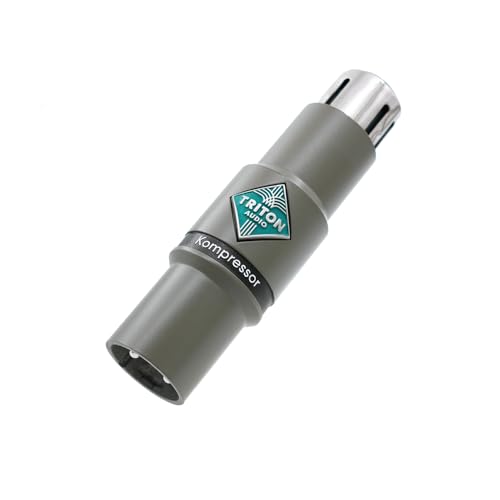
- Adds 25 dB of microphone gain
- One-knob less-to-more compression control
- Made for dynamic and ribbon microphones
Best For: Low-output dynamic or ribbon microphones in streamlined podcast chains
Four-Channel Dynamics
Behringer MDX4600 MULTICOM PRO-XL

- Four channels of compressor and limiter processing
- Includes peak limiting
- Designed for consolidated multi-channel dynamics control
Best For: Multi-microphone podcast or small-studio setups needing four channels
Flexible Rackmount Control
Dual-Channel Dynamic Processor

- Dual-channel compression with automatic attack/release settings
- Noise gate and LED monitoring for controlled vocal processing
- XLR/TRS connectivity plus sidechain insert
Best For: Rack-based podcast systems with multiple audio sources
Tube-Style Vocal Character

- Selectable tube or solid-state MultiVoice control
- Optical compression with variable blend control
- Switchable +4 dBu and -10 dBV level modes
Best For: Single-channel podcast vocal chains with tonal flexibility
All-in-One Signal Protection
Dual-Channel Compressor Limiter

- Dual-channel compression with peak limiting
- Noise gate, feedback suppression, and anti-howling processing
- XLR/TRS connectivity with additional DSP features
Best For: Complex rack-based podcast and live-production systems
Rack Dynamics Control – dbx 266xs Compressor/Gate
The dbx 266xs is a practical choice among audio compressors for podcasting when you need two-sided dynamics control in a rackmount format. Its compressor, expander/gate, sidechain insert, and dedicated LED displays support quick setup and consistent level management.
Best For: Podcast studios and live or touring setups that need compression plus gating in a single 1U unit.
Pros:
- Helps smooth uneven levels and can add sustain or tighten mixes.
- Program-adaptive expander/gates provide smooth release characteristics.
- Separate LED displays show gain reduction, compression threshold, and gate threshold.
Cons:
- Its rackmount design is less convenient for compact desktop podcast setups.
- It is an analog, corded-electric processor rather than a software solution.
The 266xs suits users who want straightforward hardware control over both compression and gating. It is especially useful when a podcast signal chain also needs broader dynamics processing beyond a single microphone channel.
Two-Channel Processing – Behringer Composer Pro-XL MDX2600
The Behringer Composer Pro-XL MDX2600 is a two-channel compressor, limiter, and gate for podcast producers who want several core dynamics tools in one hardware unit. Its stated uses include audio production, mixing, and mastering, making it suitable for broader signal-chain work.
Best For: Producers who need two channels of compression, limiting, and gating for podcast production or mixing.
Pros:
- Combines compression, limiting, and gating across two channels.
- Designed for audio production, mixing, and mastering applications.
- Portable hardware design with a listed two-year warranty.
Cons:
- The supplied specifications provide limited detail about podcast-specific controls.
- As corded hardware, it requires a place in the studio signal chain.
The MDX2600 is a flexible option when a podcast setup needs more than basic compression. Its two-channel layout can support multiple sources or stereo processing, while the limiter and gate add useful dynamics functions.
Vocal Channel Strip – dbx 286s Mic Preamp and Processor
The dbx 286s is a strong all-in-one choice among audio compressors for podcasting because it combines a microphone preamp with compression, de-essing, enhancement, and expander/gate processing. It accepts XLR microphone input and includes metering LEDs for monitoring processor status.
Best For: Single-microphone podcast recording where vocal compression, de-essing, gating, and preamp functions are needed in one channel.
Pros:
- Combines classic dbx compression with de-esser, enhancer, and expander/gate sections.
- Floating balanced XLR microphone input and additional 1/4-inch TRS line input support different sources.
- Loop-out and insert connections allow integration with additional processors.
Cons:
- It provides one channel, so each microphone needs its own channel-strip unit for separate processing.
- Its 1U rackmount format may be more hardware than a minimalist desktop setup requires.
For spoken-word recording, the 286s offers a complete front-end approach rather than compression alone. Its de-esser and expander/gate are particularly useful additions when shaping a single microphone signal before recording or mixing.
Optical Leveling – Behringer 2A Classic Compressor
The Behringer 2A Classic is a one-channel, 2A-style leveling amplifier for podcasters seeking a dedicated optical compressor design. Its stereo-link feature adds flexibility for compatible stereo applications, although the supplied notes identify it as a single-channel unit.
Best For: Single-channel podcast vocal chains where a dedicated 2A-style optical leveling amplifier is preferred.
Pros:
- Uses a 2A-style optical leveling amplifier design.
- Provides a stereo-link feature for compatible applications.
- Offers a focused one-channel compression format.
Cons:
- Only one output channel is listed, limiting multi-microphone use without additional units.
- The supplied notes provide fewer control and connectivity details than for the other processors.
The 2A Classic is best considered a focused leveling option rather than a full channel strip. It may appeal to podcasters who want a dedicated optical-style compressor stage and do not need integrated de-essing, gating, or microphone preamp functions.
Flexible Rack Control – ART SCL2 Dual/Stereo Compressor/Limiter
The ART SCL2 is a versatile choice among audio compressors for podcasting when you need hardware control over one or two channels. Its dual-channel design, selectable linked-stereo operation, and balanced TRS/XLR connectivity suit multi-microphone or broader studio setups.
Best For: Podcasters who want a rack-style compressor with separate or linked stereo operation, metering, and additional gate and limiter functions.
Pros:
- Supports dual-channel or linked-stereo operation.
- Accepts both 1/4-inch TRS and XLR balanced inputs.
- Offers selectable automatic or manual attack and release controls.
- Includes precise LED level meters plus gate and limiter functionality.
Cons:
- Its 19-inch rack-style format may be more hardware than a simple podcast setup requires.
- Operation involves multiple controls rather than a single-knob workflow.
The SCL2 is the more configurable option here, particularly for users managing multiple channels or wanting compression alongside gating and limiting. Its corded, rack-oriented design makes it best suited to a permanent or semi-permanent recording setup.
Simple Mic-Side Leveling – Triton Audio Kompressor In-Line XLR Compressor
The Triton Audio Kompressor takes a compact, source-level approach to audio compressors for podcasting. It combines an in-line FET-OPTO compressor with a 25 dB microphone preamp and uses one knob, making it especially straightforward for dynamic and ribbon microphones.
Best For: Podcasters using low-output dynamic or ribbon microphones who want added gain and simple compression through an XLR connection.
Pros:
- Combines compression and up to 25 dB of microphone gain in one compact unit.
- One-knob control makes adjustment quick and approachable.
- Designed for dynamic and ribbon microphones, including low-output models.
- Requires 48V phantom power while blocking it from reaching the microphone.
Cons:
- Compression control is limited to a single less-to-more knob.
- Requires 48V phantom power to operate.
- Uses an XLR in-line format rather than offering multiple channels or balanced TRS inputs.
For a minimalist vocal chain, the Kompressor is appealing because it places gain and dynamics control directly at the microphone connection. It is less suitable when you need detailed attack, release, or multi-channel adjustments.
Four-Channel Dynamics – Behringer MDX4600 MULTICOM PRO-XL
Behringer MDX4600 MULTICOM PRO-XL - 4 Channel Compressor/Limiter and Peak Limiter
Check Price On AmazonThe Behringer MDX4600 is a practical option among audio compressors for podcasting when a four-channel compressor and limiter format fits your setup. Its MULTICOM PRO-XL design combines compressor/limiter processing with peak limiting for multi-source recording or routing needs.
Best For: Podcasters and small studios that need four channels of compressor, limiter, and peak-limiter processing in one unit.
Pros:
- Provides four channels of compression and limiting.
- Includes peak-limiter functionality for additional level control.
- Consolidates multi-channel dynamics processing in one product.
Cons:
- The supplied notes do not specify input connectors, metering, or detailed attack and release controls.
- A four-channel unit may be more capacity than a single-microphone podcast requires.
The MDX4600 stands out when channel count is the priority. Because the supplied specifications provide limited information about its detailed controls and connections, confirm the configuration before matching it to a particular podcast interface or rack.
Flexible Rackmount Control – Dual-Channel Dynamic Processor
For podcast producers building a rack-based setup, this unit offers practical dynamics control for vocals and other sources. Its dual-channel design, automatic attack and release settings, noise gate, and visual monitoring make it one of the more feature-rich audio compressors for podcasting, while XLR and TRS connectivity supports flexible routing.
Best For: Podcasters who want dual-channel vocal processing, noise reduction, and rackmount connectivity.
Pros:
- Dual-channel compression with Overeasy and automatic attack/release settings.
- Built-in noise gate and independent LED indicators for monitoring gain reduction, compression, and gate thresholds.
- Classic VCA circuitry and XLR/TRS inputs and outputs support detailed vocal processing and flexible integration.
- Sidechain insert enables targeted frequency ducking for sources such as bass or kick drums.
Cons:
- Its 1U rackmount format may be more equipment than a simple desktop podcast setup needs.
- Operation requires corded power and hands-on knob adjustments.
This is a strong choice when your podcast system includes multiple sources or needs routing flexibility. The noise gate and visual feedback are especially useful for repeatable vocal processing, while the sidechain feature adds room for more advanced setups.
Tube-Style Vocal Character – ART Solo VLA Compressor
The ART Solo VLA is a single-channel option for podcasters who want a more character-focused approach to dynamics control. Its selectable tube or solid-state MultiVoice operation, optical compression design, and blend control make it a distinctive choice among audio compressors for podcasting.
Best For: Single-microphone podcast chains seeking selectable tube/solid-state character and blended compression.
Pros:
- Selectable MultiVoice tube or solid-state control provides two processing approaches.
- Optical isolators support the unit’s OPTO compression design.
- Variable blend control combines uncompressed and compressed signals.
- Switchable +4 dBu and -10 dBV level modes support different signal environments.
Cons:
- Single-channel operation limits processing to one source at a time.
- The tube-based design may be less practical for users seeking a compact, minimal podcast chain.
Choose the Solo VLA when tonal flexibility matters as much as straightforward level control. Its blend function can help retain some of the original signal, while the selectable operating modes give a single vocal chain more character options.
All-in-One Signal Protection – Dual-Channel Compressor Limiter
This dual-channel processor is aimed at users who want compression and additional signal-management tools in a 1U rackmount unit. For audio compressors for podcasting, its noise gate, peak limiting, feedback suppression, and vocal refinement features can help maintain consistent output when working with demanding live or studio-style setups.
Best For: Rack-based podcast and live-production systems needing compression, limiting, gating, and extra DSP processing.
Pros:
- Dual-channel compression and peak limiting help control dynamics and prevent overload.
- Built-in noise gate reduces unwanted background noise.
- Includes electronic crossover, feedback suppression, DSP reverb, and anti-howling processing.
- XLR and 1/4-inch TRS inputs and outputs support studio and live-sound integration.
Cons:
- The broad processing feature set may be unnecessary for a straightforward podcast vocal chain.
- Its 1U rackmount format is less convenient for portable or desktop-only setups.
- The supplied notes do not specify detailed compression controls or connectivity beyond XLR/TRS.
This model makes the most sense when your setup extends beyond basic voice compression. The combination of gating, limiting, feedback control, and additional DSP can simplify signal management, particularly for podcasting that also involves live venues or complex routing.
How We Picked the Best Audio Compressors for Podcasting
We focused on compressors that can realistically serve spoken-word recording, podcast production, livestreaming, and small studio work. Selection factors included compression control, signal routing, microphone compatibility, noise-gate or de-esser features, channel count, rack or desktop practicality, and suitability for beginners versus experienced operators.
Because podcast setups vary widely, this list includes both dedicated compressors and channel-strip-style processors. A compact inline preamp may suit a single dynamic microphone, while a rackmount unit can provide more connectivity and expansion room for two or more voices.
Quick Comparison
| Type | Best For | Typical Advantage |
|---|---|---|
| Inline compressor/preamp | Single-mic setups | Compact gain and dynamics control |
| Channel strip | Voice-focused recording | Compression plus tone shaping and cleanup |
| Single-channel compressor | One host or vocal chain | Simple, focused control |
| Dual-channel compressor | Two microphones or stereo sources | Flexible expansion for interviews |
| Four-channel compressor | Multi-person productions | Several inputs in one rack space |
Key Buying Factors for Audio Compressors for Podcasting
Controls and Ease of Use
Look for adjustable threshold, ratio, attack, release, and output gain. Auto modes, gain-reduction meters, and clearly labeled controls can make setup easier, especially when recording live.
Microphone Gain and Compatibility
Dynamic and ribbon microphones often need substantial clean preamp gain. If your interface or mixer lacks enough headroom, an inline compressor/preamp can be more useful than a line-level processor. Confirm whether the unit accepts microphone-level signals directly and whether phantom power is appropriate for your microphone.
Noise Gate, De-Esser, and Sidechain Features
A gate can reduce room noise between phrases, while a de-esser helps manage harsh “s” sounds. Sidechain inserts are valuable when you want external equalization or more precise control over which frequencies trigger compression.
Channel Count and Connections
Choose a single-channel model for one host, a dual-channel model for two microphones, and a four-channel processor for larger panels or future expansion. Check for XLR and TRS connections, balanced operation, and enough input and output flexibility for your interface or mixer.
Compression Character
Optical designs are often chosen for smooth, forgiving leveling, while FET-style compression can deliver faster, more assertive control. VCA processors commonly offer precise, versatile settings. For speech, the best choice depends on whether you prioritize transparency, coloration, or fast peak management.
Who Should Buy Which Audio Compressors for Podcasting?
- Solo podcasters: Choose a single-channel compressor or channel strip with straightforward controls.
- Dynamic-microphone users: Consider a unit with a strong microphone preamp and sufficient clean gain.
- Two-person shows: A dual-channel compressor can keep both voices more consistent while simplifying cabling.
- Panel podcasts: Four-channel processing provides more room for multiple speakers and future growth.
- Live streamers: Prioritize easy metering, gating, sidechain flexibility, and reliable rack or desktop operation.
Set compression conservatively at first: aim for moderate gain reduction on normal speech, leave headroom for enthusiastic moments, and monitor for pumping, clipped peaks, or an unnatural loss of dynamics.