ACEMAGIC K1 Mini PC Ryzen R2544 review is easiest to understand as a compact desktop aimed at practical work, not flashy specs.
If you want a small Windows 11 Pro machine for office tasks, multiple monitors, or light home-server duties, this ACEMAGIC K1 Mini PC is built around those needs.
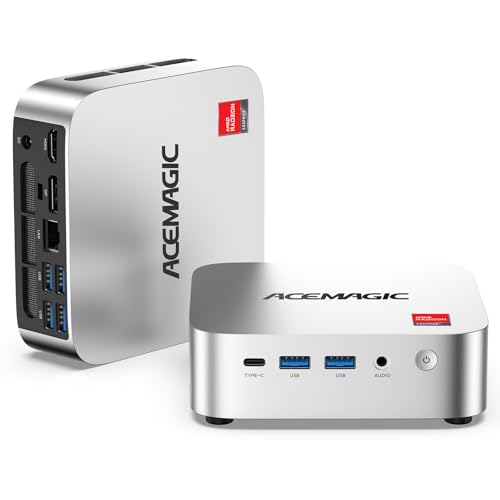
ACEMAGIC K1 Mini PC Review Summary
The ACEMAGIC K1 Mini PC makes sense for buyers who value a small footprint, wired and wireless flexibility, and the ability to drive multiple displays without jumping to a full tower.
Its Ryzen R2544 processor, triple 4K display support, and upgrade-friendly memory and storage layout give it a clear role as a desk-saving productivity box for home office users, students, light creators, and anyone who wants a quiet-ish all-round mini desktop with room to grow.
This is not the kind of system that should be bought for heavy content creation or demanding gaming.
It is better judged as a focused productivity machine with useful extras like USB-C with DP 1.4 support, Gigabit Ethernet, WiFi, Bluetooth, and always-ready features such as Auto Power On, RTC Wake, and Wake-on-LAN.
If your buying goal is a compact, flexible Windows desktop for everyday work and multi-monitor use, the K1 is well aligned with that job.
Review Scorecard
| Category | Score | Buyer assessment |
|---|---|---|
| Everyday productivity | 8/10 | The 4-core, 8-thread Ryzen chip is positioned for office work, browsing, learning, and multitasking. |
| Multi-monitor setup | 9/10 | Triple 4K support is the standout feature and fits desk-heavy workflows very well. |
| Connectivity | 8/10 | USB-C, multiple USB 3.2 ports, Ethernet, WiFi, and Bluetooth cover most practical setups. |
| Expandability | 8/10 | Dual SO-DIMM slots and expandable storage make it more future-friendly than many entry mini PCs. |
| Home-server utility | 8/10 | Auto Power On, RTC Wake, and Wake-on-LAN are useful for NAS and always-on tasks. |
| Performance headroom | 6/10 | The listing supports light content creation and media use, but not heavy workloads. |
| Value for purpose | 8/10 | The feature mix is broad for a compact desktop, especially if you need display flexibility. |
Key Features and Specifications of ACEMAGIC K1 Mini PC
The core pitch of the ACEMAGIC K1 Mini PC is straightforward: a compact Windows 11 Pro computer with a Ryzen R2544 processor, 8GB of DDR4 memory, and a 256GB M.2 SSD.
The processor is listed as a 4-core, 8-thread part with a base clock of 3.35GHz and boost up to 3.7GHz, which places it in a practical everyday-performance lane rather than a premium workstation tier.
The memory and storage configuration is modest out of the box, but the machine is designed to be expanded.
The listing says it has dual DDR4 SO-DIMM slots supporting up to 32GB of RAM and storage expansion up to 4TB.
That matters because it turns the K1 from a fixed-budget mini PC into a more adaptable long-term desktop for buyers who expect their workload to grow.
Connectivity is one of the strongest parts of the design.
ACEMAGIC lists six USB 3.2 ports, including a USB-C Gen 2 port with up to 10Gbps transfer speed.
The USB-C port also supports DP 1.4 display output and PD power delivery, which gives the K1 more flexibility than basic office mini PCs that treat USB-C as a convenience port only.
For display output, the K1 is built to support up to three 4K monitors through HDMI 2.0, DP 1.4, and USB-C 3.2.
That is a meaningful differentiator for people who want more screen area for spreadsheets, dashboards, trading, remote work, coding, or media control.
It is also one of the reasons this model stands out as a home-office mini PC rather than a generic low-cost box.
Network and wireless options are equally practical.
The machine includes Gigabit Ethernet, WiFi 5, and Bluetooth 4.2.
Those choices are not exotic, but they are appropriate for a desktop that may be used with a wired office connection, wireless peripherals, or a home server role.
The listing also highlights smart wake features such as Auto Power On, RTC Wake, and Wake-on-LAN.
Those capabilities are especially relevant for NAS applications, firewall systems, digital signage, and business environments where the machine should be remotely accessible or resume automatically after power events.
Pros and Cons of ACEMAGIC K1 Mini PC
Pros
- Triple 4K display support is excellent for productivity-focused desk setups.
- USB-C with DP 1.4 and PD adds flexibility that many mini PCs lack.
- Dual RAM slots and expandable storage improve the long-term case for buying it.
- Gigabit Ethernet plus WiFi and Bluetooth cover both fixed and flexible installations.
- Wake features make it more useful for home-server and always-on use than a basic office mini PC.
Cons
- The included 8GB RAM and 256GB SSD are serviceable, but not generous.
- The Ryzen R2544 is aimed at everyday tasks, not demanding creative work.
- Bluetooth 4.2 and WiFi 5 are functional but not cutting-edge.
- Buyers needing heavy multitasking, large local media libraries, or advanced editing should expect to upgrade or shop higher.
Who Should Buy ACEMAGIC K1 Mini PC?
This ACEMAGIC K1 Mini PC review points strongly toward buyers who want a small, tidy desktop for work rather than a bulky tower.
It fits home office users, remote workers, students, and general productivity buyers who need a reliable Windows 11 Pro system with enough display support to run multiple windows side by side.
It is also a sensible pick for buyers who care about flexible placement.
The VESA-friendly mini PC format makes it easier to tuck behind a monitor or into a compact setup, and the smart power features help if the machine will sit in a less interactive role.
The K1 also makes sense for home-lab style use when the job is lightweight: a small NAS, firewall, digital signage node, or always-on helper system.
The wired networking, wake features, and upgrade options all support that use case.
Who should skip it?
Anyone expecting serious gaming, heavy video editing, complex 3D work, or a workstation-grade machine should look elsewhere.
The listed specs are aimed at responsive daily computing, not sustained high-end workloads.
If you want headroom more than compact practicality, this is probably not the right tier.
Performance and Connectivity for Everyday Use
Daily Productivity
For office software, web apps, online learning, and media playback, the Ryzen R2544 platform is presented as a responsive fit.
The listing language is clearly oriented around multitasking, and the 4-core/8-thread layout is the kind of configuration that should handle everyday workloads cleanly when paired with reasonable storage and memory.
Multi-Monitor Workflows
Triple 4K output is the most important practical feature here.
It lets the K1 serve people who keep documents, email, reference material, and dashboards open at the same time.
For buyers who work better with more screen space than raw horsepower, that matters more than chasing a bigger CPU label.
Home Server and Always-On Roles
The smart features are not an afterthought.
Auto Power On, RTC Wake, and Wake-on-LAN give the K1 a real advantage for utility use, especially when the machine is meant to restart after outages or be reached remotely.
That makes it more versatile than a mini PC that only thinks like a desktop.
Expansion and Setup Flexibility
The combination of dual RAM slots, storage expansion, USB-C display output, and PD support makes the K1 easier to adapt over time.
Buyers do not have to keep it in its factory configuration forever, which is one reason it looks more durable as a purchase than some small PCs that are effectively sealed appliances.
Alternatives to ACEMAGIC K1 Mini PC
If you want a similar mini desktop but prefer another brand, the most obvious alternatives are the Beelink mini PC lineup, the MINISFORUM mini PC lineup, and the GMKtec mini PC lineup.
Those families are worth comparing if you want to balance size, ports, and upgrade options against your specific desktop or home-server plan.
If your priority is a richer ecosystem around compact office machines, a Lenovo ThinkCentre Tiny or HP Pro Mini may also be worth a look.
Those are especially relevant if you want a business-oriented feel and do not need the same kind of triple-display emphasis.
Is ACEMAGIC K1 Mini PC Worth It?
Yes, for the right buyer.
The ACEMAGIC K1 Mini PC is worth it if you want a compact Windows desktop for productivity, multi-monitor work, or light home-server use and you value expandability and flexible connectivity.
It is less compelling if your priority is raw performance, but as a practical small-form-factor machine with clearly defined strengths, it has a credible and useful place in 2026.