If you repair circuit boards, swap components, or clean up messy solder joints, the right desoldering station can save time and reduce pad damage.
Below, we focus on practical buying considerations and which type of station makes sense for different electronics repair workflows.
Best 10 Desoldering Stations for Electronics Repair Picks for 2026
2-in-1 Repair Pick
YIHUA 948D III Soldering & Desoldering Kit

- Combines a 110W soldering station with a desoldering gun
- Improved tool supports continuous through-hole desoldering
- Includes 3 nozzles and cleaning/filter accessories
Best For: Users who want one station for both soldering and desoldering
Dedicated Budget Station
YIHUA 948 Standard Desoldering Station
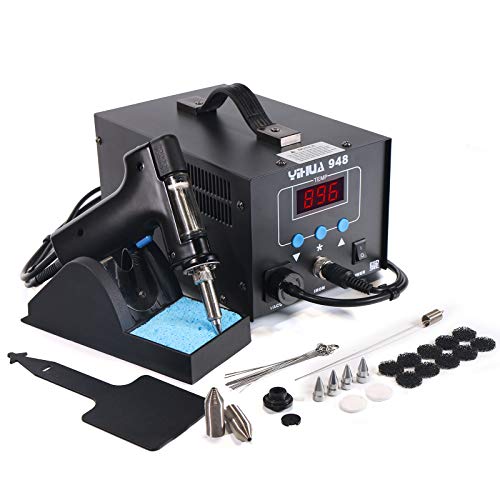
- Dedicated station for efficient repeated desoldering
- One-handed use with stabilized nozzle temperature and suction
- Replaceable tube system for cleaning or replacement
Best For: Technicians who want a single-purpose desoldering station
Hand Tool Alternative
No-Clean Solder Wick Braid 10ft
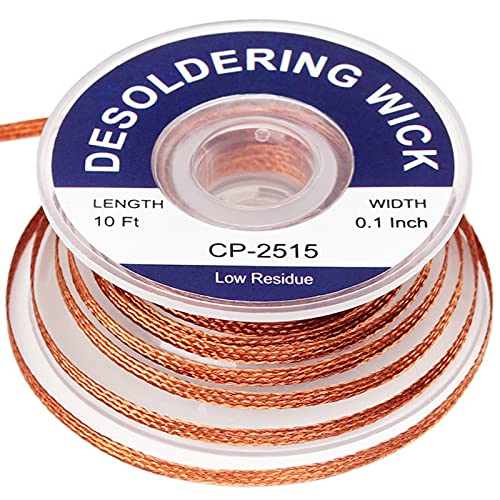
- 10ft copper braid for absorbing molten solder
- Good for small PCB corrections and component removal
- Low-cost manual option for bench kits
Best For: Occasional small repairs and solder cleanup without a powered station
Heavy-Duty PCB Pick
WEP 948D-I 110W Desoldering Station

- 110W gun targets faster multilayer board desoldering
- 3 presets plus sleep and standby modes
- Tiltable display with °C/°F conversion
Best For: Frequent PCB and motherboard desoldering work
4-in-1 Rework Hub
YIHUA 948-II 4 in 1 Hot Air Rework Station

- Combines four tools in one unit
- PID control with digital calibration
- Large accessory kit included
Best For: Users who want a versatile bench station for mixed repair tasks
Dedicated Desoldering Pick
YIHUA 948D-I Dedicated Desoldering Station

- 110W station for through-hole components
- Single-handed gun operation
- Three presets plus sleep/standby modes
Best For: Technicians who want a focused desoldering station for routine board work
2-in-1 Rework Starter Kit
WEP 8786D-I SE 2-in-1 Hot Air Station
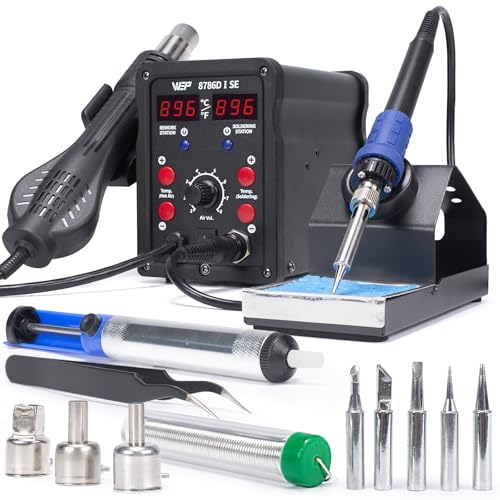
- Soldering and hot air in one station
- Includes pump, tips, nozzles, and tweezers
- PID control with sleep and standby modes
Best For: Beginners who want a compact rework station with accessories included
2-in-1 Desoldering Station
YIHUA 948 Upgraded 2-in-1 ESD Safe 80W Station

- 80W desoldering + 60W soldering in one compact unit
- PID temperature control with real-time correction
- Includes nozzles, filters, and a metal holder
Best For: Repairs that need both soldering and through-hole desoldering in one station
Compact Rework Combo
WEP 882D Compact Soldering and Hot Air Combo

- Soldering iron and hot air rework station in one body
- PID control plus sleep, standby, and auto-shutdown
- Includes tips, nozzles, solder wire, tweezers, and pump
Best For: Bench setups that need hot air rework plus soldering in one compact unit
Dedicated Desoldering Iron
YIHUA 929D-V Electric Desoldering Iron

- Single-handed tool for through-hole desoldering
- Fixed-temperature plug-and-play operation
- Reusable solder storage tube and two nozzle sizes
Best For: Simple through-hole solder removal and solder-bridge cleanup
2-in-1 Repair Pick – YIHUA 948D III Soldering & Desoldering Kit
If you want desoldering stations for electronics repair that also handle soldering, the YIHUA 948D III is built for bench work where speed and flexibility matter. It combines a 110W soldering station with a powered desoldering gun, so you can move between soldering and through-hole removal without switching tools.
Best For: Repairers who want an all-in-one soldering and desoldering setup for through-hole work and general bench use.
Pros:
- 2-in-1 station supports both soldering and desoldering at the same time
- 110W EVO soldering iron offers quicker heating and faster heat recovery
- Improved desoldering tool is designed for continuous through-hole work with less clogging
- Includes three nozzle sizes plus cleaning accessories and filter parts
Cons:
- Made for 110-127V use only
- Heavier and more specialized than simple hand tools
Overall, this is a practical choice if you need a compact bench station that can do both sides of the job. It stands out for repair tasks involving sockets, LCD screens, nixie tubes, and similar through-hole components.
Dedicated Budget Station – YIHUA 948 Standard Desoldering Station
For buyers comparing desoldering stations for electronics repair, the YIHUA 948 keeps the focus on removing solder efficiently. It uses stabilized nozzle temperature and powerful suction to make repeated joint removal easier than wick or pump methods when you have a lot of work to clear.
Best For: Repair work that calls for a dedicated desoldering station rather than a combo tool.
Pros:
- Dedicated desoldering station is designed for efficient repeated joint removal
- One-handed operation makes it easier to work through a series of joints
- Variable temperature range from 716°F to 896°F with °C/°F display
- Replaceable tube design lets you clean or swap filter components
Cons:
- Only handles desoldering, not soldering
- Made for 110-127V use only
This model makes sense if you mostly remove components and want a straightforward station built for that task. It is especially useful when manual wick or pump tools would slow you down on larger jobs.
Hand Tool Alternative – No-Clean Solder Wick Braid 10ft
If you are shopping for desoldering stations for electronics repair but only need a simple cleanup tool, solder wick is the low-cost option to consider. This no-clean braid is meant for correcting mistakes, removing small parts, and absorbing molten solder from PCB work without a powered station.
Best For: Occasional desoldering, small PCB corrections, and bench kits that need an inexpensive manual backup.
Pros:
- Useful for small boards, relays, switches, and other component removal tasks
- 10ft roll provides plenty of length for regular use
- Copper weave is designed to absorb molten solder quickly
- No-clean style keeps the cleanup process simple
Cons:
- Not a powered station, so it is slower for larger jobs
- Best suited to small-scale repair work rather than heavy desoldering
This is a practical add-on if you want an inexpensive fallback for small corrections. It will not replace a true desoldering station, but it is useful for fine work and quick fixes.
Heavy-Duty PCB Pick – WEP 948D-I 110W Desoldering Station
Among desoldering stations for electronics repair, the WEP 948D-I is aimed at higher-volume board work where power and convenience matter. Its 110W desoldering gun is designed for faster multilayer PCB desoldering, and the station adds presets, sleep mode, and a tiltable display for more efficient bench use.
Best For: Frequent desoldering on multilayer boards, motherboards, and other higher-thermal-mass jobs.
Pros:
- 110W desoldering gun is built for faster multilayer board desoldering
- 3 memory presets reduce repeated temperature setup
- Tiltable LCD display and °C/°F conversion improve usability
- Sleep and standby modes help reduce oxidation and wear
Cons:
- Not suitable for graphics card motherboards
- Made for 110-127V use only
This is a strong fit if you regularly clear boards and want a station with more convenience features than a basic unit. It looks best for repair shops or serious hobby benches that do repeated component removal.
4-in-1 Rework Hub – YIHUA 948-II 4 in 1 Hot Air Rework Station
If you want desoldering stations for electronics repair that can do far more than pull solder, the YIHUA 948-II is built as an all-in-one bench unit. It combines desoldering, hot air rework, soldering, and suction pickup in a single 110V station, which makes it a practical choice for users who want one setup for multiple board-level tasks.
Best For: Technicians and hobbyists who want a versatile, multi-tool station for repair work on a single bench.
Pros:
- Combines four functions: desoldering, hot air rework, soldering, and suction pickup.
- PID temperature control and digital calibration help support accurate operation.
- Includes a wide accessory bundle, including nozzles, filters, tweezers, wick, and cleaning tools.
- Features sleep function, hot/cool air switching, and °C/°F display.
Cons:
- Designed for 110-127V US-standard power only.
- Bulkier than a dedicated single-purpose desoldering station.
- Best suited to users who will actually use the extra functions.
This is a strong pick if you value flexibility over simplicity. It’s especially appealing for repair benches where hot air, soldering, and desoldering are all used regularly.
Dedicated Desoldering Pick – YIHUA 948D-I Dedicated Desoldering Station
For buyers focused specifically on desoldering stations for electronics repair, the YIHUA 948D-I keeps the job centered on one purpose: removing through-hole components quickly and with one-handed control. Its 110W design, adjustable temperature range, and preset channels make it a straightforward option for repeat repair workflows on compatible boards.
Best For: Repair users who want a dedicated desoldering gun station for through-hole work and routine bench use.
Pros:
- 110W power is positioned for faster through-hole desoldering.
- Single-handed gun operation can simplify removal compared with a separate iron and pump.
- Three preset channels make it easier to jump between common temperatures.
- Sleep and standby modes help reduce wear and improve safety.
Cons:
- Not suitable for desoldering graphics card motherboards.
- Designed for 110-127V US-standard power only.
- Focused on desoldering, so it is less versatile than combo stations.
If your priority is a dedicated desoldering tool rather than an all-purpose station, this model is the most targeted option in the group. The upgraded nozzle set and adjustable display add useful refinement for regular repair work.
2-in-1 Rework Starter Kit – WEP 8786D-I SE 2-in-1 Hot Air Station
If you want a budget-friendly entry into desoldering stations for electronics repair, the WEP 8786D-I SE offers a practical 2-in-1 setup with hot air and soldering in one compact unit. It also includes a desoldering pump, tips, nozzles, tweezers, and solder wire, so it arrives ready for general electronics work right away.
Best For: Beginners and general-purpose repair users who want a compact rework station with starter accessories.
Pros:
- 2-in-1 station combines soldering and hot air rework.
- Includes useful starter accessories like solder wire, desoldering pump, tweezers, tips, and nozzles.
- PID stabilization supports temperature control on both the iron and hot air side.
- Sleep and standby modes are included to help reduce wear and improve safety.
Cons:
- Comes with a manual desoldering pump rather than a dedicated electric desoldering gun.
- Single-channel design is less specialized than purpose-built desoldering stations.
- Designed for 110-127V US specifications only.
This is a sensible pick if you want a compact rework station that covers soldering and basic desoldering support without overcomplicating the setup. It’s especially useful for users building out a first electronics repair bench.
2-in-1 Desoldering Station – YIHUA 948 Upgraded 2-in-1 ESD Safe 80W Station
If you want one of the more versatile desoldering stations for electronics repair, the YIHUA 948 combines an 80W desoldering gun with a 60W soldering iron in one compact unit. It adds PID temperature control, digital temperature correction, and an intelligent detection system, making it a practical pick for repair work where stable heat and status feedback matter.
Best For: Technicians and hobbyists who want a compact all-in-one station for both soldering and through-hole desoldering.
Pros:
- Combines an 80W desoldering station and 60W soldering station in one unit
- PID control with real-time temperature correction for more consistent heating
- Self-detection messages help you monitor status and spot faults
- Includes multiple nozzles, filter parts, cleaning pins, and a metal holder
Cons:
- Designed for 110-127V US power only
- Needs about 5 minutes of preheating before desoldering use
This is a strong choice if you want a station that handles both soldering and desoldering without taking up much space. The built-in safeguards and included accessories make it especially useful for regular electronics repair, as long as you are working within its voltage range.
Compact Rework Combo – WEP 882D Compact Soldering and Hot Air Combo
Among desoldering stations for electronics repair, the WEP 882D stands out as a compact rework combo with a soldering iron and hot air station in one body. It is aimed at general repair work where you need flexible heat control, and it adds PID temperature control, sleep and standby modes, and a useful accessory bundle to get started right away.
Best For: Users who want a compact soldering and hot air rework station for broader electronics repair tasks.
Pros:
- 2-in-1 design combines a soldering station and hot air rework station
- Built-in PID control for both heat sources
- Includes solder wire, tips, hot air nozzles, tweezers, and a desoldering pump
- Sleep, standby, auto-shutdown, and calibration features help reduce wear
Cons:
- Uses 110-127V US power only
- Hot air setups may be more than you need if you only want simple through-hole desoldering
If you need a station that can handle more than just one kind of soldering task, the WEP 882D is a practical all-in-one setup. The included accessories and temperature controls make it appealing for repair benches that need flexibility in a small footprint.
Dedicated Desoldering Iron – YIHUA 929D-V Electric Desoldering Iron
If you mainly need a focused tool for through-hole work, this YIHUA 929D-V is one of the more specialized desoldering stations for electronics repair. It is a plug-and-play electric desoldering iron with fixed temperature control, a short charging handle for one-handed use, and reusable parts that make cleanup straightforward.
Best For: Through-hole desoldering and removing excess solder on boards where a dedicated handheld tool is enough.
Pros:
- Single-handed operation with a short handle for easier grip changes
- Fixed-temperature, plug-and-play design keeps operation simple
- Reusable solder storage tube can be lifted out and cleaned easily
- Includes two nozzle sizes for different through-hole component sizes
Cons:
- Temperature is not adjustable
- Designed for 110-127V US power only
- Best suited to through-hole desoldering rather than broader rework tasks
This is a straightforward choice if you want a dedicated desoldering iron instead of a larger station. Its main strength is simple, continuous through-hole cleanup with minimal fuss, especially when you do not need adjustable controls or hot air features.
How We Picked the Best Desoldering Stations for Electronics Repair
For Desoldering Stations for Electronics Repair, the most important factors are heat stability, suction strength, nozzle quality, recovery time, and how easy the tool is to maintain. We also looked at whether a unit is better suited to fine PCB work, general repair, or mixed rework tasks that include soldering and hot air.
Because these tools vary widely, we favored options that offer useful temperature control, straightforward operation, and replacement parts or accessories that support long-term use.
Quick Comparison
Some buyers need a dedicated desoldering gun for through-hole component removal, while others want a 2-in-1 or 4-in-1 station that can handle soldering, rework, and hot air tasks. Dedicated desoldering stations are typically the best choice for frequent solder removal, while combo stations are better if you need one setup for multiple repair jobs.
If you only need occasional cleanup, a solder wick, manual pump, or compact desoldering tool may be enough. If you work on boards regularly, an electric station with better thermal control usually pays off quickly.
Key Buying Factors for Desoldering Stations for Electronics Repair
Temperature Control and Stability
Consistent heat matters more than maximum wattage alone. A station that holds temperature well helps solder flow evenly, reduces dwell time, and lowers the risk of lifting pads or stressing components.
Suction Performance
Look for strong, reliable vacuum performance and a nozzle design that clears solder quickly. Better suction helps with plated through-holes, multi-layer boards, and lead-free solder that often requires more heat and effort.
Nozzle Variety and Replacement Access
Different joint sizes need different nozzle diameters. Models with multiple nozzles or easy-to-find replacements are more practical for real repair work, especially if you handle a mix of consumer electronics, control boards, and power devices.
ESD Safety and Ergonomics
If you work around sensitive ICs, ESD-safe construction is worth prioritizing. Comfort also matters: a lighter handpiece, good hose length, and clear controls reduce fatigue during longer repair sessions.
Maintenance and Cleaning
Desoldering stations need regular cleaning to stay effective. Removable filters, simple tip cleaning, and accessible internal parts make upkeep easier and help maintain suction over time.
Who Should Buy Which Desoldering Stations for Electronics Repair?
Choose a dedicated desoldering station if you regularly remove through-hole parts, repair vintage gear, or work on boards where clean solder extraction is a must.
Choose a combo rework station if you want desoldering plus soldering and hot air capability in one bench unit. This is ideal for general electronics repair, SMD work, and hobbyist benches with limited space.
Choose a compact or manual tool if your desoldering needs are occasional. For small jobs, a solder wick or basic pump can be more cost-effective than a full station.
The best choice is the one that matches your repair volume, board types, and how often you need repeatable, clean solder removal rather than occasional fixes.