Choosing the right monitor can make live switching, camera shading, and multicam coordination faster and more accurate.
This roundup focuses on director monitors for video production that balance brightness, connectivity, portability, and professional monitoring tools.
Best 10 Director Monitors for Video Production Picks for 2026
ATEM Multiview Pick
15.6-inch quad-split ATEM display

- 4 HDMI inputs and outputs for multiview use
- 15.6-inch IPS panel with 1920 x 1080 resolution
- Peaking, false color, and pixel-to-pixel tools
Best For: ATEM Mini live switching and compact studio setups
Bright Studio Choice
21.5-inch ultra-bright studio screen

- 1000-nit screen for bright environments
- Dual HDMI and 3G-SDI connectivity
- Waveform, vector scope, and 3D LUT support
Best For: Bright studios and crews needing advanced monitoring tools
Portable ATEM Option
carry-on quad HDMI with suitcase

- 4 HDMI inputs and outputs for multi-camera setups
- 15.6-inch IPS display with Full HD resolution
- Includes a suitcase for transport
Best For: Teams that need a portable monitor for mobile live production
Rackmount Broadcast Pick
17.3-inch rackmount broadcast display
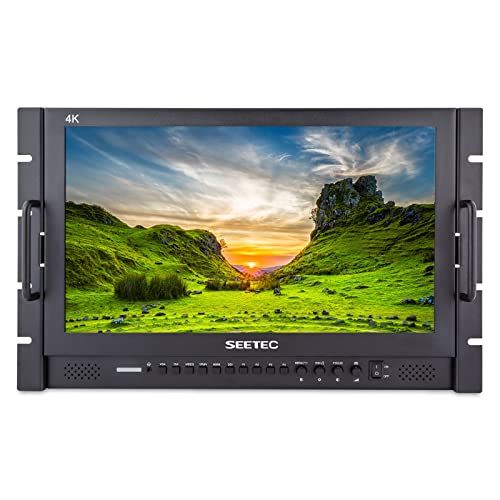
- 7RU rack mount design for installed setups
- 17.3-inch Full HD IPS panel with Rec.709 support
- Front and rear 3-color tally lights
Best For: Control rooms and studio racks that need a fixed broadcast monitor
Quad-Split 4K Multiview Pick
FEELWORLD ATEM156 15.6" Director Monitor

- 4 x HDMI I/O with quad-split multiview
- 15.6" IPS Full HD panel with peaking and false color
- VESA mount support plus headphone monitoring
Best For: Live switching setups that need a compact HDMI multiview screen
Carry-On Production Workhorse
SEETEC P173 17.3" Director Monitor

- 17.3" Full HD screen with 300 cd/m² brightness
- 3G-SDI, HDMI, composite, and component I/O
- Includes tally lights, sunshade, and focus tools
Best For: Portable broadcast crews needing SDI compatibility and tally indicators
Daylight Broadcast Flagship
SEETEC P215 PRO 21.5" Director Monitor
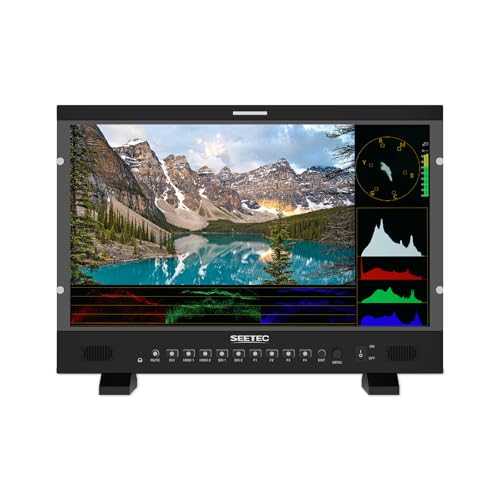
- 1000-nit brightness for daylight viewing
- 21.5" Full HD panel with waveform and 32 LUT support
- 2 SDI inputs, 2 HDMI inputs, and 3-color tally
Best For: Bright-location productions needing a large, feature-rich director screen
Compact Field Monitor

- 13.3-inch IPS display with 1920 x 1080 resolution
- 3G-SDI, HDMI, AV, YPbPr, and DVI-I inputs
- Peaking, markers, freeze, and tally support
Best For: Smaller crews needing a compact monitor with broad connectivity
Daylight Carry-On Monitor
21.5-inch 1000-nit director display

- 1000-nit brightness for better outdoor visibility
- Waveform, vector, histogram, LUT, and false color tools
- HDMI/SDI input-output with protective suitcase
Best For: Bright outdoor shoots and mobile crews needing a rugged monitor
Quad View Streaming Monitor

- Four HDMI inputs and outputs for multi-camera setups
- Quad, dual, and single view monitoring modes
- Peaking, false color, and framing tools included
Best For: Live streaming teams using multiple cameras and HDMI switching
ATEM Multiview Pick – 15.6-inch quad-split ATEM display
If you need director monitors for video production that make live switching easier, the SEETEC ATEM156 is built around 4 HDMI inputs and outputs with quad-split monitoring. Its 15.6-inch IPS panel gives you a Full HD 1920 x 1080 view, while peaking focus, false color, and pixel-to-pixel tools help you judge shots more efficiently during production.
Best For: Live streaming setups and ATEM Mini users who want a compact multiview monitor with basic field-friendly power options.
Pros:
- 4 HDMI inputs and outputs support multi-view monitoring and signal loop-out
- 15.6-inch IPS display with 1920 x 1080 resolution and 170° viewing angle
- Focus-check tools include peaking focus, false color, and pixel-to-pixel
- Can be powered by 12V DC input or the included V-mount battery plate
Cons:
- Brightness is listed at 250 cd/m², so it is not the strongest option for very bright locations
- Battery is not included
- HDCP sources may require an HDMI splitter to strip the signal
This is a practical director monitor if your priority is straightforward ATEM workflow support rather than advanced color tools. It focuses on useful live-production features and a simple control layout.
Bright Studio Choice – 21.5-inch ultra-bright studio screen
For director monitors for video production that need to stay visible in bright spaces, the FEELWORLD FVM215 stands out with a 21.5-inch 1000-nit screen. It supports 4K HDMI input, dual HDMI and 3G-SDI connectivity, and includes tools like waveform, RGB parade, vector scope, focus assist, false color, and 3D LUT loading for more controlled monitoring.
Best For: Studio and location crews who want a larger, very bright monitor with more advanced exposure and color tools.
Pros:
- 1000-nit brightness helps visibility in outdoor shoots and bright studios
- Dual HDMI and 3G-SDI inputs improve compatibility with pro cameras and recorders
- Built-in waveform, RGB parade, vector scope, and 3D LUT loading
- Factory CALMAN color calibration supports more consistent color output
Cons:
- At 21.5 inches, it is larger and less portable than compact field monitors
- FHD 1080p resolution is solid, but not higher than Full HD
If you want a brighter, more feature-rich director monitor for detailed image checks, this model covers the essentials well. It is especially appealing when you need strong visibility and more precise exposure tools on set.
Portable ATEM Option – carry-on quad HDMI with suitcase
Among director monitors for video production, the SEETEC ATEM156-CO is a carry-on friendly option built for multi-camera work with 4 HDMI inputs and outputs. Its 15.6-inch IPS screen delivers Full HD 1920 x 1080 resolution, and the included suitcase makes it easier to transport between studio and location shoots.
Best For: Mobile live production teams that need a compact director monitor they can pack and move quickly.
Pros:
- 4 HDMI inputs and outputs support up to four connected sources and loop-out
- 15.6-inch IPS panel with 1920 x 1080 resolution
- Includes a suitcase for easier transport
- Focus tools include peaking focus, false color, and pixel-to-pixel
Cons:
- Brightness is listed at 250 cd/m², which may be limited in very bright setups
- Battery is not included
- HDCP-protected sources may need an HDMI splitter
This model makes sense if portability matters as much as monitoring features. It keeps the same core live-switching workflow as the ATEM156 while adding a travel-friendly carry solution.
Rackmount Broadcast Pick – 17.3-inch rackmount broadcast display
If your director monitors for video production live in a rack, the SEETEC P173-9HSD-RM is built for that workflow with a 7RU rack mount design. It uses a 17.3-inch Full HD 1920 x 1080 IPS panel, supports 3G-SDI, HDMI, YPbPr, and video inputs and outputs, and adds tally lights plus monitoring tools like focus assist, image freeze, and image flip.
Best For: Studio racks, control rooms, and broadcast installations that need a larger fixed monitor with tally support.
Pros:
- 7RU rack mount design integrates cleanly into studio or post-production racks
- 17.3-inch Full HD IPS panel with Rec.709 color standard support
- 3G-SDI, HDMI, YPbPr, and video inputs and outputs cover multiple signal types
- Front and rear 3-color tally lights support live production coordination
Cons:
- Rack-mount form factor is less flexible for portable field use
- Brightness is listed at 300 cd/m², which is moderate for a broadcast display
This is the most installation-focused option in the group. It is a strong fit when you need a fixed director monitor with professional inputs, tally visibility, and rack-ready mounting.
Quad-Split 4K Multiview Pick – FEELWORLD ATEM156 15.6" Director Monitor
If you need director monitors for video production that can keep multiple camera feeds visible at once, the FEELWORLD ATEM156 is built around a quad-split workflow. It accepts 4 x HDMI input and output ports, supports quad split with picture-in-picture, and can also switch to dual-view or a single image, making it a flexible fit for live switching and small studio setups.
Best For: Live production teams using HDMI switchers like ATEM Mini who want a compact multiview monitor.
Pros:
- 4 x HDMI I/O with quad-split, dual-view, and single-image display modes
- Supports Picture-in-Picture in each window plus HDMI loop outputs to a switcher
- 15.6-inch IPS panel with 1920 x 1080 resolution and 170° viewing angle
- Includes peaking, false color, front headphone jack, and VESA mounting support
Cons:
- Brightness is listed at 250 cd/m², so it may be better suited to controlled lighting
- HDCP-protected sources require an external HDMI splitter to strip the signal
- Native panel resolution is Full HD, not 4K
The ATEM156 is a practical choice if your priority is monitoring several HDMI sources in one place rather than chasing premium brightness or advanced broadcast scaling. Its combination of multiview layouts, pass-through support, and built-in focus tools makes it useful for straightforward switching workflows.
Carry-On Production Workhorse – SEETEC P173 17.3" Director Monitor
For director monitors for video production that travel easily but still give you a larger viewing area, the SEETEC P173-9HSD-CO is designed as a carry-on broadcast monitor. It combines 17.3-inch Full HD imaging with 3G-SDI, HDMI, composite, and component I/O, giving you broad compatibility for field shoots, playback, and live production monitoring.
Best For: On-set crews that want a portable broadcast monitor with SDI and tally support.
Pros:
- 17.3-inch 1920 x 1080 display with 300 cd/m² brightness
- 3G-SDI, HDMI, composite, and component input/output options
- Focus assist, check field, image freeze, image flip, center marker, and safe frame tools
- Front and rear 3-color tally lights included for production coordination
Cons:
- Brightness is lower than high-output daylight monitors
- Glossy screen finish may be less ideal under harsh reflections
- Total HDMI count is limited compared with some multiview-focused monitors
This model stands out when you want a true broadcast-style monitor with practical field features rather than a multiview-heavy director screen. The included suitcase, sunshade, and tally kit reinforce its role as a mobile production monitor.
Daylight Broadcast Flagship – SEETEC P215 PRO 21.5" Director Monitor
If you need director monitors for video production in bright environments, the SEETEC P215 PRO is built around a 1000-nit panel that is viewable in almost every kind of light. With a 21.5-inch Full HD screen, LUT support, waveform monitoring, and HDR monitoring, it is aimed at crews that want a larger, more capable production display for field shooting and on-set review.
Best For: Crews working outdoors or in mixed light who need a bright, feature-rich broadcast monitor.
Pros:
- 1000-nit brightness for daylight-viewable monitoring
- 21.5-inch 1920 x 1080 screen with HDR monitoring and CalMAN calibration
- Built-in waveform monitoring and support for 32 custom LUTs
- 3-color tally light plus 2 SDI inputs and 2 HDMI inputs
Cons:
- Heavier than the smaller portable monitors at 4.5 kg
- Viewing angle is listed at 89 degrees, narrower than some IPS alternatives
- Like other Full HD monitors, it does not offer a native 4K panel
The P215 PRO is the most display-forward option here, especially if visibility and image tools matter more than compact size. Its high brightness, waveform, LUT support, and HDMI 4K60 compatibility make it a strong fit for demanding production work.
Compact Field Monitor – 13.3-inch Full HD SDI monitor
If you need director monitors for video production in a compact build, this 13.3-inch SEETEC model is a practical field-ready option. It pairs a Full HD IPS panel with 3G-SDI, HDMI, AV, YPbPr, and DVI-I connectivity, plus focus and framing tools that help when checking shots on set.
Best For: Smaller production setups that want a lightweight monitor with broad input support and useful on-camera assist tools.
Pros:
- 13.3-inch IPS panel with 1920 x 1080 resolution and 170°/170° viewing angles
- Multiple inputs and outputs, including 3G-SDI, HDMI, AV, YPbPr, and DVI-I
- Includes peaking focus assist, center marker, screen markers, image freeze, and pixel-to-pixel
- Built-in speaker, headphone jack, tally indicators, and included sunshade/U bracket
Cons:
- 400 cd/m² brightness is solid, but not as strong as daylight-focused monitors
- 26 ms response time is not the fastest option for motion-critical preview work
This is a well-equipped monitoring tool for crews who want a smaller display with professional assist features and flexible connections. It makes sense when portability and practical framing tools matter more than maximum brightness.
Daylight Carry-On Monitor – 21.5-inch 1000-nit director display
For director monitors for video production in bright locations, this 21.5-inch SEETEC carry-on display stands out with 1000 nits of brightness and a protective suitcase. It also gives you the exposure and focus tools needed for on-set checking, along with HDMI and SDI connectivity for common camera workflows.
Best For: Outdoor and run-and-gun productions that need a bright, portable monitor with waveform-style analysis tools.
Pros:
- 1000-nit brightness helps visibility in daylight or harsh lighting
- 21.5-inch 1920 x 1080 panel with 178° viewing angle
- Supports 32 custom LUTs plus waveform, vector, histogram, false color, and focus assist
- Dual HDMI and SDI input/output, plus portable protective suitcase and V-mount plates
Cons:
- Full HD resolution is fine for monitoring, but not higher than 1080p
- Large 21.5-inch format is less compact than smaller director monitors
This model is aimed at crews who prioritize visibility and on-location durability. The combination of brightness, analysis tools, and protective carry case makes it a strong fit for demanding field work.
Quad View Streaming Monitor – 15.6-inch ATEM-ready display
If your director monitors for video production need to keep multiple sources visible at once, this 15.6-inch SEETEC ATEM156 is built for that job. With four HDMI inputs and outputs, quad-view monitoring, and quick-access buttons, it’s geared toward live switching and multi-camera studio workflows.
Best For: Live streaming and multi-camera productions that want quad split viewing and easy HDMI switching.
Pros:
- Four 4K HDMI inputs and outputs support multi-camera and loop-through use
- Quad view, dual view, and single view modes for flexible monitoring
- Peaking focus, false color, pixel-to-pixel, image freeze, and framing markers
- 15.6-inch IPS Full HD panel with shortcut keys for faster operation
Cons:
- 250 cd/m² brightness is lower than daylight-oriented monitors
- 160° viewing angle is narrower than some IPS competitors listed here
This is a strong fit for teams centered around an ATEM-style live workflow. The combination of quad monitoring, HDMI routing, and quick controls makes it especially useful in control-room or studio environments.
How We Picked the Best Director Monitors for Video Production
We prioritized practical features that matter on set: screen size, panel brightness, input/output flexibility, and monitoring tools like waveform, LUT support, and HDR. We also weighed whether each display is better suited to a compact streaming rig, a mobile production case, or a fixed studio workflow.
Quick Comparison
For smaller switcher setups, 15.6-inch quad-split models are often the easiest to deploy and transport. If you need more room for confidence checks or multi-source review, 17.3-inch and 21.5-inch displays offer a better overview. High-brightness models are the strongest choice for rooms with ambient light, while rackmount and carry-on styles fit studio racks and field kits, respectively.
Key Buying Factors for Director Monitors for Video Production
Screen Size and Viewing Distance
Pick a size that matches how far you will sit from the display. A 13.3-inch monitor works well in tight carts or portable kits, 15.6-inch is the common sweet spot for live production, and 21.5-inch is better when multiple operators need to read the image at once.
Brightness and Color Tools
If you work in bright rooms, look for 1000-nit displays or similar high-brightness specs. Waveform, false color, LUT loading, and HDR support are valuable for exposure checks, matching cameras, and maintaining a consistent look across sources.
Connectivity and Signal Routing
Choose HDMI-heavy models for streaming switchers and smaller rigs, or SDI-capable models if you need longer cable runs and more traditional broadcast workflows. Input/output flexibility matters when the monitor has to sit in the signal path rather than just display a feed.
Portability and Mounting
Carry-on designs suit mobile crews, while rackmount units are better for control rooms and permanent installs. Aluminum construction can add durability without making the monitor feel overly bulky.
Who Should Buy Which Director Monitors for Video Production?
Live streamers and content creators should lean toward compact quad-split HDMI monitors for easy multi-camera oversight. Studio teams and broadcast crews will usually benefit more from larger SDI/HDMI models with waveform and LUT features. Field producers and traveling crews should consider carry-on units for faster setup and safer transport, while rackmount buyers should focus on fixed-install models that integrate cleanly into production racks.
If your workflow depends on clear, reliable monitoring, the best choice is the model that matches your signal format, workspace, and need for real-time image evaluation.