If you want steadier speeds across a large home, mesh WiFi systems with dedicated backhaul are one of the smartest upgrades you can make. They help nodes communicate more efficiently, which can mean better performance for streaming, gaming, and smart-home devices.
In this roundup, we focus on systems that balance coverage, backhaul options, port selection, and value so you can find the right fit without overpaying for features you won’t use.
Best 10 Mesh Wifi Systems with Dedicated Backhaul Picks for 2026
Wired-Backhaul Value Pick
Tenda ME6 Pro WiFi 7 Mesh 3-Pack
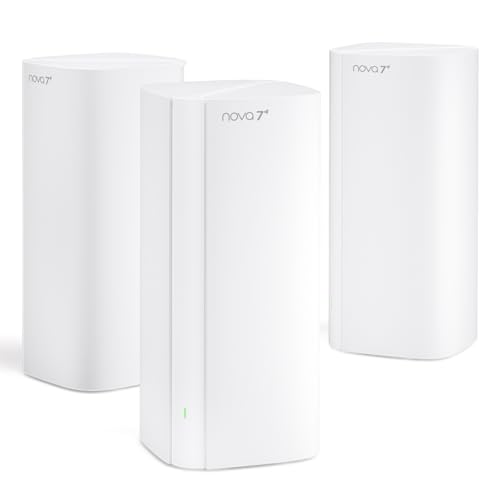
- Ethernet backhaul support for steadier mesh links
- WiFi 7 with MLO and dual-band coverage
- Up to 6,600 sq. ft. with app control
Best For: Large homes that want WiFi 7 mesh coverage with wired backhaul support
Premium Tri-Band Pick
NETGEAR Orbi 770 WiFi 7 Mesh 3-Pack

- Tri-band WiFi 7 with Enhanced Backhaul
- Up to 8,000 sq. ft. and 100 devices
- App setup plus WPA3 and Armor trial
Best For: Large households needing premium WiFi 7 mesh performance and strong backhaul support
Tri-Band Backhaul Balance
TP-Link Deco XE75 WiFi 6E Mesh 3-Pack

- 6GHz band works as backhaul by default
- Up to 7,200 sq. ft. and 200 devices
- Tri-band WiFi 6E with app setup
Best For: Homes wanting a tri-band WiFi 6E mesh system with dedicated 6GHz backhaul
Compact Premium Pick
NETGEAR Orbi 770 WiFi 7 Mesh 2-Pack

- Tri-band WiFi 7 with Enhanced Backhaul
- Up to 5,500 sq. ft. and 100 devices
- App-based setup with WPA3 security
Best For: Medium to large homes that want WiFi 7 mesh performance in a 2-pack
Wi‑Fi 7 value pick
TP-Link Deco 7 BE23 Dual-Band BE3600

- Wi‑Fi 7 with MLO, Multi-RUs, and 4K-QAM.
- Simultaneous wireless and wired backhaul support.
- Two 2.5 Gbps WAN/LAN ports per node.
Best For: Homes wanting a future-ready Wi‑Fi 7 mesh with multi-gig ports and easy expansion.
Budget mesh workhorse
DBIT AX1800 WiFi 6 Mesh System
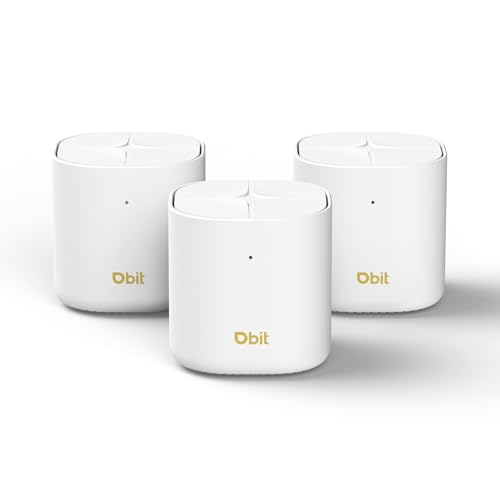
- AX1800 dual-band Wi‑Fi 6 with app control.
- Gigabit ports support stable wired backhaul.
- Up to 6,500 sq. ft. and 150+ devices.
Best For: Budget-conscious buyers wanting easy whole-home coverage and wired backhaul support.
Higher-speed mesh option

- Wi‑Fi 7 with up to 4324 Mbps on 5 GHz.
- 2.5G Ethernet works with Wi‑Fi 7 for stable coverage.
- Covers up to 4,600 sq. ft. and 150+ devices.
Best For: Users wanting faster Wi‑Fi 7 mesh performance and easy expansion across a large home.
WAVLINK AX3000 Mesh Pick
WAVLINK AX3000 WiFi 6 Mesh System 2 Pack

- Wi‑Fi 6 AX3000 dual-band system
- Covers up to 5,000 sq. ft.
- Supports Ethernet backhaul and WPA3
Best For: Buyers who want Wi‑Fi 6 mesh with wired backhaul flexibility.
Tenda Wi‑Fi 7 Value Pick
Tenda WiFi 7 Mesh System BE3600

- Wi‑Fi 7 dual-band mesh up to 3.6 Gbps
- Three Gigabit ports per node
- Supports 160+ devices with WPA3
Best For: Homes wanting Wi‑Fi 7 mesh features and wired flexibility.
TP-Link 6E Backhaul Upgrade

- Tri-band Wi‑Fi 6E with dedicated 6GHz backhaul
- Up to 7,200 sq. ft. coverage
- Includes a 2.5Gbps port per unit
Best For: Large homes needing dedicated 6GHz backhaul and multi-gig ports.
Wired-Backhaul Value Pick – Tenda ME6 Pro WiFi 7 Mesh 3-Pack
If you want one of the more affordable mesh wifi systems with dedicated backhaul support, the Tenda ME6 Pro is built for large homes that need steady coverage more than flashy extras. Its dual-band WiFi 7 design uses wired Ethernet backhaul to help keep mesh links stable, while MLO and the 2.5G WAN/LAN port add flexibility for faster home networking.
Best For: Large households that want WiFi 7 mesh coverage with Ethernet backhaul support and easy app-based setup.
Pros:
- Supports wired Ethernet backhaul for more stable mesh performance.
- Covers up to 6,600 sq. ft., making it a fit for larger layouts.
- WiFi 7 features like MLO help improve throughput and lower latency.
- Includes a 2.5G port plus two 1G ports for flexible wired connections.
Cons:
- Dual-band design does not include a 6GHz band.
- Not compatible with older MW3/MW6 mesh systems.
This is a practical choice if your priority is dependable whole-home coverage with wired backhaul support and simple management through the Tenda app. It looks especially appealing for users who want WiFi 7 benefits without stepping up to a tri-band flagship.
Premium Tri-Band Pick – NETGEAR Orbi 770 WiFi 7 Mesh 3-Pack
The NETGEAR Orbi 770 is a premium pick among mesh wifi systems with dedicated backhaul-style performance thanks to its tri-band design and Enhanced Backhaul. If you need strong whole-home coverage for a busy network, this system is built to keep speeds moving across many devices while supporting WiFi 7 and up to 100 connected devices.
Best For: Larger homes that want a high-performance WiFi 7 mesh system with tri-band backhaul help and strong device capacity.
Pros:
- Tri-band WiFi 7 with Enhanced Backhaul for smoother mesh traffic.
- Up to 8,000 sq. ft. of coverage with 3-pack setup.
- Supports up to 100 devices for busy households.
- Includes app setup, WPA3 security, and NETGEAR Armor trial.
Cons:
- Coverage and performance depend on home layout and satellite placement.
- Armor requires a separate subscription after the trial.
If you want a fast, feature-rich mesh system for a large home, the Orbi 770 stands out for its tri-band architecture and broad compatibility. It is a strong fit when you want premium performance, strong security features, and easy expansion later.
Tri-Band Backhaul Balance – TP-Link Deco XE75 WiFi 6E Mesh 3-Pack
The TP-Link Deco XE75 is a smart option if you want mesh wifi systems with dedicated backhaul behavior without jumping to WiFi 7 pricing. Its tri-band WiFi 6E design uses the 6GHz band as a backhaul by default, which helps keep node-to-node connections stable while covering up to 7,200 sq. ft. and supporting up to 200 devices.
Best For: Homes that want a tri-band WiFi 6E mesh system with a dedicated 6GHz backhaul and broad device support.
Pros:
- 6GHz band can work as backhaul by default for stable mesh links.
- Tri-band WiFi 6E delivers up to 5,400 Mbps total speed.
- Covers up to 7,200 sq. ft. and supports up to 200 devices.
- Includes app setup, Alexa support, and HomeShield security features.
Cons:
- WiFi 6E is not as new as WiFi 7.
- 6GHz coverage is only available to WiFi 6E-compatible devices when not used for backhaul.
For buyers who want a proven tri-band mesh setup with a strong backhaul advantage, the Deco XE75 hits a useful balance of performance and value. It is especially appealing if you have a lot of devices and want stable roaming without paying for the newest generation.
Compact Premium Pick – NETGEAR Orbi 770 WiFi 7 Mesh 2-Pack
The NETGEAR Orbi 770 2-pack is a strong choice for mesh wifi systems with dedicated backhaul-style performance in a smaller package. Its tri-band WiFi 7 platform with Enhanced Backhaul is designed to keep the network fast and consistent across the home, while still delivering up to 5,500 sq. ft. of coverage and support for up to 100 devices.
Best For: Medium to large homes that want WiFi 7 mesh performance with tri-band backhaul support in a 2-pack.
Pros:
- Tri-band WiFi 7 with Enhanced Backhaul for smoother mesh operation.
- Up to 5,500 sq. ft. of coverage from the 2-pack.
- Supports up to 100 devices on one network.
- Includes app setup, WPA3 security, and an Armor trial.
Cons:
- Smaller coverage than the Orbi 770 3-pack.
- Armor protection requires a separate subscription after the free trial.
This 2-pack makes sense if you want Orbi-level WiFi 7 features but do not need the extra satellite included in the larger bundle. It is a straightforward way to get high-speed mesh coverage with backhaul help and future-ready hardware.
Wi‑Fi 7 value pick – TP-Link Deco 7 BE23 Dual-Band BE3600
If you’re comparing mesh wifi systems with dedicated backhaul, the TP-Link Deco 7 BE23 is a strong Wi‑Fi 7 option for homes that want fast wireless performance plus the flexibility of simultaneous wireless and wired backhaul. It combines dual-band Wi‑Fi 7, 2.5 Gbps Ethernet ports, and AI-roaming in a simple Deco system built for whole-home coverage.
Best For: Households that want a future-ready Wi‑Fi 7 mesh with strong coverage, multi-gig wired ports, and easy expansion.
Pros:
- Wi‑Fi 7 features like MLO, Multi-RUs, and 4K-QAM.
- Supports simultaneous wireless and wired backhaul for stronger, more stable connections.
- Each unit includes two 2.5 Gbps WAN/LAN ports for multi-gig devices.
- Up to 6,500 sq. ft. coverage and support for up to 150 devices.
Cons:
- Dual-band design may be less specialized than tri-band systems for backhaul-heavy setups.
- Maximum coverage depends on using the 3-pack configuration.
- Advanced Wi‑Fi 7 features only help if your devices support them.
This is a practical pick if you want modern mesh performance without overcomplicating setup. The BE23’s blend of Wi‑Fi 7, multi-gig ports, and dedicated backhaul support makes it a well-rounded choice for busy homes.
Budget mesh workhorse – DBIT AX1800 WiFi 6 Mesh System
The DBIT AX1800 is a straightforward choice if you want mesh wifi systems with dedicated backhaul support without paying for the latest Wi‑Fi generation. Its dual-band Wi‑Fi 6 design, gigabit ports, and wired backhaul support make it a solid fit for large homes that need reliable coverage and easy roaming.
Best For: Budget-conscious buyers who want simple whole-home coverage, wired backhaul, and easy app-based management.
Pros:
- AX1800 dual-band Wi‑Fi 6 speeds for streaming, gaming, and downloads.
- Gigabit Ethernet ports support stable wired backhaul.
- Covers up to 6,500 sq. ft. and supports 150+ devices.
- Easy setup with app control plus a dedicated mesh pairing button.
Cons:
- Wi‑Fi 6 is less advanced than newer Wi‑Fi 7 mesh options.
- Dual-band systems can be less flexible than higher-end backhaul-focused setups.
- Smart features are useful, but the hardware is more basic than premium rivals.
This is a practical mesh kit for people who care more about stable coverage than cutting-edge specs. With wired backhaul support and broad device compatibility, it covers the essentials well.
Higher-speed mesh option – Deco 7 BE25 Dual-Band BE5000
For shoppers focused on mesh wifi systems with dedicated backhaul, the TP-Link Deco 7 BE25 adds faster Wi‑Fi 7 hardware and 2.5G Ethernet to a dual-band mesh platform. It’s designed for homes that want strong whole-home coverage, easy expansion, and backhaul flexibility in a compact Deco system.
Best For: Users who want faster Wi‑Fi 7 mesh performance, multi-gig wiring, and simple expansion across a large home.
Pros:
- Wi‑Fi 7 with up to 4324 Mbps on 5 GHz and 688 Mbps on 2.4 GHz.
- Wi‑Fi 7 and 2.5G Ethernet work together for faster, more stable whole-home coverage.
- Covers up to 4,600 sq. ft. and supports over 150 devices.
- Deco app setup, AI-roaming, and compatibility with other Deco units.
Cons:
- Coverage is lower than some larger 3-pack systems.
- Backhaul requires at least two Deco units.
- Dual-band design may not suit every heavy backhaul scenario.
The BE25 is a good fit if you want newer Wi‑Fi 7 speeds and the convenience of the Deco ecosystem. It balances easy management with the wired and wireless backhaul features many homes need.
WAVLINK AX3000 Mesh Pick – WAVLINK AX3000 WiFi 6 Mesh System 2 Pack
If you want mesh wifi systems with dedicated backhaul flexibility for a mid-size home or small office, this WAVLINK AX3000 kit is built around Wi‑Fi 6 speed, broad coverage, and easy expansion. It supports both wireless mesh use and Ethernet backhaul, so you can start simple and later hardwire nodes for better latency and steadier performance.
Best For: Homes or offices that want Wi‑Fi 6 mesh coverage with the option to add wired backhaul later.
Pros:
- AX3000 dual-band Wi‑Fi 6 with up to 3.0 Gbps and 160MHz bandwidth.
- Covers up to 5,000 sq. ft. and supports 256+ devices.
- Supports Ethernet backhaul for improved speed and lower latency.
- Easy setup through the WavRouter app or web interface.
Cons:
- It is dual-band, not tri-band, so the backhaul is not a separate dedicated radio.
- Best coverage claims depend on placement and home layout.
This is a practical choice if you want strong Wi‑Fi 6 performance now and the flexibility to hardwire nodes later. The WPA3 support, mesh roaming, and AP mode make it versatile for everyday networking without overcomplicating setup.
Tenda Wi‑Fi 7 Value Pick – Tenda WiFi 7 Mesh System BE3600
For shoppers comparing mesh wifi systems with dedicated backhaul options, this Tenda BE3600 stands out for Wi‑Fi 7 features, dual-band simplicity, and strong port count on each node. It does not use a 6GHz band, so the focus is on fast dual-band mesh performance, MLO, and flexible wired connections through its three Gigabit ports.
Best For: Households that want Wi‑Fi 7 mesh features and plenty of wired-device support without stepping up to tri-band.
Pros:
- Wi‑Fi 7 with MLO and 4K-QAM for speeds up to 3.6 Gbps.
- Supports 160+ devices and covers up to 2,500 sq. ft.
- Three Gigabit ports make wired backhaul and device hookups easier.
- App control, guest mode, parental controls, and WPA3 support.
Cons:
- Single-pack listing means you may need to buy more units for full mesh coverage.
- Does not support the 6GHz band.
This is a good fit if you want modern Wi‑Fi 7 features in a compact, dual-band mesh system. The port layout and device capacity make it especially appealing for mixed wireless and wired setups.
TP-Link 6E Backhaul Upgrade – TP-Link Deco XE75 Pro 3-Pack
If you specifically want mesh wifi systems with dedicated backhaul, this Deco XE75 Pro is the clearest match in the group. Its 6GHz band works as the dedicated backhaul by default, which helps keep node-to-node traffic separate while the tri-band design handles a busy home network.
Best For: Larger homes that want tri-band 6E mesh with dedicated 6GHz backhaul and multi-gig ports.
Pros:
- True tri-band Wi‑Fi 6E with a 6GHz band used as dedicated backhaul by default.
- Up to 7,200 sq. ft. of coverage and support for 200 devices.
- One 2.5 Gbps port plus two Gigabit ports per unit.
- AI-driven mesh, Deco app setup, and HomeShield security features.
Cons:
- Renewed unit, not brand new.
- Premium features may be more than needed for smaller homes.
This is the strongest backhaul-focused option here if you want a dedicated wireless lane between nodes without running Ethernet. The tri-band design, large coverage, and multi-gig port make it a solid pick for demanding households.
How We Picked These Mesh Wifi Systems with Dedicated Backhaul
We prioritized systems that offer a strong path between nodes, whether through a dedicated wireless band, tri-band design, or wired Ethernet backhaul support. We also looked at real-world coverage claims, multi-gig ports, Wi‑Fi 6E or Wi‑Fi 7 support, and capacity for busy homes with many devices.
Because coverage numbers can be optimistic, we favored products with practical hardware advantages rather than headline speeds alone. That means better odds of getting consistent performance in bedrooms, offices, basements, and outdoor-adjacent spaces.
Quick Comparison
Choose Wi‑Fi 7 if you want the most future-proof platform and have newer devices. Choose Wi‑Fi 6E if you want a strong middle ground with 6 GHz support and usually better pricing. Choose Wi‑Fi 6 if your main goal is affordable coverage for a large home.
Tri-band systems are often the easiest way to get the benefits people expect from Mesh Wifi Systems with Dedicated Backhaul, while dual-band systems can still work well when Ethernet backhaul is available or your layout is less demanding.
Key Buying Factors for Mesh Wifi Systems with Dedicated Backhaul
Backhaul Type
Dedicated wireless backhaul reduces traffic competition between nodes. If your home supports it, wired Ethernet backhaul is even better for stability and latency. Some dual-band systems can still perform well when connected by cable.
Coverage and Device Load
Match the system to your home size and number of users, but don’t rely on square-foot claims alone. For households with 4K streaming, gaming, video calls, and smart devices, capacity matters as much as range.
Port Selection
Look for at least one multi-gig WAN or LAN port if you have fast internet service or plan to use wired backhaul. Extra gigabit ports are helpful for TVs, consoles, and desktop PCs.
Standards and Features
Wi‑Fi 7 brings improved efficiency and headroom for newer devices, while Wi‑Fi 6E adds the 6 GHz band for cleaner airspace. MLO, beamforming, and app-based setup can also improve the experience, but they should complement strong hardware rather than replace it.
Who Should Buy Which Mesh Wifi Systems with Dedicated Backhaul?
If you want top-tier performance and the longest upgrade runway, choose a Wi‑Fi 7 mesh system. If you want a strong performance-to-price balance, Wi‑Fi 6E is often the sweet spot. If you’re covering a large home on a tighter budget, Wi‑Fi 6 mesh can still deliver dependable whole-home coverage.
For homes with thick walls or long layouts, prioritize systems that support Ethernet backhaul and offer enough nodes to reduce dead zones. For apartments or smaller homes, a two-pack may be enough, especially if your internet plan is moderate and your device count is manageable.