Choosing among microphone preamps for home studios can be difficult when your setup includes everything from low-output dynamic microphones to sensitive condensers. The right preamp should add clean, controllable gain without introducing distracting noise or unnecessary complexity.
This roundup covers compact inline boosters, affordable tube designs, channel strips, and premium single-channel preamps. Use the buying guide below to match features, connectivity, and gain requirements to your recording workflow.
Best 10 Microphone Preamps for Home Studios Picks for 2026
All-in-One Control

- Mic and instrument preamp
- Compression, de-esser, enhancer, and gate
- Insert, loop-out, and LED metering
Best For: Home studios wanting integrated vocal and instrument processing
Affordable Tube Color
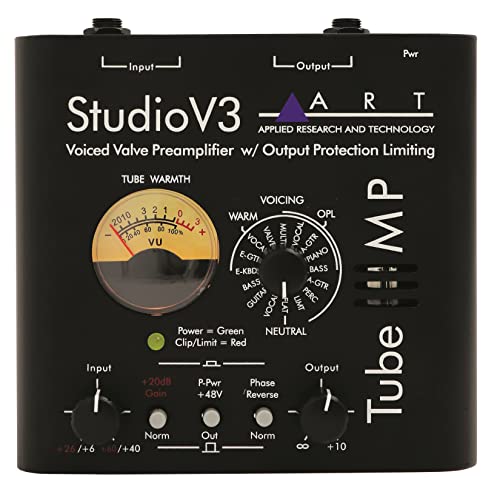
- Single-channel tube preamp
- Variable Valve Voicing
- Works with microphones and instruments
Best For: Compact home studios exploring tube-style preamp voicing
Transformer Detail
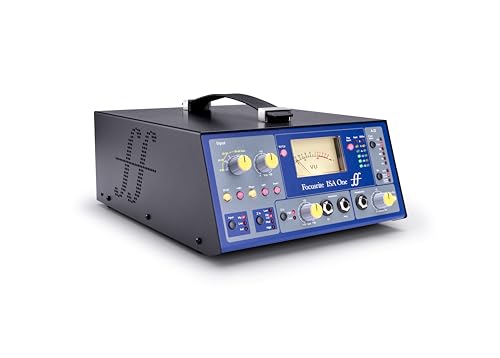
- Transformer-based ISA microphone preamp
- Independent DI and amp routing
- Switchable impedance and detailed metering
Best For: Flexible single-channel recording and DI workflows
Clean Gain Booster

- Adds up to +25 dB of gain
- Uses phantom power without passing it to the mic
- Compact XLR inline activator
Best For: Low-output passive microphones and ribbon mics
Tube Tone Workhorse
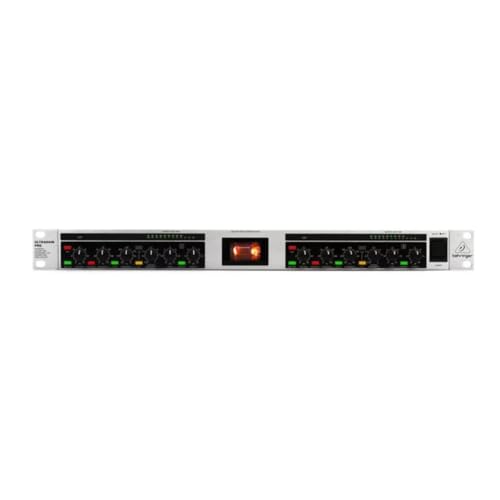
- 12AX7 tube adds musical coloration
- Built-in parametric EQ sections
- 10 Hz–200 kHz stated bandwidth
Best For: Home studios wanting tube tone and onboard EQ
Dynamic Mic Booster

- Adds stated +29 dB clean gain
- For dynamic and ribbon microphones
- Requires 48V phantom power
Best For: Low-output dynamic or ribbon mics
Compact Class-A Booster

- Low-noise Class-A JFET amplifier
- Four matched JFETs
- Shielded compact enclosure
Best For: Low-noise inline signal boosting
Best Inline Gain Booster

- Adds +28 dB of clean, transparent gain
- Ultra-slim all-metal inline design
- Built for dynamic and passive ribbon microphones
Best For: Low-output dynamic and passive ribbon microphones
Best Adjustable Studio Preamp

- 0–72 dB adjustable gain range
- -120 dBV EIN for low-noise operation
- Mic, Hi-Z, 48V, dual-output, and USB-C support
Best For: Versatile home recording and streaming setups
Best Compact Budget Booster

- Adds 20 dB of clean balanced gain
- Supports dynamic and condenser microphones
- Compact black metal case with 48V power
Best For: Simple vocal, podcasting, and livestreaming setups
All-in-One Control – dbx 286s Channel Strip
For home studios needing more than basic gain, the dbx 286s combines a microphone preamp with compression, de-essing, enhancement, and expander/gate processing. Its rack-mountable design and front-panel metering make it a practical choice for shaping vocals, instruments, podcasts, and other sources before they reach your interface or mixer.
Best For: Home-studio users who want a microphone preamp and vocal-processing channel strip in one unit.
Pros:
- Includes compression, de-esser, enhancer, and expander/gate sections.
- Accepts XLR microphone input plus balanced or unbalanced 1/4-inch line input.
- Loop-out and insert connections support additional external processing.
- LED metering and 1U rack-mountable construction suit organized studio setups.
Cons:
- Its single channel may be limiting for stereo or multi-microphone recording.
- The extensive processing features may be more than users seeking only clean preamp gain need.
The 286s is a strong fit when you want hands-on control over dynamics, sibilance, and tonal detail before recording. Choose it over a simpler preamp if integrated processing is central to your workflow.
Affordable Tube Color – ART Tube MP Studio V3
The ART Tube MP Studio V3 is a compact, single-channel tube microphone preamp for home studios that want variable valve voicing in a straightforward format. Its metal enclosure and compatibility with microphones, guitars, keyboards, bass, drums, and vocals make it a flexible entry point for recording different sources.
Best For: Budget-conscious home-studio users seeking a compact tube preamp for vocals and instruments.
Pros:
- Single-channel tube microphone and instrument preamplifier.
- Variable Valve Voicing provides a way to tailor the preamp character.
- Supports a broad range of sources, including vocals, guitars, bass, keyboards, and drums.
- Compact metal enclosure is suitable for smaller studio spaces.
Cons:
- Offers only one channel for recording.
- The supplied notes provide fewer connectivity and metering details than some competing models.
The Tube MP Studio V3 keeps the feature set focused while adding tube-based voicing flexibility. It is a sensible option for a home setup where one versatile channel and a compact footprint matter more than extensive routing or onboard processing.
Transformer Detail – Focusrite ISA One
The Focusrite ISA One is a standalone, transformer-based microphone preamp with an independent DI channel, switchable impedance, insert connectivity, and detailed metering. For home studios looking for a more feature-rich recording front end, it provides flexible routing for microphones, guitars, headphones, and optional digital conversion.
Best For: Engineers and performers who want a flexible single-channel preamp with DI, impedance choices, and monitoring features.
Pros:
- Lundahl LL1538 input transformer supports the ISA preamp design.
- Four switchable input impedances accommodate different microphones.
- Independent DI channel includes amp routing and a rear XLR output.
- Provides an insert point, headphone output, variable-calibration VU meter, and peak meters.
Cons:
- It is a single-channel unit and weighs 12.8 pounds.
- The stereo 192kHz A-D converter is an optional upgrade rather than a standard feature.
ISA One is aimed at users who need more than basic microphone gain, particularly those recording both microphones and direct instruments. Its routing, impedance selection, and metering make it a versatile centerpiece for a carefully built home-studio chain.
Clean Gain Booster – Cloudlifter CL-1
The Cloudlifter CL-1 is a one-channel microphone activator rather than a complete recording preamp, designed to add up to 25 dB of gain to quiet passive microphones. In home studios, it can pair with an existing preamp or interface to strengthen low-output vocals, voiceovers, podcasts, ribbons, and acoustic instruments while keeping phantom power away from the microphone.
Best For: Home-studio users pairing passive or low-output microphones with an interface or preamp that needs additional clean gain.
Pros:
- Adds up to +25 dB of gain using standard +48V phantom power.
- Does not pass phantom power through to passive microphones, including passive ribbons.
- Designed for vocals, podcasts, streaming, radio, live sound, and studio recording.
- Compact stainless-steel enclosure uses straightforward XLR connectivity.
Cons:
- It requires an existing microphone input or preamp and does not replace a full recording interface.
- It is intended for a single channel.
- Phantom power is required for operation.
The CL-1 makes the most sense when your current preamp lacks sufficient gain for a passive microphone. It is a focused signal-boosting accessory, so buyers wanting onboard compression, tone controls, or full preamp routing should look elsewhere.
Tube Tone Workhorse – Behringer MIC2200
Behringer ULTRAGAIN PRO MIC2200 Audiophile Vacuum Tube Microphone/Line Preamplifier
Check Price On AmazonFor home studios looking for microphone preamps with added tone-shaping flexibility, the Behringer ULTRAGAIN PRO MIC2200 combines a discrete mic/line preamp with a hand-selected 12AX7 tube. Its parametric EQ sections and line driver make it suited to setups that need more than basic gain.
Best For: Home-studio users who want tube coloration, broad frequency response, and onboard EQ control.
Pros:
- Uses a hand-selected 12AX7 tube for an ultra-musical sound.
- Includes fully parametric EQs with center-frequency, bandwidth, and level controls.
- Offers an ultra-wide 10 Hz–200 kHz bandwidth and an independent line driver.
Cons:
- Its rack-style feature set may be more involved than a simple inline booster.
- The supplied details do not specify a USB audio interface function despite listing a USB Type-A connector.
The MIC2200 is the more feature-rich option here, especially when you want preamp gain, tube character, and signal shaping in one unit. It makes the most sense for a home studio built around outboard processing.
Dynamic Mic Booster – StudioMan DPM1
The StudioMan DPM1 is a compact choice for home studios seeking microphone preamps for low-output dynamic or ribbon microphones. It adds 29 dB of stated clean gain before the interface or mixer, helping users avoid turning up a noisier built-in preamp.
Best For: Podcasters, streamers, and vocalists using dynamic or ribbon microphones with an interface or mixer that supplies phantom power.
Pros:
- Provides a stated +29 dB of clean, transparent gain.
- Compact plug-and-play XLR design with a rugged metal enclosure.
- Designed to improve signal-to-noise performance at the microphone input.
Cons:
- Requires 48V phantom power, which is not included.
- Strictly not for condenser microphones.
- Its usefulness depends on having an XLR interface or mixer that supplies phantom power.
The DPM1 is a focused gain solution rather than a full-featured preamp. Choose it when your dynamic or ribbon microphone needs more level and your existing interface can provide the required phantom power.
Compact Class-A Booster – Triton Audio FetHead
The Triton Audio FetHead is a compact inline option for home studios comparing microphone preamps that prioritize low-noise signal amplification. Its Class-A JFET design, matched JFETs, and shielded enclosure are aimed at fitting neatly into an XLR microphone chain.
Best For: Home-studio users who want a compact, low-noise inline preamp with a shielded enclosure.
Pros:
- Uses a low-noise Class-A JFET amplifier.
- Features four matched JFETs and a double single-ended amplifier topology.
- Its shielded enclosure is designed for a compact inline setup.
Cons:
- The supplied details do not state the amount of gain provided.
- Unlike the MIC2200, it does not list onboard EQ or other tone-shaping controls.
- The provided specifications list two channels but do not clarify the channel configuration.
The FetHead is best considered a straightforward inline signal-boosting component. Its stated Class-A JFET design and shielding make it appealing when low-noise operation and a small footprint matter more than extensive controls.
Best Inline Gain Booster – sE Electronics DM1 Dynamite
For home studios using a low-output dynamic or passive ribbon microphone, the sE Electronics DM1 Dynamite adds up to 28 dB of clean, transparent gain directly in the XLR signal path. Its inline format is a practical way to improve gain before sending the microphone to an interface, mixer, or other compatible equipment.
Best For: Dynamic and passive ribbon microphones used for podcasting, recording, or live sound.
Pros:
- Provides +28 dB of clean gain for low-output microphones.
- Compact, ultra-slim metal housing adds minimal bulk.
- Gold-plated XLR connectors and a transformerless FET design support reliable, low-noise operation.
Cons:
- Designed for dynamic and passive ribbon microphones rather than as a general-purpose multi-input preamp.
- Offers a fixed 28 dB gain boost instead of adjustable gain.
The DM1 is a focused solution when your existing interface needs more level from a dynamic or passive ribbon mic. It is especially appealing for streamlined podcasting and home-studio setups where clean gain and small size matter.
Best Adjustable Studio Preamp – RO-04 Mic Preamp
The RO-04 stands out among microphone preamps for home studios when you need broad gain control, very low input noise, and support for both microphones and instruments. Its 0–72 dB adjustable gain range, dual outputs, USB-C power support, and dedicated mic and instrument inputs make it adaptable to recording, streaming, and mobile setups.
Best For: Home-studio users recording dynamic, condenser, or ribbon microphones alongside guitar or bass.
Pros:
- Offers a wide 0–72 dB adjustable gain range for low-output and higher-output sources.
- Specifies -120 dBV equivalent input noise for a low-noise signal path.
- Includes 48V phantom power, Hi-Z instrument input, high-pass filter, and phase controls.
- Supports separate output levels and USB-C or power-bank operation for desktop and mobile streaming.
Cons:
- Larger and heavier than a simple inline microphone booster.
- The broad feature set may be more than needed for a basic one-microphone setup.
Choose the RO-04 if flexibility is more important than minimalism. It provides the gain range and connectivity to grow from a simple vocal setup into a more versatile home recording or streaming rig.
Best Compact Budget Booster – 20 dB XLR Mic Preamplifier
This compact microphone preamp is a straightforward choice for home studios that need a clean 20 dB boost without adding much equipment to the setup. Its balanced circuit, XLR output, 48V power, and compatibility with dynamic and condenser microphones suit basic vocal, podcasting, recording, and livestreaming applications.
Best For: Users who want a small, simple gain booster for dynamic or condenser microphones.
Pros:
- Provides 20 dB of balanced, transparent gain.
- Supports dynamic and condenser microphones with 48V power.
- Compact, lightweight metal housing is easy to carry and helps reduce EMC interference.
Cons:
- Has a fixed 20 dB gain level rather than adjustable gain.
- Offers fewer controls and connection options than the RO-04.
- The supplied notes do not specify a noise figure or detailed frequency response.
This model makes sense when you need an uncomplicated, portable boost for a single microphone. Its limited control set is less suitable for users who need instrument input, variable gain, or advanced routing.
How We Picked the Best Microphone Preamps for Home Studios
We focused on the practical requirements of home recording: available gain, noise performance, microphone compatibility, phantom-power behavior, controls, connectivity, and ease of integration with an audio interface. The selection includes dedicated preamps, inline gain boosters, and channel-strip options because they solve different problems.
Inline models are especially useful when an interface struggles to provide enough clean gain for a dynamic or ribbon microphone. Full preamps and channel strips offer broader control, including impedance options, equalization, compression, limiting, or direct-instrument inputs.
Quick Comparison
- Best for channel processing: dbx DBX286SV, with compression, de-essing, enhancement, and gating.
- Best for premium single-channel recording: Focusrite ISA One, with a versatile preamp design and DI input.
- Best for adding gain to dynamic microphones: Cloudlifter CL-1, Triton Audio FetHead, and sE Electronics DM1 Dynamite.
- Best for budget experimentation: ART Tube MP Studio V3 and Behringer MIC2200.
- Best for feature-focused control: RO-04, with adjustable gain and useful studio-oriented controls.
Key Buying Factors for Microphone Preamps for Home Studios
Gain and Noise
Check how much gain your microphone and interface combination actually needs. Low-output dynamics and passive ribbons can require substantial clean gain, while condensers generally need less. More gain is not automatically better if the circuit becomes noisy near its upper range.
Microphone Compatibility
Confirm whether the unit is designed for dynamic, condenser, ribbon, or line-level sources. Phantom power is required by many condensers, but should be used carefully with passive ribbon microphones unless the manufacturer confirms safe operation.
Connection and Power
Most of these products use XLR connections, but inline boosters depend on phantom power from the interface or mixer. Make sure your interface can supply phantom power and that the preamp’s output connects correctly to your input chain. A balanced signal path is preferable for longer cable runs.
Controls and Extra Processing
A simple booster may be ideal for voice recording, streaming, or podcasting. If you want more shaping at the recording stage, consider controls such as compression, de-essing, filtering, phase reversal, impedance selection, or a high-impedance instrument input. Avoid paying for processing you will not use.
Who Should Buy Which Microphone Preamps for Home Studios?
Choose an inline preamp if you already like your audio interface but need more gain for a dynamic or ribbon microphone. These units are compact and typically the easiest upgrade.
Choose a tube or budget standalone preamp if you want an affordable way to add gain and explore a different tonal character. These are useful for basic vocals, instruments, and home-project recording, but compare noise and headroom carefully.
Choose a channel strip if you want hands-on control over vocal dynamics and tone before the signal reaches your interface. It can reduce plugin use, though it requires more setup knowledge.
Choose a higher-end single-channel preamp if clean gain, flexible impedance, dependable construction, and long-term studio use matter most. For most buyers, the best option is the one that supplies enough quiet gain and fits the existing signal chain—not necessarily the model with the most features.