The right photo scanner can help a photography studio digitize archives faster, preserve valuable originals, and deliver consistent files for editing, printing, or client access.
This roundup covers 10 practical options, including fast sheet-fed models, flatbed scanners for delicate prints, and dedicated film scanners for negatives and slides.
Best 10 Photo Scanners for Photography Studios Picks for 2026
Best High-Speed Photo Scanner

- Batch-scans up to 36 photos
- Up to one photo per second at 300 dpi
- Duplex scanning captures photo backs
Best For: High-volume scanning of mixed-size photographic prints
Best Professional Film Scanner
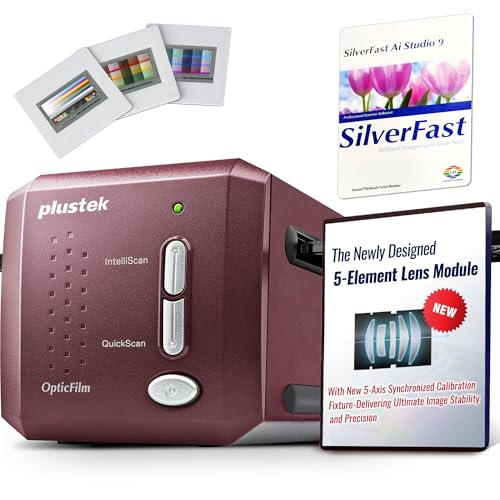
- Scans 35mm film at up to 7200 dpi
- Infrared dust and scratch removal
- Includes IT8 calibration and SilverFast software
Best For: High-detail digitization of professional 35mm film
Best Compact Film Preview Scanner
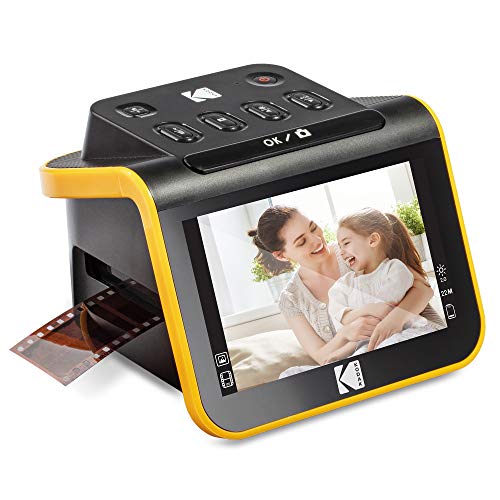
- Supports 135, 110, and 126 film
- Includes a 5-inch LCD screen
- Saves scans directly to SD cards
Best For: Simple, portable digitization and previewing of varied film formats
Best for Rapid Print Digitization

- Scans 4x6 photos in about 2 seconds
- Automatic crop, deskew, and enhancement
- Supports prints up to 8x10 inches
Best For: High-volume loose-print scanning
Best for Connected Studio Workflows

- Scans up to 100 photos per minute
- Wi-Fi 6, USB-C, and cloud support
- Feeder holds up to 36 photos
Best For: Studios combining photo and document scanning
Best for Film and Slide Conversion

- Converts multiple film and slide formats
- Creates 24MP JPEG files
- Standalone operation with SD card storage
Best For: Legacy film and slide digitization
Best Flatbed Value

- 4800 dpi optical resolution for detailed scans
- Easy Photo Fix restores faded photo color
- Compact USB-powered flatbed design
Best For: Individual prints, artwork, albums, and documents
Best Standalone Film Station
Photo, Slide & Negative Scanner

- Scans prints, slides, and 135/110 negatives
- Built-in 5-inch HD viewing screen
- Standalone SD-card workflow with included accessories
Best For: Mixed photo and film archives without computer-dependent scanning
Best Photo Workflow Bundle

- Scans multiple print sizes up to 12-inch panoramas
- 300/600 dpi options with auto crop and deskew
- Includes cleaning kit and organization software
Best For: Print-focused studios building organized digital photo archives
Best High-Speed Photo Scanner – Epson FastFoto FF-680W
For studios handling large collections of prints, the Epson FastFoto FF-680W is one of the most practical photo scanners for photography studios. It can batch-scan up to 36 photos and scan at up to one photo per second at 300 dpi, while supporting prints up to 8 x 10 inches.
Best For: High-volume digitization of family photos, postcards, Polaroids, panoramas, and mixed-size prints.
Pros:
- Batch-scans up to 36 photos and reaches up to 45 ppm/90 ipm for documents.
- Duplex scanning captures handwritten notes on the back of photos in one pass.
- Includes auto enhancement, color restoration, red-eye reduction, de-skew, crop, and rotate tools.
- Offers USB and Wi-Fi connectivity, plus Dropbox and Google Drive backup options.
Cons:
- Its photo-feed workflow is less suited to individual film negatives and slides.
- Wireless functionality depends on compatible setup and the Epson FastFoto app.
The FF-680W is a strong studio choice when speed, batch handling, and convenient restoration tools matter more than specialized film scanning. Its included carrier sheet and SafeTouch technology also add protection for delicate originals.
Best Professional Film Scanner – Plustek OpticFilm 9000i Ai
The Plustek OpticFilm 9000i Ai is designed for studios that need detailed 35mm film digitization. Its true optical resolution reaches 7200 dpi, and its infrared dust and scratch removal system is built to reduce restoration work during scanning.
Best For: Professional photographers and studios digitizing 35mm negatives and slides with color-accurate, high-resolution output.
Pros:
- Captures fine film grain and tonal detail at up to 7200 dpi and 48-bit color depth.
- Five-axis factory calibration supports consistent focus and image quality.
- SilverFast iSRD uses infrared scanning to help remove dust and scratches.
- Includes SilverFast Ai Studio, QuickScan Plus, and an advanced IT8 calibration target.
Cons:
- It is limited to film scanning rather than prints and general documents.
- USB connectivity requires a wired workstation setup.
For a photography studio centered on negatives and slides, the OpticFilm 9000i Ai offers the most specialized imaging workflow in this group. Its calibration tools and restoration software are especially useful when consistency and accurate color reproduction are priorities.
Best Versatile Batch Scanner – Canon imageFORMULA RS40
The Canon imageFORMULA RS40 is a versatile option for photography studios that scan both photos and paperwork. Its automatic feeder handles different-sized originals, and it can scan both sides at once at up to 40 items per minute.
Best For: Studios needing one USB scanner for photographs, receipts, cards, identification documents, and business paperwork.
Pros:
- Automatic feeder supports efficient batch scanning at up to 40 items per minute.
- Handles Polaroids, receipts, cards, driver licenses, tax documents, and photos.
- Includes photo enhancement, red-eye correction, and digital face smoothing tools.
- Supports Windows and Mac and saves to formats including JPG, TIF, BMP, PNG, PDF, and PPTX.
Cons:
- Its maximum listed optical resolution is 600 dpi; 1200 dpi is interpolated.
- It uses USB rather than wireless connectivity.
The RS40 is a sensible all-purpose choice among photo scanners for photography studios, particularly when document work is part of the daily workflow. Its feeder and broad media support make it more flexible than a print-only solution.
Best Compact Film Preview Scanner – KODAK Slide N Scan
The KODAK Slide N Scan is a compact film-focused option for studios that want quick previews and simple conversions without a computer-dependent workflow. It accepts 135, 110, and 126 film formats plus 50mm slides, and saves files directly to an SD card.
Best For: Convenient previewing and basic digitization of multiple consumer film and slide formats.
Pros:
- Supports 135, 110, and 126 negatives and slides, plus 50mm slides.
- Built-in 5-inch LCD enables viewing and editing without a separate monitor.
- One-touch controls adjust film type, color, brightness, and date/time settings.
- Saves digital files to SD or SDHC cards up to 32GB.
Cons:
- It uses a CMOS sensor and 24-bit color depth rather than the higher-end specifications of a professional film scanner.
- SD card storage is not included.
- Its single-item feed is less suited to high-volume batch scanning.
The Slide N Scan is appealing when portability, easy operation, and broad consumer film-format support outweigh advanced studio calibration. Its large screen makes it convenient for reviewing scans immediately with clients or family members.
Best for Rapid Print Digitization – Plustek ePhoto Z300
For photography studios digitizing stacks of everyday prints, the Plustek ePhoto Z300 is a straightforward choice among photo scanners for photography studios. It handles common photo sizes from 3×5 through 8×10, with automatic cropping and deskewing to reduce hands-on cleanup.
Best For: Studios processing large batches of loose photographic prints with a Mac or PC.
Pros:
- Scans a 4×6 photo in about 2 seconds and an 8×10 photo in about 5 seconds at 300 dpi.
- Supports 300 dpi and 600 dpi optical scanning with a CCD sensor.
- Automatic crop and deskew features, plus image enhancement tools for faded photos.
- Works with Windows and macOS systems.
Cons:
- Photos must be inserted one at a time.
- USB connection only; wireless scanning is not listed.
- Resolution is limited to 600 dpi.
The Z300 prioritizes throughput and simplicity over advanced workflow automation. It is a practical fit when a studio needs to convert many physical prints quickly without the slower process of placing each image on a flatbed.
Best for Connected Studio Workflows – ScanSnap iX2500 Photo Edition
The ScanSnap iX2500 Photo Edition is designed for studios that want photo scanning integrated with broader document workflows. Among photo scanners for photography studios, its automatic feeder, wireless connectivity, touchscreen profiles, and cloud support make it especially useful for organized batch processing.
Best For: Studios scanning photos alongside documents, receipts, and business cards across computers, mobile devices, and cloud services.
Pros:
- Scans up to 100 photos per minute, with an automatic feeder holding up to 36 photos.
- Includes three photo carrier sheets for delicate prints.
- Offers Wi-Fi 6 and USB-C connectivity, including computer-free connections to smart devices or cloud services.
- Touchscreen profiles and automatic optimization, naming, and sorting simplify repeat jobs.
Cons:
- The automatic feeder holds fewer photos than documents: 36 versus 100.
- Its 600 dpi CIS sensor may be less suited to users specifically seeking higher listed optical resolution.
- Requires relatively current operating systems and mobile platforms.
This is the most workflow-focused option in the group. Choose it when connectivity, repeatable profiles, and mixed media organization matter as much as scanning speed.
Best for Film and Slide Conversion – Magnasonic FS71 Film Scanner
Studios working with archival negatives and slides need a film-specific tool rather than a standard print scanner. The Magnasonic FS71 converts several film formats into 24MP JPEG files and works without a computer, making it a convenient option among photo scanners for photography studios handling legacy media.
Best For: Studios digitizing 35mm, 110, 126, Super 8 film, and compatible slides.
Pros:
- Supports 35mm, 110, 126, and Super 8 film negatives, plus 135, 126, and 110 slides.
- Produces 24MP digital JPEG files and scans images in less than 5 seconds each.
- Built-in 5-inch display enables viewing and adjustments without a computer.
- Saves directly to an SD card with support for up to 128GB of expandable memory.
Cons:
- Designed for film and slides rather than standard loose photo prints.
- HDMI cable for TV or monitor viewing is not included.
- SD card is not included.
The FS71 is a focused archival scanner with a simple standalone workflow. Its broad film-format support and built-in controls make it a sensible choice for studios preserving older collections without installing specialized software.
Best Flatbed Value – Epson Perfection V19 II
For photography studios that need a compact, versatile flatbed, the Epson Perfection V19 II combines 4800 dpi optical resolution with straightforward USB operation. It is well suited to detailed photo scans, artwork, albums, and occasional document work.
Best For: Studios scanning individual prints, artwork, books, and albums that want high optical resolution in a lightweight flatbed.
Pros:
- 4800 dpi optical resolution supports detailed scans and photo enlargements.
- Easy Photo Fix can restore color to faded photos with one click.
- Removable high-rise lid accommodates books and photo albums.
- Compact, 3.1-pound design is USB powered and includes a built-in kickstand.
Cons:
- Designed for one standard sheet at a time rather than batch scanning.
- USB connection is the listed connection type, with no wireless option noted.
The V19 II is a practical choice when image detail and flexible flatbed scanning matter more than automated film handling or high-volume workflows. Its included software also adds searchable PDF, OCR, and basic photo-restoration functions.
Best Standalone Film Station – Photo, Slide & Negative Scanner
Photography studios working with mixed archives may appreciate this standalone photo scanner, which handles printed photos, 35mm slides, and 135 or 110 film negatives. Its large screen and direct SD-card workflow make it convenient when a computer-free setup is useful.
Best For: Studios digitizing family archives and mixed collections of prints, slides, and film negatives without relying on a computer during scanning.
Pros:
- Supports 35mm slides, 135 and 110 negatives, printed photos, and business cards.
- Large 5-inch HD viewing screen enables previewing and editing on the device.
- Scans save directly to the included 8GB SD card.
- Bundle includes holders, trays, cleaning brush, power adapter, USB cable, and a three-year warranty.
Cons:
- Its listed 1080P resolution may offer less specification detail than dedicated high-resolution flatbeds.
- The supplied notes identify JPEG output but do not specify advanced color-management features.
This model stands out for convenience and format flexibility rather than a traditional studio flatbed workflow. The standalone operation, built-in display, and included accessories can simplify small-to-moderate archival digitization projects.
Best Photo Workflow Bundle – AMBIR Photo Scanner
For photography studios focused on printed photos, the AMBIR Photo Scanner pairs 300 or 600 dpi scanning with auto crop, deskew, editing, and organization tools. The included cleaning kit and protective carrier sheet are useful additions when handling delicate prints.
Best For: Studios digitizing varied print sizes and organizing scanned collections on Mac or PC.
Pros:
- Scans sizes from 1×1-inch photos through 8×10-inch prints and panoramas up to 12 inches.
- Offers 300 dpi and 600 dpi resolution options.
- Software supports auto-enhancement, faded-photo restoration, albums, tags, favorites, and notes.
- Includes a blower, microfiber cloth, anti-static brush, and protective carrier sheet.
Cons:
- USB is the listed connection type, so wireless workflow is not specified.
- It is intended for photos rather than the broader document, book, and film support offered by some alternatives.
The AMBIR is a strong workflow-oriented option for print-heavy studios. Its size flexibility, cleaning accessories, and Picture Studio organization tools make it especially useful when scanning is only one part of a larger photo-archiving process.
How We Picked the Best Photo Scanners for Photography Studios
We focused on the workflow demands studios face most often: scan speed, image quality, media compatibility, ease of use, and file consistency. The selection includes scanners for high-volume print archives as well as dedicated equipment for 35mm film, slides, and mixed-size photographs.
We also considered useful studio features such as automatic cropping and deskewing, duplex scanning, feeder capacity, wireless connectivity, preview screens, bundled cleaning tools, and compatibility with Windows or macOS. Resolution claims were treated as one factor rather than the only measure of quality, since optical detail, color handling, software, and the condition of the original also affect final results.
Quick Comparison
| Studio Need | Best Scanner Type | Recommended Options |
|---|---|---|
| Large print archives | High-speed sheet-fed scanner | Epson FastFoto FF-680W, Canon imageFORMULA RS40 |
| High-detail negatives and slides | Dedicated film scanner | Plustek OpticFilm 9000i Ai |
| Fast everyday 4×6 prints | Compact photo scanner | Plustek ePhoto Z300, AMBIR Photo Scanner |
| Portable or standalone film conversion | Film and slide scanner with display | KODAK Slide N Scan, Magnasonic All-in-One |
| Flexible flatbed scanning | Flatbed photo scanner | Epson Perfection V19 II |
Key Buying Factors for Photo Scanners for Photography Studios
Scan Volume and Workflow
For hundreds or thousands of loose prints, prioritize an automatic document feeder, rapid processing, and automatic image separation. Sheet-fed models can save substantial time, but delicate, curled, oversized, or valuable originals may need a flatbed.
Resolution and Image Quality
Choose based on the final use. Moderate optical resolution is often sufficient for online galleries and standard reprints, while high-resolution film scanning is more appropriate for enlargements, restoration, and archival work. Look for dependable color reproduction, shadow detail, and dust-management options alongside the headline DPI figure.
Media Compatibility
Confirm that the scanner supports your studio’s actual inventory. Some models handle only loose prints, while others accept 35mm negatives, mounted slides, 110 or 126 film, and Super 8 formats. A flatbed offers broader flexibility but may be slower than a dedicated film unit.
Software and Connectivity
Automatic crop, deskew, rotation, batch naming, and enhancement tools can reduce editing time. Wireless scanning is convenient for shared workspaces, while USB is typically straightforward and dependable. Verify operating-system support before purchasing.
Who Should Buy Which Photo Scanners for Photography Studios?
Studios digitizing large family-photo collections should start with the Epson FastFoto FF-680W or Canon RS40. Choose the Plustek OpticFilm 9000i Ai when detailed film scans and enlargement quality matter most. For quick 4×6 print capture, the Plustek ePhoto Z300 or AMBIR model emphasizes speed and automation.
If you need a simple standalone solution for occasional negatives and slides, the KODAK or Magnasonic scanners are convenient choices with built-in displays. Choose the Epson Perfection V19 II when you need an affordable flatbed for fragile, varied, or irregular originals. The ScanSnap iX2500 Photo Edition is a strong fit for studios wanting a modern, flexible document-and-photo workflow with wireless or USB operation.