The best podcast recorders for musicians need to do more than capture clear speech. They should handle vocals, instruments, interviews, rehearsals, and spontaneous ideas while keeping setup and file management manageable.
We selected 10 recorders and podcast production systems that cover different workflows, from compact two-channel devices to multitrack units with multiple microphone inputs, headphone monitoring, touch controls, and USB connectivity.
Best 10 Podcast Recorders for Musicians Picks for 2026
Best Podcast Hub

- Four XLR inputs with phantom power
- Four individually controlled headphone outputs
- Phone and USB mix-minus support
Best For: Portable group podcasts and musician interviews
Best Clip-Free Recorder

- 32-bit float recording across six tracks
- Four XLR/TRS inputs plus built-in X/Y mics
- Works as a USB interface while recording to SD
Best For: Musicians needing flexible, distortion-resistant multitrack capture
Best All-in-One Mixer

- Four mic inputs and four headphone outputs
- 14-track SD recording with touchscreen control
- Customizable sound pads and mix-minus connectivity
Best For: Desktop podcasts, live streams, and event production
Best Portable Four-Track
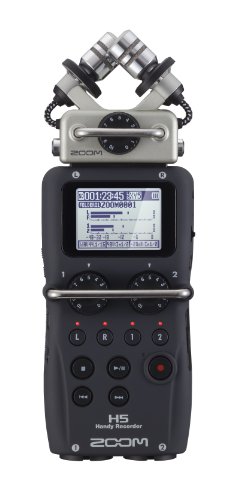
- Interchangeable capsule system
- Two XLR/TRS inputs with phantom power
- Four-track recording and USB interface mode
Best For: Mobile musicians and small field-recording setups
Best Multi-Person Pick

- Four XLR inputs for multitrack group recording
- AI noise reduction and tone enhancement
- Four headphone outputs with separate volume controls
Best For: Group podcasts, ensemble discussions, and remote guest sessions
Best Compact Two-Channel Pick

- Two locking XLR/TRS combo inputs
- 32-bit float recording for clip-free audio
- Lightweight design with SDXC support up to 1TB
Best For: Solo creators and two-source music or podcast recordings
Best for Detailed Field Recording

- Large 19.4mm X/Y stereo microphones
- 32-bit float recording with dedicated gain knobs
- Up to four-track recording at up to 192kHz
Best For: Musicians recording performances, rooms, and multi-track podcast sessions
Best Compact Pick

- 32-bit float stereo recording
- USB-C microphone mode
- Lightweight 92 g design
Best For: Portable music sessions, podcasts, and content creation
Best Multi-Track Option

- Four-track 32-bit float recording
- Two XLR/TRS inputs
- Built-in timecode generator
Best For: Multi-source music, podcast, and filmmaking setups
Best Versatile Mic Patterns

- Three mics with nine patterns
- USB mic plus SD backup
- Up to 20 hours of battery life
Best For: Flexible interviews, music sessions, and field recording
Best Podcast Hub – Zoom PodTrak P4
The Zoom PodTrak P4 is a practical choice among podcast recorders for musicians who need several microphones, separate headphone monitoring, and simple remote-interview support. Its four XLR inputs, sound pads, and battery-powered design suit portable group recordings and rehearsals.
Best For: Musicians and small podcast teams recording up to four microphones with individual headphone monitoring.
Pros:
- Four XLR microphone inputs with phantom power
- Four headphone outputs with individual volume controls
- Mix-minus support for phone and USB remote interviews
- Records multitrack audio and includes programmable sound pads
Cons:
- Battery life is listed at up to 3.5 hours on two AA batteries
- Its feature set is focused on podcast production rather than advanced standalone music recording
The P4 stands out when a compact setup needs multiple mic inputs and easy participant monitoring. Choose it for podcast-style sessions, remote guests, and portable production rather than maximum track count.
Best Clip-Free Recorder – Zoom H6 Essential
The Zoom H6 Essential is one of the more flexible podcast recorders for musicians, combining 32-bit float recording with four XLR/TRS inputs and built-in X/Y microphones. It can capture multiple sources while also working as a USB audio interface.
Best For: Musicians, podcasters, and filmmakers who want multitrack recording with protection against clipping.
Pros:
- 32-bit float recording across six tracks helps preserve distortion-free takes
- Four XLR/TRS combo inputs accommodate vocals and instruments
- Built-in X/Y microphones handle stereo recording up to 135 dB SPL
- Can record to an SD card while operating as a USB audio interface
Cons:
- Requires four AAA batteries
- Optional interchangeable capsules may add to the overall cost
With six-track recording and clip-free capture, the H6 Essential is well suited to unpredictable performances and layered source setups. Its capsule system also gives it room to adapt to different recording scenarios.
Best All-in-One Mixer – TASCAM Mixcast 4
The TASCAM Mixcast 4 is a full-size option for podcast recorders for musicians who want mixing, recording, and live production in one unit. Its touchscreen, four mic inputs, sound pads, and computer, phone, and Bluetooth connectivity support polished podcast and streaming workflows.
Best For: Creators producing multi-person podcasts, live streams, events, or voice-over sessions with real-time effects.
Pros:
- Four XLR/TRS mic inputs and four individual headphone outputs
- Records up to 14 tracks directly to an SD card
- Eight banks of customizable illuminated sound pads
- Includes Bluetooth, USB, and aux connectivity with mix-minus support
Cons:
- Corded operation makes it less portable than battery-powered recorders
- At 2,550 g, it is substantially heavier than handheld options
- Its larger control surface may be more than a simple recording setup requires
The Mixcast 4 makes sense when hands-on control and live sound triggering matter as much as recording. It is a strong studio or desktop centerpiece, especially for productions that need editing and sound-pad control.
Best Portable Four-Track – Zoom H5
The Zoom H5 is a compact, musician-friendly choice among podcast recorders for musicians who need portable four-track recording. Its interchangeable capsule system, two XLR/TRS inputs, and USB interface support both field work and computer-based sessions.
Best For: Musicians and filmmakers recording stereo sources, interviews, or small instrument setups on location.
Pros:
- Interchangeable input capsules provide recording flexibility
- Detachable shock-mounted X/Y microphones help reduce handling noise
- Two XLR/TRS inputs include phantom power and a -20 dB pad
- Supports four-track recording and multichannel USB operation
Cons:
- Records up to four tracks simultaneously, fewer than the H6 Essential
- SD/SDHC card support is listed up to 32GB
- Battery operation uses two AA batteries
The H5 remains a useful middle ground for mobile recording: more capable than a basic stereo recorder, but simpler than a full podcast mixer. Its capsule compatibility is particularly helpful when recording needs change.
Best Multi-Person Pick – Zoom PodTrak P4next
For musicians who also record interviews, rehearsals, or group shows, the Zoom PodTrak P4next is one of the most flexible podcast recorders for musicians. Its four XLR inputs, multitrack support, separate headphone controls, and built-in AI tools are designed for recording several people in one room with minimal setup.
Best For: Musicians and podcast teams recording up to four people, with occasional phone-based guests or video sessions.
Pros:
- Four XLR inputs support multitrack recording for up to four people plus a call-in guest.
- AI noise reduction, Tone Enhancement, and compression help streamline mixing.
- Four headphone outputs provide individual volume controls for comfortable monitoring.
- Up to +70dB of gain accommodates demanding microphones.
Cons:
- Its four-person feature set may be more than a solo musician needs.
- Battery requirements are not specified in the supplied details.
The P4next stands out when multiple performers or speakers need their own microphone and headphone feed. It is less focused on compact two-channel field recording, but its input count and automatic processing make it a practical group podcasting hub.
Best Compact Two-Channel Pick – Zoom H1 XLR
The Zoom H1 XLR is a compact option for musicians seeking podcast recorders for musicians that can also handle instruments and external microphones. Two locking XLR/TRS combo inputs, 32-bit/96kHz recording, and an OLED waveform display provide a straightforward setup for portable recording.
Best For: Solo musicians, interviewers, and small podcast setups that need two flexible inputs in a lightweight recorder.
Pros:
- Two XLR/TRS combo inputs accept microphones, instruments, and other sources.
- 32-bit float recording helps provide clip-free audio capture.
- OLED waveform display makes level monitoring easy at a glance.
- Supports SDXC cards up to 1TB and offers up to 10 hours of battery life.
Cons:
- Two inputs limit larger group recordings.
- It requires two AA batteries.
- The supplied details list a 0.96-inch screen, which may feel small for detailed navigation.
With its modest size and versatile combo inputs, the H1 XLR is a sensible choice when portability matters more than having numerous microphone channels. It is especially well suited to two-source music demos, interviews, and simple podcast recordings.
Best for Detailed Field Recording – Zoom H5 Studio
The Zoom H5 Studio combines large stereo microphones with hands-on gain control and 32-bit float recording, making it a strong choice among podcast recorders for musicians who also capture performances or location audio. It can record up to four tracks simultaneously and includes two XLR/TRS inputs for additional sources.
Best For: Musicians and podcasters who want detailed stereo sound, portable operation, and room to record multiple tracks.
Pros:
- 19.4mm X/Y microphones capture rich stereo audio with a wide dynamic range.
- 32-bit float recording helps prevent clipped takes.
- Dedicated gain knobs provide direct, precise level control.
- Records up to four tracks simultaneously at up to 192kHz in WAV format.
Cons:
- Four AA batteries are required.
- At 14.4 ounces, it is heavier than the H1 XLR.
- Its advanced multi-track capabilities may be unnecessary for basic two-person podcasts.
The H5 Studio is the most performance-oriented option in this group. Its large built-in stereo microphones suit live instruments and ambient recording, while the extra inputs and dedicated controls give experienced users more flexibility for layered sessions.
Best Compact Pick – Zoom H1 Essential
The Zoom H1 Essential is a straightforward choice for musicians seeking podcast recorders for musicians that are small, quick to deploy, and useful beyond podcasting. Its built-in X/Y stereo microphones, clip-free 32-bit float recording, and USB-C microphone mode suit songwriting sessions, rehearsals, interviews, and remote calls.
Best For: Musicians and creators who want a lightweight stereo recorder for spontaneous sessions, podcasts, and content.
Pros:
- 32-bit float recording helps provide clip-free audio without constant gain adjustment.
- Built-in X/Y stereo microphones capture rehearsals, acoustic performances, voices, and ambience.
- USB-C microphone mode supports livestreams, calls, podcasts, and computer or mobile recording.
- Compact 92 g design and up to 10 hours of battery life support portable use.
Cons:
- Its built-in stereo microphone configuration is less flexible than a recorder with external XLR/TRS inputs.
- It requires two AAA batteries.
The H1 Essential emphasizes portability and simplicity. Choose it when built-in stereo capture matters more than multi-input recording or advanced track expansion.
Best Multi-Track Option – Zoom M4 MicTrak
The Zoom M4 MicTrak is built for musicians who need more input flexibility from podcast recorders for musicians. It combines a stereo X/Y capsule with two XLR/TRS inputs, four-track 32-bit float recording, and a USB audio interface for more involved recording setups.
Best For: Musicians, podcasters, and filmmakers recording stereo sources alongside two external microphones or instruments.
Pros:
- Four-track 32-bit float recording provides clip-free capture without setting gain.
- Two XLR/TRS inputs accommodate professional microphones or other compatible sources.
- Built-in X/Y microphones provide high-quality stereo recording.
- Specialized construction helps reduce handling noise, while built-in timecode supports coordinated production work.
Cons:
- Its 15.2-ounce body is less compact than a basic handheld stereo recorder.
- Battery life is listed at up to 9 hours, shorter than some simpler portable options.
The M4 MicTrak is the most capable choice here for combining built-in stereo capture with external inputs. It is especially practical when a project needs multiple sources recorded at once.
Best Versatile Mic Patterns – Zoom H2 Essential
The Zoom H2 Essential stands out among podcast recorders for musicians when recording direction and coverage vary from session to session. Three built-in microphones offer nine selectable patterns, while 32-bit float recording, USB microphone operation, and simultaneous SD backup add flexibility for podcasts, music, and field work.
Best For: Musicians and podcasters who need selectable mono, stereo, or surround-style capture from one handheld recorder.
Pros:
- Three microphones and nine patterns support intimate interviews, wide stereo, and other recording perspectives.
- 32-bit float recording captures audio without continual gain adjustment.
- Can operate as a USB microphone while recording simultaneously to an SD card for backup.
- Bluetooth timecode can synchronize multiple H2 Essential units wirelessly.
Cons:
- Its broader feature set may be more than needed for simple two-channel recording.
- It requires two AA batteries.
The H2 Essential is the strongest fit when microphone pattern choice and backup recording are priorities. Its accessibility features and long listed 20-hour battery life further support extended, varied recording sessions.
How We Picked the Best Podcast Recorders for Musicians
We evaluated these models by looking at the features that matter across both podcasting and music recording: input count, microphone compatibility, recording quality, portability, monitoring options, workflow speed, and computer connectivity. We also considered whether each device suits solo creators, small ensembles, remote interviews, or more structured studio-style production.
Because “podcast recorder” can describe both a handheld field recorder and a complete production mixer, this list includes several form factors. The right choice depends on how many sources you record at once and whether you want onboard controls or prefer editing on a computer.
Quick Comparison
| Type | Best For | Main Advantage |
|---|---|---|
| Compact two-channel recorder | Solo musicians and simple interviews | Small, lightweight, quick to use |
| Handheld multitrack recorder | Live instruments and field sessions | Flexible inputs and portable recording |
| Four-input podcast recorder | Panel shows and remote interviews | Multiple microphones and headphone monitoring |
| Podcast mixer and recorder | Live production and streaming | Hands-on mixing, effects, and routing |
| Music-focused multitrack recorder | Song ideas and ensemble recording | More control over separate tracks |
Key Buying Factors for Podcast Recorders for Musicians
Inputs and Track Count
Count the microphones and instruments you expect to connect simultaneously. Two inputs can be enough for a solo performer or interview, while four XLR/TRS inputs are more practical for co-hosts, guests, stereo instruments, or small ensembles. Also check whether inputs support microphone-level, line-level, or instrument sources.
Microphone and Instrument Compatibility
XLR inputs provide the broadest compatibility with dynamic and condenser microphones, while combo inputs can accept quarter-inch instrument or line connections. Phantom power is important for many condenser microphones. Built-in microphones are convenient for quick field recordings, rehearsals, and ambient sound.
Monitoring and Workflow
Multiple headphone outputs are useful for podcasts with several participants. Look for direct monitoring if you need to hear live audio without distracting latency. Physical controls, sound pads, onboard mixing, and a clear display can speed up live production, while a simpler interface may be better for fast musical sketches.
Recording Quality and Portability
Higher-resolution recording gives you more flexibility during editing, but it also creates larger files. Battery operation, removable storage, a protective design, and a compact body matter when recording concerts, rehearsals, interviews, or locations away from a desk.
USB, Streaming, and Editing Features
If you plan to record directly into a computer, confirm that the device supports USB audio interface operation. Dedicated podcast mixers may add streaming connections, onboard effects, remote-call inputs, or editing software. These features are valuable for live shows but may be unnecessary if you only need clean multitrack files.
Who Should Buy Which Podcast Recorders for Musicians?
Choose a Compact Recorder for Solo Work
Solo musicians, voiceover creators, and simple interview setups should prioritize a small two-channel model that starts quickly and travels easily.
Choose a Handheld Multitrack Recorder for Music
Musicians recording rehearsals, acoustic sessions, or location performances should look for flexible inputs, built-in microphones, and multitrack capability.
Choose a Four-Input Podcast Recorder for Groups
Panel hosts and interviewers should favor four microphone inputs, separate headphone monitoring, remote-call connectivity, and straightforward routing.
Choose a Podcast Mixer for Live Production
Creators who stream, trigger music or effects, and mix several sources in real time will benefit from a dedicated podcast mixer and recorder with tactile controls.
Final Buying Advice
Before choosing among these Podcast Recorders for Musicians, map out your typical session: number of participants, microphone type, instrument connections, portability needs, and whether you edit later or produce live. Buying for that workflow will matter more than choosing the model with the longest feature list.