Choosing the right soldering station for microelectronics comes down to control, consistency, and the ability to work cleanly on small components without overheating them.
Below, we’ve rounded up 10 options that balance precision, speed, and useful workstation features for repair, prototyping, and fine electronic assembly.
Best 10 Soldering Stations for Microelectronics Picks for 2026
Professional Digital Station
Weller 70 Watt Digital Soldering Station
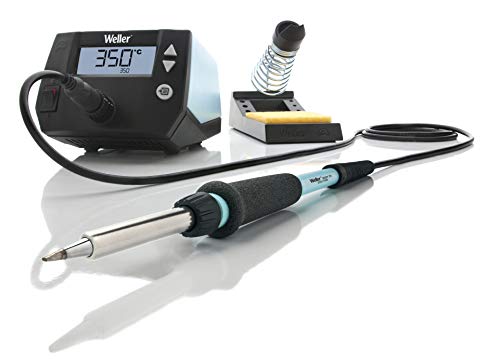
- 70W iron for faster heating and strong output
- Temperature stability helps protect tips and components
- Includes standby mode, auto setback, and password protection
Best For: Users who want a stable digital station for repeatable microelectronics work
2-in-1 Rework Station
YIHUA 862BD+ SMD ESD Safe Station
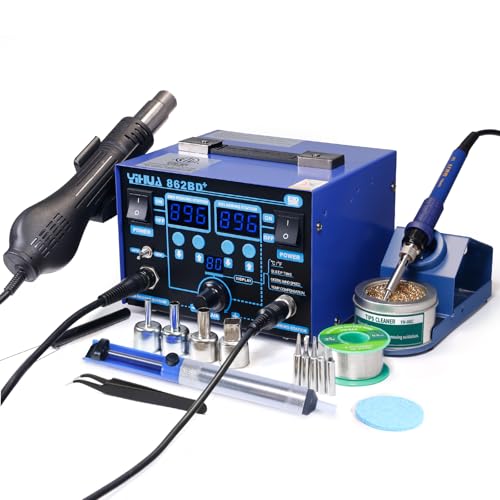
- Combines soldering and hot air rework in one unit
- PID control and digital readouts support stable operation
- Includes tips, nozzles, tweezers, pump, and cleaning tools
Best For: Repair users who need soldering plus hot air rework for microelectronics
Space-Saving Starter Station
WEP 926LED V3 Soldering Station Kit

- Compact design with integrated holder saves space
- PID temperature control and real-time display aid consistency
- Includes tips, solder wire, tweezers, pump, and cleaner
Best For: Hobbyists wanting a compact starter kit for light microelectronics work
Precision Bench Pick
YIHUA 939D+ Digital Soldering Station

- 20 ms temperature compensation for stable heat control
- 392°F to 896°F range with clear °C/°F display
- Metal build with included iron holder and tip cleaner
Best For: Regular soldering tasks where stability and durability matter
Rework Combo Choice
WEP 882D 2-in-1 SMD Hot Air Station

- Combines soldering iron and hot air rework in one unit
- PID-controlled temperature with adjustable air volume
- Includes tips, nozzles, solder wire, tweezers, and pump
Best For: Users who need both soldering and hot-air rework in one station
High-Power Precision Pick
FNIRSI DWS-200 Digital Soldering Station Kit

- 200W power with fast heating and 212°F to 842°F range
- TFT display shows value, curve, or both together
- Includes F210/F245 handles, 9 tips, and helping hands
Best For: Precision work that benefits from fast heat-up and detailed feedback
Compact Digital Bench Kit
YIHUA 926 III 60W Soldering Station
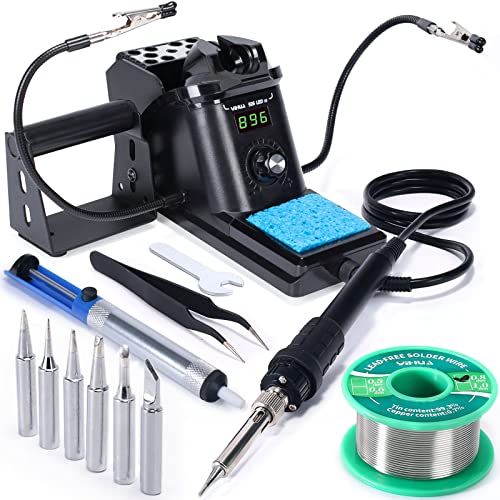
- 60W station with fast heating
- PID stabilization and calibration support
- Compact kit with 2 helping hands and 6 tips
Best For: Small benches and users who want a compact all-in-one kit
High-Power Multi-Preset Kit
WEP 927-IV 110W Soldering Station
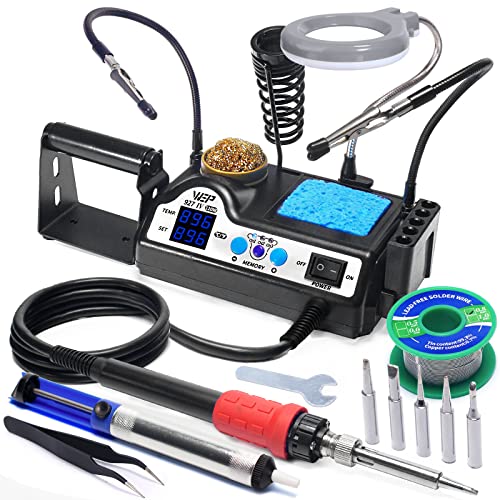
- 110W heater with 90°C to 480°C range
- 3 preset channels and dual temperature display
- Includes LED magnifier and multiple accessories
Best For: Users who want a powerful station with preset memory and built-in magnification
Feature-Rich 100W Workstation
100W Digital Soldering Station Kit

- 100W heating with 356°F to 896°F range
- Auto sleep plus calibration and °C/°F switching
- Comes with helpful bench accessories and tools
Best For: Beginners and general electronics users who want a compact, feature-rich station
Professional Digital Station – Weller 70 Watt Digital Soldering Station
If you want soldering stations for microelectronics that focus on steady control and dependable handling, this Weller digital model is built for that kind of work. It combines 70W output with temperature stability and a temperature lock, which helps keep results consistent when you are working on delicate joints and sensitive components.
Best For: Users who want a more powerful digital station with stable temperature control for repeatable microelectronics soldering.
Pros:
- 70W iron heats faster and offers strong performance for detailed soldering tasks
- Temperature stability of +/- 4°F helps protect tips and components
- Heat-resistant silicone cable supports safer handling during use
- Standby mode, auto setback, and password protection add convenience and control
Cons:
- 120V design limits use to compatible power setups
- Single included tip may mean extra purchases for specialized jobs
This is a practical pick if you want a straightforward digital station with strong power and better temperature consistency than basic entry-level irons. It is aimed at users who value reliable repeatability more than extra rework features.
Compact Micro Soldering Kit – WEP 982-V Precision Soldering Station
For soldering stations for microelectronics where size, speed, and fine control matter, this WEP 982-V is built around precision work. Its compact body, C210-compatible tips, and PID temperature control make it a strong match for small boards and microscope-assisted soldering.
Best For: Entry-level micro soldering users who want a compact station with quick heating and fine-tip control.
Pros:
- Compact 6.30 x 3.11 x 3.15 inch design saves bench space
- Heats to 662°F in seconds with PID control for stable temperatures
- Includes 5 replacement tips plus lead-free solder wire
- Sleep mode and automatic standby help reduce wear and oxidation
Cons:
- 40W output is lower than larger all-purpose stations
- 110V operation may not suit every setup
This station makes sense if your focus is fine electronic work rather than general repair. The small footprint and cartridge-style tips give it a very targeted feel for micro soldering tasks.
2-in-1 Rework Station – YIHUA 862BD+ SMD ESD Safe Station
If you need soldering stations for microelectronics that can also handle hot air jobs, this YIHUA 862BD+ gives you both tools in one unit. The included tips, nozzles, tweezers, and desoldering accessories make it suitable for board work that involves soldering, rework, and component removal.
Best For: Users who want a combined soldering and hot air rework station for microelectronics repair.
Pros:
- 2-in-1 design combines soldering iron and hot air rework station
- PID temperature control helps keep heat settings stable
- Includes 5 tips, 4 nozzles, tweezers, pump, and cleaning tools
- Adjustable sleep mode helps extend tip and element life
Cons:
- More complex than a basic soldering-only station
- 110-127V design limits it to US-standard power use
This is the most versatile choice in the group if your work includes both soldering and rework. It is especially useful when you want one station for routine micro soldering plus hot air component handling.
Space-Saving Starter Station – WEP 926LED V3 Soldering Station Kit
Among soldering stations for microelectronics, this WEP 926LED V3 stands out for its compact layout and beginner-friendly kit contents. The integrated iron holder saves desk space, while PID temperature control and a real-time display help keep small soldering jobs more manageable.
Best For: Hobbyists who want a compact, well-equipped soldering kit for light microelectronics work.
Pros:
- Compact body with integrated iron holder saves workspace
- PID microcontroller helps keep the tip temperature steady
- Includes solder wire, 5 tips, tweezers, desoldering pump, and tip cleaner
- Sleep mode and C/F switching add convenience for regular use
Cons:
- Single-channel station is more limited than multi-function rework systems
- 110-127V rating means it is not for 220V outlets
This is a sensible buy if you want a compact kit that is ready to use out of the box. It focuses on space efficiency and practical accessories rather than advanced rework features.
Precision Bench Pick – YIHUA 939D+ Digital Soldering Station
If you want soldering stations for microelectronics that feel stable and straightforward, the YIHUA 939D+ is built for regular bench use with fast heat-up, precise temperature setting, and clear °C/°F feedback. Its 20 ms compensation and ±5°C stability help keep heat under control when working on small electronic joints, repairs, or lab projects.
Best For: Regular soldering tasks where reliable temperature control and a durable bench setup matter.
Pros:
- Flexible temperature range from 392°F to 896°F for a wide set of soldering tasks
- Built-in transformer with contact-safe voltage and 20 ms temperature compensation
- Metal control panel and metal-alloy stand add durability to the workstation
- Clear digital display with simple °F/°C switching and temperature calibration support
Cons:
- Single-channel station, so it handles one soldering task at a time
- 110-127V US plug means it is not intended for 220V outlets
Overall, this is a strong pick if you want a dependable soldering station for microelectronics with practical controls and a no-frills layout. It focuses more on consistency and daily usability than on extra accessories or rework features.
Rework Combo Choice – WEP 882D 2-in-1 SMD Hot Air Station
For soldering stations for microelectronics that need both standard iron work and hot air rework, the WEP 882D gives you a compact 2-in-1 setup. It includes separate LED displays, adjustable temperature and air volume controls, and a full accessory bundle that makes it ready for electronics repair work right out of the box.
Best For: Microelectronics repair users who want a combined soldering iron and hot air station.
Pros:
- 2-in-1 design combines a soldering station and hot air rework station in one compact body
- PID control supports adjustable temperatures for both iron and hot air functions
- Includes 5 tips, 3 nozzles, solder wire, tweezers, desoldering pump, and tip cleaner
- Useful convenience features like sleep mode, standby mode, auto shutdown, and calibration
Cons:
- Rated for 110-127V only, so it is not for 220V power sockets
- Single-channel design limits simultaneous use of multiple soldering outputs
This is a practical choice when your work includes component removal, board repair, or mixed soldering and rework jobs. The bundled tools and dual-function layout make it especially appealing for an electronics bench that needs flexibility.
High-Power Precision Pick – FNIRSI DWS-200 Digital Soldering Station Kit
If you need soldering stations for microelectronics with more power and more display detail, the FNIRSI DWS-200 is built around a 200W platform, fast heating, and a full-color TFT screen. It also adds preset memory, temperature curve viewing, and two handle styles, making it a strong fit for more precise bench work across different component sizes.
Best For: Precision soldering users who want fast heat-up, preset memory, and detailed display modes.
Pros:
- 200W design with fast heating and a 212°F to 842°F temperature range
- TFT display supports temperature value, curve mode, and combined value-plus-curve views
- Three temperature storage presets help save frequently used settings
- Includes F210 and F245 handles plus 9 tips and 2 helping hands
Cons:
- Single-channel station, so it is not designed for simultaneous multi-tool operation
- Higher-power feature set may be more than basic hobby users need
This model stands out when you want more control data and faster response than a basic bench station. Its mix of power, display flexibility, and included handles makes it well suited to detailed electronics work.
Compact Digital Bench Kit – YIHUA 926 III 60W Soldering Station
If you want soldering stations for microelectronics that save space without giving up core controls, the YIHUA 926 III is a practical starter-to-intermediate bench option. It heats quickly, offers a wide adjustable range, and uses PID stabilization to help hold the set temperature during fine work.
Best For: Small benches, hobbyists, and users who want a compact all-in-one kit with temperature calibration and sleep mode.
Pros:
- 60W station with fast heating and a wide 194°F to 896°F temperature range
- PID temperature stabilization plus digital calibration support
- Compact layout with built-in iron holder and rear tip storage slots
- Includes 2 helping hands, 6 tips, solder, tweezers, sucker, and cleaning accessories
Cons:
- Designed for 110-127V US power only
- Lower power than the 100W and 110W alternatives here
Overall, this YIHUA kit makes sense if your priority is a tidy, functional station for light microelectronics work rather than maximum output. The included accessories and sleep settings add convenience, while the compact footprint is a real advantage on crowded desks.
High-Power Multi-Preset Kit – WEP 927-IV 110W Soldering Station
Among soldering stations for microelectronics, the WEP 927-IV stands out for higher power and convenience features that suit repetitive bench work. Its 110W heating element, dual temperature readout, and three preset channels are useful when you switch often between common settings.
Best For: Users who want a powerful station with preset memory, integrated magnification, and a more feature-packed workspace.
Pros:
- 110W heater with a 90°C to 480°C temperature range
- Dual numerical display shows set and actual temperature
- 3 preset channels reduce repeated temperature setup
- Built-in LED magnifier, helping hands, tip storage, and tip cleaner
Cons:
- Uses WEP #1400 tips, so replacement compatibility is specific
- Rated for 110-127V US power only
This is a strong pick if you want a more complete workstation for micro soldering tasks and value built-in organization tools. The integrated magnifier and preset channels make it especially practical for users who work on similar jobs repeatedly.
Feature-Rich 100W Workstation – 100W Digital Soldering Station Kit
If you are comparing soldering stations for microelectronics and want a balanced mix of power, controls, and included tools, this 100W kit is worth a look. It offers quick heating, adjustable temperature, calibration support, and an auto-hibernate mode that helps reduce idle wear.
Best For: Beginners and general electronics users who want a compact, feature-rich station with a broad accessory set.
Pros:
- 100W station with 356°F to 896°F temperature range
- Temperature calibration and easy °C/°F switching
- Auto sleep with adjustable timer from 0 to 600 seconds
- Includes helping hands, tips, tweezers, solder sucker, pump, stand, and cleaner
Cons:
- No preset channel memory listed
- Accessory set is broad, but the listing does not highlight a magnifier
For users who want a straightforward station with useful protection and comfort features, this kit covers the basics well. Its compact footprint and tool bundle make it a flexible option for small repair jobs, DIY projects, and entry-level microelectronics work.
How We Picked the Best Soldering Stations for Microelectronics
We focused on Soldering Stations for Microelectronics that offer stable temperature control, fast recovery, fine-tip compatibility, and features that help protect sensitive boards. ESD safety, sleep modes, clear displays, and included accessories also mattered because they improve day-to-day usability on small-pitch work.
Quick Comparison
For a simple way to narrow the list, think in terms of workload: entry-level stations are best for light repair and hobby work, while higher-wattage or two-in-one stations make more sense for denser boards, larger joints, and rework tasks. If you mainly do precision soldering, prioritize tip range and temperature stability over raw wattage.
Key Buying Factors for Soldering Stations for Microelectronics
Temperature Control and Stability
Microelectronics demands consistent heat, not just high heat. Look for digital control, quick recovery, and accurate readouts so you can solder efficiently without stressing pads, traces, or nearby parts.
Tip Selection and Compatibility
Fine conical and micro-chisel tips are essential for small components, connector pins, and SMD work. A station with readily available replacement tips is easier to maintain over time.
ESD Safety and Board Protection
When working on modern boards, ESD-safe design is a practical advantage. It reduces the risk of static damage during repair and assembly, especially in dry environments.
Ergonomics and Workflow Features
Sleep mode, auto shutdown, preset channels, helping hands, magnification, and easy-to-read displays can make long sessions more efficient. These features are especially helpful if you move between repair tasks frequently.
When to Choose a Rework Station
If your work includes SMD removal, hot-air reflow, or board-level repair, a 2-in-1 station is worth considering. Traditional iron-only stations are better for straightforward soldering, but rework stations add flexibility for more advanced microelectronics tasks.
Who Should Buy Which Soldering Stations for Microelectronics?
Beginners and casual hobbyists should look for straightforward digital stations with good temperature control and a useful accessory bundle. Repair techs and serious makers will benefit from better tip selection, stronger heat recovery, and ESD-safe construction. If you regularly handle dense boards or rework components, choose one of the higher-powered or 2-in-1 options for more capability and less waiting.
In short, the best choice depends on your parts, pace, and precision needs. Pick the station that matches the smallest and most delicate work you do most often, not just the one with the highest wattage.