Choosing the right USB duplicator can save hours when you need to clone flash drives in batches, verify copies, or securely erase sensitive data. The best models balance speed, capacity, and ease of use.
Below, you’ll find 10 strong options for small offices, IT teams, and production environments, with different port counts and feature sets to match different workloads.
Best 10 USB Duplicators Picks for 2026
Compact Standalone 1:2 Duplicator
StarTech USB Flash Drive Duplicator

- No-computer 1-to-2 duplication and erase
- LCD menu with copy-and-compare verification
- Supports quick copy, sector copy, and overwrite erase
Best For: Technicians and IT pros handling small-batch USB cloning and wiping
High-Capacity 1-to-15 Cloner
Systor USB Duplicator & Sanitizer

- Duplicates one source to 15 targets
- No computer or software required
- Up to 2GB/min with sync and async modes
Best For: High-volume USB distribution and sanitizing in businesses or IT teams
Portable 1:2 Flash Drive Copier
BestDuplicator UB300 USB Copier

- Portable standalone 1-to-2 cloning
- Quick Copy and Whole Media Copy
- Capacity, speed, and erase tools included
Best For: Technicians and small teams needing a compact USB copier for field deployment
Mid-Size 1-to-7 Duplicator
Systor USB Duplicator & Sanitizer 1-to-7

- Copies one source to seven targets
- Standalone with sync and async modes
- Up to 2GB/min transfer rate
Best For: Regular medium-size USB cloning and sanitizing workflows
Compact High-Capacity Cloner
EZ Dupe 1 to 7 Mini USB Plus MK III

- Supports up to 7 drives at once
- Standalone operation with no computer needed
- Updated for faster copy speed and better compatibility
Best For: Small teams needing a compact, standalone USB duplicator for multiple drives
Large-Batch Duplicator and Eraser
StarTech 1:15 Standalone USB Flash Drive Duplicator Cloner Eraser

- Copies or erases up to 15 USB drives
- Includes Copy & Compare verification
- LCD menu with overwrite and erase modes
Best For: IT pros who need a high-capacity standalone duplicator and eraser
Portable Four-Drive Copier
EZ Dupe 1 to 4 Mini USB Plus MK II
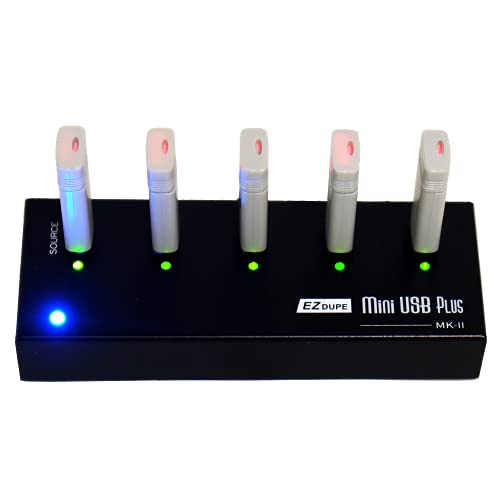
- Copies up to 4 drives at once
- Standalone and portable, with power bank support
- Updated for better compatibility and faster copying
Best For: Portable small-batch USB duplication without needing a computer
Touchscreen Standalone Duplicator
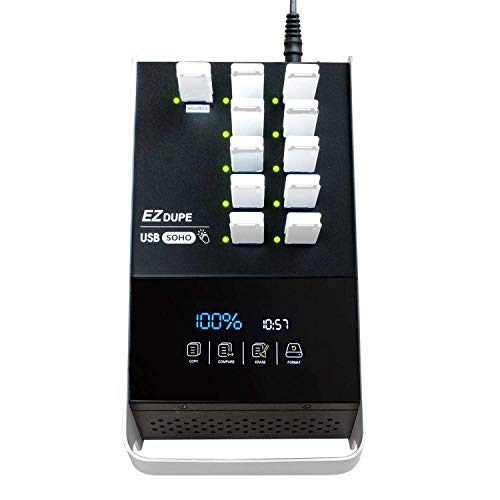
- Touchscreen menu for copy, compare, format, and erase
- Supports USB 2.0/3.0/3.1 flash media
- Standalone design built for daily operation
Best For: People who want an easy-to-use standalone USB flash drive duplicator
Computer-Connected Mini Cloner

- Duplicates up to 10 USB 2.0/3.0 drives at once
- Copies from image files, drives, or folders
- Includes software for Windows and Mac
Best For: People who want a compact computer-connected duplicator
Standalone Compact Copier
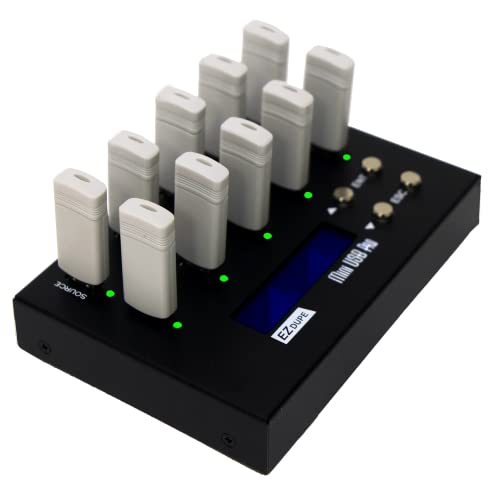
- Copies up to 9 USB flash drives simultaneously
- Quick copy and whole-media sector-by-sector modes
- Includes two erase functions for sanitizing
Best For: People who want a compact standalone USB duplicator with erase features
Compact Standalone 1:2 Duplicator – StarTech USB Flash Drive Duplicator
If you need usb duplicators for quick drive setup or secure wiping, this StarTech model keeps the workflow simple: no computer required, support for copying or erasing USB flash media, and a practical LCD/menu interface for status checks. It is aimed at technicians and IT pros who want a compact standalone tool for small-batch duplication.
Best For: IT teams and technicians who need a portable 1-to-2 USB cloner and eraser for routine deployment or sanitizing tasks.
Pros:
- Standalone 1:2 duplication and erase functions with no PC needed
- Supports quick copy, sector-by-sector copy, and multiple erase modes
- LCD menu plus copy-and-compare verification for cloned drives
- Asynchronous mode lets you replace finished drives and keep copying
Cons:
- Copies to only two drives at a time
- Asynchronous mode requires source content under 64 MB
- Designed for USB flash media, so larger workflows may need a higher-capacity unit
This is a strong fit when you want a straightforward, portable duplicator with both cloning and sanitizing features. Its speed and verification tools make it useful for controlled, repeatable USB drive tasks.
High-Capacity 1-to-15 Cloner – Systor USB Duplicator & Sanitizer
Among usb duplicators, this Systor unit stands out for larger runs because it copies one source to up to 15 targets without needing a computer or software. With a stated transfer rate up to 2GB per minute and both synchronous and asynchronous copy modes, it is built for fast, repeated deployment.
Best For: Businesses and IT groups that need a standalone 1-to-15 duplicator for high-volume USB distribution and sanitizing.
Pros:
- Copies one source to as many as 15 USB drives
- Standalone operation with no computer or software required
- Supports synchronous and asynchronous copy modes
- Includes duplication and sanitizer functionality
Cons:
- Larger desktop unit rather than a compact portable design
- Focused on USB flash-drive copying rather than broader media support
- Best suited to organized batch jobs, not one-off casual use
If your priority is scale, this model is built to reduce manual work when many identical USB drives are needed. The high target count makes it a practical choice for distribution projects and internal rollouts.
Portable 1:2 Flash Drive Copier – BestDuplicator UB300 USB Copier
If you want usb duplicators that are easy to carry and simple to run, the BestDuplicator UB300 is built around standalone 1-to-2 flash drive copying. It supports quick copy or whole-media bit-for-bit cloning, and it adds capacity checks, speed testing, and erase tools for practical field use.
Best For: Technicians, schools, and small teams that need a portable 1-to-2 USB copier with basic verification and erase tools.
Pros:
- Standalone 1-to-2 duplication without a computer
- Quick Copy and Whole Media Copy options
- Includes capacity check, device info, and read/write speed tests
- Compact, lightweight design for transport and field work
Cons:
- Copies to only two target drives at once
- Best performance depends on using source and target media of similar capacity
- Media support beyond USB flash drives requires a compatible USB card reader sold separately
This model makes sense when portability matters more than scale. It combines duplication, erase functions, and media checks in a simple standalone package for small deployment jobs.
Mid-Size 1-to-7 Duplicator – Systor USB Duplicator & Sanitizer 1-to-7
For users comparing usb duplicators that balance capacity and manageable size, this Systor 1-to-7 unit offers standalone copying with no computer or software required. It supports synchronous and asynchronous copy modes and is rated for up to 2GB per minute, making it a solid middle ground for recurring batch jobs.
Best For: Organizations that need a standalone 1-to-7 USB duplicator for regular medium-size cloning and sanitizing tasks.
Pros:
- Copies one source to up to seven USB drives
- Standalone operation with no software needed
- Supports synchronous and asynchronous copy modes
- Rated up to 2GB per minute transfer speed
Cons:
- Not as high-capacity as the 15-target Systor model
- Bulky desktop form factor compared with portable options
- Primarily focused on USB flash drives and optional 2.5″ external hard drives
This is a practical pick when 1-to-2 units are too small but a larger production duplicator would be overkill. It offers a useful mix of speed, capacity, and standalone convenience for regular USB workflows.
Compact High-Capacity Cloner – EZ Dupe 1 to 7 Mini USB Plus MK III
If you need usb duplicators that can handle a small batch without tying up a computer, this EZ Dupe 1-to-7 unit is built for straightforward standalone copying. It supports up to seven USB flash drives at once, adds asynchronous copy mode, and is updated for better compatibility and faster transfer speeds than the original version.
Best For: Teams or technicians who want a compact standalone duplicator for copying multiple USB drives in one pass.
Pros:
- Copies up to 7 USB flash drives simultaneously.
- Standalone plug-and-use operation, so no computer is needed.
- Updated speed rating of up to 2.5GB/min or 45 MB/second.
- Supports USB flash drives and external USB storage with its own power source.
Cons:
- External USB devices must have their own power source.
- Best speeds still depend on the read/write speed of the flash drives used.
This is a practical choice if you want a compact duplicator with a higher seven-drive capacity and simple standalone workflow. The asynchronous mode is especially useful when you want to keep working through drives without waiting for the entire batch to finish.
Large-Batch Duplicator and Eraser – StarTech 1:15 Standalone USB Flash Drive Duplicator Cloner Eraser
For usb duplicators that do more than copy, this StarTech model combines duplication, erasing, and sanitizing in one standalone unit. It is designed for IT workflows that need to manage multiple USB drives, verify cloned data, and wipe drives using several erase modes without relying on a host computer.
Best For: IT pros and technicians who need a standalone duplicator with erase and verification tools for larger USB batches.
Pros:
- Duplicates, erases, and sanitizes USB drives in one device.
- Supports up to 15 drives, making it useful for larger batches.
- Includes system/file copy, sector-by-sector copy, and Copy & Compare verification.
- LCD menu, LEDs, and error/bad sector scanning help monitor the process.
Cons:
- Source content for asynchronous copy must be under 128 MB.
- Bulkier and heavier than mini duplicators.
- External USB storage may need its own power source.
If you need a more feature-rich duplication station, this model stands out for its erase options and verification tools. The 1:15 capacity makes it well suited to higher-volume jobs where workflow control matters as much as copy speed.
Portable Four-Drive Copier – EZ Dupe 1 to 4 Mini USB Plus MK II
This EZ Dupe model is a compact option among usb duplicators when you want portability and simple standalone copying for smaller runs. It supports up to four USB flash drives at a time, offers asynchronous copy, and is updated for better compatibility and faster performance than the original version.
Best For: Users who want a lightweight standalone duplicator for smaller USB batches and occasional portable use.
Pros:
- Copies up to 4 USB flash drives simultaneously.
- Standalone plug-and-use design requires no computer.
- Updated version claims faster 2.5GB/min or 45 MB/second copy speed.
- Can run from a power bank or USB power source.
Cons:
- Lower capacity than 7- or 15-drive models.
- External USB storage still needs its own power source.
- Top speed depends on the speed of the drives being copied.
For small-batch jobs, this is a practical balance of portability and function. It keeps the workflow simple while still giving you asynchronous copying and compatibility updates that improve day-to-day usability.
Touchscreen Standalone Duplicator – EZ Dupe SOHO Touch 1 to 10
If you want usb duplicators that make routine flash-drive cloning simple, the EZ Dupe SOHO Touch is built around an easy touchscreen workflow. It handles copy, compare, format, and erase tasks in a standalone design, so it fits office, lab, or distribution work where repeatable operation matters.
Best For: Users who want a touch-controlled standalone duplicator for daily USB copying, comparison, formatting, and erasing.
Pros:
- Touchscreen interface keeps copy, compare, format, and erase tasks straightforward.
- Supports USB 2.0, 3.0, and 3.1 flash media.
- Rated for high-speed duplication up to 35MB per second.
- Lightweight but built for daily operation.
Cons:
- Designed for USB flash media, not a broad range of storage types.
- Best suited to users who want a physical standalone unit rather than PC software control.
Overall, this model is a practical pick if you value easy operation and a more polished interface in usb duplicators. The strong mix of smart copy, compare, and erase functions makes it a good fit for repetitive workflows.
Computer-Connected Mini Cloner – DupliM 1 to 10 Mini
The DupliM Mini is a compact option among usb duplicators for users who prefer computer-connected control. It duplicates up to 10 USB 2.0 or 3.0 drives at once and can copy from image files, flash drives, or selected files and folders on your hard drive, making it flexible for Windows and Mac workflows.
Best For: Users who want a portable, PC-connected duplicator for Windows or Mac file-based cloning jobs.
Pros:
- Duplicates up to 10 drives simultaneously.
- Works with image files, flash drives, or selected folders from a hard drive.
- Includes DupliM software suite for Windows and Mac OS.
- Compact and portable with USB 3.0 cable included.
Cons:
- Requires a connected computer to operate.
- Has minimum system requirements, so it is not fully plug-and-play for every setup.
This model is a strong fit if your workflow already runs through a PC or Mac and you want controlled duplication from files or folders. It stands out for flexibility and portability rather than standalone operation.
Standalone Compact Copier – EZ Dupe MiniUSB Pro 1 to 9
The EZ Dupe MiniUSB Pro is a compact standalone choice in usb duplicators for fast USB flash media copying and basic sanitizing tasks. It supports up to nine simultaneous copies, offers quick copy or whole-media sector-by-sector modes, and can also erase drives when you need a simple reusable workflow.
Best For: Users who want a compact standalone copier for USB flash drives and occasional erasing tasks.
Pros:
- Copies up to 9 USB flash media drives at once.
- Offers quick copy and whole-media copy modes.
- Includes two erase functions for data sanitizing.
- Supports USB 1.0, 2.0, and 3.0 flash media, plus external USB-powered hard drives up to 2TB.
Cons:
- Peak speed is listed at 35MB per second, so it is not the fastest option available.
- External hard drives must have their own power source.
This is a practical pick if you want a smaller standalone duplicator without giving up useful copy and erase functions. Its support for flash media and limited hard-drive cloning adds flexibility for mixed everyday tasks.
How We Picked the Best USB Duplicators
We focused on practical buyer priorities: port count, cloning speed, standalone operation, erase and sanitize functions, media compatibility, and control interface. For USB Duplicators, the most useful designs are the ones that reduce manual work without adding setup complexity.
We also looked for models that fit different use cases, from compact 1:2 units for light duplication to higher-capacity systems for batch deployments and lab or office workflows.
Quick Comparison: What Matters Most
If you need a fast decision, start with your output volume. Smaller systems are better for occasional jobs and tighter budgets, while 1:7, 1:9, 1:10, and 1:15 models make more sense when throughput matters more than footprint. Standalone USB Duplicators are especially convenient because they do not require a computer for basic cloning tasks.
Speed, however, is only part of the picture. A slightly slower unit with better verification, clearer status feedback, or stronger erase tools can be a better long-term buy.
Key Buying Factors for USB Duplicators
Port Count and Batch Size
Match the number of target ports to your typical production run. If you usually make a handful of copies at a time, a 1:2 or 1:4 unit is usually enough. For larger deployment jobs, a 1:7, 1:9, 1:10, or 1:15 model can dramatically improve efficiency.
Speed and Media Support
Look at the rated transfer rate, but also confirm that the unit supports the media you actually use. Some USB Duplicators are optimized for standard flash drives, while others handle USB hard drives or wider USB 2.0/3.0/3.1 compatibility.
Standalone Vs. Computer-Connected
Standalone models are ideal for simple, repeatable workflows. Computer-connected systems can be more flexible for Mac and PC environments, but they add setup steps and dependence on a host machine.
Erase and Sanitization Tools
If data security matters, choose a unit with erase or sanitize functions that fit your policy. This is important for IT refreshes, loaner drives, training media, and any environment where devices are reused.
Who Should Buy Which USB Duplicators?
For small offices and light in-house duplication, a compact 1:2 or 1:4 model is usually the smartest purchase. For IT departments, event teams, and organizations distributing many drives at once, mid- to high-capacity USB Duplicators offer far better throughput.
If your workflow includes secure data disposal, prioritize sanitizer models. If you value simplicity and portability, choose a standalone unit with a clear LCD or touchscreen interface. The best choice is the one that matches your copy volume, media type, and security needs without overspending on unused capacity.