Vocal processors with looper can turn a single microphone into a complete performance setup, adding harmonies, reverb, pitch effects, and layered backing parts without requiring a full band.
We selected ten options spanning compact vocal pedals, harmony processors, streaming-friendly units, and acoustic-guitar solutions. Use the guide below to match features, controls, connectivity, and looping capacity to your performance style.
Best 10 Vocal Processors with Looper Picks for 2026
Compact Vocal Looper

- Phrase looper for harmonies and layered beatboxing
- Six vocal effect types with one-touch operation
- Mic-stand mount and battery-powered portability
Best For: Mobile performers wanting simple vocal effects and looping
Creative Voice Tweaker

- Portable processor with looping and auto-pitch harmonizer
- Onboard effects and vocoder for electronic textures
- Sync I/O supports coordinated setups
Best For: Electronic performers and experimental vocal creators
Expressive Harmony Pedal

- 12 effects with up to three-part harmony
- Formant pedal shifts vocal character without changing pitch
- 40 presets plus 100 custom patch slots
Best For: Live performers needing expressive control and patch recall
Streaming Vocal Workstation

- 16 voice effects and three-part harmonies
- 48V phantom power supports condenser microphones
- USB recording plus up to 3.5 hours on AA batteries
Best For: Streamers and performers needing portable USB vocal processing
Compact Acoustic Rig

- Combines vocal and guitar processing
- Real-time harmonies and built-in looper
- Physical controls with XLR and 1/4-inch connections
Best For: Singing acoustic guitarists needing an all-in-one live rig
Feature-Packed Value Pick
AVE-100 Vocal Effects Processor

- Pitch correction, harmony, reverb, and delay
- Key detection, anti-feedback, and loop recorder
- 48V phantom power for condenser microphones
Best For: Live singers and creators wanting flexible vocal features
Advanced Pedalboard Choice

- Up to nine vocal effects at once
- Automatic harmony and pitch correction
- Layers vocal and guitar parts with its looper
Best For: Pedalboard-based singing guitarists needing advanced control
Feature-Rich Pick

- Auto pitch, harmony, delay, and reverb
- Layered vocal looping with Key Learn
- OTG recording plus feedback suppression
Best For: Singers and creators wanting an all-in-one vocal processor
Recording Specialist
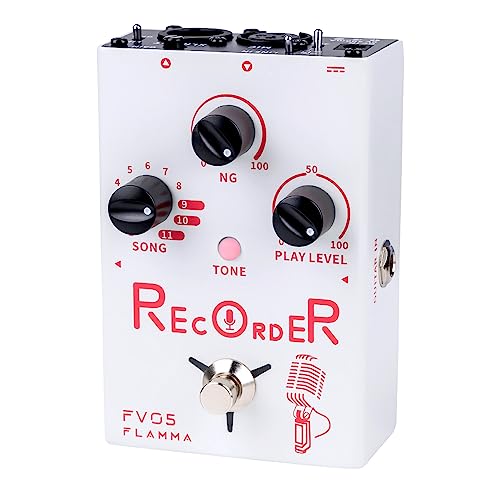
- 70 minutes across 11 recording slots
- Unlimited vocal and instrument overdubs
- Noise gate, reverb, EQ, and guitar input
Best For: Singer-songwriters focused on extended looping and overdubbing
Harmony Pedal Pick

- 11 harmony modes and 12 pitches
- Reverb for microphone and guitar inputs
- Mixed or individual output routing
Best For: Performers prioritizing harmony over onboard looping
Compact Vocal Looper – BOSS VE-5 Vocal Performer
The BOSS VE-5 is a compact choice for vocalists seeking vocal processors with looper functionality. Its one-touch controls, mic-stand mount, and built-in effects make it practical for live singing, beatboxing, rapping, and webcasting.
Best For: Mobile performers who want simple vocal effects and phrase looping.
Pros:
- Phrase looper supports harmonizing and layered beatboxing.
- Includes reverb, delay, double/harmony, dynamics, pitch correction, and tone/SFX effects.
- Compact tabletop design can attach to a microphone stand.
- Battery-powered operation supports portable use.
Cons:
- Offers fewer vocal effects than some larger processors.
- Uses a 1/4-inch audio interface for hardware connections.
The VE-5 focuses on accessible operation rather than extensive patch management. It is a strong fit when portability, quick control, and vocal looping matter most.
Creative Voice Tweaker – Roland AIRA Compact E-4
The Roland AIRA Compact E-4 combines vocal processing and looping in a portable format. With auto-pitch harmonizing, onboard effects, a vocoder, and sync I/O, it suits performers who want a more electronic and experimental vocal setup.
Best For: Electronic performers and creators exploring vocoder, harmony, and synchronized vocal effects.
Pros:
- Combines vocal processing, looping, auto-pitch, and harmonizing.
- Includes onboard effects and a vocoder for electronic vocal textures.
- Portable 7.4-inch-wide design is easy to integrate into compact setups.
- Sync I/O supports coordinated performance workflows.
Cons:
- Its plastic, metal, and rubber construction may not suit every touring preference.
- The supplied package lists a USB cable and leaflet but no additional accessories.
The E-4 stands out among vocal processors with looper features for its electronic focus. Choose it when vocoding, pitch-based effects, and synchronization are more important than traditional vocal polish.
Expressive Harmony Pedal – Zoom V6-SP Vocal Effects
The Zoom V6-SP is a feature-rich option for vocalists comparing vocal processors with looper capabilities. It combines vocal effects, three-part harmonies, formant control, built-in dynamics processing, and USB recording for live or studio-oriented work.
Best For: Performers who want expressive real-time vocal shaping, harmony, and extensive patch storage.
Pros:
- Provides 12 vocal effects and up to three-part harmonies.
- Formant pedal changes vocal character without changing pitch.
- Built-in compressor, enhancer, and de-essing help optimize vocals.
- Offers 40 preset patches and storage for up to 100 custom patches.
Cons:
- At 4.7 pounds, it is less lightweight than compact tabletop processors.
- Its listed package includes the main unit only.
- USB recording is specified at up to 32-bit/44.1kHz.
The V6-SP is suited to singers who need hands-on expression and repeatable settings. Its formant pedal and patch memory make it especially useful for creative live performances.
Streaming Vocal Workstation – Zoom V3 Vocal Processor
The Zoom V3 is a practical vocal processor for streaming, recording, and live performance. While its supplied features emphasize effects and harmonies, its USB interface, battery operation, and microphone support make it a flexible option for creators evaluating vocal processors with looper functionality.
Best For: Streamers and performers who prioritize USB recording, battery portability, and straightforward vocal enhancement.
Pros:
- Includes 16 voice effects and real-time three-part harmonies.
- Built-in enhancer, compression, reverb, delay, and pitch correction support polished vocals.
- Supports condenser microphones with 48V phantom power.
- USB recording reaches up to 32-bit/44.1kHz and battery life is rated up to 3.5 hours.
Cons:
- The supplied notes do not identify a built-in phrase looper.
- USB audio is listed with a maximum sample rate of 44.1kHz.
- Battery operation uses four AA batteries.
The V3 is better viewed as a portable vocal effects and streaming tool than a dedicated looper. It makes sense for users who value mic flexibility and direct computer or mobile recording.
Compact Acoustic Rig – BOSS VE-8 Acoustic Singer
For guitarists comparing vocal processors with looper functionality, the BOSS VE-8 is a compact all-in-one option that combines vocal and acoustic-guitar processing, real-time harmonies, effects, and looping. Its physical controls are designed for straightforward live use.
Best For: Singing acoustic guitarists who want vocal harmonies, guitar processing, and looping in one portable unit.
Pros:
- Combines vocal and guitar preamp, effects, harmonies, and looping.
- Creates real-time harmonies from guitar input or manual key settings.
- Includes ambience effects, Enhance, and chromatic pitch correction.
- Offers 1/4-inch and XLR connections plus USB.
Cons:
- Its feature set is especially focused on acoustic-guitar performers.
- At 1.5 kg, it is less lightweight than the AVE-100.
The VE-8 is a practical choice when a singer-guitarist wants a dedicated, go-everywhere setup rather than separate vocal and guitar processors.
Feature-Packed Value Pick – AVE-100 Vocal Effects Processor
The AVE-100 is a digital choice for shoppers seeking vocal processors with looper capability, pitch correction, harmony, and live-performance effects. It adds key detection, 48V phantom power, and anti-feedback features in a compact 320-gram design.
Best For: Singers, streamers, and performers who want versatile vocal effects and looping with flexible connectivity.
Pros:
- Provides pitch correction, harmony, reverb, delay, and loop recording.
- KeyLearn detects the backing track’s key for harmony and pitch applications.
- Supports condenser microphones with 48V phantom power.
- Includes intelligent anti-feedback and multiple audio connections.
Cons:
- Its included warranty is one year, shorter than the BOSS alternatives listed here.
- The notes identify knob controls rather than a broader physical control layout.
With its combination of automatic key detection, phantom power, looping, and anti-feedback, the AVE-100 offers a broad feature set for live vocals and recording-oriented setups.
Advanced Pedalboard Choice – BOSS VE-500 Vocal Performer
The BOSS VE-500 is built for performers who want vocal processors with looper functions integrated into a guitar pedalboard. It combines automatic harmony, pitch correction, extensive vocal effects, guitar-input integration, and routing flexibility in a stompbox format.
Best For: Singing guitarists and pedalboard users who need deep vocal processing and layered live performance control.
Pros:
- Processes vocals with up to nine effects at once.
- Offers automatic harmony, pitch correction, reverb, delay, modulation, distortion, EQ, and filtering.
- Dedicated guitar input supports harmonies, vocoder effects, and guitar integration.
- Built-in looper layers vocal and guitar parts.
Cons:
- Its advanced feature set may be more than needed for simple vocal looping.
- The supplied details list USB and instrument connectivity but do not specify additional microphone connector details.
The VE-500 is the strongest fit for musicians who prioritize extensive effects, guitar-linked vocal control, and pedalboard integration over a minimal control layout.
Feature-Rich Pick – Auto Pitch Vocal Looper
If you want vocal processors with looper functionality for singing, rehearsal, streaming, or songwriting, this compact unit combines auto pitch, harmony, delay, reverb, and layered vocal recording. Its Key Learn function, feedback suppression, and OTG connection add practical flexibility for live and recording setups.
Best For: Singers and creators who want vocal effects, looping, monitoring, and direct smartphone or computer recording in one device.
Pros:
- Combines auto pitch, harmony, delay, and reverb effects.
- Supports multiple vocal layers with an integrated looper.
- Offers Key Learn, Vocal Erase, feedback suppression, and OTG audio connection.
- Includes XLR input, dual 6.35 mm outputs, and headphone monitoring.
Cons:
- Some features depend on compatible backing tracks or audio sources.
- The digital processor may require checking device compatibility before using OTG connections.
This is the most versatile option of the three for users who want looping alongside pitch, harmony, connectivity, and performance-oriented controls. It is particularly appealing when one compact processor needs to cover several vocal workflow needs.
Recording Specialist – FV05 Vocal Effects Looper
The FLAMMA FV05 is a practical choice among vocal processors with looper features when extended recording capacity and overdubbing matter most. It supports unlimited dub tracks, up to 11 recording slots, and 70 minutes of total recording time, while separate vocal and guitar effects support songwriting workflows.
Best For: Singer-songwriters who want hands-free looping, vocal overdubs, guitar input, and substantial onboard recording capacity.
Pros:
- Provides up to 70 minutes of recording across 11 slots.
- Supports unlimited vocal and instrument dub tracks.
- Includes vocal noise gate, reverb, and three vocal EQ options.
- Accepts 48V phantom power and includes a dedicated guitar input with reverb.
Cons:
- Its listed effects focus primarily on reverb rather than a broader multi-effect set.
- Requires a 9V, 500mA corded power supply.
Choose the FV05 if recording time and layered overdubs take priority over pitch-shifting features. The auto-recording function and footswitch controls also make it well suited to building vocal and guitar arrangements during practice or performance.
Harmony Pedal Pick – FV04 Vocal Harmonizer
Although the FLAMMA FV04 is not a dedicated looper in the supplied specifications, it belongs in a vocal processor comparison for users who prioritize harmony effects over recording. It offers 11 harmony modes, 12 pitches, separate reverb for vocal and guitar, and flexible output routing in a compact stompbox.
Best For: Vocalists and guitarists seeking live harmony, reverb, and flexible signal routing rather than onboard looping.
Pros:
- Offers 11 harmony modes with major and minor scale flexibility.
- Accepts microphone or guitar input with dedicated reverb effects.
- Supports mixed or individual outputs for vocal and guitar channels.
- Includes 48V phantom power and a microphone amplifier option.
Cons:
- The supplied notes do not list an integrated looper.
- Its effect selection is centered on harmony and reverb rather than a wider vocal-processing set.
The FV04 is best treated as a harmony-focused alternative for performers who do not need onboard looping. Its separate-output option and guitar compatibility make it useful in setups where vocal and instrument signals need more control.
How We Picked the Best Vocal Processors with Looper
We focused on the features that matter most during real performances: vocal effect quality, harmony control, looping workflow, microphone and instrument connectivity, footswitch usability, portability, and setup flexibility. We also considered whether each unit suits live singers, acoustic guitarists, streamers, beatboxers, or home creators.
Because these products vary widely, feature depth matters as much as price. A compact processor may be ideal for quick harmonies and basic loops, while a larger multi-effects unit can provide more presets, hands-free control, and detailed sound shaping.
Quick Comparison
| Best For | Look For | Typical Strength |
|---|---|---|
| Solo live singers | Harmony, reverb, and foot control | Fuller vocals with minimal setup |
| Singers with guitar | Separate vocal and guitar effects | One coordinated performance rig |
| Loop-based performers | Phrase recording and overdubbing | Layered vocals, beats, or instruments |
| Streamers and creators | USB, OTG, or simple signal routing | Fast recording and broadcast setup |
| Advanced performers | Presets, MIDI, and assignable controls | More control over complex shows |
Key Buying Factors for Vocal Processors with Looper
Looper Workflow and Capacity
Check the maximum loop time, overdub behavior, undo and redo functions, loop memory, and whether the looper is controlled by dedicated footswitches. A simple one-button looper can work for occasional backing layers, but performers building arrangements need reliable hands-free control.
Harmony and Pitch Features
Harmony processors may use key selection, guitar input, automatic key detection, or manually chosen scales. Guitar-aware harmony can sound more natural when you play chords, while fixed-key modes may be easier for backing tracks or solo vocals. Auto-pitch effects are useful creatively, but they should not replace good microphone technique and an appropriate key.
Effects, Connections, and Control
Look for the effects you actually use, such as reverb, delay, formant shifting, distortion, or pitch correction. Confirm microphone input type, phantom-power requirements, instrument inputs, outputs, headphones, USB, and mobile-device compatibility. Footswitch spacing and preset access are especially important when you cannot reach the unit by hand.
Portability and Power
Compact pedals are easier to transport, but larger units may provide clearer displays, more switches, and deeper editing. Verify whether the processor uses an included adapter, batteries, or USB power, and consider cable requirements for your normal venue or recording space.
Who Should Buy Which Vocal Processors with Looper?
Choose a compact processor if you want fast setup, basic harmony, and occasional looping. Singers who perform with acoustic guitar should prioritize models with dedicated guitar processing and harmony tracking. If layered arrangements are central to your act, choose a unit with generous loop time, dependable overdubbing, and dedicated foot controls.
Streamers and home creators should favor USB or OTG connectivity and straightforward monitoring. Advanced live performers will benefit from programmable presets, multiple outputs, and expanded control options. Before buying, confirm microphone compatibility and the exact looping and connection features—names such as “looper” and “harmony” can describe very different workflows across models.