Great video can still feel amateur if the audio is weak. The right recorder gives you cleaner dialogue, more control on set, and fewer headaches in post.
Below, we’ve rounded up the best field recorders for filmmaking in 2026 for everything from solo interviews to multi-source productions.
Best 10 Field Recorders for Filmmaking Picks for 2026
Ultra-Portable Float Recording
Zoom F3 2-Input Field Recorder

- 32-bit float recording for sudden peaks
- Dual locking XLR/TRS inputs
- Ultra-low-noise preamps and flexible power
Best For: run-and-gun filmmakers and unpredictable locations
Compact 4-Channel Camera Mount Recorder
TASCAM DR-70D 4-Input Portable Recorder
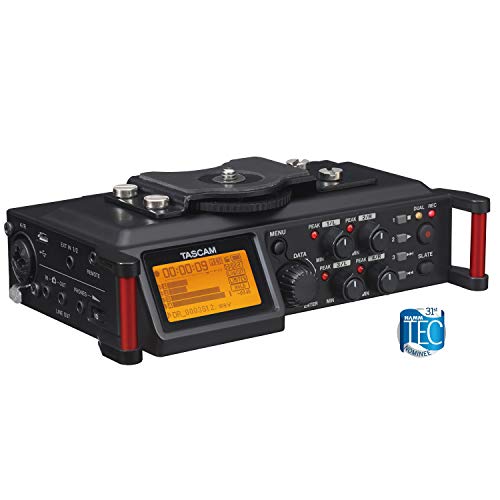
- Four balanced XLR inputs with phantom power
- Mounts above or below a camera
- Dual Recording mode for a safety copy
Best For: indie videographers and compact DSLR rigs
Ready-to-Record Bundle
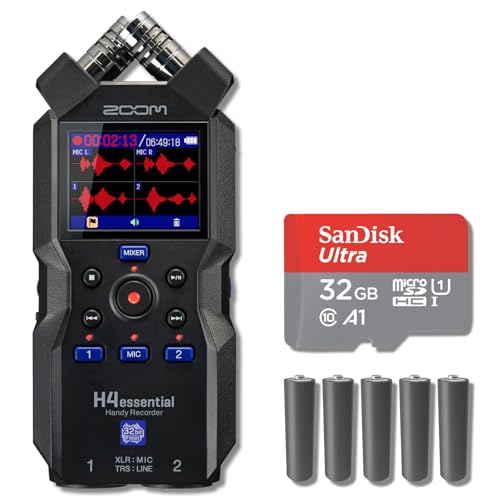
- 4-track 32-bit float handheld recorder
- Includes 32GB microSDHC card and 5 AA batteries
- Dual XLR/TRS inputs plus built-in X/Y mics
Best For: buyers who want a starter field recording kit
Under-Camera 4-Channel Recorder
TASCAM DR-60DMKII Under-Camera Recorder

- Records up to 4 channels
- 2 locking XLR inputs plus 2 x 3.5mm inputs
- Upgraded HDDA preamps with up to 64dB gain
Best For: DSLR shooters and under-camera production rigs
Compact 32-Bit Float Kit

- 4-track 32-bit float recording with built-in stereo mics
- Two XLR/TRS combo inputs with +48V phantom power
- Includes batteries, 32GB card, USB-C cable, and 25-ft XLR cable
Best For: Filmmakers and field recordists who want a compact all-in-one starter bundle
Ultra-Portable Stereo Recorder

- 32-bit float stereo recording with built-in X/Y microphones
- Supports WAV and AAC, with up to 96 kHz sample rates
- USB-C microphone mode works with PC, Mac, iOS, and Android
Best For: Crews needing a small stereo recorder for fast location audio
Expanded Multi-Input Field Recorder

- Six-track 32-bit float recording with four XLR/TRS inputs
- Onboard X/Y capsule plus dual A/D converters for headroom
- Includes 32GB microSDHC card and 5 AA batteries
Best For: Documentary and filmmaking setups that need more inputs in a handheld recorder
Portable Float-Ready Starter
Zoom H1essential Stereo Handy Recorder Bundle

- 32-bit float recording for easy level handling
- Built-in XY stereo mics in a pocket-sized body
- Bundle includes card, tripod, wind muff, headphones, and batteries
Best For: Indie filmmakers and vloggers needing a compact all-in-one recorder
Multi-Input Production Workhorse
Zoom F6 Professional Field Recorder/Mixer

- Six XLR inputs and up to 14 tracks
- 32-bit float recording with timecode I/O
- Rugged compact body for location use
Best For: Production teams and filmmakers needing multi-mic recording with sync
Flexible 4-Track Hybrid
Zoom H5 Portable Handy Recorder Bundle

- 4-input design with XLR/TRS support
- Interchangeable mic capsule system
- Bundle includes tripod, bag, card, and charger
Best For: Documentary and video creators who need a flexible handheld recorder
Ultra-Portable Float Recording – Zoom F3 2-Input Field Recorder
If you’re comparing field recorders for filmmaking, the Zoom F3 is a straightforward pick for run-and-gun audio where level changes can happen fast. Its 32-bit float recording helps preserve quiet dialogue and sudden peaks without constant gain riding, while the dual locking XLR/TRS inputs keep cables secure on more complex rigs.
Best For: Filmmakers who need a compact recorder for unpredictable locations and fast-moving shoots.
Pros:
- 32-bit float recording captures sudden peaks and soft dialogue without stopping to adjust levels.
- Dual locking XLR/TRS inputs are useful when the recorder is mounted out of reach or built into a larger rig.
- Ultra-low-noise preamps help maintain clean audio in uncontrolled environments.
- Flexible battery and USB workflows support long days on set or in the field.
Cons:
- Only two inputs, so it is less suited to larger multi-mic setups.
- Best suited to streamlined recording jobs rather than all-in-one production hubs.
The F3 is a strong fit if you want a compact recorder that prioritizes clean capture and simple operation over channel count. It is especially appealing for filmmakers who need reliable audio without constantly managing levels.
Compact 4-Channel Camera Mount Recorder – TASCAM DR-70D 4-Input Portable Recorder
For filmmakers who want a mounted recorder with more input flexibility, the TASCAM DR-70D is built around compact multi-track capture. It offers four balanced XLR mic inputs with phantom power, built-in mics for on-set ambience, and a form factor that can sit above or below a camera.
Best For: Videographers and indie shooters who need a compact 4-input recorder for camera-rig setups.
Pros:
- Four balanced XLR inputs with phantom power support production sound work.
- Compact body can be mounted above or below a camera rig.
- Built-in microphones add an option for quick on-set capture.
- Dual Recording mode creates a safety copy at a lower level to help protect takes.
Cons:
- Older-style workflow compared with newer 32-bit float recorders.
- Some users may prefer more advanced handheld controls or a newer interface.
The DR-70D makes sense when your priority is getting multiple sources into a camera-friendly recorder without adding a lot of bulk. It is a practical production tool for shoots that need dependable multi-track recording in a small package.
Ready-to-Record Bundle – Zoom H4essential Field Kit
The Zoom H4essential bundle is aimed at buyers who want field recorders for filmmaking and need the basics included from day one. It pairs a 4-track 32-bit float handheld recorder with a 32GB microSDHC card and five AA batteries, so you can start recording right away.
Best For: Filmmakers, podcasters, and journalists who want a starter kit with storage and batteries included.
Pros:
- 4-track 32-bit float recording is designed to handle quiet and loud sources on the same take.
- Dual XLR/TRS combo inputs support mics, wireless receivers, and stereo setups.
- Built-in X/Y stereo mics are rated for up to 130 dB SPL for louder environments.
- Bundle includes a 32GB card and AA batteries, making it ready to use out of the box.
Cons:
- Runs on AA batteries rather than a built-in rechargeable pack.
- The bundle card is 32GB, which may feel limited for longer multitrack sessions.
This bundle is useful if you want a recorder that is easy to deploy without shopping for accessories separately. It offers a practical starting point for portable production audio and small-field shoots.
Under-Camera 4-Channel Recorder – TASCAM DR-60DMKII Under-Camera Recorder
The TASCAM DR-60DMKII is built for filmmakers who want an under-camera recorder with a simple, production-friendly layout. It records up to four channels, combines two locking XLR inputs with two 3.5mm inputs, and uses upgraded HDDA preamps for low-noise capture.
Best For: DSLR and mirrorless shooters who need a compact under-camera recorder with multiple input options.
Pros:
- Records up to four channels to internal SD media.
- Two locking XLR inputs with 48V phantom power support pro mics.
- Two 3.5mm inputs work well for wireless or lavalier sources.
- Upgraded HDDA preamps provide up to 64dB of gain with low noise.
Cons:
- Uses a compact, older-style recorder design rather than a newer float-recording workflow.
- Internal memory is listed as very small, so SD-card use is essential.
The DR-60DMKII fits shoots that need a camera-rig-friendly recorder with a mix of pro and mini-jack inputs. It is a sensible option when you want a tidy under-camera setup and straightforward channel handling.
Compact 32-Bit Float Kit – Zoom H4essential Bundle
The Zoom H4essential bundle is a practical entry point for field recorders for filmmaking when you want a simple, ready-to-go kit. It combines a 4-track 32-bit float recorder with built-in stereo mics, two XLR/TRS combo inputs, and the accessories needed to start recording on day one.
Best For: Filmmakers, podcasters, and field journalists who need a compact 32-bit float recorder with core accessories included.
Pros:
- 32-bit float capture across 4 tracks helps reduce gain-setting worries.
- Built-in X/Y stereo mics plus two XLR/TRS inputs add flexibility on location.
- Bundle includes 5 AA batteries, a 32GB microSDHC card, a USB-C cable, and a 25-ft XLR cable.
- Works as a class-compliant USB-C audio interface for Mac, Windows, tablets, and more.
Cons:
- Only two XLR/TRS combo inputs, so it is less expandable than larger multi-input recorders.
- Accessories are practical, but the core recorder still stays geared toward compact rigs rather than full production carts.
Overall, this bundle makes sense if you want a straightforward field recording setup with 32-bit float safety and enough included gear to begin tracking interviews, ambience, or on-set audio immediately.
Ultra-Portable Stereo Recorder – Xvive XV1-R
The Xvive XV1-R is a compact option for field recorders for filmmaking when portability matters more than multi-input expansion. Its built-in X/Y microphones, 32-bit float recording, and USB microphone function make it useful for quick location captures and simple production workflows.
Best For: Filmmakers, content creators, and podcasters who want a lightweight stereo recorder for fast, high-dynamic-range capture.
Pros:
- 32-bit float recording helps protect against clipping and bad gain settings.
- Built-in X/Y microphones are rated for clean capture up to 130 dB SPL.
- Supports WAV and AAC formats, plus up to 96 kHz sample rates.
- Can function as a USB-C microphone with PC, Mac, iOS, and Android devices.
Cons:
- No headphone jack is listed in the supplied details.
- Built-in stereo mics keep it simple, but it is not an XLR-based field recorder.
- Storage support includes specific card capacities, so it is less of a pro I/O hub than larger handheld recorders.
In practice, the XV1-R suits quick documentary pickups, ambient sound, and mobile recording when you want a small recorder that can travel anywhere and still give you 32-bit float safety.
Expanded Multi-Input Field Recorder – Zoom H6essential Bundle
The Zoom H6essential bundle is the strongest fit here if you want field recorders for filmmaking with more input count and more routing flexibility. It combines four XLR/TRS inputs, an onboard X/Y capsule, and 32-bit float WAV recording into a package that is ready for interviews, documentary work, and sermon capture.
Best For: Documentary shooters, filmmakers, and worship or interview recordists who need a six-track handheld recorder with four XLR inputs.
Pros:
- Records 6 tracks at once, including 4 XLR/TRS combo inputs and the onboard X/Y capsule.
- 32-bit float WAV recording with dual A/D converters provides strong headroom.
- USB-C interface mode supports 6-in/2-out recording while continuing to record to SD.
- Bundle adds a 32GB microSDHC card and 5 AA batteries for immediate use.
Cons:
- It is more equipment-heavy than a smaller handheld recorder.
- The bundled card is 32GB, which may be limiting for longer multi-track sessions.
If you need a more capable handheld for multi-source production sound, this bundle stands out for its four XLR inputs and simultaneous interface-plus-card recording workflow.
Portable Float-Ready Starter – Zoom H1essential Stereo Handy Recorder Bundle
If you want a compact option in field recorders for filmmaking, the Zoom H1essential bundle is an easy grab-and-go choice for quick dialogue, ambience, and scratch audio. Its 32-bit float recording helps avoid gain-staging headaches, while the included tripod, wind muff, memory card, batteries, and headphones make it ready for simple location work right out of the box.
Best For: Indie filmmakers, vloggers, and creators who want a small, travel-friendly recorder with a complete accessory kit.
Pros:
- 32-bit float recording reduces the need to set gain levels.
- Built-in XY stereo microphones capture immersive stereo sound.
- Includes 64GB microSD card, tripod, wind muff, headphones, and batteries.
- USB-C power and up to 10 hours on 2 AAA batteries add flexibility.
Cons:
- Only built-in stereo mics are included; XLR input flexibility is not part of this model.
- Best suited to lightweight recording jobs rather than multi-mic productions.
Overall, this is a practical beginner-friendly recorder for filmmakers who value portability and an easy setup. It is not a full mixer replacement, but for simple on-location sound capture, it offers strong convenience in a compact package.
Multi-Input Production Workhorse – Zoom F6 Professional Field Recorder/Mixer
For field recorders for filmmaking that need true production flexibility, the Zoom F6 is built around multi-mic capture and sync-friendly workflow. Its 32-bit float recording, six XLR inputs, and timecode I/O make it a strong fit for dialogue-heavy shoots, while the compact, rugged design is meant for location work.
Best For: Filmmakers and sound teams who need multiple XLR inputs, timecode sync, and a compact recorder/mixer.
Pros:
- 32-bit float recording with dual AD converters helps prevent clipping.
- Six XLR inputs support up to 14 tracks for larger productions.
- Timecode I/O is ideal for frame-accurate sync with video.
- Works as a standalone recorder or USB audio interface.
Cons:
- More capable than a basic handheld recorder, so it may be more than a minimal solo setup needs.
- Requires AA batteries for portable use, which adds to on-set power management.
The F6 stands out when your shoot needs multiple wired microphones and reliable sync, not just quick stereo capture. It is one of the more production-ready choices here for serious filmmaking workflows.
Flexible 4-Track Hybrid – Zoom H5 Portable Handy Recorder Bundle
The Zoom H5 is a versatile middle-ground pick for field recorders for filmmaking, especially if you want a handheld unit that can handle interviews, doc work, and small multi-source setups. With interchangeable mic capsules, two XLR/TRS inputs, phantom power, and USB audio interface support, it adapts well to both location recording and computer-based workflows.
Best For: Documentary shooters, filmmakers, and creators who want flexible inputs plus an interchangeable mic system.
Pros:
- 4-input design with two XLR/TRS inputs expands recording options.
- Interchangeable capsule system adds flexibility for different setups.
- 24-bit/96 kHz recording and USB audio interface mode support workflow versatility.
- Bundle includes SD card, batteries with charger, cable, tripod, travel bag, and accessories.
Cons:
- Not as stripped-down and pocketable as smaller stereo-only recorders.
- Does not offer the same no-gain-setting simplicity as a 32-bit float model.
In practice, the H5 is a strong all-rounder for filmmakers who want more input options without jumping to a larger mixer recorder. The included bundle also helps you get started faster with fewer extra purchases.
How We Picked These Field Recorders for Filmmaking
We focused on recording reliability, preamp quality, input flexibility, gain control, workflow speed, and how well each unit fits real production use. We also considered portability, battery life, media support, and whether the recorder is better suited to handheld shooting, boom work, or more complex location sound setups.
Quick Comparison: Which Recorder Type Fits Your Shoot?
Compact handheld models are best for fast setups, travel, and simple dialogue capture. Multi-input recorders are a stronger match for interviews, dual-system audio, or productions using several microphones at once. For more advanced Field Recorders for Filmmaking, look for timecode support, 32-bit float recording, and enough XLR inputs to match your typical microphone count.
Key Buying Factors for Field Recorders for Filmmaking
Inputs and Channel Count
Choose a recorder with enough XLR or combo inputs for your current workflow, plus at least one spare path for future shoots. Two inputs may be enough for one-camera interviews, while four to six channels make sense for panels, narrative scenes, or multi-mic documentaries.
32-Bit Float and Gain Control
32-bit float can reduce clipping anxiety in fast-moving shoots, especially when talent volume changes unexpectedly. Even so, a good limiter, clean preamps, and sensible gain staging still matter for monitoring and backup protection.
Timecode and Sync Workflow
If you regularly sync multiple cameras, timecode can save time in post and reduce errors. It is especially valuable on narrative sets, doc work, and any production where multiple takes and multiple devices need tight alignment.
Portability, Power, and Media
Smaller recorders are easier to mount on a rig or carry in the field, while larger units often provide more inputs and better control. Check battery type, USB-C power options, SD card compatibility, and whether the recorder is built for long sessions away from outlets.
Who Should Buy Which Field Recorders for Filmmaking?
Solo creators and run-and-gun shooters should lean toward compact 2-channel or handheld recorders for speed and simplicity. Documentary crews and interview teams will usually benefit from 4-channel models with solid monitoring tools. If you need maximum flexibility, higher-end Field Recorders for Filmmaking with six inputs and timecode are the best fit for more demanding productions.
For most buyers, the right choice comes down to balancing size, input count, and sync features against the type of work you do most often. Pick the smallest recorder that still supports your normal setup, then add headroom for the shoots you want to grow into.