Need to clone drives quickly without relying on a computer? The best hard drive duplicators make backups, migration, and drive prep faster and more convenient.
In this roundup, we focus on practical options for SATA HDDs and SSDs, from simple dual-bay docks to higher-capacity standalone duplicators.
Best 10 Hard Drive Duplicators Picks for 2026
Compact Offline Cloner
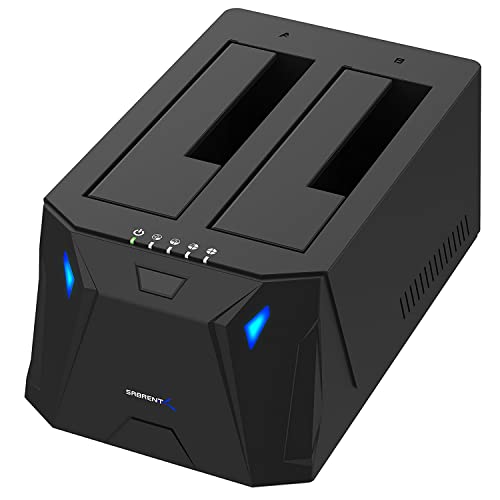
- Dual-bay dock for 2.5-inch and 3.5-inch SATA drives
- Offline cloning without a computer
- USB 3.0 with up to 5Gbps transfer speeds
Best For: People who want a simple dual-bay dock with offline cloning
IT Pro Eraser Duplicator
StarTech SATDUP11 Standalone Copier/Eraser

- Standalone duplicator and eraser for SATA drives
- Three copy modes and four erase modes
- LCD menu with copy-and-compare verification
Best For: IT pros who need cloning and secure drive wiping
Four-Bay Offline Clone Dock
SABRENT DS-U3B4 Multi-Drive Dock

- Supports up to four 2.5-inch or 3.5-inch SATA drives
- Offline clone function without a PC
- Trayless USB 3.0 dock with up to 5Gbps
Best For: People who need a multi-drive dock with built-in offline cloning
Image Library Cloner
StarTech SATDUP11IMG Disk Image Manager

- Built-in disk image library manager
- Four duplication modes with LCD navigation
- Supports 2.5-inch and 3.5-inch SATA drives
Best For: Teams that need disk image backup and restore management
Offline SATA Cloner
SABRENT Dual-Bay USB-C Dock & Cloner

- Clones SATA drives without a computer
- Reads and writes two drives over USB
- Includes USB-C cable and hot-swap bays
Best For: Simple offline cloning and dual-drive USB use
IT-Grade SATA Duplicator
StarTech Dual-Bay SATA Duplicator Dock
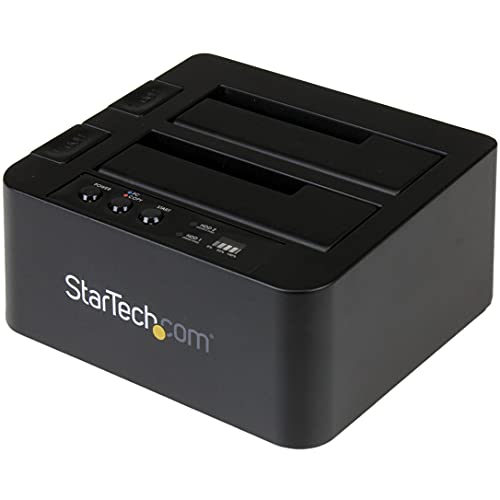
- Standalone sector-by-sector cloning
- Supports 2.5/3.5-inch SATA drives
- Includes USB-C/A cables and adapter
Best For: IT workflows needing a reliable cloning dock
Compact Clone-and-Dock Pick
UGREEN Dual-Bay Hard Drive Docking Station

- Offline cloning without a computer
- Two-bay SATA III dock with USB 3.0
- Includes 1m USB B to USB C cable
Best For: A compact dual-bay dock for basic cloning
Compact Dual-Bay Cloner

- Offline clone without a PC
- Supports SATA HDDs and SSDs
- USB 3.0 with UASP/Trim
Best For: simple no-PC cloning and backup
Standalone 4-Bay Cloner/Wiper
StarTech 4-Bay Duplicator and Eraser

- Clones and erases without a PC
- Supports SATA and IDE drives
- LCD menu with 4-bay access
Best For: IT technicians handling cloning and drive wiping
Clone Dock with USB Hub
MAIWO SATA Docking Station Cloner

- Offline clone with no PC required
- Three USB 3.0 hub ports included
- Up to 48TB total capacity
Best For: cloning with added USB hub functionality
Compact Offline Cloner – SABRENT Dual Bay USB 3.0 Dock
If you want hard drive duplicators that double as a practical everyday dock, this SABRENT dual-bay unit keeps things simple. It supports 2.5-inch and 3.5-inch SATA HDDs or SSDs, works without drivers, and can clone drives offline without tying up a PC.
Best For: Users who want a straightforward dual-bay dock with offline cloning for SATA drives.
Pros:
- Supports standard 2.5-inch and 3.5-inch SATA HDDs and SSDs
- Offline cloning mode for drive-to-drive copying without a computer
- USB 3.0 connection with transfer speeds up to 5Gbps
- Plug-and-play design with no drivers needed
Cons:
- Cloning is limited to two drives at a time
- Offline clone speed is listed at up to 60Mbps
This is a good fit if you want a simple duplicator that also functions as a useful dock for regular drive access. It balances convenience and compatibility, especially for users handling common SATA drives.
IT Pro Eraser Duplicator – StarTech SATDUP11 Standalone Copier/Eraser
Among hard drive duplicators, this StarTech model stands out if you need cloning and sanitizing in one standalone tool. It supports 2.5-inch and 3.5-inch SATA HDDs and SSDs, offers multiple duplication and erase modes, and includes an LCD menu for drive info and error display.
Best For: IT users who need a standalone duplicator plus secure erase options.
Pros:
- Supports duplication and erase workflows in one unit
- Multiple copy modes, including sector-by-sector and system/file
- Four erase modes, including secure erase and 3-pass overwrite
- LCD menu with copy-and-compare verification support
Cons:
- Requires SATA drives and is limited to two supported devices
- Some interfaces need separate adapters sold separately
This is a strong fit for professional environments where drive duplication and sanitization both matter. The built-in verification and erase options make it especially useful for deployment and recovery tasks.
Four-Bay Offline Clone Dock – SABRENT DS-U3B4 Multi-Drive Dock
If you need hard drive duplicators that also work as a multi-drive dock, this SABRENT four-bay unit gives you more flexibility than a basic two-bay model. It supports up to four 2.5-inch or 3.5-inch SATA HDDs and SSDs, connects over USB 3.0, and includes an offline clone function for direct drive-to-drive copying.
Best For: Users who want a four-bay dock for multi-drive access plus offline cloning.
Pros:
- Holds up to four SATA HDDs or SSDs in one dock
- Offline clone function works without a computer
- USB 3.0 host connection with up to 5Gbps transfer speed
- Trayless design makes drive insertion quick and simple
Cons:
- Designed for SATA drives only
- Cloning is available as an offline function rather than a dedicated copier
This model is a practical choice if your workflow involves moving between several drives and you want cloning built in. The four-bay layout makes it more versatile than many standard duplicators.
Image Library Cloner – StarTech SATDUP11IMG Disk Image Manager
For buyers comparing hard drive duplicators, this StarTech unit is the most specialized option here because it adds an image library manager. It supports 2.5-inch and 3.5-inch SATA HDDs and SSDs, offers several duplication modes, and lets you back up and restore disk images from a library drive without a PC.
Best For: IT teams and system integrators managing reusable disk image libraries.
Pros:
- Built-in image library manager for backup and restore workflows
- Four duplication modes, including sector-by-sector copying
- Supports SATA HDDs and SSDs of any capacity
- LCD display and menu navigation for drive management
Cons:
- Only one supported device is listed in the supplied details
- More specialized than a basic two-drive cloner
This is the most workflow-focused option in the group if you repeatedly deploy or restore known images. The library manager gives it an advantage for teams that want to carry fewer drives while handling many systems.
Offline SATA Cloner – SABRENT Dual-Bay USB-C Dock & Cloner
If you want hard drive duplicators that can clone without a computer, this SABRENT dual-bay dock keeps things simple. It copies one SATA drive to another at the press of a button, while also doubling as a USB dock for reading and writing two drives at once when connected to a computer.
Best For: Users who need an offline SATA cloner for quick 1-to-1 drive copies and occasional dual-drive USB access.
Pros:
- Offline cloning works with no PC attached.
- Supports 2.5-inch and 3.5-inch SATA HDDs and SSDs.
- Both bays can mount as separate drives over USB.
- USB-C cable is included in the box.
Cons:
- Target drive must be the same size as the source or larger.
- Does not support IDE/PATA, M.2, or NVMe drives.
For buyers focused on straightforward SATA drive duplication, this is a practical dock with useful day-to-day flexibility. Just make sure your drives match the compatibility limits and that your computer setup works with the included USB-C connection.
IT-Grade SATA Duplicator – StarTech Dual-Bay SATA Duplicator Dock
Among hard drive duplicators, this StarTech dual-bay dock is built for standalone cloning with no computer required, while still functioning as a USB-to-SATA dock when you need quick access to drives. It performs sector-by-sector duplication, so it copies the entire disk, including empty sectors, and supports 2.5-inch and 3.5-inch SATA HDDs and SSDs.
Best For: IT professionals or power users who want a standalone SATA duplicator with dock functionality and broad drive compatibility.
Pros:
- Standalone sector-by-sector cloning with no PC needed.
- Supports 2.5/3.5-inch SATA HDDs and SSDs of any capacity.
- Works as a USB dock for drive access over USB 3.2 Gen 2.
- Includes USB-C and USB-A cables plus a universal power adapter.
Cons:
- Target disk must be equal to or larger than the source disk.
- IDE support requires a separate adapter sold separately.
This is the most professional-leaning option in the group, with 4Kn compatibility, TRIM support, and a toolless top-loading design. If you want a duplicator dock that feels ready for regular IT work, it has the feature set to match.
Compact Clone-and-Dock Pick – UGREEN Dual-Bay Hard Drive Docking Station
If you’re shopping hard drive duplicators for a simple offline workflow, this UGREEN dual-bay dock covers cloning and everyday drive access in one compact unit. It supports two SATA drives at once, offers offline cloning without a computer, and uses USB 3.0 for standard file transfers when plugged in.
Best For: Buyers who want a tool-free dual-bay SATA dock with offline cloning and basic USB transfer support.
Pros:
- Offline cloning mode works without connecting to a computer.
- Supports two 2.5-inch and 3.5-inch SATA III drives.
- USB 3.0 provides up to 5Gbps transfer speeds.
- Includes a 1-meter USB B to USB C cable.
Cons:
- Source drive must not be larger than the target drive.
- Compatibility is limited to SATA hard drives.
The cooling, dust cover, and anti-slip design add practical value if the dock will stay on a desk or workbench. For users who mainly need a no-fuss SATA duplicator and dock combo, it is a solid fit.
Compact Dual-Bay Cloner – ORICO 2-Bay Hard Drive Dock
If you want a straightforward hard drive duplicator for everyday backup and disk-to-disk copying, the ORICO Dual Bay Dock keeps things simple. It supports 2.5-inch and 3.5-inch SATA HDDs and SSDs, and its offline clone feature lets you duplicate a drive without connecting to a computer.
Best For: Users who want an easy, no-PC cloning dock for SATA drives.
Pros:
- Offline cloning works without a computer for quick drive duplication.
- Supports 2.5″/3.5″ SATA HDDs and SSDs up to 44TB total.
- USB 3.0 with UASP and Trim support for up to 5Gbps transfers.
- Works across Windows, Mac, Linux, iPad OS, Android, and more.
Cons:
- Target disk must be larger than the source disk for cloning.
- No-drive-inserted condition means the dock will not power on.
- Only a dual-bay design, so it is not built for larger multi-drive jobs.
For users who value simple operation and broad device compatibility, this ORICO dock is a practical entry point into hard drive duplicators. It is especially appealing if you want a compact tool for backups, cloning, and quick SATA drive access.
Standalone 4-Bay Cloner/Wiper – StarTech 4-Bay Duplicator and Eraser
For buyers who need a more capable hard drive duplicator with erase functions, the StarTech.com 4-Bay Duplicator and Eraser is built for standalone cloning, wiping, and dock-style access. It supports 2.5-inch and 3.5-inch SATA drives, plus IDE compatibility through included adapters, making it a flexible choice for service and IT workflows.
Best For: IT professionals who need cloning, erasing, and drive docking in one unit.
Pros:
- Standalone duplicate and erase modes with sector-by-sector cloning.
- Supports Quick Erase and Secure Erase for drive sanitizing.
- Broad compatibility with SATA and IDE HDDs/SSDs using included adapters.
- 4-bay design with LCD menu, drive doors, and eject buttons.
Cons:
- Target disk must be equal to or larger than the source disk.
- Bulkier and heavier than a basic dual-bay dock.
- Higher-capability design may be more than casual users need.
This model stands out if you need hard drive duplicators that can also sanitize drives for reuse or disposal. Its standalone menu system and multi-format support make it a strong fit for technicians who handle cloning and wiping regularly.
Clone Dock with USB Hub – MAIWO SATA Docking Station Cloner
The MAIWO Hard Drive Docking Station Cloner is a useful pick if you want a hard drive duplicator that also doubles as a USB hub. It supports 2.5-inch and 3.5-inch SATA HDDs and SSDs, offers offline cloning, and includes three USB 3.0 ports for extra peripherals and charging.
Best For: Users who want cloning plus extra USB expansion in one dock.
Pros:
- Offline cloning works without a computer and needs no drivers.
- Supports up to 48TB total capacity across two bays.
- Includes 3 USB 3.0 hub ports, including one with 2.4A charging.
- USB 3.0 connection supports up to 5Gbps transfers.
Cons:
- Clone progress is shown by LED stages rather than a full display.
- Dual-bay layout limits it to two drives at a time.
- Target disk must still be larger than the source disk for cloning.
If you want a practical cloning dock that adds everyday USB expansion, this MAIWO unit has a useful mix of features. It is a solid choice for backup tasks, drive transfers, and desk setups where a hub is just as valuable as the duplicator itself.
How We Picked the Best Hard Drive Duplicators
We prioritized standalone cloning ability, supported drive sizes, interface speed, bay count, and overall ease of use. For Hard Drive Duplicators, the most important factors are reliable sector-by-sector copying, broad SATA compatibility, and clear status indicators so you can monitor the job without guesswork.
Quick Comparison
Dual-bay models are the most versatile choice for everyday drive-to-drive cloning and docking. Four-bay units are better for higher-volume workflows, IT tasks, and multi-drive handling. If you mainly need simple backup or migration, a dual-bay dock is usually the best value; if you need faster throughput or multi-copy capability, a dedicated duplicator is the better fit.
Key Buying Factors for Hard Drive Duplicators
Drive Compatibility
Check support for 2.5-inch and 3.5-inch SATA HDDs and SSDs. If you work with larger capacities, make sure the unit supports the total storage size you expect to clone.
Clone Speed and Mode
Standalone duplicators vary widely in throughput. Faster models save time on large disks, while image-management or eraser features can be useful for IT, refurbishing, and data sanitization workflows.
Bay Count and Use Case
Two-bay models are best for one-to-one cloning and everyday dock use. Four-bay options suit shops, offices, and users who regularly handle multiple drives. More bays can improve efficiency, but they also add size and cost.
Connectivity and Power
USB 3.0 and USB-C docks are convenient for direct computer access, while standalone SATA duplicators are better when you want a PC-free workflow. Also look for a stable power supply, especially for 3.5-inch HDDs.
Who Should Buy Which Hard Drive Duplicators?
If you want the simplest path to cloning one drive to another, choose a dual-bay model. If you’re managing multiple machines or refurbishing drives, a 4-bay duplicator is more efficient. If your main goal is speed and offline cloning, standalone Hard Drive Duplicators are the strongest choice. For mixed docking and cloning, a hybrid dock-cloner gives the most flexibility.