The right audio interface can make monitoring, recording, and streaming feel immediate instead of frustrating. Low latency matters most when you are tracking vocals, playing software instruments, monitoring guitar effects, or managing a live broadcast.
We compare 10 audio interfaces with low latency, from compact two-input models to flexible multi-channel units with DSP mixing, MIDI, and advanced routing. Use the guide below to match features, connectivity, and budget to your setup.
Best 10 Audio Interface with Low Latency Picks for 2026
Best All-Around Choice

- 4-in/4-out USB-C connectivity
- Hardware monitoring and loopback
- LCD screen, MIDI I/O, and 192 kHz support
Best For: Flexible recording, mixing, and podcasting setups
Best Starter Pick
Focusrite Scarlett Solo 3rd Gen

- Air mode and high-performing mic preamp
- High-headroom guitar and bass input
- 24-bit/192 kHz recording with software bundle
Best For: Solo vocalists, guitarists, and beginner home studios
Best Compact 2-Channel Interface

- 2-in/2-out USB-C connectivity
- Hardware monitoring for low-latency use
- 24-bit/192 kHz support across Mac, Windows, and iOS
Best For: Solo recording and compact home studios
Best DSP Monitoring

- Latency-free DSP-powered monitoring
- Class-A preamps with combo inputs
- 32-bit/192 kHz, MIDI, and included effects
Best For: Performers wanting monitored effects and durable hardware
Studio Expansion Pick
Focusrite Scarlett 16i16 4th Gen

- 16 inputs and 16 outputs with ADAT, S/PDIF, and MIDI
- 24-bit/192kHz converters with 122dB dynamic range
- Auto Gain, Clip Safe, Air modes, and included software
Best For: Producers and expandable home studios
Flexible Monitoring Pick
BlueAVS AR013 2-In/4-Out Interface

- Zero-latency monitoring with four selectable modes
- 24-bit/192kHz recording through dual combo inputs
- USB-C, phantom power, PAD switches, and balanced outputs
Best For: Podcasting, streaming, and compact recording setups
Budget Simplicity Pick
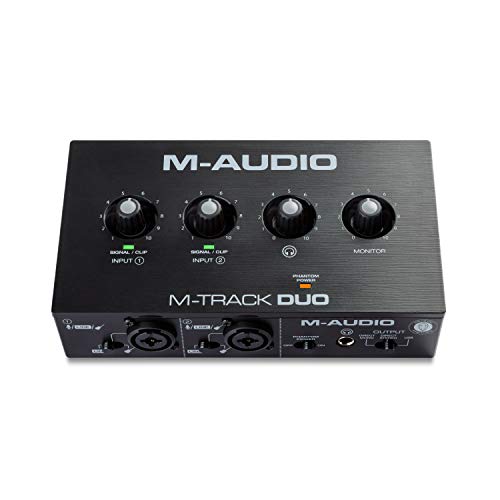
- USB/Direct switch enables zero-latency monitoring
- Two combo inputs with phantom power
- Portable 48kHz interface with MPC Beats included
Best For: Beginners, podcasters, and compact home setups
Compact Creator Pick

- 24-bit/192kHz recording with 106dB dynamic range
- 56dB preamp gain and 48V phantom power
- ASIO-compatible routing, direct monitoring, and multi-device support
Best For: Beginners, streamers, podcasters, and musicians
Streaming Control Pick

- 80dB gain for XLR microphones
- Ultra-low-latency 24-bit/48kHz monitoring
- Onboard effects, touch controls, and Wave Link integration
Best For: Streamers and microphone-focused content creators
Budget Monitoring Pick
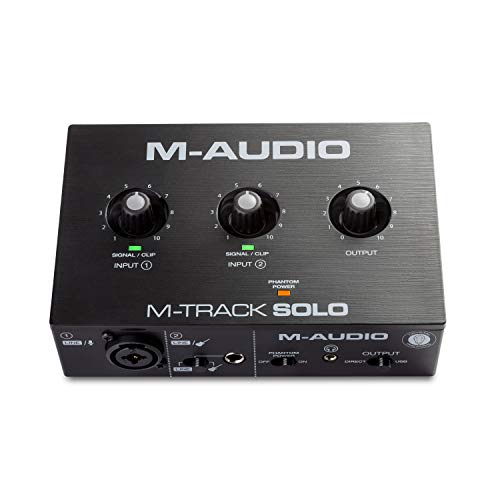
- USB/Direct switch enables zero-latency monitoring
- Combo XLR/line input plus line/instrument input
- Includes headphone and RCA outputs with MPC Beats
Best For: Beginners, podcasters, and compact home recording setups
Best All-Around Choice – MOTU M4
The MOTU M4 is a flexible audio interface with low latency for recording, mixing, and podcasting. Its 4-in/4-out USB-C design, two microphone preamps, hardware monitoring, LCD screen, loopback, and MIDI I/O suit creators who need more routing options than a basic two-channel interface.
Best For: Musicians, podcasters, and home studios needing versatile I/O and loopback.
Pros:
- 4-in/4-out USB-C connectivity with MIDI I/O
- Hardware monitoring supports low-latency recording
- LCD screen and loopback add practical control and routing flexibility
- Supports up to 192 kHz and includes 6+ GB of free content
Cons:
- More interface than needed for simple solo recording setups
- Requires a USB connection and compatible computer or iOS device
The M4 stands out when you need expansion room, direct monitoring, and podcast-friendly loopback in one compact unit. A two-year warranty adds reassurance for a long-term home setup.
Best Starter Pick – Focusrite Scarlett Solo 3rd Gen
The Focusrite Scarlett Solo 3rd Gen is a straightforward audio interface with low latency for vocalists, guitarists, and beginner producers. It combines a high-performance mic preamp, an instrument input, Air mode, Gain Halos, and 24-bit/192 kHz recording in a compact setup.
Best For: Solo musicians, vocal recording, guitar and bass players, and new podcasters.
Pros:
- High-performing mic preamp with switchable Air mode
- High-headroom instrument input for guitar or bass
- 24-bit/192 kHz converters and low-noise balanced outputs
- Includes recording software, effects, instruments, and mastering tools
Cons:
- Designed for a simpler solo setup rather than multi-input recording
- Software bundle and warranty availability may vary by region
The Solo 3rd Gen is a practical entry point for clean vocal and instrument recording. Its included software and simple controls make it especially approachable for first-time home recordists.
Best Compact 2-Channel Interface – MOTU M2
The MOTU M2 delivers audio interface with low latency performance in a compact 2-in/2-out USB-C format. With two preamps, hardware monitoring, 24-bit/192 kHz support, and compatibility with macOS, Windows, and iOS, it is suited to focused recording setups.
Best For: Solo creators and small home studios recording one or two sources at a time.
Pros:
- 2-in/2-out USB-C design keeps the setup compact
- Hardware monitoring helps with low-latency recording
- Supports 24-bit/192 kHz audio
- Compatible with macOS, Windows, and iOS
Cons:
- Two-channel I/O limits larger ensemble or podcast setups
- Listed supported software centers on MOTU drivers
The M2 is a focused choice when you want MOTU’s monitoring approach without moving up to a larger interface. Its two-channel layout works well for a vocalist and instrument or a compact stereo recording rig.
Best DSP Monitoring – Yamaha URX22C
The Yamaha URX22C combines audio interface with low latency monitoring and built-in DSP effects. Its two combo inputs, Class-A D-PRE preamps, 32-bit/192 kHz support, MIDI I/O, and DSP-powered mixer make it a strong option for creators who want monitoring effects while recording.
Best For: Musicians and home studios wanting DSP effects, MIDI, and durable construction.
Pros:
- Latency-free DSP-powered monitoring
- Includes REV-X reverb, Channel Strip, and Guitar Amp Classics
- Two combo inputs with Class-A D-PRE preamps and phantom power
- Rugged full-metal housing with Windows, macOS, and iOS compatibility
Cons:
- Only two analog inputs and two main outputs
- One-year manufacturer warranty is shorter than some listed alternatives
The URX22C is especially compelling for performers who want reverb, channel processing, or amp-style effects in their monitoring path. Its included Steinberg software and full-metal chassis further support a durable production setup.
Studio Expansion Pick – Focusrite Scarlett 16i16 4th Gen
The Focusrite Scarlett 16i16 4th Gen is a strong choice if you need an audio interface with low latency for a growing studio setup. Its 16 inputs and 16 outputs accommodate microphones, instruments, line-level gear, digital expansion, and MIDI equipment, while Auto Gain and Clip Safe simplify recording.
Best For: Producers and home studios that need extensive I/O and room to expand.
Pros:
- 16-in/16-out connectivity with ADAT, S/PDIF, and MIDI I/O.
- 24-bit/192kHz converters with a stated 122dB dynamic range.
- Auto Gain and Clip Safe help manage recording levels.
- Includes Air modes and a substantial software bundle.
Cons:
- Its larger I/O set may be more than a simple two-input setup requires.
- Requires an external power supply.
Choose the Scarlett 16i16 when connectivity and expandability matter as much as recording quality. It is particularly well suited to producers building a more capable, multi-device workflow.
Flexible Monitoring Pick – BlueAVS AR013 2-In/4-Out Interface
The BlueAVS AR013 targets users who want an audio interface with low latency for recording, streaming, podcasting, and mobile setups. It combines two XLR/TRS combo inputs with zero-latency monitoring modes, 24-bit/192kHz support, and USB-C connectivity for Mac and Windows systems.
Best For: Podcasters, streamers, and musicians who want flexible real-time monitoring in a compact interface.
Pros:
- Zero-latency monitoring with Off, Mono, Crossfeed, and Stereo modes.
- Two combo inputs support microphones, guitars, and line-level sources.
- Supports recording up to 24-bit/192kHz across multiple sample rates.
- Includes +48V phantom power and PAD switches.
Cons:
- Has only two input channels.
- Its one-year warranty is shorter than some competing options.
The AR013 is a practical pick for creators who value monitoring flexibility and broad software compatibility. Its 2-in/4-out layout keeps the setup compact while offering more output options than a basic stereo interface.
Budget Simplicity Pick – M-AUDIO M-Track Duo
The M-AUDIO M-Track Duo is a straightforward option for anyone seeking an audio interface with low latency for basic recording, podcasting, and livestreaming. Its USB/Direct switch enables zero-latency monitoring, while two combo inputs accept microphones, guitars, and line-level sources.
Best For: Beginners and creators who need an affordable, portable two-input interface.
Pros:
- USB/Direct switch supports zero-latency monitoring.
- Two combo XLR/line/instrument inputs offer flexible source compatibility.
- Phantom power supports condenser microphones.
- Includes MPC Beats software for getting started with production.
Cons:
- Maximum sample rate is limited to 48kHz.
- Provides two input channels and basic I/O compared with larger interfaces.
The M-Track Duo keeps the essentials accessible without adding unnecessary complexity. It makes the most sense for small recording setups where portable design, simple monitoring, and dual-input recording are the priorities.
Compact Creator Pick – MAONO PS22 Lite
The MAONO PS22 Lite is a versatile audio interface with low latency for creators recording vocals, guitar, podcasts, or live streams. Its 24-bit/192kHz recording, direct monitoring, and ASIO-compatible ProStudio Routing Software make it a flexible choice for Mac, Windows, and iPad setups.
Best For: Beginners, streamers, podcasters, and musicians who want a compact interface with flexible routing.
Pros:
- Records at up to 24-bit/192kHz with a 106dB dynamic range.
- Supports condenser and dynamic microphones with up to 56dB of preamp gain and 48V phantom power.
- Offers direct monitoring, instrument input controls, and ASIO-compatible low-latency output.
- Works with Mac, Windows, and iPad devices and includes USB-C connection cables.
Cons:
- Some advanced routing features depend on the included ProStudio software.
- Its compact design may provide fewer physical controls than larger interfaces.
The PS22 Lite stands out when you need one small device for recording and streaming. It is especially appealing to first-time users who value simple setup alongside higher-resolution recording and software-based routing.
Streaming Control Pick – Elgato Wave XLR MK.2
The Elgato Wave XLR MK.2 is an audio interface with low latency designed for microphone-focused streaming and content creation. It combines 80dB of gain, ultra-low-latency monitoring, onboard processing, and Wave Link software for detailed control over your voice and audio routing.
Best For: Streamers and creators who want strong microphone gain, built-in effects, and hands-on control.
Pros:
- Provides up to 80dB of gain for a broad range of XLR microphones.
- Offers ultra-low-latency monitoring at 24-bit/48kHz resolution.
- Includes voice enhancement, compression, EQ, and VST plugin support through its DSP signal chain.
- Features touch controls, LED feedback, touch mute, and Wave Link integration.
Cons:
- Wave Link requires Windows 11 or macOS 14.2 and later.
- Its audio input is XLR, so it is less suited to setups needing multiple input types.
The Wave XLR MK.2 is a strong match for a streamlined streaming desk. Its high gain ceiling and integrated software controls are particularly useful when voice processing and monitoring are more important than multi-instrument recording.
Budget Monitoring Pick – M-AUDIO M-Track Solo
The M-AUDIO M-Track Solo is a straightforward audio interface with low latency for recording, podcasting, and live streaming. Its USB/Direct switch enables zero-latency monitoring, while the combination XLR/line input and separate line/instrument input accommodates vocals, guitar, and other sources.
Best For: Home users, beginners, podcasters, and musicians seeking a compact two-channel interface.
Pros:
- Provides USB/Direct zero-latency monitoring for practical recording sessions.
- Includes a combo XLR/line input with phantom power and a separate line/instrument input.
- Offers headphone and stereo RCA outputs for flexible monitoring.
- Includes MPC Beats and supports Ableton Live Lite.
Cons:
- Maximum recording resolution is 48kHz.
- It has only two channels and a relatively simple control set.
- The USB connection uses USB Type B rather than USB-C.
The M-Track Solo makes a sensible choice when essential inputs and zero-latency monitoring matter more than advanced routing or high-resolution recording. Its compact format and included software also make it approachable for first-time home recording setups.
How We Picked the Best Audio Interface with Low Latency
We focused on interfaces that support responsive monitoring and practical home-studio, streaming, podcasting, or rehearsal workflows. The selection includes USB-C and USB models with different input counts, output options, phantom power, direct-monitoring features, software mixers, and recording resolutions. We also considered whether each model suits beginners, musicians, creators, or users who need room to expand.
Specifications such as sample rate and bit depth matter, but they do not alone determine real-world latency. Driver quality, buffer settings, computer performance, connection type, and whether monitoring is handled directly through the interface can be just as important.
Quick Comparison
| Best For | What to Prioritize |
|---|---|
| Solo vocals, guitar, and basic recording | One or two quality preamps, direct monitoring, and simple controls |
| Music production with multiple sources | More inputs and outputs, MIDI, stable drivers, and flexible routing |
| Streaming and podcasting | Easy gain control, headphone monitoring, loopback or DSP mixing |
| Live software effects | Low buffer performance, dependable drivers, and direct or DSP monitoring |
Key Buying Factors for an Audio Interface with Low Latency
Direct and DSP Monitoring
Direct monitoring routes the incoming signal straight to your headphones or speakers, minimizing the delay caused by the computer. It is ideal for tracking vocals and instruments, although it may not include software effects. DSP-equipped models can mix or process signals inside the interface, which is useful for streaming and monitoring with effects without relying entirely on the computer.
Inputs, Outputs, and Expansion
Count the sources you expect to record at the same time. Two combo inputs cover many solo setups, while larger interfaces are better for drum microphones, multiple performers, or permanent studio wiring. Extra line outputs can feed monitor speakers, headphone amplifiers, or external hardware. MIDI is valuable if you use keyboards, drum machines, or other controllers.
Drivers, Buffer Size, and Connectivity
A low-latency interface needs reliable drivers and a computer connection that remains stable at small buffer sizes. USB-C may describe the connector rather than a specific performance level, so check operating-system compatibility and included cables. Start with a moderate buffer, then lower it until you hear clicks or dropouts; raise it again for larger mixes.
Microphone and Headphone Requirements
Condenser microphones require 48V phantom power, while gain requirements vary between dynamic microphones, passive instruments, and line-level equipment. Check headphone output power if you use high-impedance headphones, and confirm that the interface offers an independent level control or separate mix when multiple people need to monitor.
Who Should Buy Which Audio Interface with Low Latency?
Choose a compact two-input model if you record one or two sources, teach online, make podcasts, or need an affordable first interface. These models are easier to configure and usually provide the essential combination of preamps, phantom power, headphone monitoring, and direct monitoring.
Choose a four-input or larger interface if you expect to record several microphones, stereo instruments, or a small band. More outputs and flexible routing also make a noticeable difference in a permanent studio.
Choose a DSP mixer model if you stream, broadcast, or want software-controlled mixes and effects. Choose a simple direct-monitoring model if dependable tracking and straightforward operation matter more than advanced routing. For any Audio Interface with Low Latency, verify your computer compatibility and workflow before prioritizing headline resolution numbers.