The best channel strips for podcasting help you shape a voice before it reaches your recording software, reducing unwanted noise while adding clarity, consistency, and professional control.
This roundup covers dedicated analog channel strips, tube-based processors, and USB interfaces with useful channel-strip features, so you can match your setup, microphone, and budget with less guesswork.
Best 10 Channel Strips for Podcasting Picks for 2026
Tube-Driven Control Hub

- Tube preamp with warmth and definition
- Compressor, expander, de-esser, and gate
- USB plus multiple digital outputs
Best For: Detailed single-microphone podcast and recording setups
Four-Input Creative Interface
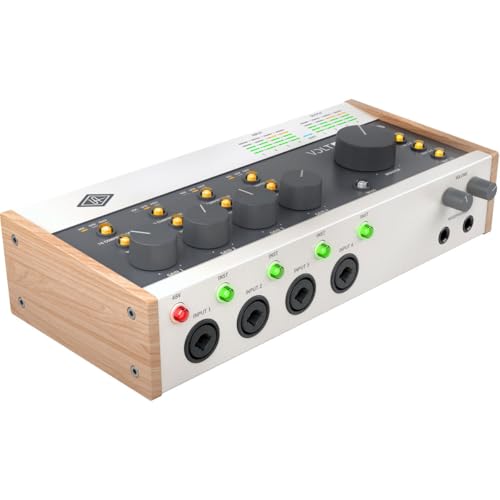
- 610-style Vintage mode
- 1176-based analog compressor
- Four-channel USB connectivity
Best For: Multi-input podcasting and portable recording
Compact 500-Series Voice Processor
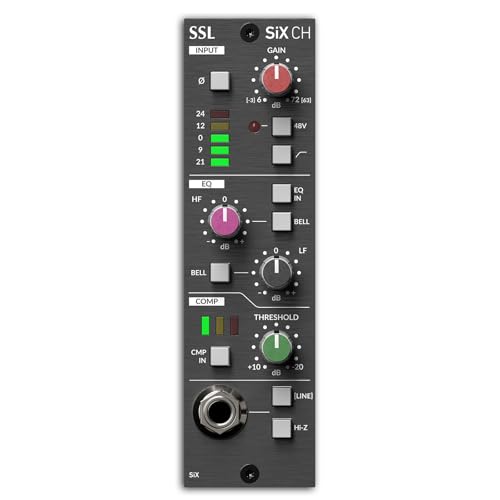
- Mic preamp, EQ, and compressor
- 75 Hz high-pass filter and phantom power
- Shelf/bell EQ and front-panel Hi-Z input
Best For: Modular mono podcast vocal chains
Portable Two-Input Recording Hub
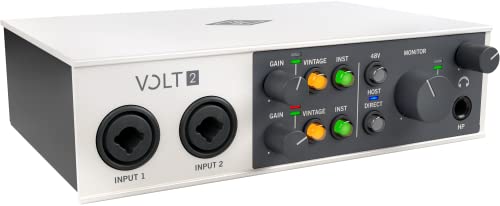
- Two-input USB-C interface
- 610-style Vintage mode
- Up to 24-bit/192 kHz recording
Best For: Solo podcasters, streamers, and compact two-mic setups
Tube-Controlled Podcasting
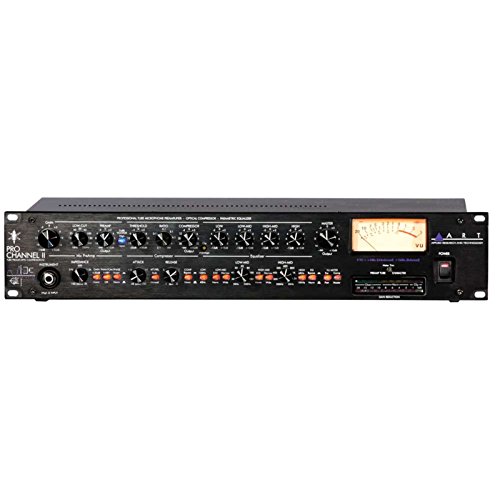
- Tube mic preamp, compressor, and EQ
- Selectable optical/tube compression
- Selectable VU metering
Best For: Single-microphone voice recording with hands-on tube processing
USB Podcasting Hub

- Two Class-A D-PRE mic preamps
- Up to 32-bit/192 kHz audio
- DSP zero-latency monitoring
Best For: Two-input podcast recording with computer or iOS connectivity
Analog Voice Shaping

- Class A vacuum-tube preamp
- Variable VCA compressor
- Three-band parametric EQ
Best For: Rack-based vocal recording with integrated analog processing
All-in-One USB Voice Hub

- One-channel mic/line preamp
- Built-in USB audio interface
- Compression, gate, and de-esser
Best For: Solo podcasters needing an integrated computer recording setup
Analog Noise Control Specialist

- Ambient noise gate and expander
- Fully analog, low-latency design
- Requires placement after a mic preamp
Best For: Podcasters adding dedicated noise control to a line-level chain
Premium Analog Vocal Chain

- Discrete mono preamp
- Lundahl I/O transformers
- Transient, saturation, and compression tools
Best For: Advanced users building a premium single-voice hardware chain
Tube-Driven Control Hub – ART VoiceChannel
For creators seeking channel strips for podcasting with extensive onboard processing, the ART VoiceChannel combines a tube preamp with compression, expansion, de-essing, and gating. Its USB and multiple digital outputs also make it suitable for varied studio and computer setups.
Best For: Podcasters and recording setups that want tube warmth, detailed dynamics control, and flexible digital connectivity.
Pros:
- Tube preamp design provides warmth and definition.
- Includes compressor, expander, de-esser, and gate.
- Offers USB, ADAT, AES/EBU, S/PDIF, and TOSLink connectivity.
- Supports sample rates up to 192 kHz.
Cons:
- Provides one channel, so it is intended for single-source recording.
- At 5.5 kg, it is less portable than compact USB interfaces.
The VoiceChannel is a feature-rich choice when voice shaping and connection flexibility matter more than a minimal setup. Its broad output options make it particularly adaptable for established recording systems.
Four-Input Creative Interface – Universal Audio Volt 476p
The Universal Audio Volt 476p is a practical option for channel strips for podcasting when you also need a USB interface for instruments or multiple inputs. It combines Vintage-mode 610 preamp character with an analog compressor and supports computer and mobile recording.
Best For: Podcasters, musicians, and small production teams needing four USB-connected channels and onboard tone shaping.
Pros:
- Vintage mode is based on classic UA 610 preamp character.
- Includes an analog compressor based on the 1176.
- Provides four channels through USB connectivity.
- Supports macOS, Windows, iPad, and iPhone recording.
Cons:
- Mobile recording requires an external Volt power supply and, in some cases, an Apple Lightning to USB Camera Adapter.
- It is an audio interface rather than a traditional one-channel hardware channel strip.
The Volt 476p suits flexible podcast and home-studio workflows, especially when several inputs and portable compatibility are priorities. Its Vintage mode and compressor add useful front-end character without requiring separate processors.
Compact 500-Series Voice Processor – SSL SiX Channel Strip
Solid State Logic SiX Channel Strip 500 Series | Mic-Pre, EQ, and Single Knob Compressor
Check Price On AmazonFor a modular approach to channel strips for podcasting, the SSL SiX Channel Strip 500 Series provides microphone preamp, EQ, and compressor functions in one 500-series module. Its high-pass filter, flexible EQ shape, and front-panel Hi-Z input support voice and instrument recording.
Best For: 500-series owners who want a focused mono channel strip for podcast vocals, voiceover, or instrument tracking.
Pros:
- Combines mic preamp, EQ, and single-knob compressor.
- Includes +48V phantom power and a 75 Hz high-pass filter.
- EQ can switch between shelf and bell curves.
- Front-panel TRS line input includes a 1MΩ Hi-Z switch.
Cons:
- Requires a compatible 500-series rack or chassis.
- Offers one channel and a single-knob compressor rather than extensive dynamics controls.
The SiX Channel Strip is a sensible choice for a dedicated vocal path in a modular rack. It keeps the essential recording stages together while leaving the broader system configuration to the user.
Portable Two-Input Recording Hub – Universal Audio Volt 2
The Universal Audio Volt 2 offers a straightforward entry point for channel strips for podcasting, pairing two USB inputs with 610-style Vintage mode and up to 24-bit/192 kHz recording. Its compact format also supports desktop, laptop, and compatible mobile workflows.
Best For: Solo podcasters, streamers, and small setups needing two inputs, MIDI, and portable USB recording.
Pros:
- Provides two inputs and two outputs in a compact USB-C interface.
- Vintage mode adds classic 610-style preamp character.
- Supports recording quality up to 24-bit/192 kHz.
- Includes MIDI and supports macOS, Windows, iPad, and iPhone workflows.
Cons:
- Has fewer inputs than the Volt 476p, limiting larger multi-microphone setups.
- Mobile use requires an external Volt power supply and, where applicable, an Apple Lightning to USB Camera Adapter.
The Volt 2 is a compact, uncomplicated option for one or two-person podcasting. It offers useful preamp coloration and high-resolution capture while keeping the hardware footprint small.
Tube-Controlled Podcasting – ART Pro Channel II
ART Pro Channel II Microphone Preamp/Compressor/EQ Professional Tube Based Selectable VU Metering
Check Price On AmazonFor podcasters seeking channel strips for podcasting with hands-on tonal control, the ART Pro Channel II combines a tube microphone preamp, selectable optical/tube compression, and tube EQ in one professional recording channel. Its selectable VU metering helps monitor the mic preamp, compressor, or main output.
Best For: Voice recording, streaming, and speech setups that benefit from tube-based processing and detailed level monitoring.
Pros:
- Combines tube mic preamp, compressor, and EQ in one unit.
- Offers switchable optical/tube compression.
- Includes selectable VU metering and precision detented controls.
Cons:
- Its single-channel design may not suit stereo or multi-microphone setups.
- At 13.4 pounds, it is less portable than a compact interface.
The Pro Channel II is a feature-rich choice when you want analog-style tube processing before recording. Its one-channel format makes it most suitable for a single-host or single-microphone workflow.
USB Podcasting Hub – Steinberg UR22C
The Steinberg UR22C is a compact two-channel USB audio interface for creators comparing channel strips for podcasting with flexible computer and iOS connectivity. Its Class-A D-PRE mic preamps, 32-bit/192 kHz support, and DSPMixFx zero-latency monitoring make it suited to recording and monitoring spoken audio.
Best For: Podcasters who need two input channels, USB-C connectivity, and software-based monitoring effects.
Pros:
- Provides two channels with Class-A D-PRE microphone preamps.
- Supports audio resolution up to 32-bit/192 kHz.
- Offers zero-latency monitoring through the DSPMixFx application.
Cons:
- It is an audio interface rather than a dedicated channel strip with onboard compressor and EQ.
- Its listed operating-system detail specifies Windows, so platform compatibility should be checked for your setup.
The UR22C is a practical recording centerpiece for a two-person podcast or interview. Choose it when connectivity and clean preamps matter more than dedicated analog dynamics and EQ controls.
Analog Voice Shaping – PreSonus Studio Channel
The PreSonus Studio Channel is a dedicated channel strip for podcasting that brings a Class A vacuum-tube preamplifier, variable VCA compressor, and three-band parametric EQ into a rack-style unit. It is designed for shaping a microphone signal before it reaches the recording system.
Best For: Voice-focused setups that want integrated tube preamplification, compression, and parametric EQ.
Pros:
- Combines a Class A vacuum-tube preamp with compression and EQ.
- Includes a variable VCA compressor for dynamic control.
- Provides three-band parametric EQ for voice shaping.
Cons:
- The supplied specifications do not list USB or computer connectivity.
- Its rack-style 19-inch-wide design may require more dedicated space than a compact interface.
The Studio Channel is a straightforward option for podcasters who want analog processing in the recording chain. Its integrated compressor and three-band EQ give voice setups useful shaping tools without combining several separate units.
All-in-One USB Voice Hub – UV1 Channel Strip
For creators seeking channel strips for podcasting, the Behringer Ultravoice UV1 combines a one-channel mic/line preamp with a USB audio interface. Its integrated compression, gate, and experienced-voice de-esser functions can help streamline a single-microphone recording setup.
Best For: Solo podcasters using a Windows computer or Mac who want preamp and basic vocal processing in one unit.
Pros:
- Combines a mic/line preamp and USB audio interface.
- Includes compression, gate, and de-esser processing.
- Supports sample rates up to 192 kHz.
Cons:
- Provides one channel, so it is limited for multi-microphone recording.
- Its listed compatibility centers on Windows 10 and Mac OS X 10.4 or higher.
The UV1 is a practical choice when you want a compact, computer-connected vocal chain without assembling separate processing units. Its single-channel design makes it most appropriate for solo recording rather than larger podcast setups.
Analog Noise Control Specialist – RO05 Channel Processor
Among channel strips for podcasting, the Rodweil RO05 is focused specifically on reducing unwanted background and preamp noise. This compact, fully analog processor uses an ambient noise gate and expander/gate design for a low-latency signal path, but it must be connected after a microphone preamp.
Best For: Home-studio podcasters who already have a mic preamp and need dedicated analog noise control in a line-level chain.
Pros:
- Designed to reduce ambient background and preamp floor noise.
- Fully analog processing avoids analog-to-digital conversion in the unit.
- Compact 3.35 × 2.95 × 1.97-inch enclosure weighs 10.6 ounces.
Cons:
- It is not a standalone microphone preamp; direct microphone connection is not recommended.
- It is a focused noise gate/expander rather than a complete channel strip with broad vocal processing.
- The notes indicate higher power consumption and a possible power-off circuit echo.
The RO05 makes sense as a targeted add-on for an existing podcast signal chain. Its placement requirement is important: use it after the preamp or at line level, not directly with a raw microphone signal.
Premium Analog Vocal Chain – SPL Channel One MK3
For buyers comparing channel strips for podcasting, the SPL Channel One MK3 is a premium mono channel strip built around a discrete preamp and Lundahl input/output transformers. It also includes a transient designer, tube saturation, and compressor for shaping a single vocal source.
Best For: Advanced solo recording setups that prioritize extensive mono vocal processing and premium analog-style hardware features.
Pros:
- Uses a discrete preamp with Lundahl I/O transformers.
- Includes transient designer, tube saturation, and compressor sections.
- Designed as a dedicated mono channel strip for focused vocal processing.
Cons:
- Its mono design supports one channel.
- The 16.78-pound weight and listed 21.5 × 14.95 × 7.3-inch dimensions suggest a substantial hardware footprint.
- The supplied notes do not list a USB interface.
The Channel One MK3 is best suited to a deliberately built, hardware-based podcast studio rather than a plug-and-play USB setup. Its broad processing selection can reward users who want hands-on control over a single voice channel.
How We Picked the Best Channel Strips for Podcasting
We selected products based on the features that matter most for spoken-word recording: microphone preamp quality, usable compression, EQ flexibility, noise control, metering, connectivity, and ease of integration with common podcasting setups. The list includes dedicated mono channel strips as well as USB audio interfaces that provide practical front-end processing or flexible recording connectivity.
We also considered different budgets and workflows. A beginner may prioritize simple USB operation and reliable drivers, while an experienced host or producer may prefer an analog signal chain with more detailed control over gain, dynamics, and tone.
Quick Comparison
| Type | Best For | What to Look For |
|---|---|---|
| Dedicated channel strip | Analog voice shaping | Mic preamp, compressor, EQ, inserts, and metering |
| USB audio interface | Simple computer recording | Low-latency monitoring, reliable drivers, and suitable inputs |
| Tube channel strip | Warmth and character | Tube gain control, noise performance, and digital outputs |
| Channel strip with gate | Noisy rooms and live speech | Adjustable gate or expander with transparent operation |
Key Buying Factors for Channel Strips for Podcasting
Preamp Gain and Microphone Compatibility
Check that the unit provides enough clean gain for your microphone, particularly if you use a low-output dynamic model. Phantom power is essential for condenser microphones, while impedance options can help optimize certain microphones. A preamp should remain quiet at the gain level your setup requires.
Compression and EQ Controls
Compression keeps speech at a more consistent level, but overly aggressive settings can make a voice sound flattened or unnatural. Look for controls that let you adjust threshold, ratio, attack, release, and output gain, or at least provide a practical set of voice-oriented parameters. A sweepable midrange EQ is especially useful for reducing boxiness or adding intelligibility.
Noise Gate, Expander, and Monitoring
A gate or expander can reduce room noise between phrases, but it should be adjustable enough to avoid cutting off quiet words. For USB models, direct monitoring and low-latency headphone output are important. Metering also makes it easier to prevent clipping before the signal reaches your computer.
Analog, USB, or Both?
Dedicated analog units work well with an existing interface and offer hands-on processing before recording. USB interfaces are usually simpler for solo podcasters because they combine the preamp, conversion, headphone monitoring, and computer connection in one box. Confirm the number of inputs and outputs you actually need before paying for extra channels.
Who Should Buy Which Channel Strips for Podcasting?
Choose a dedicated strip such as the PreSonus Studio Channel, SPL Channel One MK3, or SSL SiX Channel Strip if you already own an interface and want more refined analog control. Tube-based options such as the ART VoiceChannel or ART Pro Channel II suit users who want adjustable warmth and a more characterful signal path.
For a straightforward computer-based podcast setup, the Universal Audio Volt 2, Volt 476p, Steinberg UR22C, or Behringer UV1 can reduce equipment count and simplify monitoring. The UV1 is particularly relevant if you want podcast-focused controls, while the larger interfaces are better suited to multiple microphones or additional sources. A compact noise-gate or expander processor may be useful for untreated rooms, but set it conservatively and test it with your quietest speaker.