The best compact smart home hubs bring multiple wireless standards, devices, and automations together without taking over valuable shelf space. The right model can simplify control while improving reliability compared with a cloud-only setup.
Our selection covers beginner-friendly gateways, advanced Matter controllers, Zigbee and Z-Wave hubs, and long-range options for different smart home systems and budgets.
Best 10 Compact Smart Home Hubs Picks for 2026
Best for Flexible Automation

- Preinstalled Home Assistant OS for easier setup
- Compact, silent design with 4GB RAM and 32GB storage
- Expandable with USB Z-Wave, Zigbee, and Thread devices
Best For: DIY households wanting customizable whole-home automation
Best for Tapo Ecosystems

- Supports up to 64 sensors or controls and four cameras or doorbells
- Built-in chime and smart alarm
- Optional local storage supports microSD cards up to 512GB
Best For: Tapo users managing sensors, cameras, and doorbells
Best for Broad Protocol Support
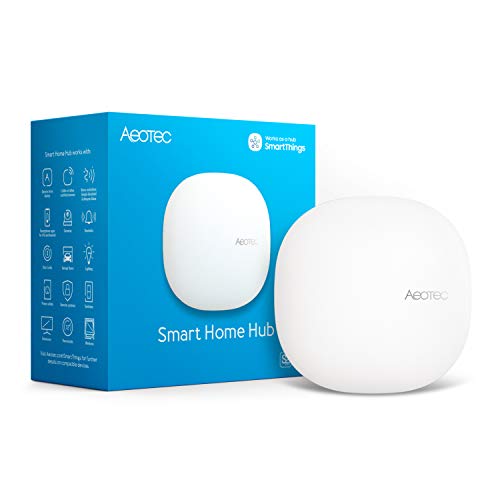
- Supports Matter, Zigbee, Z-Wave Plus, Wi-Fi, and SmartThings
- Works with Alexa and Google Home
- Sets up over Wi-Fi or Ethernet
Best For: Mixed-brand homes using multiple smart-home protocols
Best for Local Matter Bridging
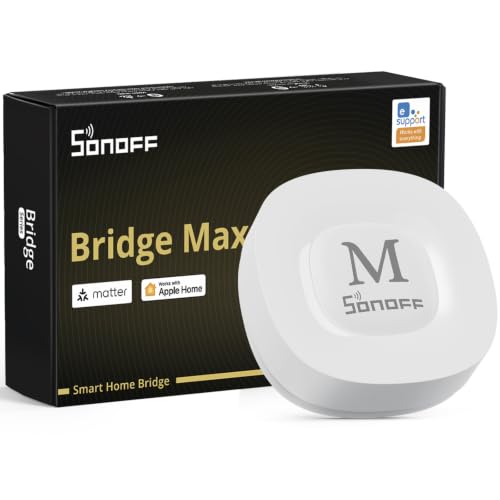
- Bridges Zigbee, BTHome, and eWeLink devices to Matter
- Local web console works without cloud services
- Supports Home Assistant through MQTT or bridging
Best For: Privacy-focused users connecting Zigbee devices across platforms
Premium Matter Hub

- Matter bridge with Zigbee and Thread support
- Local automation plus 360-degree IR control
- PoE, Wi-Fi, USB-C, and encrypted local storage
Best For: Large Aqara ecosystems and advanced Matter automation
Long-Range Hub

- Wired plug-in hub with smartphone compatibility
- Up to 0.25-mile stated maximum range
- Supports motion alerts and voice control
Best For: Simple YoLink installations where range matters
Space-Saving Starter Hub
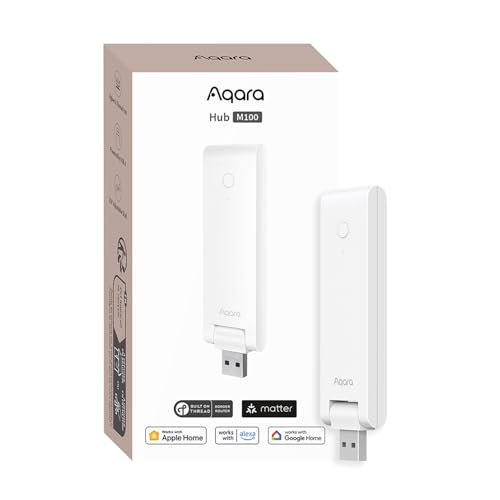
- Matter bridge with Aqara Zigbee and Thread support
- Local automation for supported devices
- USB-A power and 210-degree adjustable placement
Best For: Small Aqara and Matter-connected homes
Best Multi-Protocol Value
Tuya ZigBee & Bluetooth Gateway

- Combines Zigbee 3.0 and Bluetooth Mesh
- Supports up to 128 Tuya devices
- Alexa and Google Home voice control
Best For: Tuya households using mixed Zigbee and Bluetooth devices
Best Mini Zigbee Hub
THIRDREALITY Smart Hub Gen2 Plus

- Compact design with USB-A power
- Supports groups and countdown timers
- Connects up to 32 devices
Best For: THIRDREALITY Zigbee device users
Best for Motorized Shades
Tuya Smart Bridge for Motorized Shades

- Controls compatible motorized shades
- Tuya app remote management
- Alexa and Google Home support
Best For: Automating multiple compatible blinds or shades
Best for Flexible Automation – Home Assistant Green
Home Assistant Green | Smart Home hub with Advanced Automation | Official Home Assistant Hardware
Check Price On AmazonHome Assistant Green is a practical starting point for shoppers seeking compact smart home hubs with powerful, customizable automation. Home Assistant OS is preinstalled, so setup mainly involves connecting the included power supply and Ethernet cable.
Best For: DIY-minded households that want one hub for broad smart-home control and advanced automations.
Pros:
- Preinstalled Home Assistant OS simplifies initial setup.
- Compact, fanless, silent design with 4GB of RAM and 32GB of storage.
- Supports data stored locally on the hub and uses only a few watts of power.
- Can be expanded with USB devices for Z-Wave, Zigbee, and Thread connectivity.
Cons:
- Ethernet is required for the included basic setup.
- Z-Wave, Zigbee, and Thread connectivity requires additional USB devices.
Green stands out when customization and whole-home automation matter more than instant compatibility with a single device ecosystem. Its small, quiet enclosure also makes it easy to place in a living space or network area.
Best for Tapo Ecosystems – Tapo H200 Smart Hub
The Tapo H200 is one of the more focused compact smart home hubs, designed to coordinate Tapo sensors, switches, buttons, cameras, and doorbells. It adds a built-in chime and alarm while connecting over 2.4GHz Wi-Fi.
Best For: Tapo households that want a central hub for alerts, cameras, doorbells, and low-power sensors.
Pros:
- Supports up to 64 switches, sensors, or buttons plus four cameras or doorbells.
- Built-in chime and smart alarm can respond to motion or visitors.
- Supports local video storage on a separately purchased microSD card up to 512GB.
- Works with Amazon Alexa and Google Home for voice control.
Cons:
- Compatibility is centered on Tapo devices and listed Tapo products.
- A microSD card is sold separately for local video storage.
- Requires a 2.4GHz Wi-Fi network.
Choose the H200 if your home already uses Tapo products and you value audible alerts and local camera storage. It is less compelling as a general-purpose hub for mixed-brand devices.
Best for Broad Protocol Support – Aeotec Smart Home Hub
The Aeotec Smart Home Hub is a strong choice among compact smart home hubs for households combining different device standards. It works with SmartThings and supports Matter, Zigbee, Z-Wave Plus on the V3 model, Wi-Fi, Alexa, and Google Home.
Best For: Mixed-brand smart homes that need multi-protocol support and SmartThings-based automations.
Pros:
- Supports Matter, SmartThings, Zigbee, Z-Wave Plus, and Wi-Fi.
- Works with Amazon Alexa and Google Home.
- Offers setup through Wi-Fi or wired Ethernet.
- SmartThings automations can coordinate lights, sensors, switches, and other compatible devices.
Cons:
- Designed for use in North America.
- Z-Wave Plus support is specified for the V3 model.
- Some automation and device features depend on SmartThings compatibility.
The Aeotec hub is the most versatile option here for shoppers already invested in several wireless standards. Its wired and wireless setup options also make placement easier than hubs limited to one network connection.
Best for Local Matter Bridging – SONOFF Bridge-M
The SONOFF Bridge-M targets shoppers who want compact smart home hubs for connecting Zigbee, BTHome, and eWeLink devices across Matter platforms. Its local web console supports configuration over the LAN without requiring an app or cloud service.
Best For: Privacy-conscious users who want local Zigbee control, Matter bridging, and Home Assistant integration.
Pros:
- Bridges Zigbee, BTHome, and eWeLink devices to Matter platforms such as Alexa, Google Home, and Apple Home.
- Provides a local web console with no cloud requirement.
- Supports both Wi-Fi and Ethernet connections.
- Works with Home Assistant through MQTT or device bridging.
Cons:
- Its feature set is focused on Zigbee and supported bridge ecosystems rather than universal device control.
- Local security alarm features require pairing with Zigbee sensors.
- Configuration may appeal more to technically comfortable users than beginners.
Bridge-M is a compelling fit when local control and cross-platform integration are priorities. The built-in 90dB alarm and mobile notifications add a useful security layer, provided compatible Zigbee sensors are installed.
Premium Matter Hub – Aqara M3
The Aqara Smart Home Hub M3 is a strong choice among compact smart home hubs for advanced, locally focused automation. It combines Aqara Zigbee and Thread support with Matter bridging, IR control, dual-band Wi-Fi, and optional PoE connectivity.
Best For: Larger Aqara setups and users who want Matter integration, local automations, and smart IR control in one hub.
Pros:
- Supports up to 127 Aqara Zigbee devices and 127 Thread devices, with repeaters needed for Thread expansion.
- Runs many automations locally and can migrate Zigbee devices from older Aqara hubs.
- Includes a 360-degree IR blaster with feedback and learning, plus AC-to-Matter support.
- Offers Wi-Fi, PoE, USB-C power options, encrypted local storage, and flexible mounting.
Cons:
- Supports Aqara Zigbee devices rather than third-party Zigbee devices.
- A USB power adapter is not included.
- Some cloud-based notifications still require an internet connection.
The M3 is the most expandable and feature-rich option here, but its advanced capabilities are most useful for Aqara-focused homes that are ready to build a broader Matter system.
Long-Range Hub – YoLink YS1603
The YoLink Smart Home Hub YS1603 is a straightforward option among compact smart home hubs for users who want wired connectivity and long-range device communication. Its plug-in design keeps setup simple, while app and voice control support everyday monitoring.
Best For: Users seeking a simple, wired YoLink hub for motion alerts and extended-range smart home devices.
Pros:
- Offers a stated maximum range of up to 0.25 miles.
- Uses a simple plug-in, wired connection and 5-volt power.
- Supports smartphone compatibility, motion alerts, and voice control.
Cons:
- This regular model does not include battery backup.
- The supplied notes do not identify Matter, Zigbee, or Thread support.
- Its wired connectivity may be less flexible than wireless hub designs.
The YS1603 focuses on uncomplicated operation and range rather than broad multi-protocol control, making it a practical fit for a dedicated YoLink setup.
Space-Saving Starter Hub – Aqara M100
The Aqara Smart Hub M100 is a compact smart home hub for smaller Aqara and Matter installations. It supports Aqara Zigbee and Thread devices, bridges Aqara products into major Matter ecosystems, and can run supported automations locally without Wi-Fi or cloud access.
Best For: Small smart homes that need flexible placement, Matter bridging, and local automation without the larger capacity of the M3.
Pros:
- Supports up to 20 Aqara Zigbee devices and 20 Thread devices.
- Bridges Aqara devices to Apple Home, Alexa, Home Assistant, and other Matter ecosystems.
- Runs supported Zigbee and Matter automations locally for fast responses.
- Its USB-A power connection and 210-degree adjustable shaft allow flexible placement.
Cons:
- Supports Aqara Zigbee devices rather than third-party Zigbee devices.
- A 5V/0.5A power adapter is not included.
- It supports single-band 2.4GHz Wi-Fi rather than dual-band Wi-Fi.
The M100 is a practical entry point for compact setups, especially where Matter compatibility and adjustable placement matter more than high device capacity or wired networking.
Best Multi-Protocol Value – Tuya ZigBee & Bluetooth Gateway
For shoppers comparing compact smart home hubs, this gateway stands out by combining Zigbee 3.0 and Bluetooth Mesh support in one small bridge. It connects compatible Tuya or Smart Life devices to a 2.4GHz network and supports app, voice, and automation features.
Best For: Tuya households that need one hub for Zigbee and Bluetooth devices.
Pros:
- Supports Zigbee 3.0 and Bluetooth Mesh in one gateway.
- Remote control, grouping, and automation are available through the Smart Life/Tuya app.
- Works with Alexa and Google Home voice control.
- Supports up to 128 Tuya smart home devices.
Cons:
- Supports Tuya/Smart Life devices only.
- Requires a 2.4GHz network.
Its multi-protocol design and high stated device capacity make it a flexible choice within the Tuya ecosystem, but compatibility should be confirmed before purchase if your devices use another platform.
Best Mini Zigbee Hub – THIRDREALITY Smart Hub Gen2 Plus
Among compact smart home hubs, the THIRDREALITY Smart Hub Gen2 Plus is a small, USB-A-powered option for connecting compatible THIRDREALITY Zigbee devices. Its app adds remote control, groups, timers, and other basic scheduling tools.
Best For: THIRDREALITY users who want a compact Zigbee gateway with straightforward setup.
Pros:
- Mini design is smaller than a deck of cards.
- USB-A connector allows flexible power placement.
- Supports remote control, groups, countdown timers, and N-way Switch features.
- Connection distance extends up to 50 meters in open space, with support for up to 32 devices.
Cons:
- Works with THIRDREALITY Zigbee devices.
- Supports 2.4GHz Wi-Fi only.
- Its stated capacity is 32 connected devices.
This hub is a focused, space-saving choice rather than a broad multi-brand controller. It makes the most sense for buyers already building around THIRDREALITY Zigbee products.
Best for Motorized Shades – Tuya Smart Bridge for Motorized Shades
This bridge is one of the more specialized compact smart home hubs, serving as a central controller for compatible motorized blinds and shades. It supports Tuya app control, scheduling, and voice commands through Alexa or Google Home.
Best For: Homes automating multiple compatible motorized shades.
Pros:
- Connects and coordinates multiple compatible motorized shades.
- Enables remote control through the Tuya smart app.
- Supports Alexa and Google Home voice control.
- Allows custom schedules and home automation routines.
Cons:
- Designed specifically for compatible motorized blinds and shades.
- Compatibility should be confirmed with existing shade devices.
- Uses an included AA battery.
Unlike general-purpose hubs, this model focuses on shade control. That narrow purpose can simplify a motorized-window-covering setup, but it is less suitable if you need a hub for a wider range of smart home devices.
How We Picked These Compact Smart Home Hubs
We focused on hubs that offer a meaningful improvement over controlling devices individually through separate apps. Selection criteria included supported wireless protocols, compatibility with major ecosystems, automation capabilities, setup requirements, physical size, and the types of devices each hub can connect.
We also considered whether a hub is best suited to a specific brand family or offers broader interoperability. Because smart home standards and app support can change, confirm current compatibility with your existing devices before buying.
Quick Comparison
Home Assistant Green is aimed at users who want powerful local automation and extensive customization. Aeotec’s hub is a strong option for SmartThings users who need Zigbee, Z-Wave, and Matter support. Aqara’s M3 targets advanced automation and Matter-based setups, while the M100 provides a smaller, simpler Aqara entry point.
Tapo H200, SONOFF Bridge Max, THIRDREALITY Smart Hub Gen2 Plus, and the generic Zigbee/Bluetooth gateway are better suited to focused device families or straightforward app-based control. YoLink is particularly useful when long-range, low-power sensors are important. The motorized-blind bridge is the most specialized choice, designed around shade and blind control rather than serving as a universal hub.
Key Buying Factors for Compact Smart Home Hubs
Protocol Support
Check whether the hub supports the technologies your devices use. Zigbee is common for sensors, bulbs, and switches; Z-Wave offers a broad mesh ecosystem; Matter improves cross-platform compatibility; and Bluetooth or proprietary long-range systems may be important for specific products.
Ecosystem Compatibility
Alexa, Google Home, SmartThings, Home Assistant, Aqara, Tapo, Tuya, and other platforms do not provide identical features. A device may connect to an ecosystem but lose advanced automations or local control. Verify compatibility for the exact devices and routines you plan to use.
Local Automation and Connectivity
Local processing can make automations faster and less dependent on internet service. Look for Ethernet or reliable Wi-Fi, documented local capabilities, and backup options if your internet connection goes down.
Expansion and Setup
Consider how many devices you expect to add, whether the hub requires a specific app, and how easy it is to pair devices or migrate later. A compact hub is only useful if it has enough range, capacity, and protocol support for your home.
Who Should Buy Which Compact Smart Home Hubs?
Choose Home Assistant Green if customization and advanced local automation matter most. Pick Aeotec for a broad SmartThings-oriented setup with Zigbee, Z-Wave, and Matter. Aqara M3 is a good fit for advanced Aqara and Matter users, while the M100 suits smaller Aqara installations.
Tapo, SONOFF, and THIRDREALITY are sensible choices when most of your devices belong to one compatible product family. Select YoLink for long-range sensor coverage, the multi-mode gateway for basic Zigbee and Bluetooth control, and the dedicated blind bridge when motorized shades are your primary automation goal.