Choosing the right microscope can make PCB troubleshooting faster, safer, and far less frustrating. The best models reveal solder joints, traces, and component markings with enough clarity to spot problems before they spread.
This roundup focuses on practical digital microscopes for PCB inspection, with an eye toward real electronics use: stable magnification, usable working distance, easy focusing, and a display that reduces eye strain.
Best 10 Digital Microscopes for PCB Inspection Picks for 2026
Auto-Focus 4K Upgrade
Elikliv EM4K-AF Digital Microscope

- Autofocus with TOF sensor for quick refocusing
- 4K UHD video and 52MP still images
- 8-inch IPS screen plus HDMI/USB output
Best For: PCB repairers who want quick focus and a built-in screen
Pro Recording Pick
Andonstar AD210S-Pro 4K Microscope

- 4K 60FPS HDMI output with audio recording
- Pro boom arm stand for larger workspaces
- Triple adjustable LED lighting for bench tasks
Best For: Users who want smooth 4K recording and a flexible soldering setup
Budget-Friendly LCD Choice

- 7-inch rotatable FHD screen for easier viewing
- 12MP camera with 1080P imaging
- Black base helps reduce glare on the bench
Best For: Hobbyists who want a simple screen-based microscope for PCB checks
Multi-Lens Workshop Tool
Andonstar AD246S-M HDMI Microscope

- Three lenses cover PCB repair and other close-up tasks
- 2160P UHD recording with HDMI output
- Adjustable boom arm plus Windows measurement software
Best For: Users who want a flexible microscope for PCB work and other inspection tasks
7" Rotatable LCD Value Pick
TOMLOV DM9 7" Digital Microscope for PCB Inspection

- 7-inch rotatable FHD screen
- 12MP camera with 1080P video
- PC view plus 16GB Micro SD card
Best For: Hobbyists who want a simple screen microscope for PCB repair and inspection
Flexible Arm Budget Option
5" LCD Digital Soldering Microscope for PCB Inspection

- 5-inch IPS screen with flexible arm
- Plug-and-play PC view on Windows and Mac
- Up to 1000X digital magnification
Best For: Repair users who want a compact, flexible microscope for PCB inspection
3D Dual-Lens Premium Pick
TOMLOV TM3K-3D Microscope for PCB Inspection
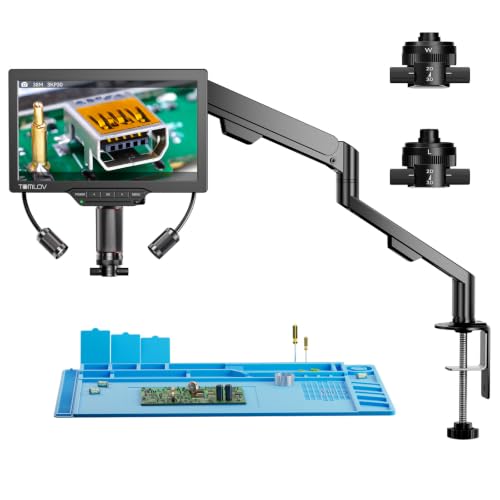
- 3D side-viewing with 360° rotation
- Magnetic dual lenses for wide and long-distance use
- 3K 7-inch IPS screen with HDMI/USB output
Best For: Users who need multi-angle PCB inspection and flexible display connections
Editor's Choice
Andonstar AD210 10.1" LCD Digital Microscope

- 10.1-inch IPS display with wide viewing angle
- Long working distance helps with PCB and soldering tasks
- Top, side, and bottom LEDs support mixed use
Best For: Versatile bench use for PCB inspection, soldering, and hobby work
Value Pick
TOMLOV DM9 Max 10.1" HD IPS Microscope

- 10.1-inch IPS screen with PC/TV connection
- 10 LED lights support PCB and repair detail work
- Remote control and one-button capture simplify use
Best For: Longer PCB inspection sessions with a bigger viewing setup
Auto-Focus 4K Upgrade – Elikliv EM4K-AF Digital Microscope
If you want digital microscopes for PCB inspection that reduce focus fiddling, the Elikliv EM4K-AF stands out with autofocus, a TOF sensor, and 4K imaging. It is built for soldering, repair, and close-up inspection where quick refocusing and a clear live view matter.
Best For: Users who want fast autofocus and a sharp built-in screen for PCB repair and detailed bench work.
Pros:
- Autofocus and TOF sensing help it refocus quickly, even with moving objects.
- 4K UHD video and 52MP images provide very detailed inspection output.
- 8-inch IPS screen offers a bright, wide-angle view for bench use.
- HDMI and USB outputs make it easy to use on a larger display.
Cons:
- 2000X is a stated maximum, so real-world detail depends on working distance and setup.
- The 10-inch stand is tall, but the broad base still takes bench space.
For PCB work, the main advantage here is convenience: autofocus, split-screen, and freeze functions can save time when checking solder joints and comparing details. It is a strong fit if you want a modern all-in-one microscope with a built-in display.
Pro Recording Pick – Andonstar AD210S-Pro 4K Microscope
For digital microscopes for PCB inspection, the Andonstar AD210S-Pro is aimed at users who want smooth 4K capture and a flexible boom-arm setup. Its 4K 60FPS output and integrated microphone make it a practical option when you need both clear visuals and recorded documentation of soldering or repair work.
Best For: Repair users and content creators who want high-frame-rate 4K capture with a roomy working area.
Pros:
- 4K 60FPS HDMI output delivers smooth, clear live viewing.
- Integrated microphone supports audio recording with video.
- Pro boom arm stand gives an extended working distance and flexible positioning.
- Triple adjustable LED lighting helps with PCB, coin, and close-up tasks.
Cons:
- The setup is larger and more specialized than compact bench microscopes.
- Maximum magnification is listed for HDMI use, so results depend on display and zoom settings.
This model makes sense if you need a microscope that can document repair steps as well as inspect them. The included accessories, remote, and PC output support a more complete workflow at the bench.
Budget-Friendly LCD Choice – TOMLOV DM9B 7" Microscope
If you are shopping for digital microscopes for PCB inspection on a simpler setup, the TOMLOV DM9B offers a straightforward 7-inch screen, 12MP imaging, and easy PC viewing. It is built for soldering, inspection, and general close-up use without adding a lot of complexity.
Best For: Hobbyists and learners who want a simple LCD microscope for PCB checks and general close-up work.
Pros:
- 7-inch rotatable FHD screen improves viewing comfort.
- 12MP camera and 1080P imaging are suitable for basic inspection and documentation.
- Black base helps reduce glare and reflections.
- PC compatibility makes larger-screen viewing and sharing easier.
Cons:
- 1080P output is less advanced than 4K options.
- Best results will depend on working distance and lighting, despite the included LEDs and gooseneck lights.
This is a practical choice if you want an easy-to-use microscope that does the job for soldering and inspection without a steep learning curve. It is especially appealing when you value screen ergonomics and a cleaner view over premium specs.
Multi-Lens Workshop Tool – Andonstar AD246S-M HDMI Microscope
The Andonstar AD246S-M is a versatile option among digital microscopes for PCB inspection because it includes three lenses for different jobs, from board repair to coin and slide viewing. Its HDMI output, boom arm stand, and PC measurement software make it a flexible bench microscope for users who switch between tasks.
Best For: Users who want one microscope for PCB repair, inspection, and multi-purpose close-up viewing.
Pros:
- Three interchangeable lenses support soldering, whole-object viewing, and slides.
- UHD 2160P video recording and HDMI output support detailed viewing.
- Pro boom arm stand is adjustable and suited to larger work envelopes.
- Windows measurement software adds photo, video, and size-analysis capability.
Cons:
- Changing lenses and dialing in the setup adds more steps than single-lens units.
- The system is more complex than a basic fixed-screen microscope.
This model is best if you want versatility more than simplicity. For PCB work, the L lens is the main attraction, while the other lenses add value if you also inspect coins, parts, or slides.
7" Rotatable LCD Value Pick – TOMLOV DM9 7" Digital Microscope for PCB Inspection
If you want digital microscopes for PCB inspection with a simple setup and a larger built-in display, the TOMLOV DM9 is built around ease of use. Its 7-inch rotatable screen, 12MP sensor, and solid metal stand make it a practical choice for solder joint checks, component inspection, and general micro-work.
Best For: Hobbyists and repair users who want a straightforward microscope with a screen, PC viewing, and included storage.
Pros:
- 7-inch rotatable FHD screen helps reduce neck and eye strain during longer inspection sessions.
- 12MP imaging with 1080P video support gives clear views for PCB repair and micro soldering.
- PC compatibility works with Windows and macOS for larger-screen viewing and analysis.
- Includes a 16GB Micro SD card and a durable aluminum alloy stand.
Cons:
- Maximum magnification is digital, so usable detail still depends on working distance and setup.
- Higher-resolution capture uses more storage space.
Overall, the DM9 is a well-rounded pick if you want a screen-based microscope that is easy to use, sturdy, and suited to PCB inspection without extra software hassle.
Flexible Arm Budget Option – 5" LCD Digital Soldering Microscope for PCB Inspection
This compact option for digital microscopes for PCB inspection focuses on practical repair use rather than extras. The 5-inch IPS display, flexible gooseneck stand, and plug-and-play PC view make it a workable pick for solder joints, board troubleshooting, and other close-up electronics tasks.
Best For: Users who want a smaller microscope for electronics repair with simple PC viewing and a flexible stand.
Pros:
- 5-inch IPS display is designed to ease neck and eye strain during repair sessions.
- Flexible arm stand helps position the lens around tight or irregular PCB setups.
- Plug-and-play PC view works through built-in Camera app on Windows and Photo Booth on Mac.
- Up to 1000X digital magnification supports micro-detail inspection for soldering work.
Cons:
- Not auto-focus, so you must set the distance and use the focus wheel manually.
- Micro SD card is not included and is required for saving photos and 1080P videos.
- Smaller screen is less suited to viewing large objects in full frame.
If you are comparing digital microscopes for PCB inspection on a tighter budget, this model emphasizes flexibility and basic repair workflow over premium display size or bundled storage.
3D Dual-Lens Premium Pick – TOMLOV TM3K-3D Microscope for PCB Inspection
For buyers looking at digital microscopes for PCB inspection with more viewing flexibility, the TOMLOV TM3K-3D stands out for its side-viewing design and dual-lens setup. The 3K screen, HDMI/USB output options, and articulating arm are aimed at more precise soldering, component inspection, and multi-angle work.
Best For: Electronics users who need side-view inspection and flexible output options for detailed PCB work.
Pros:
- 3D side-viewing and 3600 rotating imaging help inspect components from multiple angles.
- Magnetic dual lenses let you switch quickly between the wide-angle W lens and the long-distance L lens.
- 3K 7-inch IPS screen delivers a clear built-in viewing experience with vibrant color.
- HDMI and USB output provide flexible options for larger-screen viewing and computer analysis.
Cons:
- More advanced feature set may be more than casual users need.
- Uses a corded electric power source, so it is less portable than battery-powered models.
As a PCB inspection tool, this model is best when you want extra viewing angles and output flexibility rather than a basic desk microscope. The side-viewing lens system is the main reason to choose it.
Editor's Choice – Andonstar AD210 10.1" LCD Digital Microscope
If you want digital microscopes for PCB inspection that also handle soldering, coin viewing, and slide work, the Andonstar AD210 is built around flexibility. Its 10.1-inch IPS display, long working-distance metal stand, and multiple LED lighting modes make it easier to inspect boards without crowding the workspace.
Best For: Users who want a versatile bench microscope for PCB inspection, soldering, and mixed hobby use.
Pros:
- Large 10.1-inch IPS screen with 178° viewing angle for comfortable inspection.
- Long working distance and upgraded metal stand give more room for soldering and PCB work.
- Includes top, side, and bottom lighting for different inspection tasks.
- 32GB card, card reader, remote control, and slide kit add useful extras.
Cons:
- Designed as an all-purpose unit, so it is less specialized than a dedicated PCB-only microscope.
- Maximum magnification and imaging specs are solid, but not the highest in this group.
The AD210 is a strong pick if you want one microscope that can move between electronics repair and other close-up tasks. It focuses on practical usability, workspace clearance, and lighting control rather than chasing the most extreme zoom numbers.
Value Pick – TOMLOV DM9 Max 10.1" HD IPS Microscope
For digital microscopes for PCB inspection, the TOMLOV DM9 Max stands out by pairing a large 10.1-inch IPS screen with PC and TV compatibility. That makes it a practical choice for longer repair sessions when you want a bigger view of solder joints, board components, and fine surface details.
Best For: Buyers who want a screen-based microscope with easy sharing to a PC or monitor for PCB inspections.
Pros:
- 10.1-inch HD IPS display with a 178° viewing angle for comfortable viewing.
- PC and TV compatibility makes larger-screen inspection easier.
- 10 LED lights, including side gooseneck lights, help with detailed board work.
- Remote control and one-button capture make it simple to operate.
Cons:
- Focuses on convenience and screen size more than advanced microscope control features.
- Uses a battery-powered design rather than a more permanent bench setup.
The DM9 Max is well suited to hobbyists and repair users who want a straightforward display microscope for checking PCB components and solder joints. Its big screen, external display support, and strong lighting make it easy to use during extended inspection work.
Premium Pick – TOMLOV TM4K-AF Max 4K Autofocus Microscope
If you want digital microscopes for PCB inspection with a more advanced workflow, the TOMLOV TM4K-AF Max adds autofocus, TOF sensing, and AI autofocus to the mix. Its 4K output, 52MP images, and flex-arm design are aimed at users who want faster focusing and sharper detail during electronics repair.
Best For: Users who want autofocus and 4K clarity for detailed PCB inspection and repair.
Pros:
- Autofocus with TOF and AI help keep the image sharp without constant manual adjustment.
- 4K UHD video and 52MP image capture provide high-detail viewing.
- 360° spin arm and fine-tuning stand offer flexible positioning for repair work.
- Ring light and HDMI/USB output support clear, even viewing across multiple screens.
Cons:
- More advanced feature set may be more than casual users need.
- Some display specs are listed as 1280 x 800P rather than a true 4K screen panel.
The TM4K-AF Max is the most feature-rich option here for users who prioritize focus speed and image detail. It is especially appealing for PCB inspection where hands-free focusing and flexible positioning can save time.
How We Picked the Best Digital Microscopes for PCB Inspection
We prioritized models that make bench work easier, not just products with the highest magnification number. For PCB inspection, useful screen clarity, stable stands, good focus control, and enough working distance for a soldering iron matter more than oversized claims.
We also looked for features that support routine electronics tasks such as checking joints, identifying lifted pads, reading small markings, and documenting repairs. USB/HDMI output, autofocus, large displays, and adjustable lighting can all improve day-to-day usability.
Quick Comparison
If you want a broad-view bench setup, larger-screen microscopes are usually easier for prolonged inspection and shared use. If your work is more detail-oriented, autofocus and higher-resolution imaging can help when examining tiny bridges, cracked joints, and SMD parts. Compact 5-inch units may suit occasional use or tighter workspaces, while 7-inch to 10.1-inch displays are better for frequent repair sessions.
Key Buying Factors for Digital Microscopes for PCB Inspection
Image Clarity and Resolution
For electronics, the goal is not maximum zoom; it is clean, stable detail. Look for a sharp image at practical magnification levels so solder joints and component edges stay visible without excessive blur or lag.
Working Distance and Stand Design
A microscope that leaves room for tools is easier to use on real boards. Flexible arms, sturdy bases, and appropriate stand height help you solder, probe, and reposition without constantly moving the board.
Screen Size and Viewing Comfort
Larger displays reduce eye fatigue and make shared troubleshooting easier. Smaller screens can still work, but they are usually better for lighter-duty inspection rather than long repair sessions.
Lighting and Focus Control
Adjustable LEDs and fine focus are essential for revealing solder quality and surface defects. Autofocus can be especially helpful when your workflow includes switching between components at different heights.
Who Should Buy Which Digital Microscopes for PCB Inspection?
Choose a larger-screen model if you spend long hours at the bench, teach or demo repairs, or want a more comfortable inspection setup. Pick a compact microscope if you need something affordable and space-saving for occasional use. Go for autofocus or higher-resolution options if you inspect dense PCBs, fine-pitch parts, or tiny defects that demand more visual precision.
For most buyers, the best choice among Digital Microscopes for PCB Inspection is the one that balances detail, working room, and comfortable viewing rather than chasing the highest magnification alone.