Choosing among the best Micro ATX computer cases means balancing compact dimensions with the clearance, cooling, and expansion room your components require. The right case can make a small build easier to assemble, quieter to run, and simpler to upgrade.
This roundup compares 10 Micro ATX options across airflow, radiator support, graphics-card capacity, included fans, layout, and design features so you can find a case that fits both your hardware and your workspace.
Best 10 Micro Atx Computer Cases Picks for 2026
Airflow-Focused Pick
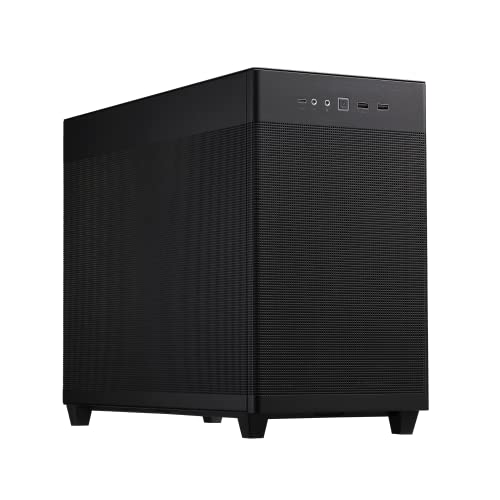
- 57,000-plus-hole mesh design supports airflow
- Fits up to a 360mm radiator and 338mm GPU
- Tool-free panels and 32mm cable-management space
Best For: Performance-oriented Micro-ATX builds
Budget-Friendly Airflow Pick

- Supports GPUs up to 360mm and 240mm liquid coolers
- Perforated design and magnetic dust filters
- Adjustable I/O panel offers flexible placement
Best For: Simple, affordable Micro-ATX builds
Best Panoramic Build

- Dual-chamber layout with back-connect support
- Fits up to a 400mm GPU and 360mm AIO
- Three included fans; supports up to nine 120mm fans
Best For: Showcase gaming builds with large components
Best Design-Focused Case

- Curved 270-degree glass display
- Walnut wood accent panel
- Supports ATX PSUs up to 220mm
Best For: Stylish compact builds with shorter components
Best Simple Panoramic Value

- 270-degree panoramic tempered glass
- Three pre-installed fans
- Micro-ATX and Mini-ITX support
Best For: Accessible showcase gaming builds with basic cooling
Best Value Starter
Rosewill FBM-X5 Micro ATX Case

- Pre-installed 400W power supply
- Supports Micro ATX and Mini ITX boards
- Flexible fan and AIO support
Best For: Budget-conscious compact PC builds
Best Airflow Design
Okinos Aqua UNO Micro ATX Case

- Three pre-installed 120mm ARGB fans
- Quick-release panoramic glass panels
- Air-cooling-only layout with dust filters
Best For: Air-cooled RGB gaming systems
Best Wood-Accent Build
Okinos Cypress 3 Micro ATX Case

- Walnut wood front accents
- Four pre-installed 120mm fans
- 10Gbps Type-C front connectivity
Best For: Decor-friendly airflow-focused builds
Airflow-Focused Pick – ASUS Prime AP201
The ASUS Prime AP201 is a strong option among micro atx computer cases for performance-focused builds. Its highly perforated mesh panels, support for large graphics cards, and compatibility with radiators up to 360mm give builders plenty of cooling flexibility in a compact 33-liter chassis.
Best For: High-performance Micro-ATX or Mini-ITX systems that need strong airflow and liquid-cooling support.
Pros:
- Supports graphics cards up to 338mm and radiators up to 360mm.
- Highly perforated mesh panels promote airflow while showing the components inside.
- Accepts ATX power supplies up to 180mm long.
- Tool-free side panels and a 32mm cable-management gap simplify building.
Cons:
- Its four expansion slots may limit some multi-slot expansion-card layouts.
- The front-mounted power-supply position requires careful planning during assembly.
The AP201 balances compact dimensions with unusually broad hardware support. It is especially appealing if cooling capacity, cable organization, and easy access matter more than a small-form-factor footprint.
Compact Hardware Champion – Lian Li A3-mATX
The Lian Li A3-mATX stands out among micro atx computer cases by combining a 26.3-liter design with support for graphics cards up to 415mm. Its mesh panels, modular interior, and flexible power-supply placement make it suitable for compact systems using substantial hardware.
Best For: Compact gaming builds with a large GPU, 360mm AIO, or flexible PSU requirements.
Pros:
- Supports GPUs up to 415mm in a compact 26.3-liter chassis.
- Compatible with 360mm radiators and up to ten 120mm fans.
- Offers front- or side-oriented installation for ATX, SFX, and SFX-L power supplies.
- Steel mesh panels support airflow for high-TDP components.
Cons:
- Fans are not included.
- The compact, modular layout may require more planning during installation.
Choose the A3-mATX when maximum component clearance is a priority in a smaller enclosure. Its flexible PSU arrangement is particularly useful for tailoring cable routing and internal space.
Budget-Friendly Airflow Pick – Cooler Master Q300L V1
The Cooler Master Q300L V1 is a practical choice among micro atx computer cases for straightforward, configurable builds. Its perforated exterior, magnetic dust filters, adjustable I/O panel, and support for a 240mm liquid cooler provide useful flexibility without a complicated layout.
Best For: Budget-conscious Micro-ATX or Mini-ITX users who want flexible placement and visible components.
Pros:
- Supports graphics cards up to 360mm and CPU coolers up to 159mm tall.
- Accommodates a 240mm liquid cooler and up to five fans.
- Perforated panels promote ventilation and heat dissipation.
- Modular I/O panel can be positioned on the front, top, or bottom of either side.
Cons:
- Storage capacity is limited to one listed internal bay.
- Power-supply support is listed up to 160mm, so longer units may not fit.
- The case has less stated radiator capacity than the larger-supporting options in this roundup.
The Q300L V1 is a sensible everyday enclosure for builders who value airflow and adjustability. Confirm the dimensions of the power supply, cooler, and graphics card before purchasing.
ARGB Showcase Pick – Lian Li Vector V100 MINI
The Lian Li Vector V100 MINI adds a display-focused design to the micro atx computer cases category. Its tempered-glass front and side panels create a 270-degree view, while four included ARGB PWM fans and support for a top-mounted 360mm radiator give the case both visual appeal and cooling potential.
Best For: Micro-ATX gaming builds that prioritize panoramic component visibility, lighting, and included fans.
Pros:
- Includes four 120mm ARGB PWM fans.
- Supports up to nine fans and a top-mounted 360mm or 240mm radiator.
- Fits graphics cards up to 415mm and ATX power supplies up to 200mm.
- Tempered-glass front and side panels provide a 270-degree component view.
Cons:
- Does not support full-size ATX motherboards.
- The glass-heavy design may be less airflow-focused than fully mesh alternatives.
- Its listed dimensions are substantial for a case marketed as “MINI.”
The V100 MINI is a compelling choice for a polished, illuminated build, especially when included fans reduce the need for immediate add-ons. Verify motherboard compatibility and available desk space before ordering.
Best Panoramic Build – STRUXVEX S6 Micro-ATX PC Case
The STRUXVEX S6 is a strong choice among micro atx computer cases for builders who want a showcase-style gaming system with room for substantial components. Its dual-chamber layout, back-connect support, and broad cooling compatibility help keep a high-performance build organized.
Best For: RGB-focused gaming builds that need generous GPU, radiator, and fan support.
Pros:
- Dual tempered-glass panels provide a panoramic view of components and lighting.
- Supports GPUs up to 400mm, a 360mm AIO, and CPU coolers up to 162mm.
- Includes three fans and supports up to nine 120mm fans.
- Dual-chamber construction separates the PSU and cables from the main hardware area.
Cons:
- The case weighs 11.3 pounds, making it less convenient to move than smaller designs.
- Connectivity is limited to two listed USB ports, including one USB 2.0 port.
Choose the S6 if visual presentation, upgrade flexibility, and cooling expansion matter more than the smallest possible footprint. Its component clearances make it particularly adaptable for demanding gaming hardware.
Best Design-Focused Case – JONSBO V12 Micro ATX PC Case
The JONSBO V12 brings a furniture-inspired look to micro atx computer cases, combining curved glass with a walnut wood accent. Its compact dimensions suit desktop placement, but builders should check the 260mm graphics-card and 140mm CPU-cooler limits before choosing components.
Best For: Compact, design-conscious builds using shorter graphics cards and an ATX power supply.
Pros:
- Curved 270-degree glass provides a multi-angle view of the hardware.
- Solid North American black walnut panel adds a distinctive home-friendly finish.
- Includes two front fans and offers USB 3.2 Gen 2 Type-C connectivity.
- Supports multiple storage combinations with 3.5-inch HDD and 2.5-inch SSD bays.
Cons:
- GPU support is limited to 260mm, restricting graphics-card choices.
- The maximum CPU cooler height is 140mm.
- Rear 92mm and 80mm fans are optional rather than included.
The V12 is a good fit when appearance and compact desktop proportions are priorities. Its component limits make it better suited to carefully planned midrange or compact builds than oversized gaming hardware.
Best Simple Panoramic Value – MOROVOL MATX PC Case V3
The MOROVOL V3 offers a straightforward entry point into micro atx computer cases, pairing Micro-ATX compatibility with a three-sided panoramic tempered-glass design. Three pre-installed fans provide airflow out of the box, making it convenient for a basic gaming build.
Best For: Budget-conscious builders who want a black showcase case with included cooling.
Pros:
- 270-degree tempered glass offers an unobstructed view of the build.
- Three pre-installed fans provide immediate airflow without extra fan purchases.
- Supports Micro-ATX and Mini-ITX motherboards.
- Front-panel USB 3.0 enables convenient device connectivity.
Cons:
- The supplied notes do not list detailed GPU, radiator, or CPU-cooler clearance.
- The case has four expansion slots, which may limit some add-in-card configurations.
- Its feature set is more basic than the STRUXVEX S6, particularly for expansion and cable-management options.
The MOROVOL V3 is a practical pick for a clean, visible gaming setup when included fans and appearance matter most. Confirm component clearances before buying, since detailed hardware limits are not specified in the supplied information.
Best Value Starter – Rosewill FBM-X5 Micro ATX Case
For shoppers comparing micro atx computer cases, the Rosewill FBM-X5 is a practical mini-tower option with a pre-installed 400W power supply. Its straightforward layout supports compact office systems and entry-level gaming builds while offering useful storage and cooling flexibility.
Best For: Budget-conscious builders who want a compact case with an included power supply.
Pros:
- Includes a non-modular 400W power supply.
- Supports Micro ATX and Mini ITX motherboards with four expansion slots.
- Offers two 2.5-inch bays, one 3.5-inch bay, and support for multiple 120mm fans.
- Supports a 240mm or 280mm AIO configuration.
Cons:
- The included power supply is non-modular.
- Only one 120mm rear fan is pre-installed.
- The front I/O uses USB 2.0 and USB 3.0 rather than USB-C.
The FBM-X5 makes sense when simplicity and included power hardware matter more than premium materials or modern connectivity. Verify that the 400W supply suits your planned components before purchasing.
Best Airflow Design – Okinos Aqua UNO Micro ATX Case
The Okinos Aqua UNO is one of the more visually focused micro atx computer cases, pairing panoramic tempered-glass panels with three pre-installed ARGB fans. It is designed specifically for air cooling, with tool-free panel access, dust filters, and organized cable-routing space.
Best For: Air-cooled gaming builds that prioritize lighting, glass-panel visibility, and easy maintenance.
Pros:
- Includes three pre-installed 120mm ARGB fans.
- Quick-release tempered-glass front and side panels simplify access.
- Removable dust filters cover the top, side, and bottom panels.
- Provides USB-C 5Gbps connectivity and cable-routing clearance with Velcro straps.
Cons:
- Does not support CPU or GPU radiator installation.
- GPU clearance is limited to 309mm.
- The area above the PSU shroud does not support additional fans.
The Aqua UNO is a strong fit for builders who prefer a simpler air-cooling setup and want an illuminated showcase appearance. Check your graphics-card length and CPU cooler height before committing.
Best Wood-Accent Build – Okinos Cypress 3 Micro ATX Case
The Okinos Cypress 3 Wood stands out among micro atx computer cases with walnut wood front accents, a tempered-glass side panel, and a three-sided mesh intake design. Four included fans and a modern Type-C port make it a distinctive choice for decor-friendly builds with practical airflow.
Best For: Home or gaming setups seeking a wood-accented case with strong out-of-box airflow.
Pros:
- Walnut wood front decoration gives the case a furniture-friendly appearance.
- Includes four 120mm non-PWM, non-ARGB fans.
- Three-sided mesh intake is designed to maximize airflow.
- Provides a Type-C 3.2 Gen 2 port rated for 10Gbps.
Cons:
- Included fans are non-PWM and non-ARGB.
- GPU clearance varies from 285mm to 320mm depending on fan placement.
- Supports CPU coolers up to 164mm and power supplies up to 150mm deep.
The Cypress 3 Wood combines a distinctive exterior with useful cooling hardware and fast front-panel connectivity. Its component limits make careful GPU, cooler, and power-supply measurements especially important.
How We Picked These Micro Atx Computer Cases
We compared these cases by focusing on the specifications that matter most in a compact desktop build: motherboard compatibility, maximum graphics-card length, CPU-cooler and radiator support, ventilation, included fans, storage flexibility, front-panel connectivity, and cable-management space. We also considered practical differences between traditional mini towers, panoramic glass designs, dual-chamber layouts, and compact cases intended for high-end components.
Because component compatibility can vary by configuration, verify the manufacturer’s current dimensions before buying. GPU length may be reduced when a front radiator, front fans, or a particular power-supply layout is installed.
Quick Comparison
| What to Compare | Best For | Why It Matters |
|---|---|---|
| Airflow and mesh panels | Gaming and sustained workloads | Helps remove heat from the CPU and GPU. |
| GPU clearance | Modern gaming builds | Determines which graphics cards will fit. |
| Radiator support | Liquid-cooled systems | Confirms whether your 240mm, 280mm, or 360mm cooler is compatible. |
| Included fans | Value-focused builds | Can reduce the cost and effort of completing the airflow setup. |
| Tempered-glass layout | Showcase PCs | Provides visibility but may require more attention to dust and thermals. |
Key Buying Factors for Micro Atx Computer Cases
Check Component Clearance First
Measure the graphics card, CPU cooler, power supply, and any planned radiator before choosing a case. Compact layouts often trade internal space for a smaller footprint, and front-mounted cooling hardware can affect GPU clearance.
Prioritize Airflow for Powerful Hardware
Mesh-front cases generally offer a safer starting point for high-wattage CPUs and GPUs. Panoramic glass cases can look excellent, but they should have strategically placed intake and exhaust fans. Look for removable filters and a clear front-to-back or bottom-to-top airflow path.
Match Cooling Support to Your Processor
Check both tower-cooler height and radiator compatibility. A case that supports a 360mm radiator may still require a specific mounting position, while smaller cases may be better suited to a compact air cooler or 240mm all-in-one.
Consider Assembly and Upgrades
Removable panels, accessible cable-routing channels, and a sensible motherboard tray can make a major difference during installation. Also check the number of drive mounts, PCIe slots, USB ports, and fan headers if you plan to expand the system later.
Who Should Buy Which Micro Atx Computer Cases?
Choose a mesh-focused model if cooling performance and quiet operation matter more than display value. These cases are usually the easiest fit for gaming systems with hot components. A compact, high-clearance design is a better match for builders using a large graphics card or a 360mm liquid cooler.
Panoramic tempered-glass cases suit RGB-focused builds and buyers who want to display components, provided the selected configuration has adequate intake and exhaust capacity. Dual-chamber designs can improve visual cleanliness and cable management, but they may require more careful planning.
For a budget office PC, home server, or basic upgrade, prioritize included fans, power-supply compatibility, front USB access, and straightforward assembly over premium glass or elaborate layouts. Finally, confirm exact dimensions and current specifications for your chosen motherboard, GPU, cooler, and power supply before ordering.