The best handheld field recorders make it easier to capture clean, detailed audio away from a studio. Whether you record interviews, live music, film sound, or everyday ideas, the right model can improve results without adding unnecessary complexity.
This roundup compares 10 current options across entry-level stereo recorders, versatile XLR models, and professional multitrack field recorders. Use the guide below to match features, workflow, and budget to the way you record.
Best 10 Handheld Field Recorders Picks for 2026
Professional Safety Net

- 32-bit float recording
- Dual locking XLR/TRS inputs
- Ultra-low-noise preamps
Best For: Run-and-gun film and location recording
Flexible Everyday Recorder

- Adjustable AB/XY stereo mics
- 32-bit float and MP3 modes
- 2-in/2-out USB-C interface
Best For: Music, meetings, podcasting, and video audio
Large-Mic Studio Detail

- 19.4mm X/Y stereo microphones
- 32-bit float recording
- Up to four-track recording
Best For: Detailed music and film location capture
Four-Channel Creator Workhorse
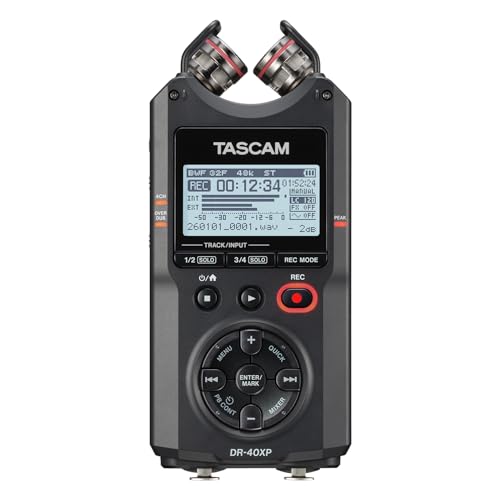
- Four-channel recording
- Adjustable A-B or X-Y mics
- Two XLR/TRS inputs
Best For: Music, interviews, and multi-source video recording
Best Budget-Friendly Pick

- 32-bit float recording helps prevent clipped audio
- X/Y stereo mics for music, voices, and ambience
- USB-C microphone mode for streaming and calls
Best For: Portable everyday recording and content creation
Best for Long Battery Life

- Up to 17.5 hours with two AA batteries
- 32-bit float, 24-bit, 16-bit, and MP3 modes
- USB-C 2-in/2-out audio interface
Best For: Extended field sessions and flexible stereo recording
Best for XLR Connectivity

- Two locking XLR/TRS combo inputs
- 32-bit/96kHz recording with waveform display
- 3.5mm stereo input and headphone output
Best For: Filmmakers, musicians, and external-mic setups
Professional Production Pick

- 32-bit float recording helps prevent clipping
- Six XLR inputs and up to 14 tracks
- Timecode I/O for frame-accurate sync
Best For: Filmmakers and multi-microphone productions
Versatile Creator Pick

- Built-in stereo microphones for quick recording
- Two XLR/TRS inputs for external gear
- USB-C recording or streaming with SD backup
Best For: Musicians, podcasters, and interview recording
Portable Pattern Specialist

- Three microphones with nine recording patterns
- 32-bit float recording minimizes gain adjustments
- USB microphone mode with simultaneous SD backup
Best For: Journalists and creators recording with built-in microphones
Professional Safety Net – Zoom F3
The Zoom F3 is one of the most dependable handheld field recorders for filmmakers and musicians who need clean audio without constantly riding gain. Its 32-bit float recording, dual locking inputs, and ultra-low-noise preamps suit demanding location work.
Best For: Run-and-gun filmmakers, location recordists, and complex microphone rigs.
Pros:
- 32-bit float recording helps capture quiet dialogue and sudden peaks without stopping to adjust levels.
- Dual locking XLR/TRS inputs help keep connections secure in larger setups.
- Flexible battery-powered and USB workflows support long recording sessions.
Cons:
- Built-in microphone operation is listed as mono or stereo, but the recorder is primarily designed around external microphones.
- MicroSD storage is required for recording.
The F3 is a focused choice when reliable level protection and secure professional connections matter more than a broad selection of built-in microphones.
Flexible Everyday Recorder – TASCAM DR-07XP
The TASCAM DR-07XP is a versatile handheld field recorder for music, meetings, voice, video, and podcasting. Adjustable stereo microphones, 32-bit float recording, and USB-C interface operation make it practical for both mobile capture and computer-based work.
Best For: Musicians, interviewers, podcasters, and creators who want adjustable built-in stereo microphones.
Pros:
- Adjustable AB/XY condenser microphones provide flexible stereo recording.
- 32-bit float, 24-bit, 16-bit, and MP3 recording modes accommodate different workflows.
- Works as a 2-in/2-out USB-C audio interface for direct computer recording.
Cons:
- MicroSD card is not included.
- Two AA alkaline batteries are sold separately.
With support for sources up to 125 dB SPL and several recording formats, the DR-07XP is a well-rounded option for creators who want one portable recorder for varied everyday assignments.
Large-Mic Studio Detail – Zoom H5studio
The Zoom H5studio brings large 19.4mm X/Y stereo microphones and 32-bit float recording to a portable handheld field recorder. Dedicated gain knobs and multi-track capability make it appealing for filmmakers and musicians who want hands-on control in the field.
Best For: Musicians and filmmakers seeking detailed stereo capture with physical gain controls.
Pros:
- Large stereo microphones are designed to deliver detailed audio with a wide dynamic range.
- Dedicated gain knobs allow quick, precise level adjustments.
- Records up to four tracks simultaneously and supports recording up to 192kHz in WAV format.
Cons:
- Its four-AA battery requirement is heavier than some smaller recorders.
- Listed digital recording time is up to 15 hours.
The H5studio is a strong fit when built-in microphone quality, tactile controls, and expandable multi-track recording are higher priorities than the lightest possible setup.
Four-Channel Creator Workhorse – TASCAM DR-40XP
The TASCAM DR-40XP is a flexible handheld field recorder for creators who need built-in microphones and external inputs at the same time. Its adjustable stereo mics, two XLR/TRS inputs, and four-channel recording support music, interviews, and video production.
Best For: Musicians, interview crews, and video creators recording multiple sources in the field.
Pros:
- Four-channel recording can capture the built-in microphones and external inputs simultaneously.
- Adjustable A-B or X-Y microphones handle sources up to 125 dB SPL.
- 32-bit float recording, low-noise HDDA preamps, and USB-C interface functionality support modern workflows.
Cons:
- MicroSD card is not included.
- Batteries are not included.
The DR-40XP stands out for hybrid setups that combine ambient stereo sound with external microphones, making it more flexible than a basic two-channel portable recorder.
Best Budget-Friendly Pick – Zoom H1 Essential
The Zoom H1 Essential is a compact choice for anyone comparing handheld field recorders for music, podcasts, video work, interviews, or everyday sound capture. Its X/Y stereo microphones and 32-bit float recording are designed to make quick recordings easier while helping prevent clipped audio.
Best For: Musicians, content creators, podcasters, interviewers, and users who want a lightweight recorder that can also work as a USB microphone.
Pros:
- 32-bit float recording supports clip-free audio capture.
- Built-in X/Y stereo microphones suit music, voices, ambience, and sound effects.
- USB-C microphone mode works for streaming, calls, voiceovers, and computer or mobile recording.
- Compact 92 g design with up to 10 hours of battery life.
Cons:
- Uses two AAA batteries rather than rechargeable battery power.
- Its built-in stereo microphone design is less suited to setups requiring XLR inputs.
The H1 Essential is a practical pick when portability and simple operation matter most. It offers useful recording flexibility without requiring a more involved external-microphone setup.
Best for Long Battery Life – TASCAM DR-05XP
The TASCAM DR-05XP is a versatile option among handheld field recorders, with stereo recording modes for music, meetings, dictation, and audio-for-video work. It supports 32-bit float, 24-bit, and 16-bit recording, plus MP3 capture, while its built-in microphones can handle sources up to 125 dB SPL.
Best For: Users who want flexible recording formats, extended battery operation, and a recorder that can double as a USB-C audio interface.
Pros:
- Supports 32-bit float, 24-bit, and 16-bit recording at several sample rates.
- Built-in omnidirectional condenser microphones support loud environments and sources up to 125 dB SPL.
- USB-C 2-in/2-out audio interface enables direct computer recording.
- Offers up to 17.5 hours of operation with two AA alkaline batteries.
Cons:
- SD card and batteries are not included.
- Its built-in microphone format may offer less connection flexibility than a recorder with XLR inputs.
The DR-05XP stands out for buyers who prioritize recording-format flexibility and long operation between battery changes. It is a well-rounded choice for field, voice, and computer-based recording.
Best for XLR Connectivity – Zoom H1 XLR
The Zoom H1 XLR is aimed at users who need more connection options from their handheld field recorders. Its two XLR/TRS combo inputs accept microphones and instruments, while 32-bit/96kHz recording, a waveform display, and SDXC support up to 1TB make it suitable for detailed production work.
Best For: Filmmakers, musicians, podcasters, and anyone building a recorder setup around external microphones or instruments.
Pros:
- Two locking XLR/TRS inputs support microphones, instruments, and other sources.
- 32-bit/96kHz recording provides a high-resolution recording option.
- OLED waveform display helps monitor levels at a glance.
- Includes 3.5mm stereo input and headphone output, with SDXC support up to 1TB.
Cons:
- Uses two AA batteries and provides about 10 hours of battery life.
- Its 6.4-ounce weight and expanded connectivity make it less minimal than a basic pocket recorder.
The H1 XLR is the strongest fit here for recording with external microphones or instruments. Choose it when input flexibility and monitoring features are more important than the simplest possible setup.
Professional Production Pick – Zoom F6
The Zoom F6 is a professional choice among handheld field recorders when you need extensive input capacity, clip-free 32-bit float recording, and dependable synchronization for location work.
Best For: Filmmakers, broadcast crews, musicians, and multi-microphone field productions.
Pros:
- 32-bit float recording with dual A/D converters helps capture quiet and loud sources without clipping.
- Six XLR inputs support simultaneous multi-microphone recording, with up to 14 tracks.
- Timecode I/O enables frame-accurate audio and video synchronization.
- Can operate as a standalone recorder or USB audio interface.
Cons:
- Its professional feature set and 2.4-pound weight may be more than casual users need.
- Requires four AA batteries.
Choose the F6 when your workflow depends on multiple XLR sources, timecode, and maximum protection against clipping. It is less focused on pocket simplicity than compact two-input recorders, but better suited to demanding production setups.
Versatile Creator Pick – Zoom H4 Essential
The Zoom H4 Essential is a flexible handheld field recorder for creators who want built-in stereo microphones, two external inputs, and 32-bit float recording in a portable format.
Best For: Musicians, podcasters, interviewers, and filmmakers needing both built-in and external microphone options.
Pros:
- Built-in stereo microphones provide a ready-to-record setup.
- Two XLR/TRS inputs accommodate external microphones, instruments, mixers, or soundboards.
- 32-bit float recording helps handle quiet dialogue and loud performances without distorted takes.
- USB-C supports recording or streaming to a phone, tablet, or computer while saving to an SD card.
Cons:
- Its four-track design offers less expansion than the Zoom F6.
- Requires two AA batteries.
The H4 Essential strikes a practical balance between simplicity and connectivity. It is a strong all-around option when you want a compact recorder that can handle solo recordings, external gear, and USB-based workflows.
Portable Pattern Specialist – Zoom H2 Essential
The Zoom H2 Essential is a compact handheld field recorder built around three microphones and nine selectable recording patterns, making it useful for everything from focused interviews to wide stereo soundscapes.
Best For: Journalists, podcasters, musicians, and creators who value flexible built-in microphone coverage.
Pros:
- Three built-in microphones support nine recording patterns, including mono and stereo options.
- 32-bit float recording reduces the need to adjust gain during changing sound levels.
- Can work as a USB microphone while recording a backup to an SD card.
- Bluetooth timecode can wirelessly sync multiple H2 Essential units.
Cons:
- It does not list XLR/TRS inputs for connecting external microphones or instruments.
- Its 1.3-inch screen is smaller than the H4 Essential’s listed 2-inch screen.
The H2 Essential is the most streamlined choice here for built-in microphone recording and varied pickup patterns. Pick it when portability and flexible coverage matter more than external-input expansion.
How We Picked the Best Handheld Field Recorders
We evaluated these Handheld Field Recorders by looking at recording quality, microphone flexibility, input options, portability, ease of use, and suitability for different types of creators. Models with 32-bit float recording receive particular attention because they can provide more forgiveness when recording levels change unexpectedly. We also considered whether each recorder works well for stereo capture, external microphones, interviews, filmmaking, music, or USB-C computer workflows.
The selection includes straightforward two-channel recorders for beginners, adaptable models with XLR/TRS inputs, and professional field units designed for more demanding production setups. The best choice depends less on having the most features and more on matching the recorder to your microphones, subjects, and working environment.
Quick Comparison
- Best for professional filmmaking: Zoom F6, with advanced multitrack recording and professional connectivity.
- Best compact professional option: Zoom F3, a small two-input recorder suited to filmmaking and music.
- Best for adjustable stereo recording: TASCAM DR-07XP or DR-40XP, depending on whether you need XLR/TRS inputs.
- Best for simple everyday recording: Zoom H1 Essential or TASCAM DR-05XP.
- Best for flexible creator setups: Zoom H4 Essential or Zoom H1 XLR.
- Best for immersive or broad stereo capture: Zoom H2 Essential.
Key Buying Factors for Handheld Field Recorders
Inputs and Microphone Options
Built-in stereo microphones are convenient for ambience, rehearsals, lectures, and quick notes. If you plan to use lavalier, shotgun, dynamic, or condenser microphones, choose a recorder with suitable external inputs. XLR/TRS connectors offer greater flexibility than basic 3.5mm microphone inputs and are especially useful for film crews, musicians, and interview kits.
Recording Format and Headroom
32-bit float recording can reduce the risk of unusable takes caused by unexpectedly loud sounds or incorrectly set gain. It is valuable for run-and-gun filming, live events, and changing sound levels, although microphone placement and room acoustics still matter. Check supported file formats and sample rates if you need a specific production workflow.
Channels and Expansion
A two-channel recorder is often enough for stereo music, interviews, and a single external microphone. Choose a four-channel or multitrack model when you need multiple microphones, a camera feed, or separate backup sources. More channels usually mean a larger setup and a steeper learning curve.
Portability, Power, and Connectivity
Consider battery life, weight, mounting options, storage media, headphone monitoring, and USB-C support. A recorder that doubles as a USB audio interface can simplify podcasting and computer-based recording. For outdoor work, physical controls and a secure grip may be more useful than a longer feature list.
Who Should Buy Which Handheld Field Recorders?
Beginners and casual users should start with a compact stereo recorder such as the Zoom H1 Essential or TASCAM DR-05XP. They are practical for voice memos, classes, rehearsals, and general-purpose recording.
Musicians and content creators may prefer the Zoom H2 Essential, H4 Essential, or H1 XLR for broader microphone compatibility and more flexible recording setups. These models can grow with a basic creator workflow.
Filmmakers and interview teams should look closely at the Zoom F3, TASCAM DR-40XP, or Zoom H5. External microphone support, monitoring, and dependable level control are more important here than the smallest size.
Professional production crews should consider the Zoom F6 when they need multiple inputs, more advanced routing, and room for a demanding field-recording workflow. Before buying, confirm the recorder’s connector types, channel count, mounting needs, and compatibility with your existing microphones.