The best headphone amplifiers with preamp output do more than drive headphones. They can connect a turntable, DAC, computer, or streaming source to powered speakers, a receiver, or another amplifier while giving you a dedicated listening output.
We selected 10 versatile models spanning tube designs, balanced DACs, phono preamps, compact Class A amplifiers, and gaming-friendly desktop units. The right choice depends on your sources, headphone impedance, output connections, and how much control you want over your system.
Best 10 Headphone Amplifiers with Preamp Output Picks for 2026
Warm Tube Versatility

- Four-way RCA source selector
- 16–600Ω headphone support
- Tube, VU meter, and tone controls
Best For: Warm-sounding stereo and headphone setups with multiple RCA sources
Digital Desktop Hub
Fosi Audio ZH3 DAC Headphone Amp
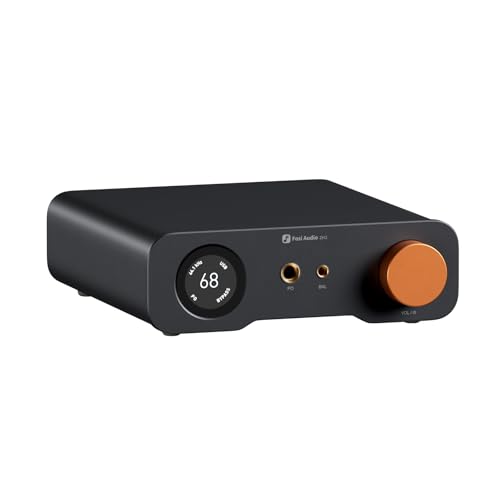
- High-resolution USB, optical, and coaxial DAC
- 4.4mm, 6.35mm, RCA, and XLR outputs
- Balanced amplification with gain and filter options
Best For: Feature-rich desktop systems using digital sources and balanced connections
Balanced Tube Power

- Up to 4000mW balanced output
- 4.4mm, XLR, and 6.35mm outputs
- RCA/TRS preamp and HP+Line modes
Best For: High-output analog HiFi systems with tube sound and balanced headphones
Gaming-Friendly DAC Amp
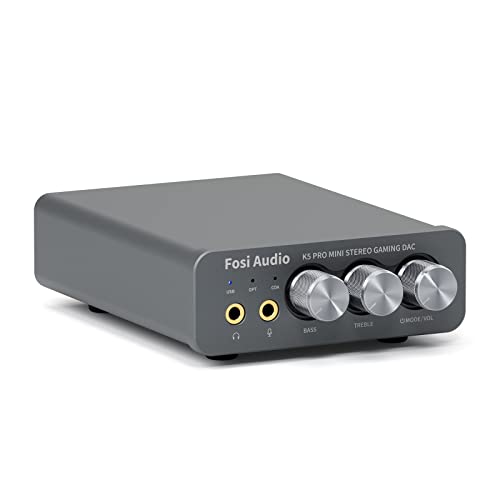
- USB-C, optical, and coaxial inputs
- Microphone input for gaming
- RCA output for powered speakers or amps
Best For: Compact PC and console gaming setups with headphones and active speakers
Tube Tone Versatility

- MM/MC phono and RCA inputs
- 16–300Ω headphone output
- Tube sound, tone controls, and replaceable tubes
Best For: Vinyl listeners wanting a flexible tube preamp with headphone support
Compact Line Booster
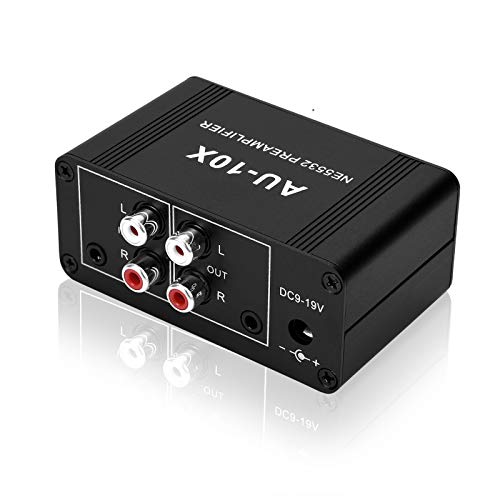
- Adds 20dB of line-level gain
- RCA and 3.5mm input/output options
- Headphone output for up to 16Ω headphones
Best For: Desktop systems using already-preamped line-level sources
Connected Tube Desktop Amp
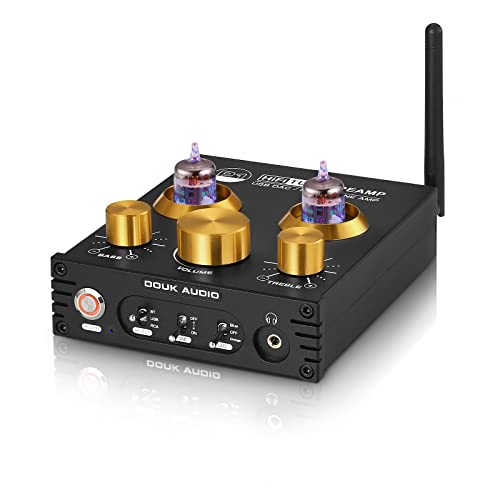
- 32–300Ω headphone drive with up to 160mW
- Bluetooth 5.0 aptX-HD and USB DAC
- Tube preamp with bypassable tone controls
Best For: Desktop listeners needing Bluetooth, USB, and headphone amplification
Vinyl Listening Pick

- MM phono input with RIAA-standard response
- RCA preamp and 3.5mm headphone outputs
- Low-noise design with grounding post
Best For: MM turntable systems needing headphone and powered-speaker connections
Budget Desktop Pick

- Class A design with NE5532 op amp
- 3.5mm and 6.35mm headphone outputs
- Replaceable op-amp socket for tuning
Best For: Compact home or office desktop headphone systems
High-Power Desktop Pick
Douk Audio U3 PRO Headphone Amp

- 1500mW output at 32Ω
- Supports headphones from 18Ω to 600Ω
- RCA, 3.5mm, and dual headphone outputs
Best For: High-power desktop listening across a wide range of headphones
Warm Tube Versatility – Douk Audio TUBE-T5C
The Douk Audio TUBE-T5C is a flexible choice among headphone amplifiers with preamp output, combining tube coloration, headphone drive, source selection, and RCA connectivity in a compact metal chassis. Its four-way RCA selector helps manage multiple sources, while bass and treble controls allow basic tonal adjustment.
Best For: Listeners who want a warm tube presentation, multiple RCA inputs, and a headphone amp that can also feed a stereo system.
Pros:
- Four-way RCA selector supports several connected sources.
- Drives headphones rated from 16–600Ω with up to 500mW output.
- Includes bass and treble adjustment, VU meter, and customizable RGB lighting.
- Pluggable tube and op-amp sockets support future rolling.
Cons:
- Its tube character and tone controls may not suit listeners seeking a strictly neutral setup.
- RCA-focused connectivity is less versatile than a digital DAC-based design.
With its source switching, preamp functionality, and visual tube-era styling, the TUBE-T5C is aimed at compact home stereo systems rather than minimalist headphone-only rigs. The metal-shielded power section and stated low-noise specifications add useful reassurance for mixed speaker and headphone use.
Digital Desktop Hub – Fosi Audio ZH3 DAC Headphone Amp
The Fosi Audio ZH3 is a strong all-in-one option among headphone amplifiers with preamp output, pairing a high-resolution DAC with balanced amplification and RCA/XLR preamp connections. It accepts USB, optical, and coaxial sources and provides both single-ended and balanced headphone outputs.
Best For: Desktop listeners who need broad digital connectivity, powerful balanced headphone output, and flexible connections to active speakers or other downstream equipment.
Pros:
- Supports PCM up to 768kHz/32-bit and DSD512.
- Offers 6.35mm and 4.4mm headphone outputs with high rated power.
- Provides USB, optical, coaxial, and RCA inputs plus RCA and XLR outputs.
- Includes gain adjustment, EQ for headphone output, selectable filters, and remote control.
Cons:
- RCA and XLR output levels differ significantly, so system matching requires attention.
- EQ applies to headphone output only, not the preamp output.
The ZH3 is the most connectivity-focused model in this group. Its balanced architecture and extensive digital format support suit a desktop system that may grow to include active speakers, power amplification, and multiple source types.
Balanced Tube Power – Ampapa H1 Class A Tube Amp
The Ampapa H1 targets listeners who want headphone amplifiers with preamp output and a more substantial analog control center. Its Class A output stage, dual ECC83 tubes, multiple gain levels, and balanced headphone connections are designed for demanding full-size headphones, while RCA and TRS preamp connections support active speakers or power amplifiers.
Best For: HiFi users who want tube character, high output power, balanced headphone connections, and selectable headphone/preamp operating modes.
Pros:
- Rated up to 4000mW from its balanced high-gain output and supports 16–600Ω headphones.
- Includes 4.4mm, four-pin XLR, and 6.35mm headphone outputs.
- HP, Line, and HP+Line modes provide flexible system routing.
- Offers three gain levels, tube rolling support, a 12V trigger, and an OLED display.
Cons:
- Its warm tube-oriented presentation is less suited to listeners seeking a purely neutral chain.
- As an analog tube amplifier, it does not provide built-in digital inputs or DAC functionality.
The H1 is a compelling fit for a serious analog headphone and speaker stack. Its output options and operating modes make it easier to share one source chain between headphones and downstream equipment, while the tube and op-amp sockets leave room for tuning.
Gaming-Friendly DAC Amp – Fosi Audio K5 Pro
The Fosi Audio K5 Pro is a practical entry in headphone amplifiers with preamp output for gaming desks and compact computer audio systems. It converts USB-C, optical, or coaxial sources to 3.5mm and RCA outputs, includes a microphone input, and adds convenient bass, treble, and master-volume controls.
Best For: PC, Mac, PS5, and active-speaker users who want a simple DAC/headphone amp with microphone support and RCA output.
Pros:
- Supports USB-C, optical, and coaxial inputs with RCA and 3.5mm outputs.
- Includes microphone input for gaming and voice use.
- Provides rated output from 1000mW at 16Ω to 80mW at 300Ω.
- Offers separate bass, treble, and master-volume controls.
Cons:
- Headphone connectivity is limited to 3.5mm rather than balanced outputs.
- USB audio supports up to 24-bit/96kHz, below its optical/coaxial 24-bit/192kHz limit.
- Its feature set is more gaming-focused than audiophile-focused.
The K5 Pro makes the most sense when usability matters as much as audio performance. Its microphone input, input switching, tone controls, and RCA output create a convenient desktop hub for headphones, powered speakers, and gaming hardware.
Tube Tone Versatility – Douk Audio T9
The Douk Audio T9 is a flexible choice among headphone amplifiers with preamp output, combining MM/MC phono support, RCA input, tone controls, and a dedicated headphone amplifier. Its vacuum-tube design adds visual appeal and a warm, full-bodied character for home hi-fi listening.
Best For: Turntable owners and listeners who want tube styling, adjustable bass and treble, and headphone support in one preamp.
Pros:
- Supports both MM and MC phono cartridges, plus RCA sources.
- Dedicated 3.5mm headphone output supports headphones rated from 16–300Ω.
- Offers adjustable treble and bass controls and replaceable tube compatibility.
- All-metal construction, CNC aluminum front panel, and selectable tube backlights.
Cons:
- Requires a 12V DC power supply and a separate connection to passive speakers or an amplifier.
- Its tube-focused design may be more feature-rich than necessary for simple line-level headphone listening.
The T9 stands out when you want a phono preamp and headphone amplifier with preamp output in a visually distinctive, tone-adjustable package. It is especially well suited to a dedicated vinyl or desktop system where its MM/MC flexibility is useful.
Compact Line Booster – ATNEDCVH PA001
The ATNEDCVH PA001 is a compact option among headphone amplifiers with preamp output, providing 20dB of line-level gain alongside RCA and 3.5mm connectivity. It is designed for already-preamped sources rather than raw phono signals.
Best For: Desktop users who need to raise a weak line-level signal from a phone, TV, PC, or turntable with a built-in phono preamp.
Pros:
- Provides 20dB, or 10x, line-level signal gain.
- Includes RCA and 3.5mm inputs and outputs for flexible connections.
- Dedicated headphone jack has independent volume control.
- Compact housing fits easily into a desktop audio setup.
Cons:
- Not a dedicated RIAA phono stage; raw phono-level turntables are not compatible.
- Headphone output is intended for headphones up to 16Ω.
- Cannot drive passive speakers directly.
The PA001 makes sense as a straightforward signal booster for powered speakers, an amplifier, or sensitive low-impedance headphones. Confirm that your source already provides line-level output before choosing it.
Connected Tube Desktop Amp – Douk Audio P1
The Douk Audio P1 combines a preamp, headphone amplifier, USB DAC, Bluetooth receiver, and tone controls, making it a versatile pick among headphone amplifiers with preamp output. Its 32–300Ω headphone drive range suits many common over-ear headphones.
Best For: Desktop listeners who want wired USB playback, aptX-HD Bluetooth, tube character, and headphone amplification in one unit.
Pros:
- Drives headphones rated from 32–300Ω with up to 160mW output.
- Supports Bluetooth 5.0 with QCC3034 and aptX-HD decoding.
- USB DAC supports up to 24-bit/192kHz playback on Windows, Mac, and Linux.
- Includes bypassable bass and treble controls and replaceable JAN5725 tubes.
Cons:
- Its headphone range starts at 32Ω, so it may not be the ideal match for very low-impedance headphones.
- Wireless and USB features may be unnecessary for a simple analog-only system.
The P1 is the most connectivity-focused option here, pairing tube-inspired sound with modern desktop sources. Choose it when Bluetooth, USB decoding, tone adjustment, and broad headphone compatibility matter as much as preamp functionality.
Vinyl Listening Pick – BOX X1 Phono Preamp
The Fosi Audio BOX X1 is a practical choice if you need headphone amplifiers with preamp output for a turntable setup. It accepts an MM phono signal, provides RCA line output for powered speakers, and includes a 3.5mm headphone output for flexible listening.
Best For: Vinyl listeners who want headphone and RCA outputs in one compact phono preamp.
Pros:
- Includes MM turntable input, RCA line output, and 3.5mm headphone output.
- RCA and headphone outputs can be used simultaneously.
- Uses low-noise circuitry with RIAA-standard frequency response.
- Includes a grounding post and 12V power adapter.
Cons:
- Designed for MM turntables rather than other cartridge types.
- Its headphone output is 3.5mm only.
Choose the BOX X1 when your priority is integrating headphones and powered speakers into a simple MM vinyl system. It is less suitable if you need a standalone amplifier for multiple digital sources.
Budget Desktop Pick – Douk Audio U3 Headphone Amp
The Douk Audio U3 is a compact desktop amplifier for shoppers comparing headphone amplifiers with preamp output features in a simple RCA-based setup. It accepts RCA input and drives headphones through either 3.5mm or 6.35mm connections.
Best For: Home or office desktop users who want a small Class A amplifier for headphones.
Pros:
- Provides both 3.5mm and 6.35mm headphone connections.
- Uses a Class A output stage with a NE5532 op amp.
- Wide 5–20V input range supports flexible power arrangements.
- Pluggable op-amp socket allows upgrades and experimentation.
Cons:
- Offers RCA input rather than the broader connectivity of larger amplifiers.
- Its compact design may provide fewer controls and connections than a full-size unit.
The U3 is a sensible low-cost option for a dedicated desktop headphone station, especially if you value replaceable op-amp experimentation. Confirm that your source and headphone connectors match its RCA input and dual headphone outputs.
High-Power Desktop Pick – Douk Audio U3 PRO Headphone Amp
The Douk Audio U3 PRO is aimed at listeners seeking headphone amplifiers with preamp output flexibility and substantial drive power. It offers up to 1500mW at 32Ω, supports headphones from 18Ω to 600Ω, and includes RCA and 3.5mm inputs plus two headphone output sizes.
Best For: Desktop listeners who need broad headphone impedance support and high output power.
Pros:
- Rated for headphones from 18Ω to 600Ω.
- Delivers up to 1500mW at 32Ω.
- Includes RCA and 3.5mm inputs with 3.5mm and 6.35mm outputs.
- Replaceable op-amp socket supports customization.
Cons:
- Its compact desktop format may not suit users wanting a full-size system component.
- The included power adapter is DC 5V, so it depends on the supplied external power solution.
The U3 PRO stands out when power and connector flexibility matter more than extra features. Its voltage-boost circuit and broad impedance rating make it a versatile match for desktop headphone systems, while the replaceable op-amp design adds room for experimentation.
How We Picked the Best Headphone Amplifiers with Preamp Output
We focused on useful system flexibility rather than headline power alone. Each selected model offers headphone amplification plus some form of preamp, line-level, source-selection, or system-integration capability. We also considered input and output variety, support for analog and digital sources, tone controls, phono compatibility, balanced connectivity, size, and likely desktop or hi-fi use.
Because these products serve different listeners, the roundup includes both feature-rich DAC preamps and simple analog headphone amps. Tube models may appeal to listeners who prefer a warmer presentation, while compact solid-state units generally prioritize low cost, small size, and straightforward operation.
Quick Comparison
- Best for digital desktop systems: Choose a model with USB DAC functionality and multiple line outputs.
- Best for vinyl: Look for built-in MM or MM/MC phono support and an appropriate grounding connection.
- Best for multiple sources: RCA selection, Bluetooth, USB, and tone controls make switching easier.
- Best for demanding headphones: Check rated power, output impedance, and compatibility with high-impedance models.
- Best for simple setups: A compact RCA-to-headphone amplifier avoids unnecessary features and cabling.
Key Buying Factors for Headphone Amplifiers with Preamp Output
Inputs and Output Routing
Confirm that the amplifier accepts your actual sources. RCA works well for turntables with a separate phono stage, CD players, and streamers; USB is useful for computers; Bluetooth adds convenience. Check whether the preamp output is fixed or variable, and whether it can feed powered speakers or a receiver at the level you need.
Headphone Power and Impedance
Compare the manufacturer’s power ratings at your headphones’ impedance. High-impedance headphones may need more voltage, while low-impedance or sensitive models can expose hiss from noisy amplification. If you use two headphone jacks, verify whether both can operate simultaneously and whether they share the same output stage.
Phono, Tone, and Balanced Features
A phono input is valuable for turntables, but MM and MC support are not interchangeable. Tone controls can help compensate for room, recording, or headphone balance. Balanced inputs and outputs may improve connection flexibility, but a balanced label does not automatically guarantee better sound; matching cables and equipment still matter.
Size, Controls, and Long-Term Use
Measure the space around your computer, rack, or record player. Front-panel gain, volume, input, and tone controls can be more useful than a small sound-quality difference. Tube units also require occasional tube replacement and extra ventilation, while solid-state models are typically simpler for daily use.
Who Should Buy Which Headphone Amplifiers with Preamp Output?
Choose a DAC preamp if your main sources are a computer, console, or digital streamer. Choose a tube preamp if you value an adjustable, traditional hi-fi presentation and visual appeal. Choose a phono-focused model for a turntable-centered system, especially when you need headphone listening without turning on a larger receiver.
Choose a compact Class A amplifier for an affordable desktop headphone upgrade, particularly when you already own a DAC or line-level source. Gamers and work-from-home listeners should prioritize convenient volume control, low noise, and the right 3.5mm connections. Before buying, map every source and destination in your setup; connector compatibility and output routing matter as much as amplifier power.