A balanced headphone amplifier can deliver more power, lower noise, and greater connection flexibility than a basic single-ended amp. The right model depends on your headphones, source equipment, listening space, and whether you need a desktop or portable design.
We selected 10 options spanning dedicated amplifiers, DAC/amp combos, tube designs, compact units, and multi-channel solutions. Use the guide below to narrow the list by output type, features, power, and overall system compatibility.
Best 10 Headphone Amplifiers with Balanced Output Picks for 2026
Best Overall
TOPPING L70 Balanced Headphone Amplifier

- 4-pin XLR and 4.4mm balanced outputs
- High-voltage, high-current drive
- Preamp function with 12V trigger
Best For: Powerful, flexible balanced desktop systems
Best Value
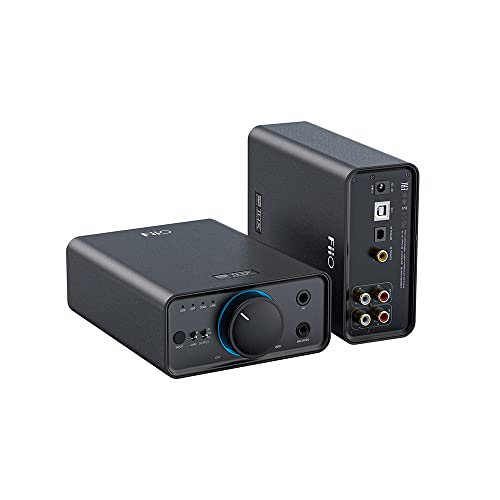
- 4.4mm balanced headphone output
- Up to 2000mW stable output
- USB, optical, coaxial, and AUX inputs
Best For: Affordable all-in-one desktop listening
Most Versatile

- 4.4mm balanced output and powerful amp stage
- 10-band PEQ and LDAC Bluetooth
- Preamp mode and 12V trigger
Best For: Feature-rich wired and wireless desktop systems
Best R2R Option

- Fully differential 24-bit R2R DAC
- 4.4mm balanced and 6.35mm outputs
- NOS/OS modes and three gain levels
Best For: Compact R2R-based balanced headphone listening
Warm Portable Pick
MUSEHiFi M3 Ultra Tube DAC Amp
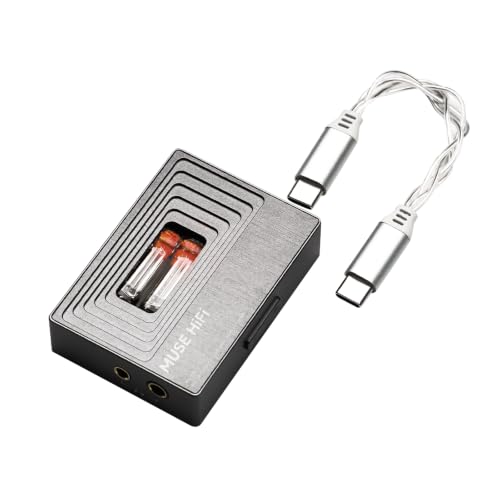
- 4.4mm balanced output up to 480mW
- JAN6418 hybrid tube amplification
- PCM 384kHz and DSD256 support
Best For: Portable IEM and headphone listeners who want tube character
Desktop Powerhouse
Fosi Audio ZH3 Balanced DAC Amp
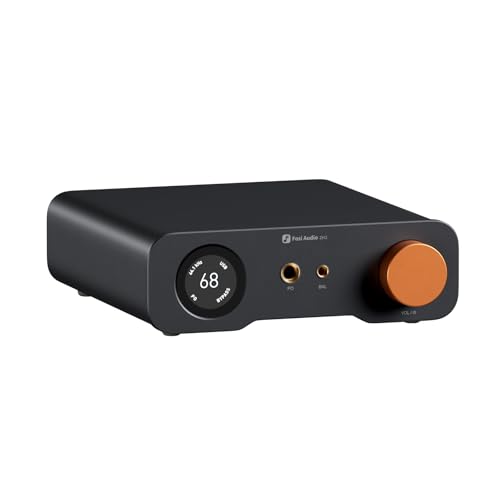
- 4.4mm balanced output up to 2570mW
- PCM 768kHz/32-bit and DSD512 support
- USB, optical, coaxial, RCA, and XLR connectivity
Best For: Desktop systems with demanding headphones and multiple sources
Gaming DSP Choice
TOPPING DX1 II Balanced DAC Amp

- 4.4mm output up to 1000mW x2
- 10-band PEQ with independent L/R tuning
- USB-C, optical, PS5, and Switch compatibility
Best For: Gamers wanting balanced power and detailed EQ control
Warm Tube Powerhouse

- Up to 4000mW balanced output
- 4.4mm, XLR, and 6.35mm outputs
- Tube preamp with RCA/TRS connectivity
Best For: Full-size headphone and HiFi system users seeking warm tube sound
High-Output Desktop Amp

- Up to 4600mW+4600mW balanced power
- Discrete Class AB amplification
- 5V USB or 12V PD operation
Best For: Planar and high-impedance headphones needing strong desktop drive
Four-Listener Monitor Hub

- Four simultaneous headphone outputs
- Independent volume for every channel
- Compact 6.35mm TRS monitor distribution
Best For: Recording and rehearsal setups with multiple listeners
Best Overall – TOPPING L70 Balanced Headphone Amplifier
The TOPPING L70 is a strong choice for listeners seeking headphone amplifiers with balanced output and substantial drive capability. Its fully balanced design supports 4-pin XLR and 4.4mm headphones, while multiple gain settings and exceptionally low noise make it suitable for both sensitive IEMs and demanding over-ear models.
Best For: Audiophiles who want a powerful balanced amplifier that can also serve as a preamp.
Pros:
- Supports 4-pin XLR, 4.4mm balanced, 6.35mm, and 3.5mm outputs.
- High-voltage, high-current output can handle high-impedance and low-sensitivity headphones.
- Relay-based volume control, gain memory, ground-loop switch, and 12V trigger add practical flexibility.
Cons:
- It is a dedicated amplifier and does not include a built-in DAC.
- Its extensive features may be more than needed for a basic headphone setup.
With its ultra-low noise, low output impedance, and preamp functionality, the L70 is a versatile centerpiece for a balanced desktop audio system.
Best Value – FiiO K7 Balanced DAC/Amp
The FiiO K7 combines a desktop DAC and headphone amplifier in a cost-conscious package for shoppers comparing headphone amplifiers with balanced output. Its 4.4mm balanced connection, dual THX AAA 788+ amplifier stage, and broad digital and analog input selection make it an accessible all-in-one option.
Best For: Buyers seeking a balanced DAC/amp with strong connectivity and output power under the $300 range.
Pros:
- Includes 4.4mm balanced, 6.35mm, and 3.5mm headphone outputs.
- Offers up to 2000mW of stable output power for many full-size headphones.
- Accepts USB, optical, coaxial, and AUX inputs, with two gain levels and three output levels.
Cons:
- It provides fewer specialized system features than larger dedicated amplifiers.
- The listed warranty is one year.
The K7 is a practical way to add balanced headphone output without assembling separate DAC and amplifier components.
Most Versatile – TOPPING DX5 II DAC/Amp
The TOPPING DX5 II is aimed at listeners who want headphone amplifiers with balanced output alongside modern source options and sound-shaping tools. It combines a fully balanced amplifier, 4.4mm output, 10-band PEQ, LDAC Bluetooth, preamp operation, and support for high-resolution PCM and DSD playback.
Best For: Desktop listeners who want wired, wireless, balanced, and preamp functionality in one component.
Pros:
- Fully balanced quad-channel amplifier with a 4.4mm headphone output.
- Supports USB, Bluetooth, coaxial, and optical sources, including LDAC and other Bluetooth codecs.
- 10-band PEQ, color display, preamp mode, and 12V trigger support broaden its system flexibility.
Cons:
- Its many settings and connection options may be excessive for simple headphone use.
- Wireless playback requires a compatible Bluetooth source and codec.
For users building a feature-rich desktop setup, the DX5 II offers balanced headphone drive while covering DAC, wireless, EQ, and active-speaker duties.
Best R2R Option – FiiO K11 R2R DAC/Amp
The FiiO K11 R2R offers a compact route into headphone amplifiers with balanced output for listeners interested in resistor-ladder conversion. Its fully differential 24-bit R2R array, switchable NOS and OS modes, three gain levels, and 4.4mm balanced connection provide both tuning flexibility and practical headphone compatibility.
Best For: Listeners who want R2R conversion, selectable processing modes, and a compact balanced desktop amplifier.
Pros:
- Uses a fully differential 24-bit R2R DAC array with NOS and OS modes.
- Provides up to 1300mW x2 output and three gain levels.
- Includes both 4.4mm balanced and 6.35mm single-ended headphone outputs.
Cons:
- It offers fewer input types than some multifunction DAC/amp alternatives.
- The R2R design may appeal most to listeners specifically seeking its selectable presentation.
The K11 R2R is a compact, capable pick for buyers prioritizing R2R architecture and balanced headphone connectivity over extensive wireless or system-integration features.
Warm Portable Pick – MUSEHiFi M3 Ultra Tube DAC Amp
If you want headphone amplifiers with balanced output for portable listening, the MUSEHiFi M3 Ultra combines a JAN6418 tube stage, USB DAC functionality, and a 4.4mm balanced connection in a compact wired design. It is suited to listeners who want tube character without giving up high-resolution playback or useful output power.
Best For: Portable listeners using IEMs or wired headphones who prefer a smoother tube-influenced presentation.
Pros:
- 4.4mm balanced output provides up to 480mW, while the 3.5mm output provides up to 460mW.
- JAN6418 tube and hybrid op-amp design aim for smooth vocals, rich harmonics, and controlled detail.
- ES9028Q2M DAC supports PCM up to 32-bit/384kHz and DSD256.
Cons:
- Tube circuitry can be vulnerable to microphonic noise during movement, despite the included reduction measures.
- It uses wired USB connectivity rather than wireless playback.
The M3 Ultra is a strong choice when portability and tube flavor matter as much as balanced power. Its 4.4mm output is only modestly more powerful than the single-ended output, so its main appeal is the combination of compact size, DAC support, and hybrid tube tuning.
Desktop Powerhouse – Fosi Audio ZH3 Balanced DAC Amp
For desktop systems needing headphone amplifiers with balanced output, the Fosi Audio ZH3 combines a DAC, headphone amplifier, and preamp with extensive connectivity. Its 4.4mm balanced output is rated far above its 6.35mm single-ended output, making it a practical option for demanding headphones and flexible desktop setups.
Best For: Desktop listeners who need high balanced output power, multiple digital inputs, and preamp connections.
Pros:
- 4.4mm balanced output delivers up to 2570mW at 32 ohms, with three gain levels for 16- to 300-ohm headphones.
- AKM4493SEQ DAC and XMOS XU316 support PCM up to 768kHz/32-bit and DSD512.
- Offers USB, optical, coaxial, and RCA inputs plus 4.4mm, 6.35mm, RCA, and XLR outputs.
Cons:
- RCA and XLR output levels differ significantly, so output selection requires attention to the connected equipment.
- EQ adjustments apply only to the headphone output.
The ZH3 is the most feature-rich desktop option here for users building around active speakers, power amplifiers, or several source components. Its unusually strong balanced output and adjustable gain provide plenty of flexibility, while the EQ and swappable op-amps allow further sound customization.
Gaming DSP Choice – TOPPING DX1 II Balanced DAC Amp
The TOPPING DX1 II is one of the more gaming-focused headphone amplifiers with balanced output, pairing a 4.4mm fully balanced headphone stage with 10-band parametric EQ. USB-C plug-and-play operation, optical connectivity, and support for PS5 and Nintendo Switch make it a versatile choice for both gaming and music.
Best For: PC and console gamers who want balanced headphone power, customizable EQ, and headset voice-chat support.
Pros:
- Fully balanced 4.4mm output reaches up to 1000mW x2 at 32 ohms.
- 10-band PEQ supports frequency, gain, bandwidth, and independent left/right adjustments.
- UAC 1.0 and 2.0 modes support PC, Mac, PS5, Nintendo Switch, and tablets.
Cons:
- The 4.4mm balanced output is separate from the 3.5mm TRRS headset connection, so users must choose the appropriate connection for microphone support.
- USB-C operation is designed around a 5-volt supply and may be less suitable for large desktop systems than a dedicated mains-powered amp.
The DX1 II stands out when EQ and console compatibility are priorities rather than purely analog listening. Its balanced architecture offers substantial output for headphones and IEMs, while optical I/O and RCA and 4.4mm line outputs broaden its usefulness beyond a basic gaming DAC.
Warm Tube Powerhouse – Ampapa H1
The Ampapa H1 is a strong choice among headphone amplifiers with balanced output if you want tube character, flexible connections, and substantial power for full-size headphones. Its balanced high-gain output delivers up to 4000mW, while 4.4mm, 4-pin XLR, and 6.35mm outputs support a broad range of setups.
Best For: Listeners with 16–600Ω headphones who want warm tube sound, preamp functionality, and multiple output options.
Pros:
- Up to 4000mW balanced output with low, mid, and high gain settings
- 4.4mm, 4-pin XLR, and 6.35mm headphone outputs
- RCA and TRS I/O plus HP, Line, and HP+Line output modes
- Dual ECC83 tubes, OLED display, and 12V trigger support
Cons:
- Tube-based design may be more involved than a simple solid-state amplifier
- Its extensive controls and preamp features may exceed basic headphone-only needs
The H1 stands out for buyers building a more complete HiFi system rather than seeking a minimal headphone amp. Its tube preamp stage, balanced connectivity, and system-expansion features make it especially versatile for desktop listening.
High-Output Desktop Amp – FiiO JadeAudio GIGAS 1
The FiiO JadeAudio GIGAS 1 focuses on clean, high-current amplification for demanding headphones. Among headphone amplifiers with balanced output, it offers up to 4600mW+4600mW through 4.4mm balanced output at 32Ω, along with a compact design and flexible 5V or 12V USB-C PD power.
Best For: Planar magnetic and high-impedance headphone users who prioritize power, headroom, and a compact desktop form factor.
Pros:
- Up to 4600mW+4600mW balanced output at 32Ω
- Discrete Class AB design with high current capability
- 4.4mm balanced and 3.5mm outputs, including CTIA microphone pass-through
- Supports standard 5V USB power or higher-output 12V PD power
Cons:
- Higher output capability requires compatible USB-C PD power for maximum performance
- It provides fewer connection and system-control features than a full-size preamp amplifier
GIGAS 1 is a practical pick when driving power is the main priority. Its discrete Class AB stage and 12V PD support give demanding headphones extra headroom, while the 3.5mm input and output keep it compatible with everyday sources and headsets.
Four-Listener Monitor Hub – Pyle PHA40
The Pyle PHA40 takes a different approach to headphone amplifiers with balanced output: it is a compact distribution amp for sending one stereo source to four listeners. Each channel has its own volume control, and four 6.35mm TRS outputs make it useful for rehearsals, recording sessions, and shared monitoring.
Best For: Small studios, performers, and recording setups where up to four people need independent headphone volume control.
Pros:
- Drives up to four headphones simultaneously
- Independent rotary volume controls for each listener
- Compact design suited to studio, stage, or mobile use
- Four 6.35mm stereo TRS outputs and a matching TRS input
Cons:
- It is a monitor distribution unit rather than a high-powered audiophile balanced-output amplifier
- Uses 6.35mm connections only, with no 4.4mm or XLR output listed
- Plastic enclosure may feel less substantial than metal desktop amplifiers
Choose the PHA40 for multi-person monitoring rather than maximum headphone drive or premium system integration. Its strongest advantage is straightforward: four listeners can share a source while adjusting their own levels independently.
How We Picked the Best Headphone Amplifiers with Balanced Output
We compared these Headphone Amplifiers with Balanced Output by looking at their balanced connection options, stated output capability, input and output flexibility, form factor, and intended use. We also considered whether each model includes a DAC, preamp functionality, tone controls, Bluetooth, tube circuitry, or features useful for gaming and portable listening.
Because specifications and included accessories can vary by version, confirm the seller’s current listing before buying—especially output power, connector type, and whether balanced cables are included.
Quick Comparison
| Best For | Look For |
|---|---|
| Pure desktop amplification | Dedicated balanced inputs and high current output |
| Simple computer setup | Integrated USB DAC and headphone outputs |
| Portable listening | USB-C power, compact size, and efficient battery use |
| Tube sound | Tube-based or hybrid Class A circuitry |
| Gaming and media | Low-latency USB, optical input, and EQ controls |
| Multiple listeners | Several independent outputs and channel controls |
Key Buying Factors for Headphone Amplifiers with Balanced Output
Connector Compatibility
Balanced headphone connections commonly use 4-pin XLR or 4.4mm Pentaconn plugs, while some products use balanced TRS connections. Check your headphones and cable before ordering. A 4.4mm output is not automatically compatible with every balanced cable, and adapters should be used only when the manufacturer supports them.
Power and Headphone Load
More power is useful for demanding planar-magnetic or high-impedance headphones, but excessive output is not a substitute for good gain control. Look for low-noise operation with sensitive headphones and enough voltage or current for your specific model. Manufacturer power figures may be measured at different impedances, so compare like-for-like when possible.
DAC, Inputs, and System Role
A DAC/amp combination is convenient for computers and digital sources, while a dedicated amplifier makes sense if you already own a quality DAC. Check for USB, optical, coaxial, RCA, Bluetooth, or analog preamp connections based on how you plan to build your system.
Features and Everyday Usability
Useful extras include selectable gain, a physical volume control, display information, EQ, remote control, automatic input switching, and a preamp output. Tube models may add a warmer presentation but typically require more care and occasional tube replacement.
Who Should Buy Which Headphone Amplifiers with Balanced Output?
Choose a dedicated desktop model such as the TOPPING L70 or FiiO GIGAS 1 if maximum amplification flexibility is the priority. The FiiO K7, TOPPING DX5 II, FiiO K11, Fosi Audio ZH3, and TOPPING DX1 II are better suited to buyers who want a compact digital hub with an integrated DAC.
For portable use, the MUSEHiFi M3 Ultra is the more appropriate direction. Tube enthusiasts should consider the MUSEHiFi or a Class A tube amplifier, while buyers connecting several listeners should focus on the four-channel splitter-style amplifier. Finally, verify balanced wiring and output requirements before purchasing, since balanced operation only works when the source, amplifier, cable, and headphones are all configured correctly.