Sending one video source to several monitors requires more than a basic passive splitter. The right video distribution amplifier preserves signal quality while matching your connectors, resolution, and installation needs.
We selected 10 options covering BNC, SDI, RCA composite video, CCTV, security monitoring, gaming, and professional broadcast workflows. Use the guide below to narrow your choice by format, output count, and required signal range.
Best 10 Video Distribution Amplifier Picks for 2026
Compact Analog Splitter

- One BNC input and four BNC outputs
- Compact plastic enclosure
- Designed for straightforward video distribution
Best For: Basic BNC analog video and surveillance setups
Broadcast SDI Hub
Blackmagic Mini Converter SDI Distribution

- Eight reclocked SDI outputs
- Auto-switches SD, HD, and 3G-SDI
- Supports embedded audio and ancillary data
Best For: Broadcast, studio, and live-event SDI distribution
1080p CCTV Distributor
AuviPal 4-Port BNC Video Splitter
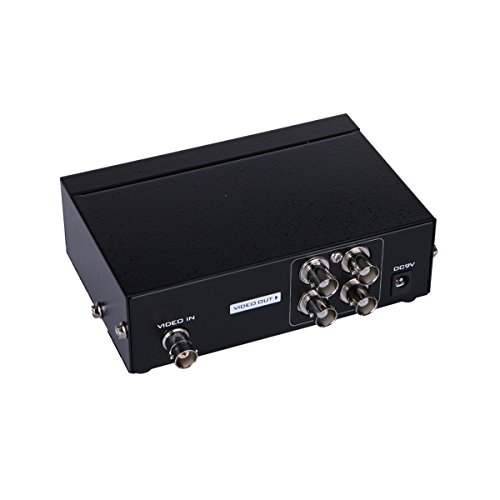
- One input feeds four BNC outputs
- Supports up to 1080p at 60Hz
- Metal housing and plug-and-play setup
Best For: Analog CVBS CCTV and monitoring systems
Long-Run SDI Splitter
AVMATRIX SD1141 1×4 SDI Distribution Amplifier

- Auto-detects SD, HD, and 3G-SDI
- Four reclocked outputs
- Supports long specified cable distances
Best For: Professional SDI systems with extended cable runs
Compact Coaxial Expansion
RCA 4-Way Video Signal Amplifier

- Four antenna outputs
- 10dB amplification
- Compact surface-mount design
Best For: Four-way coaxial antenna signal distribution
CCTV Monitoring Hub
TNP 1-to-8 BNC Distribution Amplifier

- One input and eight outputs
- Powered analog signal buffering
- Metal housing for continuous use
Best For: Analog BNC CCTV and surveillance systems
Powered AV Duplication
DTECH 4-Way RCA Video Audio Splitter

- One 3-RCA input to four outputs
- Amplifies video and audio signals
- Includes 9V AC adapter
Best For: Composite RCA multi-display and audio setups
Best 8-Port BNC Pick
8-Port 1080p BNC Video Distributor
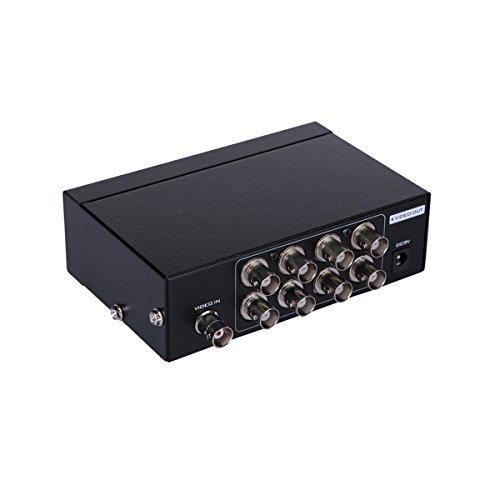
- 1 input feeds 8 BNC outputs
- Supports up to 1080p at 60Hz
- Metal housing with one-year warranty
Best For: Analog CCTV and BNC monitoring systems
Best Simple RCA Splitter
MT-VIKI 4-Way Composite AV Splitter
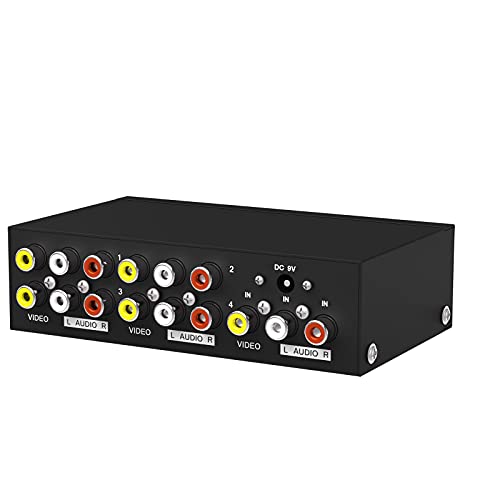
- Mirrors one AV input to 4 outputs
- Compatible with RCA-equipped devices
- Plug-and-play operation
Best For: Basic composite audio/video distribution
Best Powered RCA Option
DTECH 8-Way Composite AV Distributor

- Sends one RCA AV signal to 8 outputs
- Built-in amplifier supports longer connections
- Includes 9V power adapter and LED indicator
Best For: Large composite AV and multi-monitor setups
Compact Analog Splitter – Speco VIDDIST 1-in/4-out
Speco VIDDIST 1 in/4 Out Video Distribution Amplifier 1 Input to 4 Output Video Bnc Splitter
Check Price On AmazonThe Speco VIDDIST is a straightforward video distribution amplifier for splitting one BNC video source across four outputs. Its compact plastic housing and simple 1-in/4-out design suit basic analog video installations where uncomplicated signal distribution is the priority.
Best For: Basic BNC-based analog video distribution and small surveillance setups.
Pros:
- Splits one video input to four BNC outputs.
- Compact housing measures approximately 4-1/2 inches wide, 1 inch high, and 3-1/2 inches deep.
- Simple design for installations using BNC connections.
Cons:
- Plastic construction may be less rugged than a metal enclosure.
- The supplied notes do not specify resolution support, signal reclocking, or digital/SDI compatibility.
The VIDDIST is a sensible choice when you need basic four-way BNC distribution without advanced format handling. For HD-SDI workflows or long cable runs, a purpose-built SDI model may be a better fit.
Broadcast SDI Hub – Blackmagic Mini Converter SDI Distribution
The Blackmagic Design Mini Converter is a video distribution amplifier for sending one SDI source to multiple devices. It accepts switchable SD, HD, and 3G-SDI signals, automatically detects supported formats, and provides eight reclocked outputs for broadcast, studio, and live-event systems.
Best For: Broadcast and live production setups needing eight reclocked SDI outputs.
Pros:
- Provides eight reclocked SDI outputs from one input.
- Supports auto-switching SD, HD, and 3G-SDI formats.
- Supports ancillary data, embedded audio, and ASI.
- Includes a redundant SDI input for mission-critical applications.
Cons:
- More specialized than a basic analog BNC splitter.
- The supplied notes identify a 12-volt minimum supply but do not detail the included power arrangement.
With eight outputs, format auto-detection, reclocking, and redundant input capability, this Mini Converter is aimed at professional signal distribution rather than casual home use. It is the strongest option here for multi-device SDI routing when supported formats and embedded data matter.
1080p CCTV Distributor – AuviPal 4-Port BNC Video Splitter
The AuviPal 4-port video distribution amplifier splits one BNC input across four outputs for compatible analog video equipment. It supports up to 1080p at 60Hz, uses a durable metal housing, and is designed for plug-and-play use in surveillance and monitoring systems.
Best For: Analog CCTV systems using PAL, NTSC, or SECAM video connections.
Pros:
- Distributes one BNC input to four BNC-compatible outputs.
- Supports resolutions up to 1080p at 60Hz according to the supplied notes.
- Metal housing is intended for stability, durability, and heat resistance.
- Includes a US power adapter, user manual, and one-year warranty.
Cons:
- Not compatible with SDI or digital signals.
- Requires cameras to use CVBS mode for compatible analog output.
This model offers a practical balance of simple installation and useful analog-video support. Confirm that your cameras and displays use compatible CVBS, PAL, NTSC, or SECAM signals before choosing it; it is not a solution for SDI distribution.
Long-Run SDI Splitter – AVMATRIX SD1141 1×4 SDI Distribution Amplifier
The AVMATRIX SD1141 is a video distribution amplifier for 3G, HD, and SD-SDI systems. It automatically detects incoming SDI signals, reclocks all four outputs, and is designed for extended cable runs, making it useful when signal integrity and installation flexibility are important.
Best For: SDI installations requiring four reclocked outputs and longer transmission distances.
Pros:
- Accepts SD, HD, and 3G-SDI signals automatically.
- Provides four outputs with signal reclocking.
- Specified transmission distances reach up to 400m for SD, 200m for HD, and 120m for 3G-SDI.
- Includes a detachable bracket for wall mounting and a three-year warranty.
Cons:
- Requires a 17-volt DC input according to the supplied specifications.
- Only outputs 2 and 4 support DVB-ASI, so that capability is not universal across all outputs.
The SD1141 is a strong fit for professional SDI distribution where reclocking and cable distance are key concerns. Its four-output capacity is smaller than the Blackmagic unit’s eight outputs, but its stated distance ratings and wall-mount bracket make it attractive for distributed installations.
Compact Coaxial Expansion – RCA 4-Way Video Signal Amplifier
The RCA VH240R is a practical video distribution amplifier for expanding one compatible coaxial signal across four antenna outputs. Its 10dB amplification and 75-ohm impedance make it suited to straightforward home or small-system signal distribution.
Best For: Users who need four coaxial antenna outputs in a compact surface-mounted enclosure.
Pros:
- Provides four antenna outputs for multi-device distribution.
- Uses 10dB signal amplification.
- Compact 4 x 5.77 x 1-inch surface-mount design.
- Built around a standard 75-ohm impedance.
Cons:
- Offers four outputs rather than the larger output counts available from some distribution amplifiers.
- The supplied notes identify antenna outputs, not BNC or RCA connections.
Choose this model when a simple, compact four-way coaxial distribution setup is all you need. Confirm connector compatibility and mounting space before purchase.
CCTV Monitoring Hub – TNP 1-to-8 BNC Distribution Amplifier
The TNP BNC video distribution amplifier duplicates one standard analog composite source to eight displays. Its powered active circuitry is designed to buffer the signal for CCTV systems, while the metal housing supports continuous-use installations.
Best For: Security rooms and surveillance systems using analog BNC cameras, DVRs, multiplexers, and monitors.
Pros:
- Distributes one analog BNC source to eight outputs.
- Powered amplification helps reduce the drawbacks of passive splitting.
- Plug-and-play operation requires no software or complex settings.
- Metal housing is intended to support heat dissipation and 24/7 operation.
Cons:
- Designed for standard analog BNC composite equipment.
- Not intended for SDI or digital HD formats.
- Its 9 x 5 x 2-inch housing may require dedicated installation space.
This is the strongest fit of the three for an analog CCTV distribution job requiring eight simultaneous displays. Verify that every connected device uses standard analog BNC composite video.
Powered AV Duplication – DTECH 4-Way RCA Video Audio Splitter
The DTECH FJ104-US is a video distribution amplifier for sending one composite RCA audio/video source to four displays or audio devices. Its active amplification, color-coded jacks, included AC adapter, and compact metal case make it convenient for gaming, TV, projector, and capture-card setups.
Best For: Multi-display composite AV connections that need both video and left/right audio distribution.
Pros:
- Splits one 3-RCA composite source into four outputs.
- Active amplification supports clearer video and reliable audio over longer connections.
- Includes a 9V AC power adapter and LED indicator.
- Color-coded RCA jacks simplify video and left/right audio connections.
Cons:
- Limited to RCA composite audio/video connections.
- Requires AC power for operation.
- Does not include switching between multiple sources.
Consider this model when your system uses analog RCA video plus stereo audio and needs four simultaneous destinations. Its small metal enclosure is suitable for placement behind a monitor or inside a rack.
Best 8-Port BNC Pick – 8-Port 1080p BNC Video Distributor
For a CCTV or monitoring setup using analog BNC video, this video distribution amplifier sends one source to eight displays or devices. It supports up to 1080p at 60Hz and is designed for plug-and-play operation, making it a practical choice for continuous surveillance use.
Best For: Analog CCTV systems, monitoring installations, TV studios, and other setups needing eight simultaneous BNC outputs.
Pros:
- Splits one BNC input to eight outputs with distortion-free signal distribution.
- Supports resolutions up to 1080p at 60Hz and PAL, NTSC, and SECAM formats.
- Durable metal housing, compact design, included power adapter, and one-year warranty.
Cons:
- Not compatible with SDI or digital signals.
- Connected cameras must be set to CVBS mode for compatible video output.
This is the strongest option here when your equipment uses BNC connections and you need eight amplified analog video feeds. Verify that your source is CVBS rather than SDI or another digital format before buying.
Best Simple RCA Splitter – MT-VIKI 4-Way Composite AV Splitter
This compact video distribution amplifier duplicates one composite audio/video source across four RCA-connected outputs. It is a straightforward plug-and-play solution for compatible televisions, DVRs, and other RCA-equipped devices, with no software required.
Best For: Basic home or office AV setups that need one RCA audio/video source mirrored to four destinations.
Pros:
- Distributes one set of audio and video inputs to four output sets.
- Works with devices using RCA connections, including TVs and DVRs.
- Plug-and-play design requires no software or configuration.
Cons:
- Should be kept away from routers, TVs, power supplies, and other transmitters to reduce interference.
- Ground-loop issues may cause noise with some connected devices.
The MT-VIKI is a sensible low-complexity choice for standard RCA duplication. It is best suited to short, uncomplicated analog installations where interference and grounding can be controlled.
Best Powered RCA Option – DTECH 8-Way Composite AV Distributor
When a composite source must reach several monitors, speakers, or recording devices, this powered video distribution amplifier provides one RCA input and eight outputs. Its built-in amplifier is intended to help maintain clear video and reliable audio over longer connections.
Best For: Multi-monitor AV installations, dubbing projects, presentations, and setups using TVs, projectors, receivers, or capture equipment.
Pros:
- Distributes one composite audio/video signal to eight RCA outputs.
- Built-in amplification supports clearer images and reliable audio over long-distance connections.
- Durable metal case, anti-skid feet, LED indicator, color-coded jacks, and included 9V adapter.
Cons:
- Requires AC power through the included DC 9V adapter.
- Designed for composite RCA signals rather than BNC, SDI, or digital connections.
The DTECH offers more output capacity and active signal support than a basic passive splitter. Choose it when eight RCA destinations and powered distribution are more important than a minimal, cable-only setup.
How We Picked the Best Video Distribution Amplifiers
We focused on products that distribute one source to multiple displays or recording devices while addressing common installation requirements. Selection criteria included input and output format, number of outputs, supported video standards, signal amplification, power requirements, connector compatibility, and suitability for the intended environment.
The lineup includes compact composite-video and audio distribution boxes, BNC splitters for CCTV systems, and SDI distribution amplifiers for professional video workflows. Because these products are not interchangeable, the best choice depends on the source and display equipment you already own.
Quick Comparison
| System Type | Typical Connector | Best For | What to Check |
|---|---|---|---|
| Composite video and audio | RCA | Older TVs, gaming, AV systems | Video standard, audio channels, power adapter |
| Analog CCTV | BNC | Security cameras and monitoring systems | Input/output count, resolution, coaxial compatibility |
| SDI video | BNC | Broadcast, studio, and production equipment | SD, HD, or 3G-SDI support and signal integrity |
Key Buying Factors for a Video Distribution Amplifier
Signal Format and Connectors
Start with the source output and display inputs. RCA distribution products are designed for composite video and commonly carry left/right audio as separate connections. BNC models may support analog CCTV video or SDI, but a BNC connector alone does not identify the signal standard. Confirm that the amplifier supports your exact format.
Output Count
Choose a unit with enough outputs for the current installation and a small amount of expansion room. Four-output models suit home AV, small monitoring stations, and basic demonstrations. Eight-output units are more practical for larger security systems or installations feeding several screens and recorders.
Resolution and Distance
Check supported resolution and signal type before purchasing. SDI equipment is generally intended for digital professional video, while composite products target standard-definition sources. For longer cable runs, an active distribution amplifier is usually preferable to a passive splitter because it can help maintain a usable signal at each output.
Power and Installation
Powered units need an accessible outlet and may require space for ventilation and cable management. Verify the included adapter, operating voltage, housing style, and mounting options. For CCTV or permanent installations, also consider strain relief and whether the enclosure can be secured near the source equipment.
Who Should Buy Which Video Distribution Amplifier?
Choose a compact RCA distribution amplifier for older AV equipment, composite gaming systems, or multiple televisions that use analog inputs. Select a BNC CCTV splitter when the source and displays belong to an analog security-monitoring system. For studio, broadcast, or camera-chain applications, use an SDI distribution amplifier that explicitly matches your SDI standard and data rate.
Four-output models are a sensible choice for small systems, while eight-output designs work better when several monitors, recorders, or control-room destinations must receive the same feed. Before ordering, map every connection from source to display and confirm the amplifier supports the cable type, resolution, and audio requirements of the complete setup.