Choosing the right wire binder can improve turnaround times, reduce finishing errors, and help your shop deliver a more professional final product.
This roundup focuses on dependable options for print-shop workloads, from compact manual units to heavier-duty machines built for higher output.
Best 10 Wire Binding Machines for Print Shops Picks for 2026
Versatile Shop Binder
Rayson TD-132 3:1 Spiral Coil Binder

- 3:1 pitch manual punch and bind
- Supports wire, coil, and click accessories
- Binds up to 120 sheets, punches 12
Best For: Small print shops needing a flexible letter-size binder
Dual-Pitch Workhorse
Tamerica OMEGAWIRE-321 Dual-Pitch Wire Binder

- Built-in 3:1 and 2:1 hole patterns
- Binds from 2 pages to about 250 sheets
- Includes disengageable pins and margin control
Best For: Print shops needing one machine for multiple wire pitches
Heavy-Duty Wide-Format Pick
Akiles WireMac-31 3:1 Punch & Closer

- 40 disengaging dies for cleaner punching
- 14-inch open-sided punching width
- All-metal build with 3/16" to 9/16" closing
Best For: Shops needing a durable wide-format 3:1 wire system
Integrated Dual-Pitch Finisher
Akiles DuoMac 321 Dual-Pitch Wire Binder
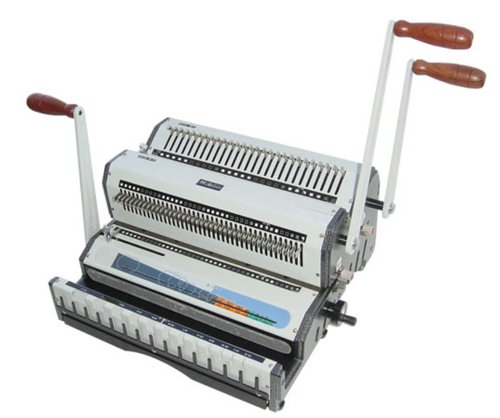
- Punches and binds in one unit
- Switches between 3:1 and 2:1 without die changes
- Built-in wire closing for Double-O Wire
Best For: Finishing stations that need fast dual-pitch changeovers
Manual Twin Loop Wire Binder
Tamerica TW-2100 for High-Volume Shops

- 2-handle manual twin loop wire punch and bind design
- 4-position punching depth adjustment
- Open-ended punch for documents larger than 14 inches
Best For: Print shops needing a durable manual wire binder for standard and oversized jobs
All-in-One 3:1 Pitch Binder
Rayson TD1202R for Flexible Shops

- Supports wire, coil, and click binding spines
- 32-hole punch with up to 12-sheet capacity
- All-metal construction with adjustable margin depth
Best For: Print shops needing one versatile 3:1 pitch binder for multiple finishing options
Electric Coil Inserter Binder
S-20 for Medium-Volume Production

- Manual punch with electric coil inserter
- Up to 20-sheet punching and 190-sheet electric binding
- 46 fully-disengageable dies for smaller pages
Best For: Print shops producing medium-volume coil documents with mixed page sizes
Compact Desktop Wire Binder

- Compact desktop design saves workspace.
- Punches up to 12 sheets and binds up to 120.
- Metal build with square holes and wire closer control.
Best For: Small print shops and offices needing a compact wire binder.
Electric Punch Production Pick
Heavy Duty Electric Punch Binder

- Electric punch with foot pedal speeds up workflow.
- Punches up to 20 sheets and binds up to 120.
- 34 disengageable dies support custom and smaller formats.
Best For: Medium-volume print shops that need faster punching and flexible sheet handling.
Custom Layout Specialist
Rayson TD-1500B34 Adjustable Punch

- 34 selectable dies enable custom hole patterns.
- Punches up to 15 sheets and binds up to 130.
- Square hole system with adjustable margins improves alignment.
Best For: Print shops producing calendars, notebooks, and other custom-format documents.
Versatile Shop Binder – Rayson TD-132 3:1 Spiral Coil Binder
If you need wire binding machines for print shops that can handle a mix of document finishes, the Rayson TD-132 offers a practical 3:1 pitch setup with punching and binding in one manual unit. It supports wire binding spines from 1/4" to 9/16" and also works with coil and click binding accessories, making it a flexible choice for everyday shop jobs.
Best For: Small print shops that want a versatile, manual binding machine for letter-size projects.
Pros:
- Manual punching and binding in one machine
- Handles up to 12 sheets per punch and binds up to 120 sheets
- Works with 3:1 pitch wire, coil, and click binding accessories
- Metal and ABS construction with a scraps drawer for cleaner operation
Cons:
- Letter-size only, so it is not built for larger formats
- Manual operation may slow down high-volume finishing
- Maximum punch capacity is lower than heavier-duty shop models
The TD-132 is a strong fit if you want one machine to cover several binding styles without adding more equipment. It leans toward versatility and efficiency rather than industrial throughput.
Dual-Pitch Workhorse – Tamerica OMEGAWIRE-321 Dual-Pitch Wire Binder
For print shops comparing wire binding machines for print shops, the Tamerica OMEGAWIRE-321 stands out for its built-in 3:1 and 2:1 punching patterns and high binding range. It is designed to handle everything from short jobs to thicker books, with manual punching capacity rated at 20 sheets for 2:1 wire and 15 sheets for 3:1 wire.
Best For: Shops that need one manual machine for both 3:1 and 2:1 wire binding jobs.
Pros:
- Built-in 3:1 and 2:1 punch patterns
- Binds from 2 pages to approximately 250 sheets
- Disengageable punch pins for better document handling
- Includes punching margin control
Cons:
- Manual operation may not suit fast-paced production needs
- At 57 pounds, it is heavier than compact tabletop units
- Specific capacity varies by wire pitch
This model makes sense when flexibility and thickness range matter more than portability. Its dual-pitch design can help a shop standardize on one machine for multiple wire binding tasks.
Heavy-Duty Wide-Format Pick – Akiles WireMac-31 3:1 Punch & Closer
The Akiles WireMac-31 is a serious option among wire binding machines for print shops that need a heavy-duty manual punch and closer setup. With 3:1 pitch, all 40 dies independently disengaging, and a 14-inch open-ended punching width, it is built for handling a wide range of document sizes while maintaining cleaner punch results.
Best For: Print shops that want a durable, all-metal 3:1 wire punch and binding setup for wider jobs.
Pros:
- All 40 dies can be independently disengaged
- 14-inch punching width with open sides for wider documents
- All-metal construction for durability
- Closing capacity from 3/16" to 9/16"
Cons:
- Manual operation requires more operator effort
- Single punching capacity is 20 sheets, which is solid but not extreme
- Heavier footprint may take up more bench space
For shops that need a dependable, wide-format-capable binding system, the WireMac-31 is a practical and durable pick. Its disengageable dies are especially useful when you need cleaner results on different document sizes.
Integrated Dual-Pitch Finisher – Akiles DuoMac 321 Dual-Pitch Wire Binder
If your workflow calls for compact, professional wire binding machines for print shops, the Akiles DuoMac 321 combines punching and binding in one unit and switches between 3:1 and 2:1 pitch without die changes. That makes it a strong fit for shops that want to move between different document thicknesses without slowing down setup.
Best For: Print shops and office finishing stations that want an integrated dual-pitch wire binder.
Pros:
- Dual 3:1 and 2:1 pitch capability
- All-in-one punching and binding design
- No die changes needed when switching modes
- Integrated wire closing mechanism for Double-O Wire formats
Cons:
- Manual machine, so throughput depends on operator speed
- Legal-size footprint may be larger than compact desktop options
- Not as specialized as separate punch-and-close equipment
The DuoMac 321 is a workflow-friendly machine for shops that value convenience and quick changeovers. Its biggest advantage is reducing the time and hassle of switching between pitch types.
Manual Twin Loop Wire Binder – Tamerica TW-2100 for High-Volume Shops
If you need wire binding machines for print shops that can handle recurring jobs without adding electrical complexity, the Tamerica TW-2100 is a straightforward manual option. Its 2:1 pitch setup, open-ended punch for oversize documents, and all-metal construction make it a practical fit for shops that bind a steady mix of books and larger pieces.
Best For: Print shops that want a heavy-duty manual wire punch and bind machine for standard jobs and oversized documents.
Pros:
- 2-handle manual twin loop wire punch and bind design
- 4-position punching depth adjustment for setup flexibility
- Open-ended punch handles documents larger than 14 inches
- Heavy-duty, all-metal construction for durability
Cons:
- Manual operation may be slower than electric binding systems
- Designed specifically for 2:1 pitch wire binding
For print shops that value durability and a clean manual workflow, the TW-2100 covers the essentials well. Its combination of punching flexibility, wire closing, and larger-sheet support makes it a solid shop-floor workhorse.
All-in-One 3:1 Pitch Binder – Rayson TD1202R for Flexible Shops
Among wire binding machines for print shops, the Rayson TD1202R stands out for versatility. It supports wire, plastic coil, and click binding spines in 3:1 pitch, while its 32-hole round-hole punch and compact metal build make it useful for shops that want one machine for multiple finishing styles.
Best For: Print shops and offices that want a flexible 3:1 pitch machine for wire, coil, and click binding.
Pros:
- Works with wire binding spines, plastic coil bindings, and click spines
- 32-hole punch handles up to 12 sheets of 20lb paper
- Starter set of binding spines included
- Heavy-duty all-metal construction for stability
Cons:
- Punch capacity is limited to 12 sheets at a time
- 3:1 pitch format may not suit every binding requirement
This is a good choice if you want flexibility more than maximum capacity. The included accessories and adjustable margin depth add convenience, while the metal build helps it stay dependable during regular use.
Electric Coil Inserter Binder – S-20 for Medium-Volume Production
If your workflow needs wire binding machines for print shops with easier finishing steps, the S-20 focuses on speed at the binding stage. It pairs a manual punch with an electric coil inserter, supports 4:1 pitch coil documents, and offers adjustable margins plus fully disengageable dies for more controlled production work.
Best For: Print shops producing medium-volume coil documents that want an electric inserter and adjustable punch setup.
Pros:
- Manual punch with electric coil inserter for easier binding
- Punches up to 20 sheets and binds up to 190 sheets electrically
- 46 fully-disengageable dies support smaller-than-letter pages
- Open punch throat handles legal, tabloid, and A4 sizes
Cons:
- Plastic construction may feel less rugged than metal-only units
- Coil-focused 4:1 pitch setup is not a wire-binding system
The S-20 is a practical fit when you want to reduce effort during binding without giving up manual punching control. Its sheet capacity, open throat, and adjustable margins make it well suited to a range of document sizes.
Compact Desktop Wire Binder – Rayson TD1202
If you need wire binding machines for print shops that can handle everyday short runs without taking up much counter space, the Rayson TD1202 is built around compact, practical operation. It offers 3:1 pitch binding, a 12-sheet punch capacity, and binding up to 120 sheets, making it a fit for small production tasks, school materials, and office booklets.
Best For: Small print shops, schools, and home offices that need a space-saving wire binder for light to moderate jobs.
Pros:
- Compact desktop footprint for tighter workspaces.
- Metal construction for a more durable feel.
- Square hole design with 32 holes and wire closer control for easier binding.
- Adjustable margin depth helps with alignment across different jobs.
Cons:
- Manual punching limits throughput compared with electric models.
- 12-sheet punch capacity is best suited to lighter stacks.
- Most useful for smaller binding volumes rather than high-output print runs.
Overall, the TD1202 is a straightforward, cost-conscious choice when you want dependable wire binding without a large machine. It’s a sensible option if your print shop values versatility, compact size, and simple setup over speed.
Electric Punch Production Pick – Heavy Duty Electric Punch Binder
For wire binding machines for print shops that need faster punching and better handling of medium-volume work, this heavy-duty model stands out with its electric punch and manual bind setup. It can punch up to 20 sheets and bind up to 120 sheets, and the included foot pedal keeps hands free while moving paper through the workflow.
Best For: Medium-volume print shops that want faster punching, larger-sheet support, and a more efficient binding workflow.
Pros:
- Electric punch with foot pedal improves speed and workflow.
- 34 fully disengageable dies support smaller formats and flexible layouts.
- Adjustable depth margins and side margin control help alignment.
- Open punch throat handles larger sheets like legal, tabloid, and A4.
Cons:
- Heavy 71-pound build is less portable.
- Manual bind step still requires operator involvement.
- Best suited to medium-volume use rather than large-scale production.
This is the strongest option here if speed and sheet flexibility matter more than a compact footprint. The electric punch and disengageable dies make it better aligned with print-shop workflows that need more efficient daily output.
Custom Layout Specialist – Rayson TD-1500B34 Adjustable Punch
Rayson TD-1500B34 Wire Binding Machine, 3:1 Pitch, 15 Sheets Punch, 130 Sheets Bind
Check Price On AmazonIf your shop produces calendars, notebooks, or other nonstandard documents, this Rayson model is one of the more flexible wire binding machines for print shops. Its 34-die selectable punch system allows customized hole positions, while the 15-sheet punch capacity and 130-sheet binding capacity keep it practical for medium workloads.
Best For: Print shops that need customizable punching layouts for special formats and medium-duty binding jobs.
Pros:
- 34 selectable dies allow highly flexible punching patterns.
- 15-sheet punch capacity supports moderate production jobs.
- Binds up to 130 sheets with 5/8″ wire spines.
- Square hole punching and adjustable margins help produce cleaner results.
Cons:
- Manual operation is slower than electric punch systems.
- Best value is tied to custom layouts, not pure speed.
- Included accessories are basic rather than a full production kit.
For shops that regularly handle unusual sizes or specialty projects, the TD-1500B34 offers more layout control than a fixed-die machine. It’s a practical pick when customization is more important than maximizing punch speed.
How We Picked the Best Wire Binding Machines for Print Shops
For Wire Binding Machines for Print Shops, we prioritized punch capacity, binding capacity, hole pattern options, build quality, and speed. We also looked for features that matter in production settings, such as disengaging dies, adjustable margins, and compatibility with common wire sizes.
Quick Comparison
Manual machines are usually best for smaller shops, occasional use, or short runs where flexibility matters more than raw speed. Electric punch or inserter features are better suited to busier environments that need more throughput and less operator fatigue. Multi-pitch models are especially useful if your shop handles different booklets, manuals, and presentation jobs.
Key Buying Factors for Wire Binding Machines for Print Shops
Punch Capacity
Look for a machine that can handle your typical sheet count in one pass. Higher punch capacity reduces batching and helps keep production moving.
Binding Capacity
Binding capacity should match the thickest documents you produce. A machine that binds beyond your usual range gives you more flexibility for larger catalogs, reports, and training manuals.
Pitch and Hole Pattern
Most print shops need 3:1 pitch for thinner books and tighter finishes, while 2:1 pitch works better for thicker documents. If you produce a mix of jobs, a dual-pitch model can save time and equipment cost.
Adjustability and Accuracy
Disengaging dies, adjustable margins, and solid paper alignment help prevent miss-punches and improve consistency across runs. These features are especially valuable when finishing client-facing materials.
Speed and Operator Comfort
If your shop finishes jobs regularly, consider whether manual operation will slow production or cause fatigue. Electric punchers and assisted inserters can improve output and reduce strain.
Who Should Buy Which Wire Binding Machines for Print Shops?
Smaller print shops or in-house teams with lighter finishing needs should usually choose a reliable manual model with good capacity and easy setup. Busy shops that handle repeated wire-bound jobs should lean toward heavier-duty or electric-assisted machines. If your work varies between thin booklets and thicker reference materials, a dual-pitch machine is often the most practical choice.
In short, the best Wire Binding Machines for Print Shops are the ones that match your typical volume, document thickness, and desired finish quality without slowing down production.