Staying connected in an RV is easier when you choose the right cellular router. The best models can improve speed, stability, and coverage while giving you a more flexible setup than a basic hotspot.
Below, we focus on RV-friendly options for different budgets, network needs, and travel styles so you can pick a router that fits how you really use the road.
Best 10 Cellular Routers for RV Internet Picks for 2026
Flexible Pay-As-You-Go Hotspot

- Made for RVers and campers
- 5G plus automatic 4G/LTE backup
- Month-to-month service with no contracts
Best For: Travelers who want a portable hotspot with flexible service
Reliable 4G LTE RV Router

- 4G LTE CAT 12 with dual-SIM failover
- Wi-Fi 6 and multi-WAN support
- Four SMA connectors for external antennas
Best For: RVers who want a capable 4G LTE router
Compact Travel Router

- Wi-Fi 6 travel router with 2.5G WAN
- Pre-installed OpenVPN and WireGuard
- Good for pairing with existing internet
Best For: RV travelers who already have a cellular source
Value RV Backup Choice

- Plug-and-play Nano SIM setup
- Dual-band Wi-Fi supports up to 50 devices
- WireGuard, OpenVPN, and WPA3 security
Best For: RV owners needing simple LTE backup internet
Portable LTE Hotspot Pick
KiwiSIM 4G LTE WiFi Router with Battery
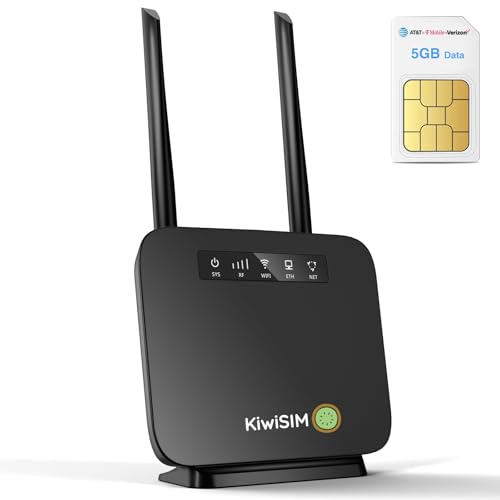
- 3000mAh battery for portable use
- Supports AT&T, T-Mobile, and Verizon
- Connects up to 32 devices
Best For: RV travelers who want a battery-powered LTE router for easy move-around use
Travel VPN Router Choice
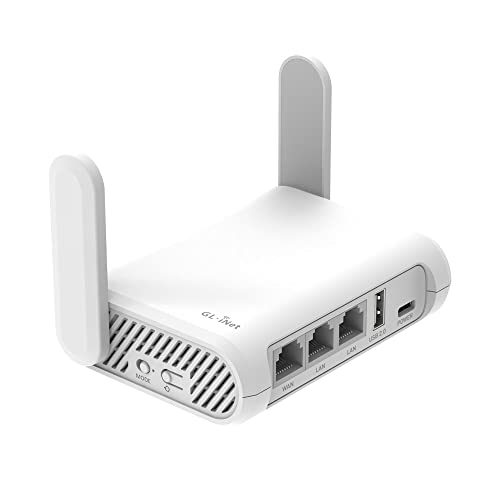
- Dual-band AC1200 travel router
- OpenVPN and WireGuard pre-installed
- Compact 145g portable design
Best For: RV users who want a lightweight VPN travel router for shared or upstream internet
Premium 5G RV Gateway – GL.iNet GL-X3000 Spitz AX
If you want cellular routers for RV internet with a more advanced networking feature set, the GL.iNet GL-X3000 is built for flexible mobile use. It combines 5G support, Wi-Fi 6, dual-SIM failover, and multi-WAN options, making it a strong fit for RVs that move between different coverage areas and connection sources.
Best For: RV owners who want a feature-rich 5G gateway with dual-SIM, VPN, and multi-WAN flexibility.
Pros:
- 5G support with dual-SIM single-standby and automatic failover.
- Wi-Fi 6 speeds up to 574Mbps on 2.4GHz and 2402Mbps on 5GHz.
- Multi-WAN support including Ethernet, repeater, cellular, and tethering.
- Pre-installed OpenVPN and WireGuard, plus OpenWrt-based customization.
Cons:
- Performance figures are based on local-network tests, not real-world RV conditions.
- 5G capability depends on network and plan availability.
- More advanced than a simple plug-and-play hotspot.
The GL-X3000 stands out when you need more than basic internet access and want redundancy, VPN support, and antenna flexibility in one RV-ready gateway. It is a better match for users who value control and connectivity options over simplicity.
Flexible Pay-As-You-Go Hotspot – TravlFi JourneyGo 5G
For shoppers comparing cellular routers for RV internet, the TravlFi JourneyGo 5G is more of a portable hotspot approach than a full router. It is designed specifically for RVers and campers, with 5G service, automatic 4G/LTE backup, and a no-contract month-to-month model that keeps setup and billing straightforward.
Best For: RVers and campers who want portable internet with flexible pay-as-you-go service.
Pros:
- Built specifically for RVers and campers.
- 5G with automatic 4G/LTE backup and TowerSync signal selection.
- Up to 24 hours of battery life for all-day use.
- Touchscreen shows connected devices, usage, and settings.
Cons:
- Designed as a hotspot, not a full home-style router.
- Internal antenna design may be less flexible than detachable-antenna setups.
- Coverage and performance still depend on available network signal.
The JourneyGo 5G is best when portability and plan flexibility matter more than advanced router controls. If you want a travel-ready device with simple on-device management and no long-term contract, it is an easy option to consider.
Reliable 4G LTE RV Router – GL.iNet GL-X2000 Spitz Plus
If your RV internet setup does not need 5G, the GL.iNet GL-X2000 is a practical 4G LTE option with Wi-Fi 6, dual-SIM support, and multi-WAN flexibility. It is aimed at users who want dependable connectivity for RVs, road trips, and offices, while still keeping VPN and antenna expansion options available.
Best For: RV owners who want a 4G LTE router with dual-SIM, Wi-Fi 6, and external antenna support.
Pros:
- 4G LTE CAT 12 with dual-SIM single-standby and failover support.
- Wi-Fi 6 speeds up to 574Mbps on 2.4GHz and 2402Mbps on 5GHz.
- Multi-WAN support for Ethernet, repeater, cellular, and tethering.
- Four SMA connectors for external antenna expansion.
Cons:
- 4G LTE only, so it is not a 5G router.
- VPN speeds are lower than the GL-X3000 model.
- Cellular use is limited in some regions listed by the manufacturer.
The GL-X2000 is a strong pick if you want a more affordable, 4G-focused RV router with serious networking features. Its external antenna flexibility and failover support make it well suited to travelers who want reliability without moving up to 5G.
Compact Travel Router – GL.iNet GL-MT3000 Beryl AX
The GL.iNet GL-MT3000 is a compact travel router for RV, cruise, and plane use, but it is not a cellular router by itself. For cellular routers for RV internet, it fits best as a companion device that can extend or secure an upstream mobile connection, thanks to Wi-Fi 6, wired ports, and built-in VPN tools.
Best For: RV travelers who need a small travel router to pair with existing internet or hotspot access.
Pros:
- Wi-Fi 6 with dual-band speeds up to 574Mbps and 2402Mbps.
- OpenVPN and WireGuard are pre-installed for VPN client/server use.
- Supports VPN cascading and OpenWrt 21.02 customization.
- Includes 2.5G WAN and 1G LAN ports plus USB 3.0.
Cons:
- Does not provide cellular connectivity on its own.
- Better as a travel router than a primary RV internet modem.
- Requires an upstream internet source such as a hotspot or campground network.
This model makes sense if your RV already has a modem, hotspot, or another internet source and you want better routing, security, and VPN handling. It is more of a compact network hub than a standalone cellular gateway.
Premium Portable Option – NETGEAR Nighthawk M1 4G LTE Hotspot
If you want a portable pick for cellular routers for RV internet, the NETGEAR Nighthawk M1 stands out for travelers who need a secure, movable connection rather than a fixed install. It supports unlocked SIM use, works best on AT&T and T-Mobile, and can deliver up to 1Gbps speeds where coverage allows.
Best For: RV owners who want a fast portable hotspot for travel and backup connectivity.
Pros:
- Up to 1Gbps download speeds, depending on carrier and signal strength
- Gigabit Ethernet port for a wired primary or backup internet connection
- Connects up to 20 devices for group travel or mobile work
- Unlocked and accepts all SIM cards except Sprint legacy network
Cons:
- Requires a compatible BYOD data plan and Micro SIM activation
- Best performance is tied to AT&T and T-Mobile coverage
- As a hotspot, it is less like a full router setup than a dedicated RV router
For RV use, this is a strong choice if you value speed and portability more than advanced router features. The Ethernet port adds flexibility, but the real advantage is having a secure network you can carry anywhere.
Budget Wired Capable Pick – ZBT AC1200 4G LTE Router
Among cellular routers for RV internet, the ZBT AC1200 is aimed at buyers who want a SIM-based router with wired expansion and dual-band Wi-Fi. Its Cat4 modem, gigabit Ethernet ports, and OpenWrt support make it a practical indoor-style router for a parked RV or mobile setup with power and space.
Best For: RV users who want a feature-rich SIM router with Ethernet ports and dual-band Wi-Fi.
Pros:
- Supports AT&T and T-Mobile North America bands with automatic 3G fallback
- AC1200 dual-band Wi-Fi with 2.4GHz and 5GHz coverage
- Five gigabit Ethernet ports for wired devices and network expansion
- USB and microSD sharing for simple network storage use
Cons:
- Cat4 speeds top out at 150Mbps download, which is far below premium LTE devices
- Designed more like an indoor router than a rugged RV-specific unit
- Setup and OpenWrt features may be more than casual users need
This is the most router-like option here, with enough ports and Wi-Fi capacity to handle a small mobile network well. It makes the most sense if you want a SIM router that can also support wired gear inside the RV.
Value RV Backup Choice – Cudy LT500 4G LTE Router
The Cudy LT500 is a straightforward option for cellular routers for RV internet if your priority is easy setup and dependable backup access. It uses a Nano SIM, supports plug-and-play use, and adds dual-band Wi-Fi plus four Ethernet ports for a compact mobile network.
Best For: RV owners who want a simple backup LTE router with Wi-Fi and Ethernet.
Pros:
- Plug-and-play Nano SIM setup for quick cellular internet access
- Dual-band AC1200 Wi-Fi with support for up to 50 devices
- Four fast Ethernet ports for wired connections
- WireGuard, OpenVPN, and WPA3 help with privacy and security
Cons:
- Cat4 cellular speeds are limited to 150Mbps download
- Best suited for backup or moderate-use internet, not heavy LTE performance
- LAN port bandwidth is listed at 10/100 Mbps rather than gigabit
For RVs, this model is appealing because it balances simple deployment with enough networking features for everyday travel. It is a sensible pick when you want a reliable cellular fallback without paying for a higher-speed mobile gateway.
Portable LTE Hotspot Pick – KiwiSIM 4G LTE WiFi Router with Battery
If you want cellular routers for RV internet that are simple to pack and use on the road, the KiwiSIM 4G LTE WiFi Router is built around portability. It supports major U.S. carriers, includes a 3000mAh battery, and can run as a mobile hotspot for camping, travel, or parking-lot work sessions when broadband isn’t available.
Best For: RV travelers who want a battery-powered LTE router that can move easily between the rig, campsite, and car.
Pros:
- Supports AT&T, T-Mobile, and Verizon with a data-only SIM included
- 3000mAh battery makes it practical for indoor and outdoor use
- Can connect up to 32 devices at once
- Includes detachable antennas plus WAN/LAN support
Cons:
- Single-band 2.4GHz Wi‑Fi only
- LTE Cat4 speeds are rated up to 150Mbps down and 50Mbps up
- Requires a data plan for ongoing use
This is a good fit if you value mobility, easy setup, and broad carrier support more than advanced networking features. It’s especially appealing for casual RV internet use where a built-in battery and portable design matter most.
Travel VPN Router Choice – GL.iNet Opal GL-SFT1200
For cellular routers for RV internet setups that need privacy and flexibility, the GL.iNet Opal is a compact travel router with dual-band Wi‑Fi, gigabit ports, and built-in VPN tools. It’s designed to repeat an existing internet connection or create a private network from public Wi‑Fi, which makes it useful when your RV stops at campgrounds, cruise terminals, or other shared networks.
Best For: RV users who want a lightweight travel router with VPN support and gigabit wired connections.
Pros:
- Dual-band AC1200 Wi‑Fi with 2.4GHz and 5GHz support
- OpenVPN and WireGuard are pre-installed
- Two Gigabit LAN ports and one Gigabit WAN port
- Compact 145g design is easy to carry
Cons:
- Does not support easytethering
- Requires setup through the manual or setup video guide
- Not a cellular modem itself; it works with internet sources like wired or wireless uplinks
This router makes the most sense if your RV internet strategy already includes another modem or public Wi‑Fi and you want to secure and organize that connection. Its strength is travel-friendly networking rather than built-in cellular access.
Hardwired RV LTE Router – ZBT 4G LTE WiFi Router with Watchdog
If you need cellular routers for RV internet that are built for installed, always-on use, the ZBT 4G LTE WiFi Router stands out. It uses a Quectel EC25-AF Cat 4 module, supports North American LTE bands for AT&T and T-Mobile, and adds hardware watchdog protection for unattended vehicle or remote setups.
Best For: RV owners who want a more permanent LTE router installation with automatic recovery and wired power.
Pros:
- Cat 4 LTE module supports AT&T and T-Mobile bands
- Hardware watchdog can auto-reboot unattended systems
- Four detachable antennas for improved coverage options
- 12V vehicle power input works directly with RV systems
Cons:
- Single-band 2.4GHz Wi‑Fi only
- Real-world LTE speeds are capped by Cat 4 performance
- More installation-focused than pocket-portable routers
This model is the most installation-friendly of the three, especially if you want a router that can stay in the RV and recover itself after failures. It’s a practical choice for users prioritizing stability, vehicle power, and always-on connectivity over compact portability.
How We Picked These Cellular Routers for RV Internet
We focused on Cellular Routers for RV Internet that balance real-world mobility, carrier compatibility, Wi‑Fi performance, and antenna options. Priority went to models with strong modem categories, dual-SIM or multi-network support where available, and features that matter in a moving vehicle, such as detachable antennas, VPN support, and stable firmware.
We also considered setup simplicity, power flexibility, device capacity, and whether a router is better suited to full-time RV living, weekend trips, or as a backup connection.
Quick Comparison: What Matters Most
In this group, 5G gateway-style routers are the best fit for users who want the highest potential speeds and better future-proofing. LTE routers remain the smart value choice for many travelers because they can be cheaper, easier to manage, and still plenty fast for streaming, remote work, and navigation.
Portable hotspot-style units are useful for lighter travel or as a secondary connection, while compact travel routers are best when you already have internet from another modem or hotspot and want better Wi‑Fi distribution inside the RV.
Key Buying Factors for Cellular Routers for RV Internet
Network Support and Carrier Compatibility
Check whether the router supports the bands used by your preferred carrier. Unlocked devices are often more flexible, especially if you travel across regions or want to switch plans. Dual-SIM support can be helpful when coverage varies.
Modem Category and Speed Potential
Cat 4, Cat 6, Cat 12, and 5G hardware all serve different needs. Higher categories generally offer better peak speeds and aggregation support, but your actual performance will still depend on signal quality and tower congestion.
Antenna Options and Signal Strength
For RV use, detachable external antennas are a major plus. They can improve reception in weak-signal areas and give you more placement flexibility than an all-in-one hotspot.
Wi‑Fi Range and Device Load
Choose a router with enough Wi‑Fi coverage and client capacity for everyone on board. If you stream, work remotely, or use multiple smart devices, a stronger Wi‑Fi 6 router may be worth it.
Power, Portability, and Setup
Consider whether you want a fixed-install gateway, a portable hotspot, or a travel router that can pair with another modem. The best Cellular Routers for RV Internet fit your power setup, travel pace, and comfort level with configuration.
Who Should Buy Which Cellular Routers for RV Internet?
If you live in your RV full time or need the most capable connection, choose a 5G or higher-end LTE gateway with external antennas. If you travel occasionally and want straightforward internet access, a portable hotspot or compact LTE router may be enough. If your priority is improving and sharing an existing connection inside the RV, a travel router can be the best value.
In short, pick based on how much speed, control, and coverage you need—not just the highest spec sheet number.