If you move big video, photo, backup, or project files, the right dock can save hours and reduce cable clutter. A good station also makes drive swapping, cloning, and recovery much easier.
Below, we focus on models that balance speed, bay count, and compatibility so you can choose the best fit for your workflow.
Best 10 Hard Drive Docking Stations for Large Files Picks for 2026
Dual-Bay Cloning Dock
SABRENT EC-HD2B 2-Bay USB 3.0 Dock
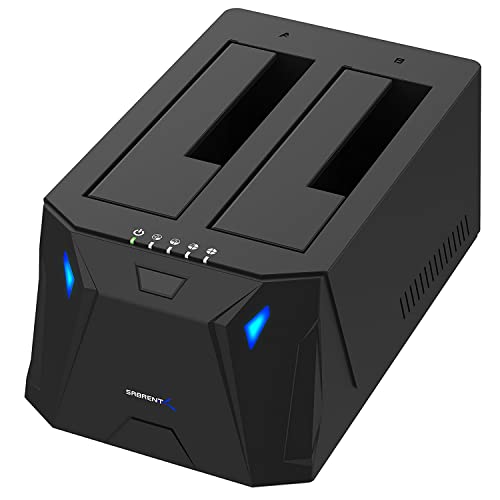
- Dual-bay access for two SATA drives
- Offline cloning included
- USB 3.0 with plug-and-play setup
Best For: Large-file copying and basic drive cloning
High-Speed USB-C Dock
OWC Drive Dock Dual Bay USB 10Gb/s

- Dual-bay SATA access over USB-C
- Up to 522MB/s speeds
- Independent power switches
Best For: Fast Mac/PC access to multiple bare drives
Flexible 22TB Dock

- Supports drives up to 22TB
- Wide OS and device compatibility
- Tool-less hot-swap design
Best For: Broad compatibility and big SATA drive support
Simple Lay-Flat Dock
SABRENT EC-DFLT USB 3.0 SATA Dock
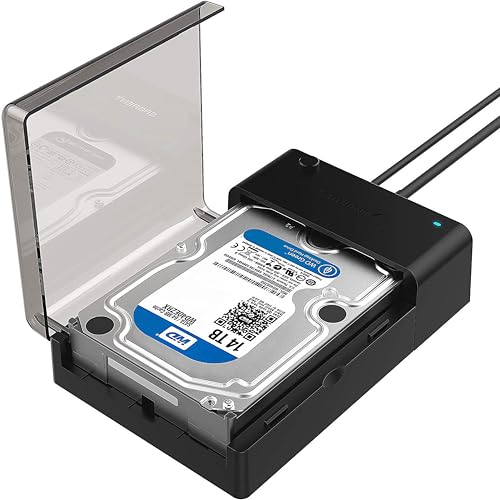
- Single-bay SATA dock with UASP
- Includes 12V power adapter
- Tool-free hot-swap design
Best For: Simple one-drive access for SATA storage
Best for Easy Setup
UGREEN 2-Bay SATA Dock for 48TB

- Offline clone two SATA drives without a computer
- Supports two 2.5-inch/3.5-inch drives at once
- USB 3.0 up to 5Gbps with cooling and dust cover
Best For: People who want a dual-bay dock for large-file backups and drive cloning
Lay-Flat Speed Dock
ORICO USB 3.0 UASP Single-Bay Dock
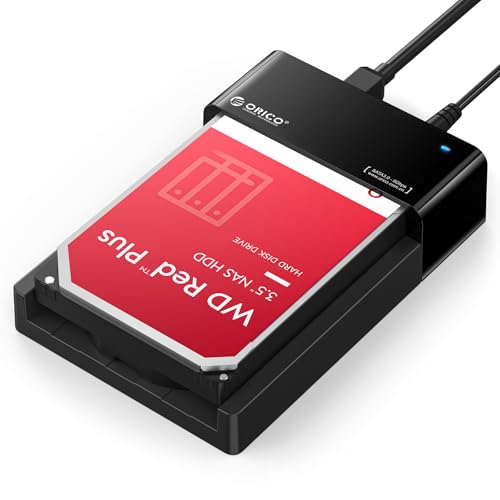
- USB 3.0 with UASP and up to 5Gbps
- Supports 2.5-inch and 3.5-inch SATA drives up to 24TB
- Tool-free, hot-swappable, lay-flat cooling design
Best For: Anyone who wants a simple single-bay dock for large-file transfers
USB-C Offline Cloner
SABRENT Dual-Bay USB-C Docking Station

- Offline cloning works without a computer
- Dual bays can read and write two SATA drives at once
- USB-C, tool-free, hot-swappable design
Best For: Users who want a USB-C dual-bay dock for copying and working with large drives
High-Capacity 5-Bay Cloner
ORICO USB C 5 Bay Hard Drive Docking Station

- 5-bay dock supports up to 5 x 20TB drives
- One-button offline cloning copies up to four drives
- Aluminum alloy build with USB 3.2 Gen 1
Best For: Large media libraries and high-capacity SATA drive management
Best Heavy-Duty Pick
WAVLINK USB 3.0 and USB C SATA Dock

- Supports 2.5-inch and 3.5-inch SATA HDDs/SSDs
- UASP and USB-C/USB 3.0 help boost transfer speed
- Built-in offline clone and power switch
Best For: Simple two-drive backups and large-file transfers
Triple-Bay NVMe and SATA Cloner
ICY BOX USB-C 10Gbps NVMe Reader

- Supports NVMe plus 2.5-inch and 3.5-inch SATA drives
- USB 3.2 Gen 2 offers up to 10Gbps transfers
- Triple-bay, tool-free design for easy swapping
Best For: Mixed NVMe and SATA users who want fast cloning and access
Dual-Bay Cloning Dock – SABRENT EC-HD2B 2-Bay USB 3.0 Dock
If you need hard drive docking stations for large files, the SABRENT EC-HD2B is a practical dual-bay option for moving, backing up, or cloning SATA drives. It supports 2.5-inch and 3.5-inch SATA HDDs and SSDs, with USB 3.0 speeds up to 5Gbps and offline cloning for drive-to-drive copies.
Best For: Users who want a dual-bay dock for large file transfers and simple offline cloning.
Pros:
- Supports two SATA drives at once, including 2.5-inch and 3.5-inch HDDs/SSDs.
- Offline cloning is built in, with support up to 60Mbps.
- Plug-and-play design with no drivers needed.
- USB 3.0 connection supports up to 5Gbps transfer speeds.
Cons:
- Cloning speed is much lower than the USB transfer speed ceiling.
- Only supports SATA drives, not IDE or NVMe.
For large-file workflows, this dock stands out because it combines two-drive access with straightforward cloning in one unit. It is a solid fit when you want simple desktop convenience rather than advanced features.
High-Speed USB-C Dock – OWC Drive Dock Dual Bay USB 10Gb/s
For hard drive docking stations for large files, the OWC Drive Dock is aimed at users who want fast, swappable access to bare SATA drives. Its USB-C connectivity supports up to 522MB/s, and it can read two 2.5-inch or 3.5-inch drives simultaneously on Mac or PC.
Best For: Mac and PC users who want faster dual-drive access over USB-C.
Pros:
- USB-C connectivity with speeds up to 522MB/s.
- Reads two SATA drives at the same time.
- Independent power switches for each bay.
- Compatible with Mac and PC.
Cons:
- Higher-end design may be more than you need for basic transfers.
- Requires USB-C or included adapter cable for best use.
This is the strongest pick here for people who regularly move large files and want a more performance-focused dock. The simultaneous dual-bay design and USB-C support make it a flexible workstation tool.
Flexible 22TB Dock – ORICO USB 3.0 SATA Dock DD18
This ORICO model is a versatile choice among hard drive docking stations for large files, especially if you want broad device support and a simple tool-less setup. It handles 2.5-inch and 3.5-inch SATA drives, supports up to 22TB, and uses UASP over USB 3.0 for transfer speeds up to 5Gbps.
Best For: Users who want a compact dock with wide platform compatibility and large-drive support.
Pros:
- Supports 2.5-inch and 3.5-inch SATA HDDs and SSDs up to 22TB.
- UASP support with USB 3.0 speeds up to 5Gbps.
- Works with Windows, Mac, Linux, iPad OS, and more.
- Tool-less, hot-swap design with LED indicators.
Cons:
- Single-bay design only supports one drive at a time.
- Does not support IDE or SAS drives.
If compatibility matters as much as storage capacity, this dock covers a lot of ground without adding complexity. It is a sensible pick for backups, imaging, and everyday large-file transfers.
Simple Lay-Flat Dock – SABRENT EC-DFLT USB 3.0 SATA Dock
If you want a no-frills option for hard drive docking stations for large files, this SABRENT lay-flat dock keeps things simple. It supports bare SATA 2.5-inch and 3.5-inch drives, includes a 12V power adapter for stable use with 3.5-inch drives, and offers USB 3.0 with UASP support.
Best For: Users who want an easy single-bay dock for direct SATA drive access.
Pros:
- Works with SATA I/II/III 2.5-inch and 3.5-inch drives.
- Includes a 12V power adapter for 3.5-inch drive stability.
- Tool-free, hot-swap design with plug-and-play setup.
- USB 3.0 with UASP support for efficient transfers.
Cons:
- Single-bay design cannot access two drives simultaneously.
- Uses USB-A, so USB-C users may need an adapter.
- Only supports SATA drives, not IDE, SAS, or M.2 formats.
This dock is a straightforward choice when you mainly need quick access to one bare SATA drive at a time. It is especially useful if you value simplicity and included power for larger 3.5-inch drives.
Best for Easy Setup – UGREEN 2-Bay SATA Dock for 48TB
If you need hard drive docking stations for large files, this UGREEN dual-bay dock is built for quick transfers, drive management, and offline cloning without a computer. It supports two SATA drives at once and uses USB 3.0 for up to 5Gbps, making it a practical option when you want to move or duplicate big file libraries efficiently.
Best For: Users who want a dual-bay dock for copying large drives and handling two SATA drives at once.
Pros:
- Offline cloning lets you copy one drive to another without connecting to a PC.
- Dual-bay support works with 2.5-inch and 3.5-inch SATA III drives.
- USB 3.0 connection supports up to 5Gbps transfer speeds.
- Built-in cooling, dust cover, and anti-slip pads help with safer everyday use.
Cons:
- Offline cloning requires the target drive to be the same size as or larger than the source.
- Transfer speed tops out at USB 3.0 levels rather than faster modern standards.
Overall, this is a strong pick if your priority is swapping between large SATA drives and duplicating data with minimal setup. The dual-bay layout and cloning function make it especially useful for backups and drive migration.
Lay-Flat Speed Dock – ORICO USB 3.0 UASP Single-Bay Dock
For hard drive docking stations for large files, this ORICO lay-flat model focuses on simple access, solid compatibility, and easy drive swapping. It supports SATA HDDs and SSDs up to 24TB, uses USB 3.0 with UASP for up to 5Gbps, and its flat design is meant to help with heat dissipation during longer file transfers.
Best For: Users who want a straightforward single-bay dock for moving large files and swapping drives quickly.
Pros:
- USB 3.0 with UASP supports up to 5Gbps for faster transfers.
- Works with 2.5-inch and 3.5-inch SATA I/II/III drives and SSDs up to 24TB.
- Tool-free, hot-swappable design makes drive changes easy.
- Lay-flat construction is designed to improve natural cooling.
Cons:
- Only supports one drive at a time.
- Maximum capacity is 24TB, which is lower than some dual-bay options.
This dock is a sensible choice if you mainly need fast access to one large SATA drive at a time. It keeps setup simple while still offering the speed and compatibility most people need for big backups and file transfers.
USB-C Offline Cloner – SABRENT Dual-Bay USB-C Docking Station
If your main goal is handling hard drive docking stations for large files, this SABRENT dual-bay dock is built for both live file access and standalone cloning. It supports two SATA drives at once over USB-C, offers up to 5Gbps connection speed, and can clone one drive to another without a computer when you just need a direct copy.
Best For: People who want a dual-bay USB-C dock with offline cloning for large SATA drives.
Pros:
- Offline cloning works without a computer for simple drive-to-drive copying.
- Reads and writes two drives at once when connected to a computer.
- Supports 2.5-inch and 3.5-inch SATA HDDs and SSDs.
- Tool-free, hot-swappable design with an LED for each bay.
Cons:
- Requires a USB-C port on your computer, or you need your own USB-C to USB-A cable.
- Does not support IDE/PATA, M.2, or NVMe drives.
- Offline cloning speed is limited to up to 60MBps by design.
This is a strong fit if you want a dock that can both manage two drives and duplicate them independently of a PC. The USB-C connection and dual-bay layout make it useful for backup workflows, while the cloning feature adds real convenience for drive upgrades.
High-Capacity 5-Bay Cloner – ORICO USB C 5 Bay Hard Drive Docking Station
If you need hard drive docking stations for large files, this ORICO 5-bay model is built for high-capacity storage and fast local duplication without tying up a computer. It supports 2.5-inch and 3.5-inch SATA SSDs/HDDs, offers up to 5 x 20TB expansion, and includes a one-button offline cloning mode for simple backups or drive swaps.
Best For: Creators, photographers, and other users managing very large photo, video, or archive libraries.
Pros:
- 5-bay design with support for up to 100TB total capacity
- Offline cloning copies up to four drives without a PC
- Aluminum-alloy body and vertical layout help with heat dissipation
- USB 3.2 Gen 1 with USB-C to C/A cable for broad compatibility
Cons:
- Cloning will overwrite the target disk, so backups are required first
- Uses SATA drives only, not NVMe
- Supports one supported device quantity in the listed details, so it is more of a dock/cloner than a multi-device hub
This is the most storage-heavy option in the group, and it stands out when your priority is managing many large files in one physical dock. If you want a desktop-friendly cloning station with serious bay count and simple operation, it is a practical fit.
Best Heavy-Duty Pick – WAVLINK USB 3.0 and USB C SATA Dock
For buyers comparing hard drive docking stations for large files, this WAVLINK dual-bay dock is a straightforward pick for moving data between two SATA drives with easy offline cloning. It supports 2.5-inch and 3.5-inch HDDs/SSDs, includes both USB 3.0 and USB-C connectivity, and uses UASP for faster transfer performance than standard USB 3.0.
Best For: Users who want a simple dual-drive dock for backups, cloning, and everyday large-file transfers.
Pros:
- Dual-bay layout works with 2.5-inch and 3.5-inch SATA drives
- UASP support and USB 3.0/USB-C connectivity improve transfer efficiency
- Offline cloning is built in for quick drive duplication
- Tool-free setup with hot-swapping and built-in power switch
Cons:
- Offline cloning is limited to source-to-target mode and is not online clone support
- Listed 16TB x2 capacity is lower than larger multi-bay options
- Not compatible with M1/M2-based Macs according to the notes
This dock is a sensible middle-ground if you want reliable SATA access without the bulk or complexity of a larger station. It is especially practical for people who clone drives occasionally and still need decent speed for large-file work.
Triple-Bay NVMe and SATA Cloner – ICY BOX USB-C 10Gbps NVMe Reader
If your workflow includes both NVMe and SATA media, this ICY BOX dock is a flexible choice among hard drive docking stations for large files. It supports M.2 PCIe NVMe SSDs as well as 2.5-inch and 3.5-inch SATA SSDs/HDDs, and its USB 3.2 Gen 2 connection is rated up to 10Gbps for fast transfers and cloning.
Best For: Mixed-drive users who need one dock for NVMe cloning, SATA access, and fast file movement.
Pros:
- Works with M.2 NVMe, 2.5-inch SATA SSDs, and 3.5-inch HDDs
- One-touch offline cloning keeps the process simple
- USB 3.2 Gen 2 delivers up to 10Gbps transfer speeds
- Triple-bay design lets you access multiple drives at once
Cons:
- Listed hard disk form factor is 2.5 inches in the details, so drive compatibility should be checked carefully
- Plastic enclosure may feel less rugged than metal alternatives
- Smaller than large multi-bay docks for users needing very high total capacity
This is the most versatile dock in the set if your storage setup mixes NVMe and SATA. It makes sense when you want one tool that can handle fast SSD migration and general large-file workflows without switching devices.
How We Picked the Best Hard Drive Docking Stations for Large Files
For Hard Drive Docking Stations for Large Files, we prioritized transfer speed, bay count, support for 2.5-inch and 3.5-inch drives, cloning features, and real-world ease of use. We also looked for UASP support, USB-C or fast USB 3.x connectivity, stable power delivery, and clear compatibility with common SATA HDDs and SSDs.
Quick Comparison
Single-bay docks are best for simple access and occasional transfers. Dual-bay models are ideal if you regularly clone drives or copy between two volumes. Multi-bay stations make more sense when you need a central hub for archiving, editing, or backup workflows. If you work with especially large file sets, faster interfaces like USB-C 10Gb/s can help keep bottlenecks down.
Key Buying Factors for Hard Drive Docking Stations for Large Files
Speed and Interface
Look for USB 3.0, USB 3.2, or USB-C models with UASP support if you want better sustained throughput. For SSD-heavy workflows or frequent large transfers, 10Gb/s options offer more headroom than basic 5Gb/s docks.
Drive Support and Capacity
Make sure the dock supports the drive sizes you actually use, including 2.5-inch SSDs and 3.5-inch HDDs. If you archive a lot of footage, check maximum supported capacity per bay and total system capacity.
Cloning and Offline Copying
Standalone cloning is useful when you need to duplicate drives without a computer. That can be a major time-saver for backups, system migrations, and field work.
Cooling and Stability
Large file transfers can run for long periods, so stable power and reasonable heat management matter. A heavier dock with a secure base often performs better than a lightweight unit that shifts around on the desk.
Who Should Buy Which Hard Drive Docking Stations for Large Files?
If you want the simplest setup, choose a single-bay dock for occasional transfers and drive access. If you clone drives or work with two volumes often, a dual-bay docking station is the most practical choice. If your workflow includes large archives, multiple backups, or frequent drive rotation, a five-bay station offers the most flexibility. For mixed environments with SSDs, HDDs, and faster data tasks, prioritize USB-C and higher-speed models first.
In short, the best hard drive docking station for large files is the one that matches your transfer speed needs, drive mix, and how often you swap or clone disks.