If you need cleaner audio on location, portable recorders with XLR inputs are one of the smartest upgrades you can make. They let you connect professional microphones, capture stronger levels, and keep your workflow flexible in the field.
From compact handheld units to multi-input field recorders, the best options balance sound quality, portability, battery life, and the features that matter most for video, podcasting, and music recording.
Best 10 Portable Recorders with XLR Inputs Picks for 2026
Compact 32-Bit Float Starter
Zoom H1 XLR 2-Channel Recorder

- Two XLR/TRS combo inputs
- 32-bit float recording up to 96kHz
- OLED waveform display and 3.5mm I/O
Best For: Interviews, podcasts, and lightweight mobile recording setups
Mic-Mounted News Clip Recorder
TASCAM DR-10X Portable XLR Recorder

- Captive XLR connector attaches to handheld mics
- Dual recording adds a safety backup
- Manual/auto gain with limiter and low cut filter
Best For: Reporters and interviewers who want a tiny recorder attached to an XLR mic
Pro Field Safety Pick
Zoom F3 Professional Field Recorder

- Two locking XLR/TRS inputs
- 32-bit float with dual AD converters
- Ultra-low-noise preamps for field work
Best For: Run-and-gun filmmakers and recordists who need secure XLR connections and dependable capture
Camera-Rig Workhorse
TASCAM DR-60DmkII 4-Channel Recorder

- Two locking XLR inputs with phantom power
- Records up to 4 channels
- Dual 3.5mm inputs for wireless and lav mics
Best For: DSLR and compact video rigs that need multiple audio sources in one recorder
Professional Multitrack Choice
Zoom F6 6-In XLR Field Recorder

- Six XLR inputs with up to 14 tracks
- 32-bit float recording helps avoid clipping
- Timecode I/O supports video sync
Best For: Multi-mic filmmaking and location audio
Portable Creator Pick
TASCAM DR-40XP 4-Channel Portable Recorder
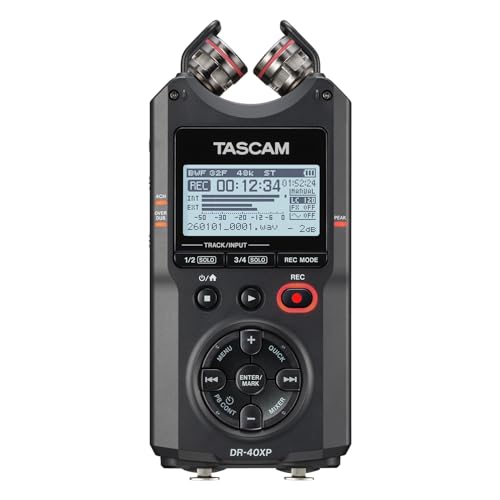
- Two XLR/TRS inputs for external mics
- Built-in adjustable stereo mics for quick capture
- USB-C interface mode for computer or mobile use
Best For: Lightweight recording for music, interviews, and video
Production-Grade Workhorse
Zoom F8n Pro 8-In/10-Track Recorder
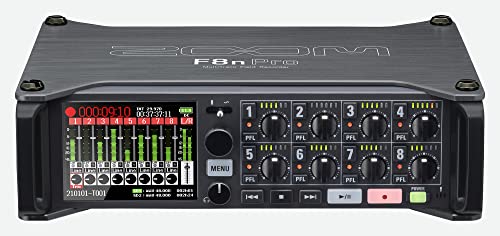
- Eight XLR/TRS inputs for larger productions
- Dual SD slots support redundant recording
- 32-bit float and timecode suit film workflows
Best For: Professional film and location audio teams
Podcast Multitrack Hub

- Four XLR inputs for up to four speakers plus a call-in guest.
- AI noise reduction, Tone Enhancement, and COMP streamline cleanup.
- Four headphone outputs with independent volume controls.
Best For: Podcast teams and creators needing a compact multitrack recorder.
Flexible 4-Track Field Tool

- Two XLR/TRS combo inputs for mics, instruments, or a mixer.
- 32-bit float recording reduces clipping worries.
- Built-in stereo mics and USB-C interface expand versatility.
Best For: Creators needing a compact all-round recorder for interviews and field audio.
Pro-Level Portable Capture

- Large X/Y mics deliver detailed onboard stereo recording.
- Two XLR/TRS inputs and 32-bit float support flexible capture.
- Dedicated gain knobs make level control quick and direct.
Best For: Musicians, filmmakers, and podcasters wanting hands-on portable recording.
Compact 32-Bit Float Starter – Zoom H1 XLR 2-Channel Recorder
If you want portable recorders with XLR inputs that stay simple but still give you serious flexibility, the Zoom H1 XLR is built for easy field use. It records in 32-bit / 96kHz, includes two XLR/TRS combo inputs, and adds a 3.5mm stereo input and headphone output for more monitoring and connection options.
Best For: Interviews, podcasts, and lightweight mobile recording setups.
Pros:
- Two XLR/TRS combo inputs handle mics, instruments, and other sources.
- 32-bit float recording at up to 96kHz helps keep levels clean.
- OLED waveform display makes level checking quick at a glance.
- 3.5mm stereo input and headphone output add useful flexibility.
Cons:
- Only 2 channels, so it is not built for larger multi-mic sessions.
- Runs on AA batteries, so long sessions may need spares.
Overall, this is a practical entry point for anyone who needs XLR inputs in a compact recorder without overcomplicating the workflow. It looks especially appealing for creators who value fast setup, clear monitoring, and simple portability.
Mic-Mounted News Clip Recorder – TASCAM DR-10X Portable XLR Recorder
Among portable recorders with XLR inputs, the TASCAM DR-10X stands out for mounting directly onto a handheld microphone. It is designed for voice recording, interviews, and news gathering, with manual and automatic gain, a low cut filter, a limiter, and dual recording for a safety copy.
Best For: Reporters and interviewers who want a tiny recorder attached to an XLR mic.
Pros:
- Captive XLR connector lets it attach firmly to a handheld microphone.
- Dual recording creates a backup copy at a lower level.
- Manual or automatic gain plus limiter and low cut filter add control.
- Very compact at 2.56 ounces for grab-and-go use.
Cons:
- Single-channel mono recording limits it to simple capture jobs.
- Small screen and minimal onboard controls suit basic use more than advanced routing.
The DR-10X is a smart choice when the priority is reliable speech capture from an XLR microphone without carrying a larger recorder. Its safety features and attached-mic design make it especially useful in fast-moving field situations.
Pro Field Safety Pick – Zoom F3 Professional Field Recorder
If you need portable recorders with XLR inputs for demanding shoots, the Zoom F3 is aimed squarely at professional field work. It offers two locking XLR/TRS inputs, 32-bit float recording, dual AD converters, and ultra-low-noise preamps so you can capture clean audio in unpredictable conditions.
Best For: Run-and-gun filmmakers and recordists who need secure XLR connections and dependable capture.
Pros:
- Two locking XLR/TRS inputs keep connections secure in larger rigs.
- 32-bit float recording helps handle quiet dialogue and sudden peaks.
- Dual AD converters and ultra-low-noise preamps support clean capture.
- Flexible power and USB workflows help on long days in the field.
Cons:
- Built for serious field use, so it is more specialized than casual recorders.
- No built-in microphone form factor; it depends on external XLR/TRS sources.
The F3 is a strong fit when reliability matters more than convenience features. For creators working in uncontrolled environments, its secure inputs and safety-minded recording approach make it a practical professional tool.
Camera-Rig Workhorse – TASCAM DR-60DmkII 4-Channel Recorder
For shooters looking at portable recorders with XLR inputs that fit neatly into a camera rig, the TASCAM DR-60DmkII is built around videography use. It records up to four channels, includes two locking XLR inputs with 48V phantom power, and adds dual 3.5mm inputs for wireless or lav mic sources.
Best For: DSLR and compact video rigs that need multiple audio sources in one recorder.
Pros:
- Records up to 4 channels for more complex camera setups.
- Two locking XLR inputs with 48V phantom power support condenser mics.
- Dual 3.5mm inputs work well for wireless and lav mics.
- HDDA preamps provide up to 64dB of gain with low noise.
Cons:
- Heavier than pocket recorders at 1.1 pounds.
- Designed around camera-rig use, so it is less compact for plain voice capture.
This is a good match if your recording setup needs to live under a camera and manage several inputs at once. The combination of XLR support, extra 3.5mm connectivity, and higher channel count makes it especially useful for video production.
Professional Multitrack Choice – Zoom F6 6-In XLR Field Recorder
If you want portable recorders with XLR inputs for demanding shoots, the Zoom F6 is built around clip-free 32-bit float capture, six XLR inputs, and timecode I/O. It’s a strong fit when you need multiple microphones running at once without giving up a compact, location-friendly body.
Best For: Filmmakers, field recordists, and musicians who need six XLR inputs, timecode, and no-clipping recording in a travel-ready format.
Pros:
- Six XLR inputs support multi-mic recording with up to 14 tracks.
- 32-bit float recording with dual AD converters helps prevent clipping on sudden peaks.
- Timecode I/O supports frame-accurate sync for video workflows.
- Works as a standalone recorder or a USB audio interface.
Cons:
- Uses 4 AA batteries, so power management matters on longer sessions.
- Its advanced feature set may be more than casual users need.
The F6 stands out when flexibility and headroom matter more than simplicity. For production work that needs multiple XLR sources and reliable sync, it offers a practical, professional balance of size and capability.
Portable Creator Pick – TASCAM DR-40XP 4-Channel Portable Recorder
Among portable recorders with XLR inputs, the TASCAM DR-40XP focuses on straightforward flexibility: two XLR/TRS inputs, built-in adjustable mics, and 32-bit float recording. It’s a compact option for creators who want an easy handheld workflow for music, interviews, and video audio.
Best For: Musicians, interviewers, and video creators who want a lightweight recorder with XLR/TRS inputs, built-in mics, and USB-C connectivity.
Pros:
- Two XLR/TRS inputs handle external microphones and line-level sources.
- Built-in adjustable A-B or X-Y mics add quick stereo capture options.
- 32-bit float recording helps keep sound clean and clip-free.
- USB-C audio interface mode adds direct computer or mobile recording.
Cons:
- MicroSD card and batteries are not included.
- Only two external inputs, so it’s less expandable than larger field recorders.
The DR-40XP is a practical pick when you want a small recorder that can move easily between handheld field use and interface duty. It won’t replace a larger multi-input system, but it covers common creator needs well.
Production-Grade Workhorse – Zoom F8n Pro 8-In/10-Track Recorder
If your priority is serious production flexibility, the Zoom F8n Pro is a heavyweight option in portable recorders with XLR inputs. It combines eight XLR/TRS inputs, 32-bit float recording, timecode accuracy, and dual SD slots for workflows that need redundancy and control.
Best For: Professional film crews and field mixers who need eight inputs, redundant recording, and highly accurate timecode.
Pros:
- Eight XLR/TRS inputs support larger multi-source sessions.
- 32-bit float with dual AD converters captures a wide dynamic range without clipping.
- Dual SD slots allow redundant recording for added security.
- Can function as an 8-in/4-out USB interface while recording to card.
Cons:
- At 1.8 kilograms, it is the least lightweight option here.
- Its professional feature set may be overkill for simple one- or two-mic jobs.
The F8n Pro is the most capable choice in this group when channel count, redundancy, and sync precision are priorities. It’s built for demanding sets rather than casual portable recording.
Podcast Multitrack Hub – Zoom PodTrak P4next
If you want portable recorders with XLR inputs for podcasting, the Zoom PodTrak P4next is built around four XLR mic inputs, multitrack recording, and straightforward phone capture. It focuses on making multi-person sessions easier with enough inputs, enough headphone outputs, and onboard tools that help keep setup and mixing simple.
Best For: Podcast teams, remote call-in shows, and creators who want a compact recorder with four XLR inputs.
Pros:
- Four XLR inputs support recording up to four in-person speakers plus a call-in guest.
- AI noise reduction, Tone Enhancement, and COMP help clean up audio with less manual work.
- Four headphone outputs with separate volume controls make monitoring easy for everyone.
- Up to +70dB of gain helps drive demanding podcast mics.
Cons:
- Designed mainly for podcast workflows rather than broader field recording.
- Uses 2 AA batteries, so long sessions may require power planning.
- Feature set may be more than needed for solo recording.
The P4next stands out if your priority is fast, portable podcast production with multiple mic inputs and direct phone integration. It is especially practical when you need a recorder that can handle several speakers and simplify the job of keeping levels under control.
Flexible 4-Track Field Tool – Zoom H4 Essential
The Zoom H4 Essential is a strong pick in portable recorders with XLR inputs when you want a compact unit that can handle music, interviews, podcasts, and video audio. Its built-in stereo mics, two XLR/TRS combo inputs, and 32-bit float recording give you a versatile setup without forcing you to worry as much about clipping.
Best For: Creators who need a portable all-round recorder for interviews, field audio, and smaller multi-source sessions.
Pros:
- Two XLR/TRS combo inputs let you connect external mics, instruments, or a mixer.
- 32-bit float recording helps capture loud and quiet sources with less clipping risk.
- Built-in stereo microphones add convenience when you do not want to plug in extras.
- USB-C audio interface support plus SD card backup adds flexible recording options.
Cons:
- Only two external XLR/TRS inputs, so it is not ideal for larger group recordings.
- AA battery power means you will need spares for longer shoots.
- Compact controls may feel less specialized than a dedicated podcast mixer.
Overall, the H4 Essential is a practical choice if you need one recorder that can move between field work, content creation, and casual multi-input recording. It offers enough I/O and recording safety to suit many portable workflows without adding much bulk.
Pro-Level Portable Capture – Zoom H5 Studio
Among portable recorders with XLR inputs, the Zoom H5 Studio is aimed at users who want more control and higher-end capture from a handheld unit. With large X/Y stereo mics, two XLR/TRS inputs, 32-bit float recording, and dedicated gain knobs, it is built for situations where sound quality and quick adjustments both matter.
Best For: Musicians, filmmakers, and podcasters who want a portable recorder with more advanced hands-on control.
Pros:
- Large 19.4mm X/Y mics provide rich, detailed onboard stereo capture.
- Two pro-quality XLR/TRS inputs support external mics or instruments.
- 32-bit float recording helps deliver clip-free takes in changing environments.
- Dedicated gain knobs make level adjustment fast and intuitive.
Cons:
- More advanced than a basic field recorder, so it may be more than casual users need.
- Four AA batteries are required for operation.
- Only up to four tracks simultaneously, which may limit larger sessions.
If you want a portable recorder that feels closer to a pro capture tool than an entry-level handheld, the H5 Studio is the most control-focused option here. It balances strong onboard mics, external input flexibility, and easy level management in a portable form factor.
How We Picked the Best Portable Recorders with XLR Inputs
We focused on real-world use: reliable XLR connectivity, preamp quality, recording safety, power options, and how easy each recorder is to carry and operate on set or on the move. We also favored models with modern features such as 32-bit float recording, dual recording paths, timecode support, and USB audio interface functions where they add practical value.
Quick Comparison
Among Portable Recorders with XLR Inputs, smaller handheld models are best for solo creators and interviews, while dedicated field recorders are better for multi-mic shoots, music capture, and production workflows. Podcast-focused units are a better fit when headphone monitoring, sound pads, or live call-in features matter more than rugged field operation.
Key Buying Factors for Portable Recorders with XLR Inputs
Input Count and Connector Type
Start with how many microphones or line sources you need to record at once. Two XLR/TRS inputs are enough for interviews and small shoots, while four, six, or eight inputs make sense for panel discussions, band recording, or production audio.
Recording Format and Headroom
32-bit float recording is a major advantage if you want to avoid clipped takes and reduce gain-staging stress. If your work involves unpredictable speech levels or fast-moving sets, this can be a deciding factor.
Preamps and Monitoring
Cleaner preamps mean less noise and better results with dynamic microphones and quieter sources. Also look for strong headphone output, direct monitoring, limiter options, and low-cut filters to help manage difficult environments.
Portability and Power
Handheld recorders are convenient for interviews and run-and-gun work, while bag-style field recorders usually offer better expandability. Battery life, USB-C power, and external power support can matter as much as the recorder itself.
Who Should Buy Which Portable Recorders with XLR Inputs?
If you are a filmmaker, choose a recorder that prioritizes preamp quality, timecode, and multiple XLR channels. Podcasters should look for easy gain control, headphone outputs, and USB connectivity. Musicians and live-recording users will usually benefit from more inputs, better multitrack handling, and stronger dynamic range. For solo creators, a compact two-input model often offers the best mix of convenience and performance.
In short, the right portable recorder with XLR inputs depends on your channel count, workflow, and how much post-production flexibility you want. Match those needs first, then compare features second.